Radon Testing in Evergreen, Colorado | InspectandTest
Evergreen sits in EPA Radon Zone 1, the agency’s highest-risk category, where the predicted average indoor radon level meets or exceeds the 4 pCi/L action threshold. The foothills geology here, fractured granite and metamorphic rock at over 7,000 feet in Jefferson County, channels radon efficiently, and the same fractured rock can carry radon into private well water. Radon is a colorless, odorless radioactive gas and the second-leading cause of lung cancer after smoking. This page explains how radon testing evergreen homeowners should plan, why the mountain setting demands it, and what testing costs. This summary reflects EPA and CDPHE guidance current as of 2026; consult a certified professional for testing decisions.
Part of our Radon Levels guide — start there for the full picture →
Radon testing in Evergreen: what to know
Radon testing measures the gas accumulated inside a home in picocuries per liter (pCi/L). The EPA recommends action at or above 4 pCi/L, and because Evergreen lies in Zone 1, a meaningful share of local homes test at or above that line. Two mountain homes a short distance apart can read very differently depending on where bedrock fractures intersect the foundation, so the only way to know your number is to test.
Radon gives no sensory warning, which is what makes measurement essential rather than optional. It has no color, odor, or taste, and it causes no symptoms a family would notice, so a home with a high level feels identical to one with none. The health consequence is long-term: radon decay products lodge in lung tissue, and the EPA and CDC identify radon as a leading cause of lung cancer after smoking. In fractured-granite Evergreen, where readings can run high and vary sharply from home to home, that invisible, symptomless nature is exactly why a measured number is the only trustworthy guide.
Short-term tests (2 to 7 days) suit real-estate timelines, while long-term tests (90+ days) average seasonal swings for a fuller exposure picture. For the underlying science and device types, our plain-language radon guide for Front Range homeowners covers both approaches.
Evergreen’s geology makes radon especially variable house to house. Fractured granite does not release radon uniformly; a home built where rock fractures funnel soil gas toward the slab or crawlspace can read far higher than a neighbor on more intact rock. Mountain homes also vary widely in foundation type, full basement, crawlspace, slab-on-grade, and each interacts with radon entry differently. A neighbor’s clean test tells you nothing about your own home, which is why testing is always an individual-home decision in the foothills.
Why Evergreen homes need radon testing
Geology drives the risk and makes it acute here. Radon comes from uranium decay in rock and soil, and Evergreen’s fractured granite foothills geology both contains uranium and provides fracture pathways that channel radon toward homes, which is why Jefferson County’s mountain areas fall squarely in Zone 1. Fractured bedrock is a more efficient radon conduit than uniform plains soil.
Construction and occupancy concentrate it. Many Evergreen homes have basements or crawlspaces in direct contact with that fractured rock, and finished lower levels, common in the larger Hiwan and Soda Creek custom homes, put bedrooms and family rooms where radon collects. Crawlspace homes are not exempt; radon enters the crawlspace and migrates upward into living space.
The mountain setting adds a water pathway. Most Evergreen homes draw from private wells, and radon dissolved in well water drawn from fractured granite can be released indoors when water is agitated, in showers, faucets, and laundry, adding to the airborne level. Long, cold mountain winters also keep homes sealed and heated for months, drawing soil gas indoors. The EPA links thousands of lung-cancer deaths a year to radon, and Evergreen’s combination of Zone 1 geology and well water puts local exposure among the more complex pictures on the Front Range.
What an Evergreen radon test covers
A professional test places a calibrated continuous radon monitor or passive device in the lowest livable level, basement, crawlspace-adjacent room, or ground floor, under closed-house conditions. The tester documents placement and the closed-house window so the result holds up in a real-estate negotiation.
Closed-house conditions
For at least 12 hours before and during a short-term test, windows and exterior doors stay closed except for normal entry, which keeps a breezy mountain afternoon from lowering the reading artificially. If a test comes back at or above 4 pCi/L, the next step is mitigation, detailed in our guide to radon mitigation in Evergreen.
Air testing and the well-water question
A continuous radon monitor logs hourly readings and detects tampering, making it the preferred tool for an Evergreen home sale; passive charcoal kits average exposure at lower cost for a homeowner’s own picture. Because so many Evergreen homes are on wells, a separate water-radon test may be warranted when air levels are elevated, since fractured-granite well water can be a meaningful secondary source. Air testing of the lowest livable level remains the primary measurement, with water testing as a targeted follow-up. CDPHE references the 4 pCi/L air action level for these decisions.
Radon testing cost in Evergreen
A professional short-term radon test in the Evergreen market typically runs about $135 to $250, with mountain travel occasionally nudging the higher end. A do-it-yourself kit costs roughly $15 to $40 plus lab fees, and CDPHE periodically offers discounted kits to Colorado residents. Bundled into a pre-purchase home inspection, radon testing often adds just $100 to $175.
A separate well-water radon test, when warranted, adds a lab fee of roughly $40 to $100. Long-term air kits sit at the low end on price but tie up months; for a transaction, the documented short-term professional test is standard because it fits inspection deadlines and produces a defensible closed-house result.
Weigh the cost against the protection. A $200 test that catches a 9 pCi/L basement or crawlspace reading lets an Evergreen family install a mitigation system and cut exposure by 90 percent or more. Given the fractured-granite geology and the added well-water pathway, skipping the test leaves a genuinely elevated risk invisible for as long as the family lives in the home, which at altitude is often for decades.
Colorado regulations and disclosure
Colorado requires radon disclosure in residential real-estate transactions, and the Seller’s Property Disclosure asks sellers to report known radon results and any existing mitigation system. CDPHE runs the state radon program, references the 4 pCi/L action level, and offers discounted kits to residents. Colorado does not license home inspectors, so for any test tied to a sale, confirm the tester follows recognized national measurement protocols.
Disclosure shapes mountain-property negotiations both ways. An Evergreen seller who has tested and mitigated, and ideally addressed well-water radon, can offer clean results as reassurance, while a seller who has never tested leaves the buyer to discover the number during the contingency, often resulting in a mitigation credit. Buyers in Zone 1 Evergreen should not waive radon testing to sweeten an offer; the modest cost is small against the long-term health stakes of an untreated basement or crawlspace fed by fractured rock.
Neighborhoods and areas served
Radon turns up across Evergreen regardless of neighborhood: basement and crawlspace homes in Downtown Evergreen, Kittredge, Bear Mountain, Brook Forest, and Soda Creek, and the larger custom homes in Hiwan. Because the fractured-granite geology underlies the whole area and varies fracture by fracture, no neighborhood is exempt, and a clean test next door predicts nothing about your own foundation.
Service typically extends to adjacent foothills communities in the same Zone 1 mountain footprint, including Conifer, Bergen Park, Morrison, and Golden. Evergreen residents can reference the county-level radon testing in Jefferson County hub, and those down the hill can read our companion guide to radon testing in Golden. Wherever the home sits in Evergreen, treating radon as a default test reflects the reality that the entire mountain community is in the highest EPA risk zone, with an added well-water pathway.
Testing crawlspace and well-served Evergreen homes
Evergreen’s varied foundations change how a radon test should be approached, and a crawlspace home is the clearest example. Radon enters a vented or unsealed crawlspace from the fractured rock below and migrates upward into the living space through gaps around plumbing, ductwork, and the subfloor. The test is still placed in the lowest livable level, the ground-floor living area above the crawlspace, because that is where occupants are exposed, but a high result there points to the crawlspace as the entry path. Owners sometimes assume a crawlspace home is exempt from radon; it is not, and in fractured-granite Evergreen those homes can read just as high as full-basement houses.
Well water adds a second consideration unique to mountain properties. Radon dissolved in well water drawn from fractured granite is released into the air whenever water is agitated, in showers, dishwashers, and washing machines, contributing to the airborne level measured in the home. The primary measurement is always the air test in the lowest livable level, but when air radon is elevated and the home is on a private well, a separate water-radon test helps determine whether the water is a meaningful contributor that warrants its own treatment. Ignoring the water side can leave a portion of the exposure unaddressed even after an air-side mitigation system is installed.
The practical upshot for an Evergreen homeowner is to test the air first, in the right location, under proper closed-house conditions, and then let the result guide any follow-up. A clearly elevated air reading in a crawlspace home signals the need for a mitigation approach suited to that foundation, while a well home with high air radon may warrant the additional water test before settling on a complete fix. Matching the testing strategy to the specific foundation and water source is what gives a mountain household an accurate picture rather than a partial one.
How to choose an Evergreen radon testing provider
Ask whether the provider uses a calibrated continuous radon monitor, follows EPA or AARST protocols, and understands mountain construction, basements, crawlspaces, and well systems. A good tester documents closed-house conditions, device placement, and duration so the result stands up in a sale. For a purchase, ask the provider to place and retrieve the device themselves rather than handing you a kit, since a tester-administered continuous monitor carries far more weight.
Confirm the monitor’s calibration is current, and ask whether the provider can advise on well-water radon testing if air levels come back high, given how common wells are here. If a result is borderline, between 2 and 4 pCi/L, a competent provider explains your options, including a long-term follow-up, rather than pushing an unnecessary mitigation sale. Bundling radon with a full home inspection in Evergreen is efficient on a remote property.
For homeowners not in a transaction, a CDPHE discounted long-term kit is a low-cost way to get a representative annual average and a reasonable first step. If it comes back at or near the action level, a professional follow-up confirms the result before you commit to mitigation. Either path beats not testing, since every Evergreen home sits in Zone 1 over fractured rock and measuring is the only way to know your number.
References
- Radon risk and EPA zone maps — U.S. Environmental Protection Agency
- Colorado radon program and kits — Colorado Department of Public Health and Environment
- Radon and lung cancer — Centers for Disease Control and Prevention
Frequently asked questions
Is Evergreen in a high radon zone?
Yes. Evergreen sits in EPA Radon Zone 1, the highest-risk category, like the rest of Jefferson County's foothills. Fractured granite geology channels radon efficiently, so every home, including crawlspace cabins, should be tested.
Can well water carry radon in Evergreen?
Yes. Many Evergreen homes draw from private wells fed by fractured granite, and radon dissolved in that water can be released indoors when water is agitated in showers and faucets. A separate water-radon test may be warranted when air levels are elevated.
What radon level requires action in Evergreen?
The EPA air action level is 4 pCi/L. At or above that reading, EPA and CDPHE recommend mitigation. Levels between 2 and 4 pCi/L are still worth considering for reduction, especially in an occupied basement or above a crawlspace.
How much does a radon test cost in Evergreen?
A professional short-term air test typically runs $135 to $250, with mountain travel sometimes at the higher end. A separate well-water radon test adds about $40 to $100. CDPHE periodically offers discounted air kits to residents.
Do crawlspace homes in Evergreen need radon testing?
Yes. Radon enters a crawlspace from the fractured rock below and migrates up into living space, so crawlspace homes are not exempt. The test is placed in the lowest livable level, and mitigation can address crawlspace entry when levels are high.
Every Evergreen home sits in EPA Zone 1 over fractured granite, so radon testing is basic due diligence, not optional. To connect with a vetted local tester who understands mountain construction and well water, get in touch through our contact page.
Test your home for radon
Radon is invisible and odorless, so a test is the only way to know your level. A short-term kit gives a first reading in days; a digital monitor tracks it over time.
| Product | Why | Buy |
|---|---|---|
 AirChek Charcoal Radon Test Kit | Lab fee usually included; EPA short-term protocol. | Amazon — $21.95 |
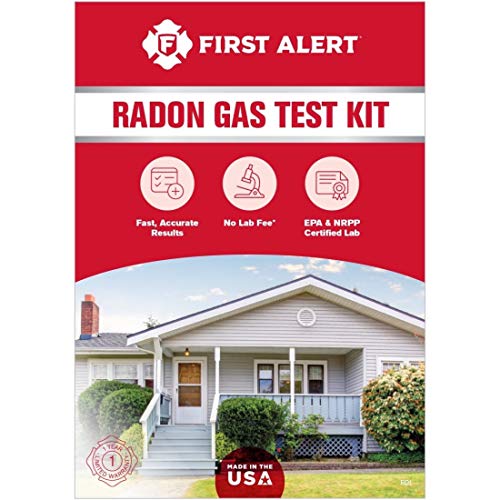 First Alert RD1 Radon Test Kit | Widely stocked; 48-hour charcoal test. | Amazon — $16.98 |
 Airthings Corentium Home | Digital monitor with a long-term average. | Amazon — $142.99 |