Natural Gas Detector: What Homeowners Need to Know
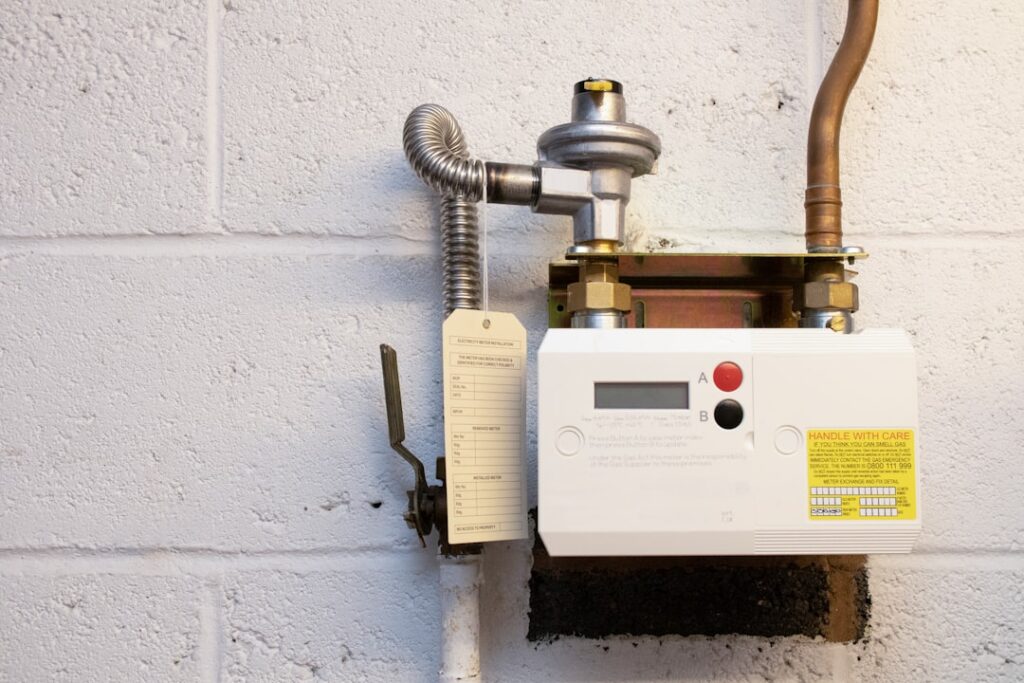
A natural gas detector is a device that senses methane, the primary component of natural gas, in the air and alarms before a leak approaches a flammable concentration. For homes heated or fueled by natural gas, it adds an early-warning layer beyond the human nose. Detectors come as fixed plug-in units, hardwired alarms, and handheld probes. Knowing how they work and where to place them is what makes them effective. This guide draws on NFPA, DOE, and InterNACHI guidance and cites code and trade sources rather than manufacturer marketing.
Part of our Home Inspection Tools guide — start there for the full picture →
What a natural gas detector does
A natural gas detector samples the air for methane and triggers an alarm when concentration crosses a safety threshold, well below the lower explosive limit where a gas-air mixture can ignite. The goal is to warn occupants in time to ventilate, shut off the gas supply, and evacuate if needed. Fixed units monitor continuously; handheld units help locate a leak’s source.
Natural gas itself is colorless and, in its pure state, odorless. Utilities add a sulfur-like odorant (mercaptan) so leaks can be smelled. A detector backs up that odorant, which matters for people with reduced sense of smell or during sleep when a slow leak might otherwise go unnoticed.
Natural gas detector versus carbon monoxide alarm
This distinction trips up many homeowners. A natural gas detector senses methane, a flammable fuel gas, and protects against fire and explosion. A carbon monoxide alarm senses CO, a toxic byproduct of incomplete combustion, and protects against poisoning. They detect different gases and are not interchangeable.
A home with gas appliances benefits from both. Some combination units handle both jobs, but they must satisfy the placement rules for each gas, which can conflict. Our overview of carbon monoxide detector signals and what they mean covers the CO side, and the parent home inspection tools guide compares detection instruments.
How natural gas detectors work
Most consumer units use catalytic bead or metal-oxide semiconductor sensors that change electrical behavior when methane is present. These sensors respond to combustible gases as a class, so a unit may also react to other flammable gases. They are tuned to alarm at a fraction of the lower explosive limit to provide margin before any ignition risk.
Sensors drift and age, with a typical service life of several years. After that, accuracy declines and the unit should be replaced rather than relied upon. This aging behavior is shared across gas-sensing tools, including the broader-purpose gas leak detector category that includes propane and multi-gas models.
Where to place a natural gas detector
Placement is governed by physics. Natural gas (methane) is lighter than air, so it rises and accumulates near the ceiling. Detectors must be mounted accordingly.
- Mount natural gas detectors high on the wall or near the ceiling.
- Place them near gas appliances such as furnaces, water heaters, ranges, and dryers, but not directly above the burner.
- Avoid dead-air corners, drafty spots, and areas of high humidity, grease, or dust.
- Keep away from windows, vents, and fans that could disperse a leak away from the sensor.
- Follow the manufacturer’s stated mounting height and coverage area.
A natural gas detector mounted low near the floor (the correct spot for heavier-than-air propane) may fail to alarm during a methane leak. Confirm your fuel type before installing.
Signs of a natural gas leak
A detector supplements, but does not replace, your awareness of leak signs. The rotten-egg or sulfur odor from the added mercaptan is the most reliable clue. Other signs include a hissing sound near a gas line or appliance, dead or dying vegetation over an underground line, bubbles in standing water outdoors near a line, and an unexplained spike in gas usage.
If you smell a strong gas odor, leave immediately, avoid switches, flames, and anything that could spark, and call your gas utility and emergency services from outside. Do not try to locate the leak yourself with an open flame. A handheld detector can help a professional pinpoint a small leak after the area is confirmed safe.
Choosing and maintaining a unit
When selecting a natural gas detector, match it to methane, confirm the mounting height suits a ceiling-area install, and decide between plug-in, hardwired, and battery models. Plug-in units are simple but need an outlet near the ceiling or a cord routed safely; hardwired units integrate with home wiring; battery units offer placement flexibility but need battery upkeep. Smart units can send phone alerts and integrate with shutoff valves.
Maintenance keeps the unit honest. Test it on the manufacturer’s schedule using the test button, keep the sensor area clean, ensure plug-in units have battery backup for outages, and replace the device at end of life. A detector that has outlived its sensor offers false security, which is worse than no detector at all because it discourages vigilance.
Why methane’s properties shape detection
Methane, the main component of natural gas, is lighter than air, which is the single most important fact for detector placement. When natural gas leaks, it rises and collects near the ceiling rather than pooling at the floor. A detector mounted low, where it would catch heavier propane, can sit in clean air during a methane leak that is accumulating overhead. Matching the device to the gas is therefore not optional.
Methane is also colorless and, in pure form, odorless and non-toxic to breathe in small amounts, but it is an asphyxiant at high concentrations because it displaces oxygen, and it is flammable within a specific range in air. The flammability is the primary household hazard: a leak that reaches its flammable range near an ignition source can ignite or explode. Detection aims to warn well before that range is approached.
The added odorant, mercaptan, gives natural gas its characteristic rotten-egg smell, but odorant can fade in some situations, and not everyone can smell it equally well. A detector provides a consistent, around-the-clock check that does not depend on a person being awake, present, and able to smell. That reliability is the core argument for installing one in a gas-fueled home.
Where natural gas leaks commonly occur
In homes, natural gas leaks tend to start at predictable points along the supply path. Appliance connections, the flexible connectors and shutoff valves serving furnaces, water heaters, ranges, and dryers, are common, particularly as fittings age or after an appliance is moved. Threaded pipe joints can loosen with temperature cycling, and pilot lights or burners that fail to light can release raw gas into the room.
- Aging or loosened appliance connectors and valves.
- Threaded supply-pipe joints that work loose over time.
- Unlit pilot lights or burners releasing unburned gas.
- Corroded or damaged interior gas piping.
- Damage to buried exterior service lines from digging.
A fixed natural gas detector placed near these appliances watches for accumulation, while a handheld combustible-gas tool helps a technician pinpoint the exact fitting once a leak is confirmed. Knowing the likely sources also helps homeowners decide where a detector will do the most good, typically near the furnace, water heater, and kitchen range.
Limitations to understand
A natural gas detector watches a limited area and one class of gas. It will not catch a leak in a room it does not cover, and it does not detect carbon monoxide. It also cannot fix the underlying problem; it only buys time to respond. Treat it as one layer in a system that includes the gas odorant, your own senses, professional appliance servicing, and a clear evacuation plan.
Nuisance alarms can occur near sources of other combustible vapors, such as aerosols or solvents, so placement away from such sources reduces false triggers. Reading the manual for your specific model prevents misinterpreting its signals.
Natural gas versus propane detectors
Homeowners sometimes buy the wrong detector because they assume all gas detectors are interchangeable. They are not. A natural gas detector is tuned for methane, which is lighter than air and rises, so it mounts high. A propane detector is tuned for LPG, which is heavier than air and sinks, so it mounts low. Installing one for the wrong gas, or at the wrong height, can leave a real leak undetected.
The first step is knowing which fuel your home uses. Homes on a piped utility supply typically use natural gas, while homes with an exterior tank usually use propane. Some properties use both, perhaps natural gas for the furnace and propane for a backup appliance or grill, in which case each gas needs appropriate detection at the appropriate height.
Multi-gas or combustible-gas detectors can sense both classes of fuel gas, which simplifies coverage, but placement still has to suit the gas you are most concerned about. For a broader look at detectors that cover multiple gases and the handheld tools used to locate leaks, see our overview of the gas leak detector category, which spans methane, propane, and multi-gas models.
What a natural gas detector cannot do
A natural gas detector is a valuable early-warning layer, but it has clear boundaries that homeowners should respect. It monitors only the area and gas it is placed for, so a leak in an unmonitored room may go undetected. It does not detect carbon monoxide, which is a separate toxic hazard requiring its own alarm, and it cannot repair the underlying leak it warns about.
- It covers only the room and gas it is designed and positioned for.
- It does not detect carbon monoxide; CO needs a dedicated alarm.
- It warns of a leak but cannot fix the fitting or appliance.
- It is not a replacement for annual professional appliance servicing.
- It supplements, but does not replace, your response to the gas odorant.
The most robust home safety setup layers several defenses: natural gas detection where gas appliances live, CO alarms for combustion byproducts, the utility’s added odorant, annual appliance maintenance, and a household plan for responding to a gas smell. A detector is one important piece of that system, not the whole of it.
Building a household gas-safety plan
A detector works best as part of a planned response rather than a standalone gadget. Every member of the household should know what the alarm sounds like, where the main gas shutoff is located, and the basic rule that a strong gas smell or sustained alarm means leave the building first and call for help from outside.
The plan should specify that no one operates light switches, appliances, or anything that could spark during a suspected leak, and that the home is not re-entered until the utility or emergency responders confirm it is safe. Practicing this once, the way families practice fire escapes, makes the right response automatic under stress.
Pair the plan with maintenance: annual servicing of gas appliances, prompt repair of any detected leak by a licensed professional, and replacement of detectors at end of life. A detector, a clear plan, working appliances, and CO alarms together form a layered defense far stronger than any single device. That combination is what genuinely protects a gas-fueled home.
When to call a professional
Call your gas utility immediately if you suspect an active leak, and evacuate first if the odor is strong. Call a licensed plumber or HVAC technician to find and repair leaks at fittings, valves, and appliances. A home inspector or HVAC pro can also assess appliance connections and venting as part of a broader safety check.
Schedule annual servicing of gas furnaces, water heaters, ranges, and dryers. Professional leak detection equipment is far more sensitive than consumer units and is the right tool for confirming and locating a suspected leak before repair.
References
- NFPA: Heating Safety (gas and fuel-burning equipment) — National Fire Protection Association
- ENERGY STAR: Seal and Insulate — U.S. Environmental Protection Agency (ENERGY STAR)
- InterNACHI gas safety resources — InterNACHI
Frequently asked questions
Where should a natural gas detector be mounted?
High on the wall or near the ceiling, because natural gas is lighter than air and rises. Place it near gas appliances but not directly above a burner, and follow the manufacturer's stated mounting height for reliable detection.
Is a natural gas detector the same as a CO alarm?
No. A natural gas detector senses methane and protects against fire and explosion, while a CO alarm senses toxic carbon monoxide from combustion. They detect different gases and are not interchangeable, so homes with gas appliances often need both.
How long does a natural gas detector last?
Most consumer sensors last several years before accuracy declines. Replace the entire unit at its stated end of life rather than relying on an aged sensor, and test it regularly with the test button.
What should I do if my natural gas detector alarms?
Treat it as a possible leak. Leave the building, avoid switches and flames, and call your gas utility and emergency services from outside. Do not search for the leak with an open flame or re-enter until it is confirmed safe.
CO & gas detectors
A carbon monoxide alarm is the cheapest life-safety device in the house. Combination CO + explosive-gas units add a layer near furnaces and gas lines.
| Product | Why | Buy |
|---|---|---|
 First Alert CO Alarm First Alert CO Alarm | Plug-in with battery backup. | Amazon — $21.99 |
 Kidde Nighthawk CO + Gas Kidde Nighthawk CO + Gas | Detects CO + natural/propane gas. | Amazon — $57.47 |