Mold Spots: What Homeowners Need to Know
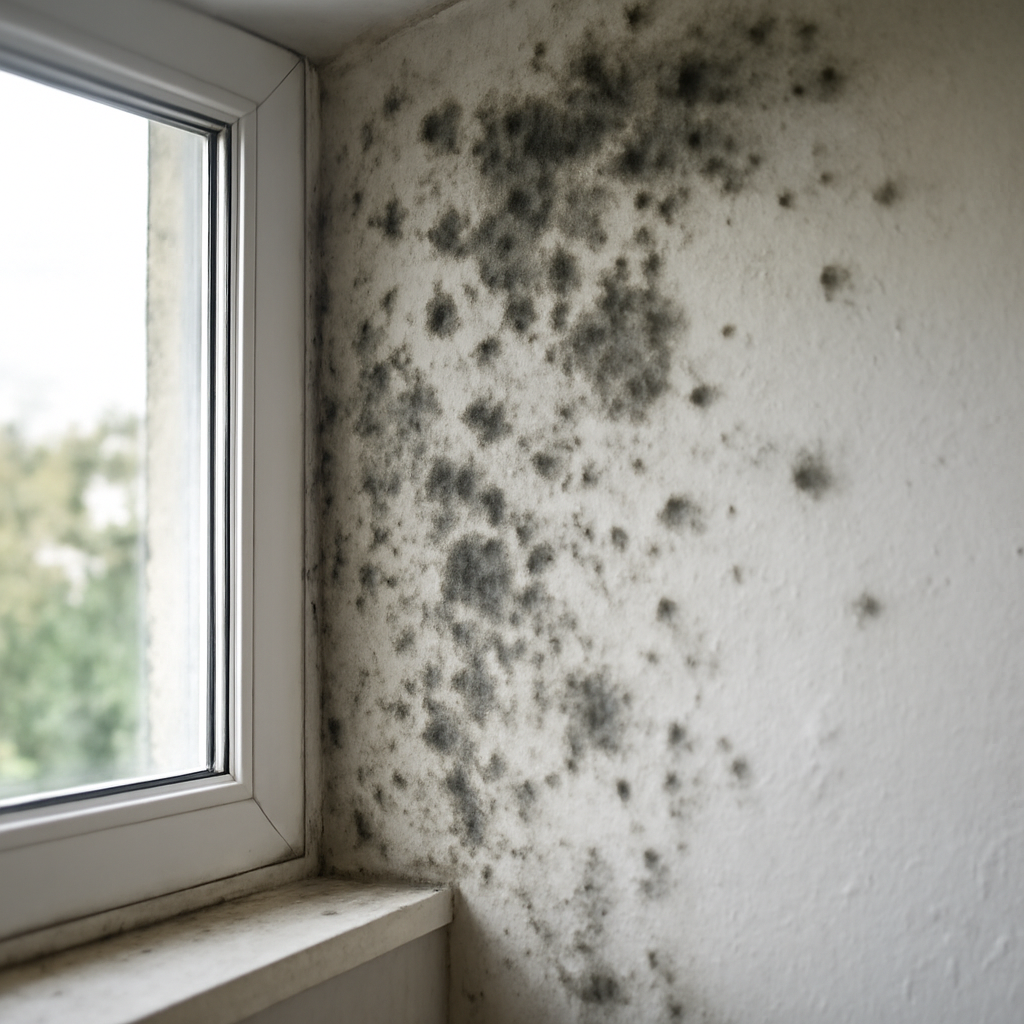
Small dark or fuzzy marks on a ceiling, wall, or grout line are easy to dismiss as dirt, but they often tell a bigger story. Mold spots are usually the visible tip of a moisture problem that started out of sight, and catching them early can save a homeowner from costly repairs. Knowing how to recognize them, distinguish them from harmless stains, and remove them correctly is practical knowledge every homeowner benefits from. This guide summarizes EPA and CDC guidance current as of 2026; it is educational only, and a certified professional should assess significant or hidden growth while a physician handles any health concern.
Part of our Types of Mold guide — start there for the full picture →
Is this mold, asbestos, or water damage? Get a free instant screen
Upload a clear photo of the suspect area. You'll get an instant AI screening opinion and what to do next. This is screening guidance, not a professional determination.
Screening guidance only. AI can be wrong. Confirm asbestos, mold type, or lead with lab testing or a licensed professional before acting.
What Are Mold Spots?
Mold spots are small, often clustered patches of fungal growth on indoor surfaces, ranging in color from black and green to brown, white, pink, or orange. They typically start tiny and multiply, spreading into blotchy, irregular shapes rather than neat lines. Unlike a flat stain, a mold spot usually has texture you can see in side lighting, and it may feel fuzzy, slimy, or powdery.
These spots form when mold spores, which are always floating in indoor air, land on a damp surface and find the moisture and organic material they need to grow. The EPA emphasizes that the presence of growth signals a moisture problem somewhere, even if the source is not obvious. A single spot rarely stays single; it is a marker that conditions are right for more.
Mold spots appear most often where humidity collects: bathrooms, around windows, on ceilings under roof leaks, in basements, and on walls behind furniture. For a closer look at how growth presents on walls specifically, see the guide on what mold on walls looks like.
How to Tell Mold Spots From Stains
Not every spot is mold, and telling the difference prevents both panic and complacency. Several blemishes mimic mold spots, and a few simple checks separate them.
Water Stains
Water stains are flat, smooth, and often ringed, marking where moisture spread and dried. They stay within a defined boundary and do not have raised texture. A water stain signals past moisture; a mold spot signals moisture plus active biological growth.
Dirt and Soot
Dust and dirt streaks follow airflow near vents and wipe away cleanly without returning. Soot ghosting appears as even gray shadows above outlets or near heat sources. Both are flat and lack the fuzzy texture and musty odor of mold.
Efflorescence
On masonry and basement walls, white crystalline deposits called efflorescence look like mold but are mineral salts left by evaporating water. They dissolve in water; mold does not. A quick wipe test distinguishes them.
The Practical Checks
Mold spots have texture in side lighting, often carry a musty smell, and tend to reappear after cleaning unless the moisture is fixed. A drop of diluted bleach that quickly lightens the spot suggests biological growth, while dirt stays the same shade. These are rough screens, not a definitive diagnosis.
Why Mold Spots Appear
Every cluster of mold spots traces back to moisture. The common sources are predictable. Condensation forms on cold surfaces like windows, exterior walls, and uninsulated pipes when warm humid air meets them, which is why spots often ring a window or appear on a north-facing wall. Leaks from plumbing or the roof introduce water directly, producing spots on ceilings and along baseboards. High indoor humidity from showering, cooking, and drying laundry raises moisture across a whole room.
Poor ventilation lets that moisture linger. Bathrooms without working exhaust fans, closets against exterior walls, and basements with stagnant air all hold humidity long enough for spores to colonize. In Front Range homes, finished basements combine cool below-grade surfaces with limited airflow, a recipe for recurring spots. Identifying which of these drivers is at play is the key to stopping the spots from coming back, a point the broader mold inspection and testing hub reinforces.
Are Mold Spots Dangerous?
The health significance of mold spots depends on the amount, the people exposed, and how long the exposure lasts. The CDC states that mold can cause symptoms such as nasal congestion, throat irritation, coughing, and wheezing, with stronger reactions in people who have allergies or asthma. Those with weakened immune systems face a higher risk of more serious effects.
A few small spots in a well-ventilated bathroom are a different situation than widespread growth in a bedroom. That said, the EPA’s guidance does not hinge on identifying the species or measuring exact risk. Any visible mold indicates a moisture problem worth fixing, and growth should be removed regardless of color. Size is also a poor guide to the full extent, since visible spots may be fed by larger hidden colonies behind the surface. If anyone in the home develops symptoms, the right step is a physician, not a self-diagnosis from the appearance of the spots.
What the Color of a Mold Spot Suggests
Homeowners naturally read meaning into the color of mold spots, and while color cannot identify a species or its danger, it does offer rough clues when combined with location. Black or dark green spots on bathroom grout, window frames, and damp drywall are common and often involve Cladosporium or Aspergillus; the slimy black variety on persistently soaked cellulose may be Stachybotrys, which signals a long-standing leak.
White or light gray fuzzy spots can be early-stage mold, though on masonry they may be mineral efflorescence instead. Pink or orange spots in showers are frequently a bacterium rather than a true mold, but they share the same damp habitat and respond to the same drying and cleaning. Brown spotting tends to appear on wood and around windows where condensation collects.
The reason agencies discourage acting on color alone is that the appropriate response, remove the growth and fix the moisture, is identical regardless of what the color suggests. Color is a curiosity that can hint at the moisture history, but it should never drive the decision about whether to clean or how urgently to act. That decision rests on the presence of growth and an active water source.
How Mold Spots Spread Through a Home
A few spots in one room rarely stay contained if the underlying conditions persist. Mold reproduces by releasing spores into the air, and those spores settle on other damp surfaces and start new colonies. Disturbing growth, by brushing against it, scrubbing it dry, or running a fan across it, accelerates that dispersal. This is why a bathroom problem can migrate to an adjacent closet or why basement spots can seed growth elsewhere.
HVAC systems are a major spreader. If spots develop near a return vent or inside ductwork, the system can distribute spores throughout the house, depositing them wherever moisture lets them grow. A localized issue can become a whole-home pattern this way, with spores depositing wherever moisture lets them grow.
Containing spread means acting early and carefully. Address spots while they are small, dampen before disturbing them, avoid blowing air across active growth, and keep the rest of the home dry so wandering spores have nowhere to take hold. The longer spots are left with moisture available, the wider the eventual problem.
How to Remove Mold Spots Safely
Start with moisture. Find and fix the source, whether a leak, condensation, or high humidity, because cleaning alone only delays the return of the spots. Keep indoor humidity below about 50 percent.
For small areas of spots on hard, non-porous surfaces, the EPA describes cleaning with detergent and water and drying completely. White vinegar is a popular natural alternative for tile and grout. Wear an N95 respirator, gloves, and eye protection, ventilate the space, and lightly dampen the area first so spores do not go airborne. Scrub, wipe clean, and dry thoroughly. Dispose of cleaning materials in a sealed bag.
Porous materials that have absorbed mold, such as saturated drywall or ceiling tiles, usually need replacement because the growth roots below the surface. Spots covering more than about 10 square feet, returning after cleaning, hidden behind walls, or involving HVAC systems call for a professional. The same goes for households with high-risk individuals.
Preventing Mold Spots From Returning
Prevention is mostly about denying moisture. Run bathroom and kitchen exhaust fans, wipe down shower walls after use, and use a dehumidifier in damp basements. Fix leaks promptly and dry any water intrusion within 24 to 48 hours. Improve airflow by pulling furniture slightly away from exterior walls and keeping closet doors open in humid weather. Insulate cold surfaces to reduce the condensation that feeds window and wall spots.
Inspect known trouble areas seasonally so small spots get caught and cleaned before they spread. A spot that returns repeatedly despite cleaning is a clear signal that an underlying moisture problem remains unsolved, and that is the moment to bring in a professional who can find and correct the root cause rather than treating the surface again and again.
Mold Spots in Specific Rooms
Where mold spots appear says a lot about their cause, and a room-by-room view helps homeowners read the clues. In bathrooms, spots cluster on grout, caulk, ceilings, and around the tub or shower because of the constant humidity and splashing. Poor or unused ventilation is the usual driver, and running the exhaust fan reliably addresses most of it.
In bedrooms and living areas, spots on exterior walls, in corners, and behind furniture often point to condensation, where cold wall surfaces meet warm humid indoor air. Furniture pushed flat against an exterior wall blocks airflow and creates a cold, still pocket where spots thrive. In kitchens, spots near the sink, under the cabinet, and around the dishwasher or refrigerator suggest plumbing leaks or appliance moisture.
Basements are the Front Range’s most common site, with spots on foundation walls, around windows, and on stored items reflecting below-grade dampness and limited airflow. Closets, especially those on exterior walls, develop spots when poor circulation lets humidity linger. Attics show spots when roof leaks or inadequate ventilation trap moisture. Reading the room and the spot’s location together usually reveals the moisture source, which is the key to stopping recurrence rather than just wiping the surface. The cluster guide on preventing mold in a basement targets the space where these spots most often appear locally.
When Mold Spots Signal a Larger Problem
Most isolated mold spots are minor and manageable, but certain patterns indicate something bigger that warrants a closer look. Spots that keep returning after cleaning are the clearest warning, since recurrence means the underlying moisture source remains active and unaddressed. Repeated cleaning of the same patch is a sign to investigate the cause rather than the symptom.
Spots accompanied by a strong musty odor disproportionate to the visible growth suggest hidden mold nearby, perhaps inside the wall or under the floor. Spreading spots that grow in number or size over weeks indicate active, ongoing growth fed by a persistent water source. Spots that appear alongside other moisture signs, peeling paint, warped trim, soft spots, or staining that bleeds through, point to moisture within the material, not just on the surface.
Location raises the stakes too. Spots near plumbing, below a roofline, or on a wall with a history of leaks imply the cavity behind may be affected. In these situations, the visible spots are the tip of a larger problem, and surface cleaning will not resolve it. A qualified inspector can use moisture meters and other tools to find the source and assess the full extent, as the broader mold resources explain. Catching the larger problem early, prompted by the behavior of a few spots, prevents the kind of widespread growth that turns a minor cleanup into a major remediation. The cost of a thorough assessment is small next to the cost of repeatedly cleaning a surface fed by a hidden source, or worse, tearing out a finished wall after growth has spread through the cavity behind it. A few persistent spots are cheap insurance to investigate before they become expensive.
References
- Mold Cleanup in Your Home — U.S. Environmental Protection Agency
- About Mold and Your Health — Centers for Disease Control and Prevention
- A Brief Guide to Mold, Moisture and Your Home — U.S. Environmental Protection Agency
Frequently asked questions
How do I know if a spot is mold or just a stain?
Mold spots have texture visible in side lighting, often carry a musty smell, and tend to return after cleaning unless the moisture is fixed. Water stains are flat and ringed, dirt wipes away cleanly, and masonry efflorescence dissolves in water while mold does not.
Are a few small mold spots dangerous?
A few small spots in a ventilated area are less concerning than widespread growth, but the EPA advises removing any visible mold and fixing the moisture regardless. People with allergies, asthma, or weakened immune systems may react more, and symptoms should be evaluated by a physician.
Why do mold spots keep coming back after I clean them?
Returning spots mean the moisture source has not been resolved. Cleaning removes surface growth, but mold regrows as long as the surface stays damp. Find and fix the leak, condensation, or humidity problem, and call a professional if the source is hidden.
If mold spots keep returning in your Front Range home, a vetted local inspector can track down the moisture behind them; reach out through our contact page and we will help you connect.