Mold Inspection Services Near Me: What’s Included
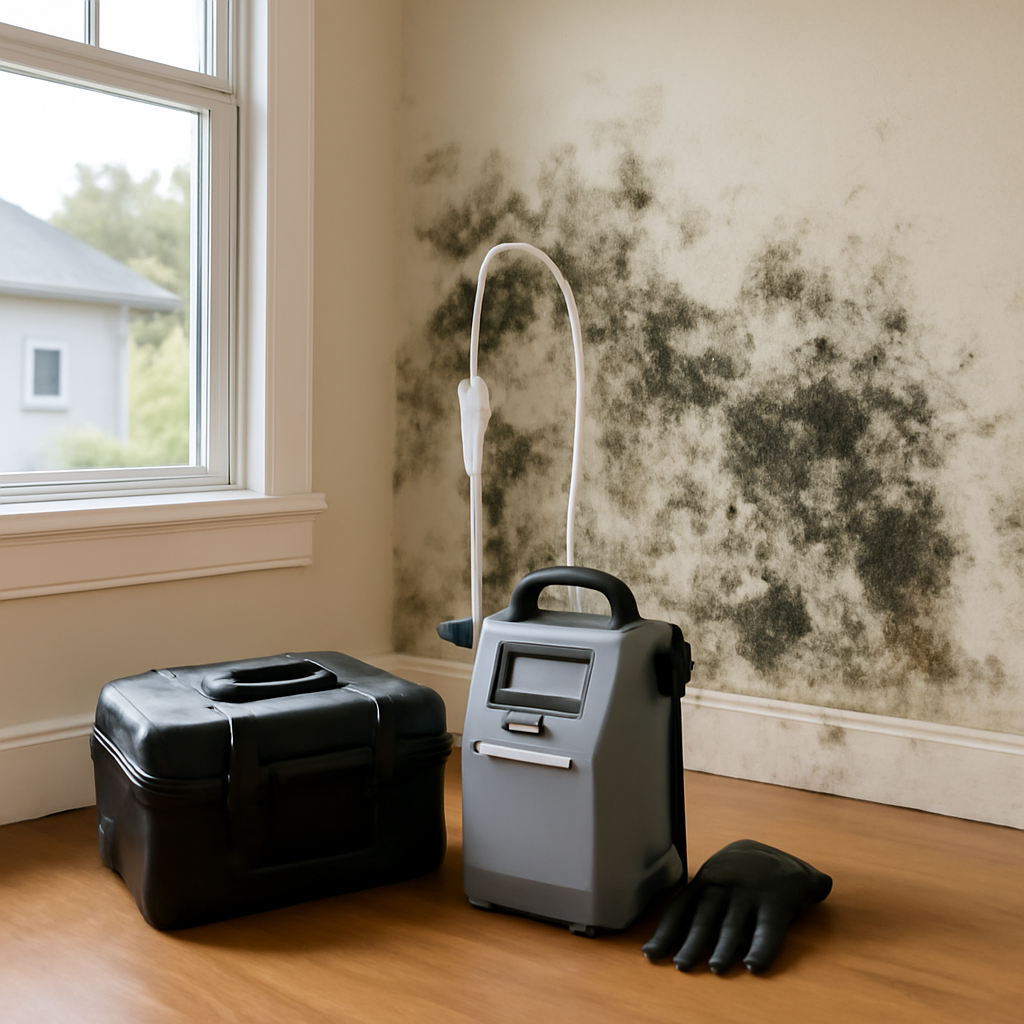
When homeowners search mold inspection services near me, most results look interchangeable until you read what each service actually delivers. The differences are real and they matter: one company’s basic visit and another’s full assessment with lab sampling and a documented report are not the same product at the same price. This guide breaks down the service components, the testing add-ons, the report deliverables you should demand, and how to compare local packages so you buy the level of service your situation needs. As background only: this reflects EPA and CDC guidance current as of 2026 and is not medical advice; consult a physician about symptoms and a qualified professional for testing decisions.
Is this mold, asbestos, or water damage? Get a free instant screen
Upload a clear photo of the suspect area. You'll get an instant AI screening opinion and what to do next. This is screening guidance, not a professional determination.
Screening guidance only. AI can be wrong. Confirm asbestos, mold type, or lead with lab testing or a licensed professional before acting.
What’s Included in a Standard Inspection Service
The core of any legitimate mold inspection service is a comprehensive visual evaluation. The inspector examines the property for visible growth, water staining, condensation, and the building conditions that allow mold to develop. A genuine service covers the spaces homeowners skip: attics, crawlspaces, basements, behind accessible appliances, around plumbing fixtures, and at windows where condensation collects.
Paired with the visual work is moisture detection, which is what separates a real service from a quick look. Standard equipment includes a moisture meter that reads water content in walls and floors, a thermal imaging camera that highlights temperature anomalies linked to hidden dampness, and a hygrometer that logs indoor humidity. A service that omits moisture detection is selling you a glance, not an inspection. The diagnostic depth here is the same regardless of whether you find the provider through a search for a local mold inspection generally.
Service Tiers and Packages
Most providers structure their offerings into tiers, and understanding them helps you avoid overpaying or underbuying. The entry tier is typically a visual-only assessment with moisture mapping and a written summary, suited to a homeowner who has a specific, visible concern and wants it scoped. This tier confirms the presence and likely source of growth without lab work.
A mid tier adds laboratory sampling, usually a set number of air or surface samples analyzed by an accredited lab, which gives documented data on the type and relative concentration of mold present. The top tier is a whole-home or transactional package with extensive sampling, comparative outdoor baselines, and a detailed report formatted for real-estate or insurance use. Match the tier to the question you are trying to answer rather than buying the biggest package by default.
Single-Issue vs. Whole-Home Service
A single-issue service targets one room or one suspected source, costs less, and answers a focused question. A whole-home service surveys the entire structure and suits buyers, post-flood situations, or homes with a musty smell and no obvious origin. Buying whole-home service for a single bathroom stain wastes money; buying single-issue service when you smell mold throughout the house may miss the real source.
Testing Add-Ons Explained
Sampling is the most common add-on, and it comes in two main forms. Air sampling captures spores from the indoor air, usually compared against an outdoor control sample to judge whether indoor levels are elevated relative to the natural background. Surface sampling, by swab or tape lift, identifies what is growing on a specific spot. Each sample carries a fee plus the laboratory analysis cost.
The EPA does not recommend routine sampling because there are no federal health-based thresholds for indoor spore counts, so a homeowner should view sampling as a tool with specific jobs: confirming hidden growth before demolition, identifying a species when it affects medical decisions a doctor is making, documenting a condition for a sale or claim, and verifying that a remediation succeeded. Our deeper look at local mold testing covers air-versus-surface methods and what results mean. Add sampling when it answers a question you actually have, not as a default upsell.
Report Deliverables You Should Demand
The report is the product you are paying for, and a weak one undermines an otherwise good inspection. A professional deliverable includes dated photographs of every finding, the moisture-meter and humidity readings recorded during the visit, a written description of conditions room by room, the inspector’s assessment of the likely moisture source, and clear, prioritized recommendations.
If sampling was performed, the report should include the laboratory’s analysis with the lab’s accreditation noted, an interpretation of what the numbers mean in plain language, and the outdoor baseline for comparison. Avoid services that deliver a verbal summary or a single-page checklist with a yes-or-no verdict. A strong report lets you hand it to any remediation contractor and get accurate competing bids. Ask to see a sample report before you book; reputable providers share redacted examples readily.
How to Compare Local Packages
Comparing services on price alone is the classic mistake because the cheapest number often hides the thinnest service. Build a small comparison on what each package includes. Does the base service include moisture mapping with meters and thermal imaging, or is that extra? How many samples, if any, are bundled, and what is the per-sample add-on fee? What exactly does the written report contain, and can you see a sample?
Then weigh independence, which shapes the entire service. A provider who also sells remediation has a reason to recommend a larger scope of work; an independent inspection service does not. Confirm certifications such as IICRC or ACAC and proof of insurance. Read recent local reviews for comments on report quality and thoroughness. Our guide to vetting local inspectors offers a checklist that pairs well with this comparison, and the mold inspection and testing hub shows how services fit into the larger process.
Matching the Service to Your Situation
The right service follows from your circumstance. A homeowner who spotted a small patch of growth and wants the source confirmed needs an entry-tier visual-and-moisture service, possibly with one surface sample. A buyer under a tight closing timeline needs a documented service with sampling and a transaction-ready report. A homeowner recovering from a basement flood needs a whole-home service that maps the full extent of moisture intrusion.
A household with a medically vulnerable member should lean toward thoroughness and a clear written record, while coordinating health questions with a physician separately. In each case, the service answers a specific question, and naming that question before you call keeps you from buying too little or too much.
The Colorado Front Range Service Landscape
Front Range homeowners face a particular set of moisture conditions that shape what a good service looks like locally. Snowmelt against foundations, ice dams, finished-basement dampness, swamp-cooler humidity, and ordinary plumbing leaks all create hidden moisture across Denver, Douglas, Arapahoe, Jefferson, Adams, and Boulder counties. Because Colorado does not maintain a statewide mold-assessor license, the burden falls on you to confirm a provider’s credentials and independence.
A local service that understands regional building styles, particularly the prevalence of finished basements and crawlspaces, will scope an inspection more accurately than a generic national checklist. The Colorado Department of Public Health and Environment publishes mold and moisture guidance that aligns with EPA recommendations, reinforcing that the service’s real job is finding the moisture source and documenting it, not simply confirming that mold exists. Choose the service whose included components match that mission.
The Visual Assessment Service in Detail
The visual portion of a service sounds simple but carries most of the diagnostic weight, so it is worth knowing what a thorough one covers. The inspector reads the building as a water-management system, starting outside. Grading that slopes toward the house, overflowing gutters, downspouts that discharge against the foundation, and roof or flashing defects all direct water where it does not belong, and a good service notes these because they are the upstream cause of many interior problems.
Inside, the assessment is methodical rather than a quick scan. Bathrooms, kitchens, and laundry rooms get close attention for their combination of water supply, drainage, and humidity. Basements and crawlspaces are examined at the base of walls, around floor drains, and at the sill plate. The attic is checked for roof-leak staining and for bathroom fans that wrongly vent into the space instead of outdoors. A service that skips the attic and crawlspace is checking only the easy half of the house, and those are precisely the spaces where hidden growth hides.
The inspector documents conditions as they go, photographing findings and noting locations, so the eventual report reflects an organized walk rather than a vague recollection. The quality of this visual work is what you are mainly paying for; sampling, where used, confirms and documents what the visual and moisture assessment already suggested.
Post-Remediation Verification as a Service
One service tier homeowners often overlook is post-remediation verification, sometimes called a clearance assessment. After a remediation contractor finishes, an independent inspection service returns to confirm the work succeeded: that the affected materials were removed, the area is dry to a normal moisture reading, and conditions no longer favor regrowth. Where sampling is appropriate, post-remediation air samples can be compared against an outdoor baseline to document that indoor levels are back in line with the natural background.
This service is most valuable when the company performing it is independent from the company that did the cleanup, for the same reason diagnosis and remediation should stay separate: a contractor verifying its own work has an incentive to declare success. Booking verification as a distinct service from a provider who did not perform the remediation gives you an objective answer to the only question that ultimately matters, whether the problem is actually resolved.
What Moisture Detection Adds to the Service
Moisture detection is the layer that converts a visual impression into evidence. A moisture meter quantifies how wet a material is relative to a dry reference, a thermal camera maps temperature patterns that hint at hidden dampness, and a hygrometer records the ambient humidity that determines whether growth can sustain itself. A service that bundles these as standard is selling a real inspection; one that lists them as paid add-ons or omits them entirely is selling a look. When comparing packages, confirm in writing that moisture mapping is included rather than assuming it.
Air Sampling vs. Surface Sampling: What Each Service Buys
When a service offers sampling, the two main methods answer different questions, and paying for the wrong one wastes money. Air sampling draws a measured volume of air through a collection cassette to capture airborne spores, almost always paired with an outdoor control sample taken the same day. The lab compares indoor counts and species mix against that outdoor baseline, because spores exist everywhere outdoors and the meaningful question is whether indoor air is elevated, not whether spores are present.
Surface sampling, by swab or tape lift, identifies what is actually growing on a specific visible spot. It answers what is this, where air sampling answers is the air elevated and by what. A service investigating a musty smell with no visible source leans on air sampling; a service confirming the identity of a visible patch leans on surface sampling. Some situations use both. Either way, ask whether the lab the service uses holds AIHA or NVLAP accreditation, because the analysis is only as trustworthy as the lab behind it. Our deeper look at local mold testing walks through how each method is collected and read.
How Service Pricing Is Actually Built
Understanding what drives a quote helps you read whether a price is fair or a trap. The base visual-and-moisture service is priced mainly on home size and complexity, since a large multi-story home with a crawlspace takes longer to assess than a single-level condo. Sampling is layered on top as a per-sample fee plus the laboratory analysis cost, so a quote with many samples climbs quickly, and a quote with none may be too thin for a transaction that needs documentation.
Two pricing patterns deserve suspicion. A headline price far below the market usually signals a cursory visit that skips moisture mapping or the harder-to-reach spaces, leaving you to pay again when the real source resurfaces. A quote padded with a long list of samples can inflate the total without adding diagnostic value, especially when a focused single-issue concern needs only one or two samples. The right service scopes the sampling to your actual question. Judge value by what is included and how the provider explains it, not by the lowest line item. For a fuller treatment of how scope drives cost, the broader look at a local mold inspection compares what different price points buy.
Questions That Reveal Service Quality on the Phone
A short call separates a real service from a cursory one before you commit. Ask whether moisture mapping with meters and thermal imaging is part of the base service or an extra charge. Ask whether the company also performs remediation, because a provider that diagnoses and sells the cleanup has a structural reason to recommend a larger scope. Ask which accredited laboratory handles any samples, and ask to see a redacted sample report so you can judge the deliverable rather than guess at it.
Ask, too, how the inspector decides whether sampling is warranted; a thoughtful answer ties sampling to a specific question rather than offering it as a default upsell. Notice how the company communicates. A provider that explains its process plainly and sets honest expectations about what a number can and cannot tell you is more trustworthy than one that promises a clean bill of health or pushes toward a fast, expensive conclusion. The way these questions are answered usually tells you more than the answers themselves.
References
- Mold and health guidance for homeowners — U.S. Environmental Protection Agency
- Basic facts about mold and dampness — Centers for Disease Control and Prevention
- Mold and moisture guidance for Colorado homes — Colorado Department of Public Health and Environment
- Mold inspection standards of practice — International Association of Certified Home Inspectors
Homeowners across the Denver metro and Front Range who want to compare mold inspection services from a vetted local pro can get in touch through our contact page.