Mold Inspection Near Me: How to Find a Local Pro
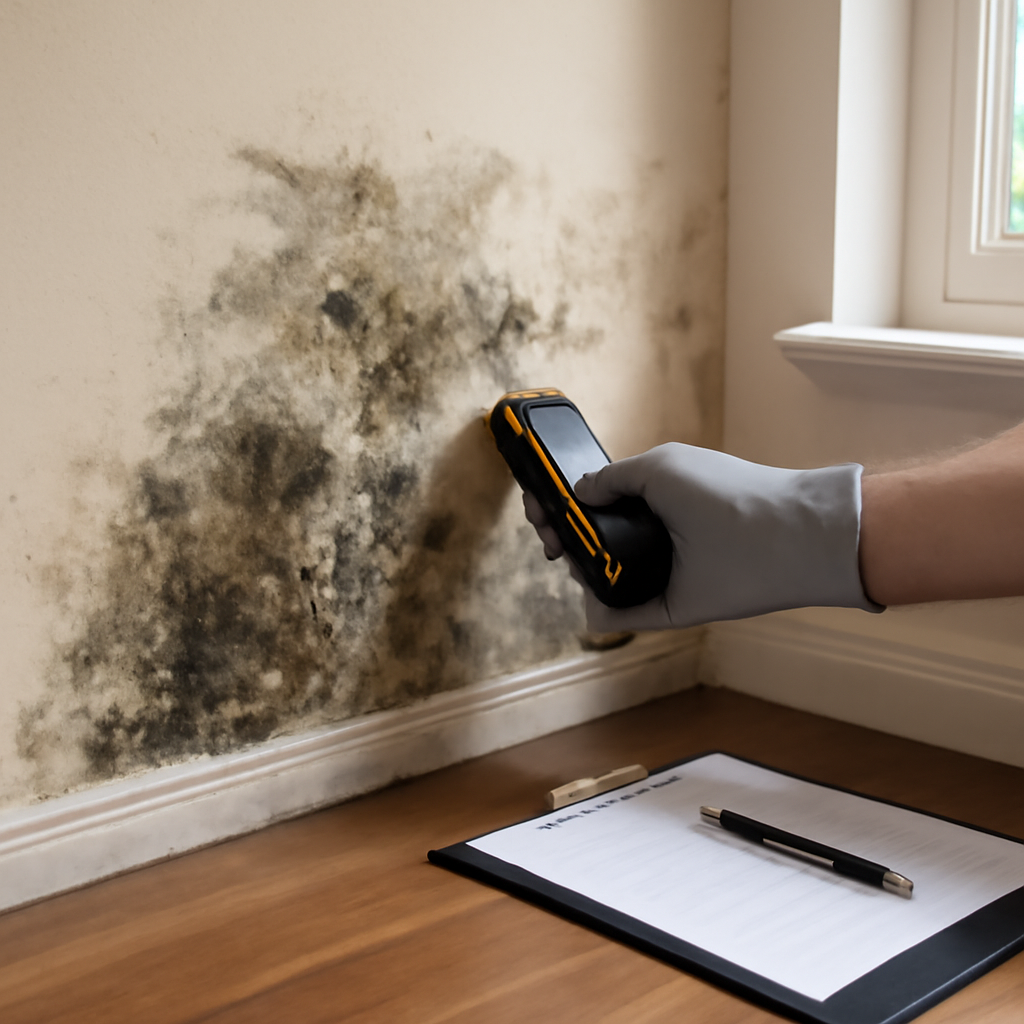
Typing mold inspection near me into a search bar is easy; knowing which of the results is worth your money is the hard part. A good mold inspection is a structured investigation of where moisture is entering a building and where growth has taken hold, performed by someone with the training and tools to read a house the way a homeowner cannot. This guide explains exactly what a competent inspection covers, the credentials that separate professionals from opportunists, the conflict of interest you must watch for, and the precise questions to ask before you hire. As background only: this reflects EPA and CDC guidance current as of 2026 and is not medical advice; consult a physician about symptoms and a qualified professional for testing decisions.
Part of our Mold Testing & Inspection guide — start there for the full picture →
Is this mold, asbestos, or water damage? Get a free instant screen
Upload a clear photo of the suspect area. You'll get an instant AI screening opinion and what to do next. This is screening guidance, not a professional determination.
Screening guidance only. AI can be wrong. Confirm asbestos, mold type, or lead with lab testing or a licensed professional before acting.
What a Real Mold Inspection Covers
A thorough mold inspection has three layers, and the best inspectors perform all of them. The foundation is a detailed visual assessment. The inspector walks the entire property looking for visible growth, water staining, peeling paint, warped materials, and the conditions that allow mold to thrive. This is not a glance; it includes attics, crawlspaces, basements, behind accessible appliances, and around every plumbing fixture and window.
The second layer is moisture mapping. Mold is a moisture problem, so the inspector uses tools to find dampness the eye misses. A pin or pinless moisture meter reads the water content of drywall, wood, and flooring. A thermal imaging camera reveals temperature differences that often mark hidden wet areas behind finished surfaces. A hygrometer records the indoor humidity that determines whether growth can sustain itself. Together these turn guesses into measurements.
The third layer, used selectively, is sampling. Air or surface samples sent to a laboratory can confirm the type and relative concentration of mold present. Sampling is not always necessary, and the EPA notes there are no federal health-based standards for acceptable indoor spore counts, so a number alone proves little. Sampling earns its cost when it confirms hidden growth before remediation, documents a condition for a transaction, or verifies that a cleanup actually worked. Our dedicated guide on local mold testing goes deeper on the lab side.
What an Inspection Is Not
A mold inspection is not the same as remediation, and it is not a moisture-meter wave at the front door. Be skeptical of any company that offers a free inspection if you also hire them to remove the mold. The inspection is a diagnostic service with real labor and equipment behind it. When the diagnosis and the treatment come from the same wallet, the incentive to find a large, expensive problem is obvious.
Credentials That Actually Mean Something
There is no single national license for mold inspectors, and requirements vary widely by state, which is exactly why credentials matter when you are vetting local options. Several certifications carry genuine weight. The IICRC, the Institute of Inspection Cleaning and Restoration Certification, offers training in applied microbial remediation and is widely recognized in the restoration field.
The ACAC, the American Council for Accredited Certification, issues respected designations such as the Council-certified Microbial Investigator, which is geared toward assessment rather than cleanup. Many strong mold inspectors also hold home-inspection credentials from InterNACHI or the American Society of Home Inspectors, which signals broad building knowledge. A few states, including some that border Colorado’s market, license mold assessors directly; where a state license exists, verify it.
Credentials are necessary but not sufficient. Pair them with proof of insurance, ideally errors-and-omissions coverage, and references from recent local jobs. A certificate framed on the wall means little without the field experience to back it up.
The Conflict of Interest You Must Understand
This is the single most important concept for anyone hiring a mold inspector. Many companies offer both inspection and remediation. When one firm diagnoses the problem and then sells you the solution, it has a financial reason to find more mold, more affected square footage, and more demolition than the situation requires. The EPA’s guidance implicitly favors independence by recommending that assessment establish the scope before remediation begins.
An independent inspector who does not sell remediation has no stake in the size of the problem. Their report stands on its own, and you can take it to competing remediation bids. For a homeowner, that independence is worth paying for directly. If you do use a combined firm, get a second opinion before authorizing expensive demolition, and never sign a remediation contract during the inspection visit itself.
What to Ask Before You Hire
A short phone screening filters out most weak options. Ask these directly. First: are you independent, or do you also perform remediation? An honest answer either way tells you how to weigh their findings. Second: what certifications do you hold, and can you provide the certificate numbers? Third: does the inspection include moisture mapping with meters and thermal imaging, or only a visual look?
Fourth: what does the written report include, and may I see a sample? A real report contains photos, moisture readings, a description of conditions, the suspected source, and clear recommendations, not a one-line verdict. Fifth: if you recommend sampling, which accredited laboratory do you use? Sixth: are you insured, and can you share proof? The way a company answers these questions usually tells you more than the answers themselves. Our guide to choosing a licensed mold inspector expands on verifying each claim, and the broader look at vetting local inspectors offers a full checklist.
What a Mold Inspection Costs
Pricing varies by region, home size, and whether sampling is included, so treat any figure as a range rather than a quote. Industry sources generally place a basic visual mold inspection of an average single-family home in the low-to-mid hundreds of dollars, with the price rising as the home grows, as crawlspaces and multiple stories add labor, and as laboratory samples are added at a per-sample fee.
Air sampling typically adds a charge for each sample plus the lab analysis. A home with a suspected problem in one area needs fewer samples than a whole-house investigation. Be wary of two extremes: a price so low it implies a cursory visit, and a price padded with unnecessary samples. The right inspection is scoped to your actual concern. Comparing what is included matters more than comparing headline prices, which is where understanding what inspection services include helps you read a quote.
Why the Cheapest Option Often Costs More
A bargain inspection that skips moisture mapping or produces a vague report can miss the hidden source entirely, leaving you to pay again when the problem resurfaces. Conversely, a thorough independent inspection that pinpoints the source can save thousands in unnecessary demolition by competing remediation bids. Value lives in accuracy, not in the lowest line item.
The Colorado Front Range Context
Colorado’s semi-arid climate leads some homeowners to assume mold is a non-issue, but that confidence can be misplaced. The Front Range sees real moisture problems from snowmelt against foundations, ice dams, basement and crawlspace dampness, swamp-cooler humidity, and the plumbing leaks that occur anywhere. Finished basements, common across Denver, Douglas, Arapahoe, Jefferson, and Boulder counties, are a frequent site of hidden growth because they combine below-grade moisture with porous finishes.
Colorado does not currently impose a statewide mold-assessor license, which makes the credential and independence questions above even more important for local buyers. The Colorado Department of Public Health and Environment publishes guidance on indoor mold and moisture that mirrors EPA recommendations: focus on the moisture source, and use qualified assessment to scope any problem. For Front Range homes, an inspector who understands local building styles and seasonal moisture patterns reads the house more accurately than a generic checklist.
How to Choose From Your Search Results
Turn the search into a short list using a repeatable filter. Start with independence: prioritize inspectors who do not sell remediation, or be prepared to get a second opinion. Confirm relevant certifications and verify them rather than taking the website’s word. Require that moisture mapping and a detailed written report are included. Read recent local reviews for mentions of thoroughness and clear reporting, not just politeness.
Then make the call and run the six questions above. Notice whether the company explains its process plainly or pushes you toward a fast, expensive conclusion. The right inspector treats your home as a diagnostic puzzle and hands you a report you could act on with any remediation contractor. For the bigger picture of how inspection, testing, and cleanup fit together, the mold inspection and testing hub ties the pieces into one homeowner roadmap. A careful choice here protects both your health environment and your wallet.
Inside an Inspection: What Actually Happens, Step by Step
Knowing how a visit unfolds helps you judge whether the one you booked is thorough. A competent inspection usually begins with an interview. The inspector asks about the history that brought you to call: a musty smell, a recent leak, visible growth, allergy-like reactions, a real-estate transaction, or a past flood. That conversation directs the search, because mold is a moisture story and the history points to where water has been.
Next comes the exterior walk. The inspector reads grading, gutters, downspouts, the roofline, and any spot where water could be directed against the building, since outdoor drainage problems are a leading source of indoor moisture. Then the interior assessment moves room by room, with extra attention to bathrooms, kitchens, laundry areas, basements, crawlspaces, and the attic. Throughout, the inspector is looking for visible growth, staining, warping, and the conditions that allow mold rather than only the mold itself.
The instrument phase overlaps the visual one. A moisture meter samples walls, floors, and ceilings around any suspect area and at known-dry references for comparison. A thermal imaging camera scans for the temperature anomalies that often mark hidden dampness behind finished surfaces. A hygrometer logs indoor humidity. If the clues converge on a hidden cavity, a borescope through a small hole can confirm growth before anyone opens a wall. The visit ends with the inspector explaining preliminary findings, followed later by a written report.
How Long It Takes and How to Prepare
A focused single-issue inspection of an average home often runs one to two hours, while a whole-home or transactional assessment with sampling can take longer. You can make the visit more productive by clearing access to suspect areas: move stored boxes off basement walls, clear under-sink cabinets, and ensure the attic and crawlspace hatches are reachable. Have your water history ready, including dates of leaks, repairs, and any prior remediation, so the inspector spends time investigating rather than reconstructing.
Moisture Mapping and Detection Methods in Plain Language
The tools that separate a real inspection from a glance deserve a clearer explanation, because understanding them helps you ask better questions. A moisture meter measures the water content of building materials. Pinless models read through the surface using electromagnetic sensing and leave no marks, which suits finished drywall. Pin models drive two small probes to read at depth, useful in wood and for confirming a pinless reading. Neither sees mold; both find the dampness that feeds it.
Thermal imaging cameras detect surface temperature differences, not moisture directly. Evaporating water cools a surface, and wet materials hold and release heat differently than dry ones, so a trained inspector reads thermal patterns as a map of where to point the moisture meter. The camera is a guide, not a verdict, which is why a good inspector always confirms a thermal anomaly with an actual moisture reading rather than declaring a leak from a colorful image alone.
A hygrometer rounds out the picture by logging relative humidity, since air above roughly 60 percent sustains growth even without a discrete leak. Together these instruments turn a building into measurable data. The borescope is the confirmation tool of last resort before demolition: a small camera on a flexible cable, fed through a coin-sized hole, that lets the inspector look inside a cavity and see growth directly rather than infer it.
Understanding Lab Analysis and What Spore Counts Mean
When sampling is warranted, the lab side carries its own vocabulary worth decoding. Reputable inspectors send samples to laboratories accredited through programs such as AIHA or operating under NVLAP recognition, because an accredited lab follows validated methods and quality controls. Ask which lab a provider uses and whether it holds that accreditation; the answer separates serious sampling from a mail-in novelty kit.
Air samples capture spores from the indoor air and are typically paired with an outdoor control taken the same day. The comparison is the point: because spores exist everywhere outdoors, the lab judges whether indoor levels and the mix of species are elevated relative to that outdoor baseline, not whether spores are present at all. A higher indoor count of a species that is sparse outdoors suggests an indoor source. Surface samples, taken by swab or tape lift, identify what is growing on a specific spot rather than what is floating in the air.
The crucial caveat, repeated throughout reputable guidance, is that there are no federal health-based standards for acceptable indoor spore counts. A number on a lab report does not equal a safety verdict, and any company that quotes a single threshold as a pass-or-fail line is overstating what the science supports. Sampling is most honest when it answers a defined question, confirming a hidden source, documenting a condition, or verifying a cleanup, rather than producing a number in search of meaning.
Verifying Credentials Before the Visit
Because no national mold-inspector license exists, verification is on you, and it is easier than it sounds. Ask each candidate for the specific certification, the issuing body, and the certificate number. IICRC and ACAC both let you confirm credentials, and InterNACHI and ASHI maintain member directories for home-inspection credentials. A few minutes confirming a number with the issuing organization is worth far more than trusting a logo on a website.
Pair the credential check with proof of insurance, ideally general liability and errors-and-omissions coverage, which protects you if a missed problem leads to a dispute. Ask how many mold inspections the person has performed in homes like yours, since field experience reading local building styles matters as much as a certificate. A professional answers all of this without hesitation; reluctance to share verifiable details is itself a meaningful signal to move on.
References
- A brief guide to mold, moisture, and your home — U.S. Environmental Protection Agency
- Controlling mold and moisture indoors — Centers for Disease Control and Prevention
- Mold and moisture guidance for Colorado homes — Colorado Department of Public Health and Environment
- Mold inspection standards for home inspectors — International Association of Certified Home Inspectors
Frequently asked questions
What does a mold inspection actually include?
A thorough inspection includes a full visual assessment of the property, moisture mapping with meters and thermal imaging to find hidden dampness, and selective air or surface sampling sent to a lab when confirmation is needed. It ends with a written report containing photos, readings, the suspected source, and recommendations.
Should I hire a company that does both inspection and removal?
Be cautious. When one firm diagnoses and also sells the cleanup, it has a financial incentive to find more mold than necessary. An independent inspector who does not perform remediation gives findings you can take to competing bids. If you use a combined firm, get a second opinion before authorizing demolition.
How much does a mold inspection cost?
A basic visual inspection of an average home generally runs in the low-to-mid hundreds of dollars, rising with home size, crawlspaces, and added lab samples. Treat figures as ranges, and judge value by what is included rather than the headline price.
What certifications should a mold inspector have?
Look for IICRC training, ACAC designations such as the Council-certified Microbial Investigator, or home-inspection credentials from InterNACHI or ASHI. Because no single national license exists and requirements vary by state, verify the certificate and confirm insurance.
Is mold a real concern in dry Colorado?
Yes. The Front Range still sees moisture from snowmelt, ice dams, basement and crawlspace dampness, and plumbing leaks. Finished basements are a common site of hidden growth, so a local inspector who understands seasonal moisture patterns reads the home more accurately.
Front Range homeowners ready to schedule a thorough, independent assessment can connect with a vetted local mold inspector through our contact page.