Moisture Meter for Firewood: Gathering and Storage Guide
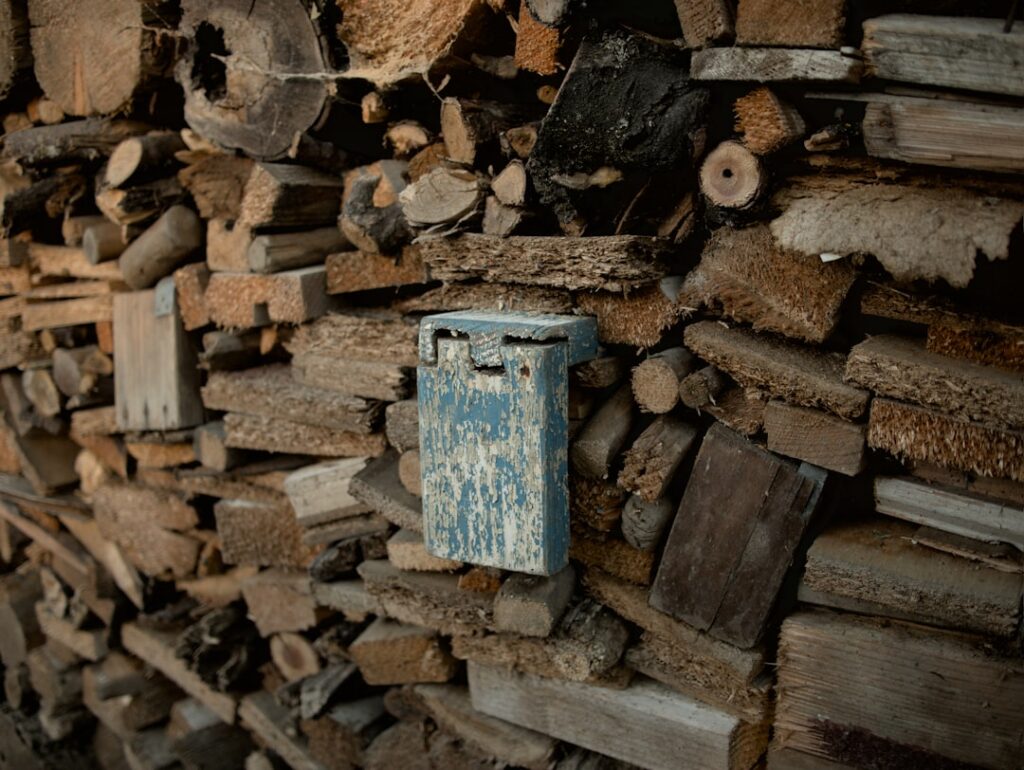
A moisture meter for firewood is the single most useful tool a wood-cutter, gatherer, or stove user can keep on the wood rack. Knowing exactly when wood has dried to the 15-20 percent range that the EPA’s Burn Wise program recommends turns hopeful guesswork into a confident answer before the wood goes in the stove. This guide focuses on the gathering and storage side — which species dry fast versus slow, how to stack and cover properly, how to read the meter on different wood, and when wood is actually ready to burn. It pairs with our broader firewood-stove buyer guide and serves wood-cutters, rural homeowners, and anyone gathering their own fuel. The information here summarizes EPA Burn Wise guidance, NFPA chimney-safety standards, and published industry data current as of 2026.
Part of our Moisture Meters & Water Damage Detection guide — start there for the full picture →
Why fresh-cut wood is so wet
Living trees carry significant moisture in their cellular structure and in sap channels. Felled green wood typically tests between 35 and 80 percent moisture content depending on species and the season of cutting. Wood cut in late winter or early spring (before sap rise) tends to start somewhat drier than wood cut in late summer when the tree is actively transpiring. The first few months after splitting see the fastest moisture loss; equilibrium with ambient conditions takes longer and depends heavily on climate, stack configuration, and species density.
Splitting accelerates drying dramatically by exposing the wood’s interior to airflow. A round of unsplit wood can sit for years without dropping below 30 percent moisture content; the same wood split into stove-sized pieces reaches the burnable range in a fraction of that time. For more depth on how the meter itself works on firewood, our companion guide to firewood moisture meters covers reading procedure and species correction.
Species that dry fast
Softwoods generally dry fastest. Pine, fir, spruce, lodgepole, and ponderosa reach the 20-percent threshold in 6 to 12 months under good drying conditions. Soft hardwoods — aspen, cottonwood, poplar, alder, birch — dry in roughly 12 months. These species also have lower density and lower BTU content per cord than dense hardwoods, so they burn fast but produce less total heat. Many stove users keep a mix: softwoods or soft hardwoods for shoulder seasons and quick fires, dense hardwoods for the coldest winter nights.
The fast-drying species are forgiving for the homeowner who underestimates how long the wood needs to season. If you cut a load of pine or aspen in early summer, it’s typically usable by late winter of the same year. The same load of oak or hard maple would still be too wet to burn well.
Species that dry slowly
Dense hardwoods take significantly longer. Oak — especially red oak and white oak — is famously slow, often requiring 18 to 36 months to drop below 20 percent moisture content. Hard maple, hickory, beech, ash, and black locust all fall in the slow-drying category. The cellular structure is denser and the moisture pathways are longer; even split rounds need extended time. Many seasoned-wood vendors specifically advertise “two-year oak” because one year of drying often isn’t enough for confident burning.
The trade-off is heat. Dense hardwoods produce significantly more BTU per cord than softwoods — sometimes nearly twice as much — which is why patient stove users cut and stack hardwoods on a multi-year cycle so there’s always a year-old or older supply ready to burn. A meter check at the end of each season confirms which sections of the stack are ready and which need more time.
The gathering and cutting timeline
Plan backwards from the heating season. For softwoods, wood cut and split by early summer is generally ready by the same heating season. For mid-density hardwoods (cherry, ash, maple), wood cut in spring and split immediately is ready the following heating season — about 12 to 18 months out. For dense hardwoods, work two years ahead: wood cut and split in spring of this year is targeted for the heating season two winters from now. The meter is the way to verify whether the planned timeline actually worked.
Cutting timing has secondary effects. Wood cut in late fall and winter (after the tree has shed its leaves and sap has receded) tends to start somewhat drier than wood cut in summer. Winter cutting is also easier in many regions because the ground is frozen, equipment moves better, and the cut wood spends the longest possible time exposed to drying conditions before the next heating season.
Stack configuration that produces dry wood
Three rules drive successful seasoning: keep the wood off the ground, expose it to air on multiple sides, and cover only the top. Off the ground means pallets, 2×4 sleepers, scrap lumber, or concrete blocks under the bottom row — anything that prevents ground moisture from wicking up into the lowest rounds. Multiple sides exposed means stack in single rows with at least a few feet of space between rows for airflow, or use a two-row stack with a gap between the rows. Covered top only means a tarp or metal roof that sheds rain but leaves the sides open.
Sun exposure helps. South-facing stack locations dry faster than shaded ones. Wind exposure helps further — even modest air movement through the spaces between rounds accelerates moisture loss. Avoid stacking against a building wall or fence that blocks airflow on one side. Avoid wrapping the whole stack in a tarp — that traps moisture and dramatically slows drying.
The two-stage approach
Many experienced stove users use a two-stage system. Stage one: bulk seasoning in an outdoor stack for the species-appropriate timeline. Stage two: final-stage drying of a few days’ supply on a covered porch or in a wood shed near the house. The second stage finishes off any surface moisture from recent rain or snow and ensures the wood entering the stove is at its driest possible state.
Measuring across the stack
One reading from one piece doesn’t characterize the whole stack. Different positions dry at different rates: top-row pieces (most sun exposure) dry faster than middle pieces (sheltered by surrounding wood), perimeter pieces dry faster than interior, sun-side faces dry faster than shade-side. Sample across the stack — top, middle, bottom; perimeter and interior; pull a few rounds out, split fresh, and read the inside face.
Treat the highest readings as the working number for that stack section. If the wet readings exceed 25 percent and the dry readings are at 18 percent, the stack is mixed — some pieces are ready, others need more time. Sort accordingly: burn the dry pieces first, leave the wetter ones for additional drying.
How to know wood is “ready”
The single best indicator is a meter reading. Visual and tactile signs help confirm: dry firewood has checks (cracks) on the end grain that radiate from the center, the bark loosens or falls off with handling, the wood is noticeably lighter than fresh-cut, and two pieces clapped together produce a hollow ringing sound rather than a dull thud. Wet wood is heavier, bark stays tight, end grain looks fresh, and clapped pieces produce a thud.
The meter resolves any ambiguity. Below 20 percent on a freshly split inside face means stove-ready. 20-25 percent means usable but not ideal. Above 25 percent means wait. The EPA Burn Wise program’s target range is 15-20 percent, and most home stove users target the upper end of that range (18-20 percent) for steady, controllable burns rather than fast-overheating very dry wood.
Storage and pest considerations
Seasoned wood stacks attract insects (carpenter ants, termites in some regions, beetles, wasps), small rodents, and snakes in some climates. Keep the bulk stack at least 20 feet from the house to limit pest migration into the structure. The small near-house supply for final-stage drying turns over quickly enough that pest concerns are minimal, but inspect each load before bringing it inside.
For broader stove and chimney safety considerations, NFPA chimney-safety guidance recommends annual chimney inspection and sweeping for active wood-burning systems. Burning consistently dry wood reduces creosote buildup; burning wet wood accelerates it. For deeper detail on meter selection and reading technique, see our home inspection tools pillar.
Equipment for serious firewood gathering
Beyond the moisture meter, the core firewood toolkit includes a chainsaw appropriate to the wood diameter, a splitting maul or hydraulic splitter for larger volumes, a peavey or cant hook for moving and turning rounds, a sturdy wheelbarrow or cart, and stacking-rack systems or scrap lumber for bottom-row support. Many homeowners cutting their own wood also invest in a basic two-cord covered storage shed near the house for the working supply.
For wood-stove users who buy seasoned wood rather than cutting their own, the moisture meter is even more important. Vendor claims of “seasoned” wood vary widely — some deliver wood at 15 percent MC, others deliver wood at 28 percent MC under the same label. Checking on delivery with the meter, ideally before payment, protects against the variability.
References
- Burn Wise Program — EPA
- Chimney Safety Information — NFPA
- Heating Safety (gas and fuel-burning equipment) — National Fire Protection Association
- Wood-Burning Stoves Inspection Guide — InterNACHI
Frequently asked questions
How long does firewood need to season?
Softwoods generally reach the 20-percent threshold in 6-12 months after splitting. Mid-density hardwoods take 12-18 months. Dense hardwoods like oak often need 18-36 months. Climate, stack configuration, and split size affect drying time.
What's the best wood for fast drying?
Pine, aspen, cottonwood, poplar, and birch dry fastest among common firewood species. Softwoods can be ready in a single season under good conditions; soft hardwoods typically need 12 months.
Should I cover my whole stack with a tarp?
No. Cover only the top to shed rain. Tarping the sides traps moisture and dramatically slows drying. Leave the sides exposed to airflow.
Can I tell wood is dry without a meter?
Dry wood shows end-grain checking, has loose bark, is noticeably lighter than fresh-cut, and produces a hollow ringing sound when two pieces are clapped together. The meter confirms what these signs suggest and removes ambiguity in borderline cases.
Moisture meters for home inspection
Pin meters read deep but leave marks; pinless meters scan surfaces non-destructively. Many inspectors carry both.
| Product | Why | Buy |
|---|---|---|
 Klein Tools ET140 Pinless Klein Tools ET140 Pinless | Non-destructive scanning; affordable. | Amazon — $49.14 |
 General Tools MMD4E General Tools MMD4E | Best-selling pin meter for drywall/wood. | Amazon — $39.98 |
 Lignomat Mini-Ligno Lignomat Mini-Ligno | Trusted by woodworkers; species-calibrated. | Amazon — $99.00 |