Fire Wood Moisture Meter: A Gathering and Storage Guide
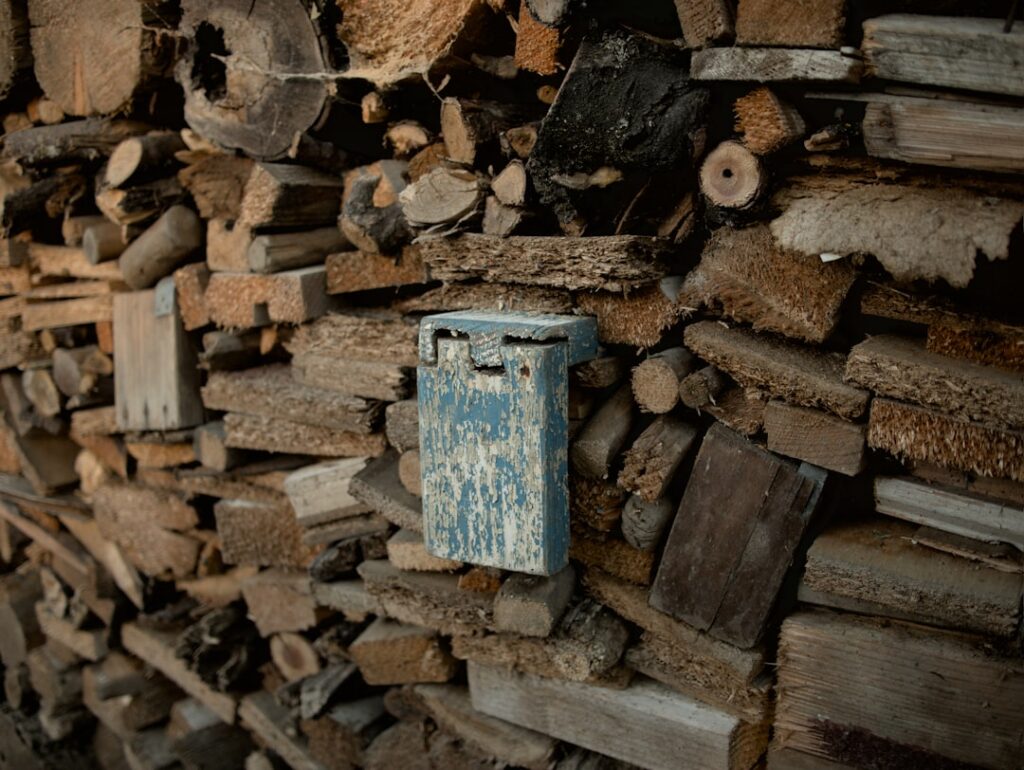
A fire wood moisture meter earns its keep less on the day you buy a stove and more across the months between cutting a green log and dropping it into the firebox. This guide focuses on the gathering, splitting, stacking, and storage side of firewood preparation — the practical work that determines whether your wood reaches the burn-ready 15-to-20-percent moisture range or sits at 30 percent come November. Information below reflects EPA Burn Wise, U.S. Department of Energy, and U.S. Forest Service guidance current as of 2026. Verify local fire-restriction rules with your county and state forestry agency before any cutting on public or private land.
Why drying time differs so much by species
Wood density and cell structure drive drying time. Oak is roughly twice as dense as pine and has tighter ray cells that release moisture slowly. The U.S. Department of Energy and U.S. Forest Service Forest Products Laboratory document seasoning times that vary from 6 to 24 months across common North American species. Splitting size, stack ventilation, ambient humidity, and seasonal temperature all modify those baselines.
A rough field guide: white oak, red oak, hickory, locust, and elm need 18 to 24 months. Hard maple, ash, beech, and birch need 9 to 18 months. Soft maple, alder, and most fruitwoods need 6 to 12 months. Pine, spruce, fir, and other softwoods reach burn-ready moisture in 4 to 10 months. Lodgepole pine common in Front Range and mountain communities tends to season faster than the same species at sea level due to Colorado’s low ambient humidity. Readers can review the broader inspection toolkit at the home inspection tools hub for context on moisture meters in other applications.
Splitting size: smaller splits dry faster
A 4-inch split dries roughly four times faster than the same wood left as a 12-inch round. The wood loses moisture primarily through end grain and split faces, not through bark. A round log with intact bark on all sides dries glacially. Splitting opens up new evaporative surface area and breaks the wood into pieces small enough for air to circulate around individual pieces in the stack.
The right split size is a compromise between drying speed and fire performance. Pieces too small burn fast and require frequent reloading. Pieces too large take too long to season and start fires slowly. For most residential wood stoves, the practical range is 3 to 6 inches across the largest face, with length matched to the firebox (typically 16 to 22 inches). Splitting in the spring for a fall burn season makes sense for softer species; harder species need a year or two longer.
Stacking for airflow
The single biggest variable in field-dried firewood is airflow through the stack. A pile heaped on the ground without structure traps moisture and rots from the bottom up. A properly stacked rick lifted off the ground with airflow on all sides dries dramatically faster.
Three common stack designs work well. The classic linear rick uses two stakes at each end with the wood stacked between them, bark side up on the top course to shed rain. The shaker round (Holzhausen) stacks wood in a 6-to-8-foot circle with the pieces sloped inward and a chimney of vertical pieces in the center. The cribbed end-stack uses crisscrossed pieces at each end for stability without stakes. All three lift the wood off bare ground using pallets, 2×4 sleepers, or scrap lumber.
Top cover, not full wrap
Cover only the top of the stack to shed rain and snow. Wrapping the sides traps moisture inside the stack and slows drying dramatically. A simple tarp tied across the top with bricks or stones to weight the edges, or a corrugated metal sheet propped on the top course, works well. Some owners build dedicated woodshed roofs with open sides — ideal for serious heating operations.
Location, sun, and wind
Site the stack where sun and prevailing wind both reach it. South-facing exposure in Colorado adds meaningful drying speed compared to a north-facing alley. Distance from the house matters too — firewood stacks attract carpenter ants, termites, and rodents that may eventually try to enter the home. Most building codes and pest-control guidance recommend keeping firewood at least 20 to 30 feet from the house and elevated above grade.
Front Range homeowners with limited yard space can compromise by using a dedicated outdoor wood rack 20 feet from the house plus a small near-door rack of one to two weeks’ supply on a covered porch. The near-door rack stays dry between trips outside in winter. The main rack stays away from the structure for pest reasons.
Using the meter through the seasoning cycle
A fire wood moisture meter earns its place across the entire seasoning timeline. At the green stage (just cut, just split), readings often run 35 to 50 percent depending on species and season. After three months on a well-ventilated rack, softwoods may already be at 20 to 25 percent. After six months, soft hardwoods like ash and maple often hit 20 percent. After 18 to 24 months, oak and hickory cross the 20-percent line.
To use the meter, split a representative log fresh, push the pins into the freshly exposed inner face along the grain, and record the reading. Take three to five readings across different logs in the stack and average them. Surface readings on already-split wood that has weathered understate true moisture content because the outer layer dries first. The what does a moisture meter do guide explains the measurement principle in more depth.
Storage protection and insect management
Stored firewood attracts insects and small mammals looking for shelter. Termites, carpenter ants, beetles, and field mice find well-ventilated stacks attractive. Do not bring firewood into the house until you intend to burn it within a week or two — indoor warmth wakes up dormant insects. Avoid stacking firewood directly against the house siding for the same reason, plus the moisture transfer between firewood and siding.
Never treat firewood with insecticide. The chemicals release during combustion and create air-quality problems. EPA Burn Wise guidance specifically warns against burning treated, painted, or chemically contaminated wood. If insects are a major issue, switch storage location, reduce stack-to-house distance violations, and inspect each piece before bringing it indoors.
What to do when seasoning runs out of time
Sometimes the math does not work — the wood was cut late, the winter arrived early, or a delivery vendor sold “seasoned” wood that turned out to be greener than promised. Three coping strategies help. First, prioritize the driest pieces (often the smallest splits and the species closest to burn-ready) for the cold heart of the season. Second, increase indoor pre-warming time — bring two days’ supply onto a covered porch or breezeway 24 to 48 hours before burning. Third, run the stove at higher draft settings to compensate for the additional water content.
Reduce wet-wood use during overnight burns when the stove runs at low draft for hours. The combination of low draft and wet fuel maximizes creosote production. Save wet wood for active daytime fires where higher draft and frequent reloads keep the flue hot. Consider supplementing with manufactured fire logs or properly dried pellets if available.
Tool care: meter pins, batteries, calibration
A firewood moisture meter handles rough conditions but benefits from basic care. Replace the pins when they bend or corrode from repeated insertion into knotty oak or hickory. Most consumer meters use generic replacement pins available for a few dollars. Replace the battery before each season or when readings start drifting. Store the meter indoors in a kitchen drawer or workshop — subzero overnight temperatures in an unheated shed shorten battery life.
Periodic verification against a known reference helps. Some owners cross-check the meter against a piece of kiln-dried lumber known to be at 8 to 10 percent moisture. The reading should fall in that range. If it does not, the meter may need replacement. Cheap meters under $20 are essentially disposable; mid-range meters around $40 last several years of regular use.
References
- Burn Wise Wood-Burning Best Practices — U.S. Environmental Protection Agency
- Wood and Pellet Heating — U.S. Department of Energy
- NFPA 211 Standard for Chimneys, Fireplaces, Vents, and Solid-Fuel-Burning Appliances — National Fire Protection Association
- Residential Wood Heater Standards — U.S. Environmental Protection Agency
- Wood Burning Stoves Inspection Guide — InterNACHI
Moisture meters for home inspection
Pin meters read deep but leave marks; pinless meters scan surfaces non-destructively. Many inspectors carry both.
| Product | Why | Buy |
|---|---|---|
 Klein Tools ET140 Pinless Klein Tools ET140 Pinless | Non-destructive scanning; affordable. | Amazon — $49.97 |
 General Tools MMD4E General Tools MMD4E | Best-selling pin meter for drywall/wood. | Amazon — $37.70 |
 Lignomat Mini-Ligno Lignomat Mini-Ligno | Trusted by woodworkers; species-calibrated. | Amazon — $115.00 |