Mildew Products: How to Choose and Use Them

Mildew is the flat, surface-level growth that shows up as gray or white patches on shower tiles, window frames, and damp fabrics. Reach for one of the many mildew products on the market and you can usually clean it off, but choosing and using them well takes a little understanding of what mildew is and where it grows. This guide breaks down the product categories and gives surface-by-surface guidance. It summarizes EPA and CDC guidance current as of 2026 and is informational only; consult your physician about health symptoms and a certified professional for large or recurring growth.
Part of our Mold Around the Home guide — start there for the full picture →
Is this mold, asbestos, or water damage? Get a free instant screen
Upload a clear photo of the suspect area. You'll get an instant AI screening opinion and what to do next. This is screening guidance, not a professional determination.
Screening guidance only. AI can be wrong. Confirm asbestos, mold type, or lead with lab testing or a licensed professional before acting.
What mildew is and how it differs from mold
Mildew is a common term for certain flat, powdery surface molds. The CDC and EPA treat mildew as a form of mold rather than a separate organism, and the cleanup principles are the same. Mildew tends to stay on the surface as a thin film, often white, gray, or yellowish, while heavier mold can be fuzzy, raised, and darker. Both need moisture, and both respond to the same core strategy: clean the growth and control the dampness.
Categories of mildew products
Mildew products fall into a few practical groups, each suited to different jobs.
Surface cleaners and removers
Spray-on cleaners formulated for mildew lift surface growth and staining from tile, grout, and glass. Many use bleach or peroxide as the active ingredient. They are the everyday workhorses for bathroom and kitchen mildew.
Mildew stain removers
Some products focus on bleaching out the stain mildew leaves behind in grout and caulk after the growth itself is gone. These help restore appearance once the area is clean and dry.
Inhibitors and resistant coatings
Mildew-resistant paints, sealers, and caulks contain additives that slow regrowth on treated surfaces. They are useful in chronically damp areas like bathrooms, though they work only as long as moisture stays controlled.
Protective gear
Gloves, eye protection, and an N95 respirator are part of any mildew kit. Even surface cleanup releases spores and exposes you to cleaning chemicals. Our guide to mold cleaning supplies covers the full protective setup.
Best Mold and Mildew Remover: our top 3 picks
| Product | Best for | Key features | Price | Buy |
|---|---|---|---|---|
| RMR-86 Instant Stain Remover | Fast mildew stain removal |
| — | Buy now →Check current price |
| Concrobium Mold Control | Mold control and prevention |
| — | Buy now →Check current price |
| 30 SECONDS Pro | Indoor and outdoor stains |
| $17.28as of Nov 5, 2026 6:40 am GMT+0000 | Buy now →Check current price |


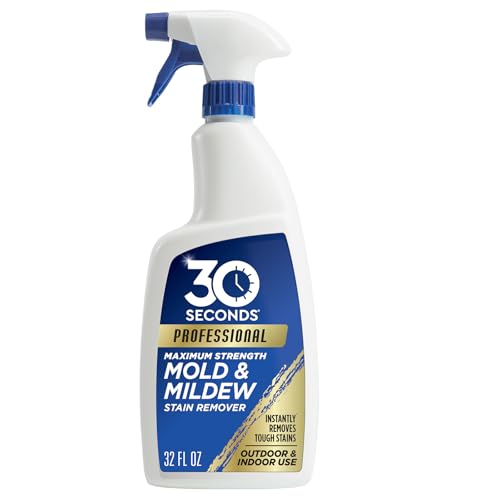
Prices are Amazon’s listed prices as of the time shown and change often; check Amazon for today’s price. As an Amazon Associate we earn from qualifying purchases.
Active ingredients to look for
The label tells you how a mildew product works. Bleach removes stains and kills surface growth on hard, non-porous surfaces. Hydrogen peroxide is a milder alternative that still tackles mildew. Quaternary ammonium compounds are common in commercial cleaners and leave a residual film. Vinegar and borax handle light, routine maintenance. The EPA notes that detergent and water alone are often enough, so the strongest chemistry is not always necessary.
Surface-by-surface guidance
Mildew behaves differently on different materials, so match the product and method to the surface.
Tile and grout
Apply a bleach- or peroxide-based cleaner, let it sit for the label’s contact time, scrub the grout with a stiff brush, rinse, and dry. Sealing grout afterward slows future mildew.
Caulk
Mildew often roots into old caulk and resists cleaning. If a remover does not restore it, the most reliable fix is to cut out the moldy caulk and replace it with a mildew-resistant product.
Glass and metal fixtures
Non-porous glass and metal wipe clean easily with most mildew cleaners. Dry them after each use to discourage regrowth.
Fabric and shower curtains
Washable fabrics can often be laundered with an appropriate additive. Heavily mildewed, non-washable items may need to be discarded, since the growth penetrates the fibers.
Painted walls and ceilings
Clean surface mildew gently, dry thoroughly, and consider repainting with mildew-resistant paint only after the area is clean and the moisture is fixed. Painting over active mildew traps it.
Using mildew products safely
Ventilate the space with a fan or open window. Wear gloves and eye protection, and add a respirator for larger jobs. Follow label directions for dilution and contact time. Never mix products, particularly bleach and ammonia, which react to form toxic gas. Rinse where directed, then dry the surface completely, because lingering dampness lets mildew return quickly.
The limit of any mildew product
Every product in this category cleans the surface but does not fix the moisture that grew the mildew. The EPA is clear that moisture control is the key to controlling mold and mildew. If a bathroom ceiling keeps mildewing, the answer is better ventilation, not a stronger spray. Our checklist to prevent mold and mildew in the house covers the humidity and airflow steps that make cleanup last.
Preventing mildew between cleanings
Keep humidity between 30 and 50 percent. Run the bathroom exhaust fan during and after showers. Squeegee shower walls and glass. Wash and dry bath mats and curtains regularly. Wipe down window sills where condensation collects. These small habits dramatically reduce how often you need a mildew product at all.
Choosing a product by room
Matching the product to the room makes mildew control more efficient.
Bathroom products
Bathrooms need cleaners that handle grout, caulk, and glass, plus a mildew-resistant caulk and paint for chronic spots. A daily shower spray and a squeegee reduce how often you need a heavier product.
Kitchen products
Kitchens benefit from food-safe-conscious cleaners around prep areas, with attention to window sills and the seals around sinks. Wipe and dry surfaces after use to keep mildew from starting.
Basement and closet products
These low-airflow spaces respond best to moisture absorbers and a dehumidifier alongside surface cleaners. Controlling the damp air does more here than any single spray.
Reading mildew product labels
The label reveals the active ingredient, the surfaces it suits, and the contact time it needs. Look for whether the product is meant for porous or non-porous materials, since a surface cleaner will not fix mildew rooted in grout or fabric. Note any warnings against mixing, especially bleach with ammonia, and follow dilution directions for concentrates. The EPA reminds homeowners that detergent and water are often enough, so the most aggressive product is not always the right call.
The link between mildew and humidity
Mildew is a humidity problem first and a cleaning problem second. It thrives where damp air lingers, on shower walls, around windows, and in still closets. No product overrides chronic humidity. Keeping relative humidity between 30 and 50 percent, ventilating wet rooms, and drying surfaces after use removes the conditions mildew needs. Our explainer on how water drives mold and mildew details why moisture control is the durable fix.
Front Range note
Colorado’s dry outdoor air makes ventilation a strong ally against mildew, since opening a window quickly lowers indoor humidity. The local trouble spots are bathrooms without good fans and finished basements where indoor moisture collects. Pairing a mildew product with better airflow keeps these areas clear far longer than cleaning alone.
Matching the product to the mildew’s severity
Mildew ranges from a faint surface haze to thick, set-in staining, and the right product scales with it. Light, fresh mildew often yields to detergent and water or a mild vinegar solution, which the EPA notes is frequently enough. Moderate growth on grout or tile calls for a dedicated bleach- or peroxide-based cleaner with adequate contact time. Heavy, established staining in old grout or caulk may resist any cleaner and require cutting out and replacing the material. Matching product strength to severity avoids both wasted effort on stubborn growth and overkill on a light film.
When to stop cleaning and replace
Some surfaces reach a point where replacement beats cleaning. Caulk darkened throughout, grout that stays stained after repeated treatment, and porous items saturated with growth are usually better replaced. Recognizing this saves the frustration of scrubbing something that will never come fully clean.
When to bring in a professional
If growth spreads beyond about ten square feet, keeps returning despite cleaning and ventilation, or appears alongside a musty smell with no visible source, the problem may be deeper than surface mildew. A qualified inspector can find hidden moisture and confirm whether you are dealing with simple mildew or more extensive mold. The mold inspection and testing hub explains when that step is worthwhile.
Preventive products that reduce future mildew
Beyond removers, a class of products helps keep mildew from returning. Mildew-resistant paint contains additives that slow growth on treated walls and ceilings. Mildew-resistant caulk and sealants resist the dark staining that plagues bathroom seams. Daily shower sprays leave a film that discourages growth between deep cleanings. Moisture absorbers reduce humidity in closets and small enclosed spaces. None of these substitutes for controlling the underlying moisture, but as supplements they extend the time between cleanings and make chronically damp areas easier to manage.
Using mildew products as part of a routine
Mildew control works best as a light, regular habit rather than an occasional battle. A quick wipe and squeegee after showers, a weekly pass with a mildew cleaner on grout and seals, and seasonal attention to closets and basements keep mildew from ever gaining ground. This routine uses less product and less effort than letting growth build up and then attacking it. Pair the habit with humidity control, and most homes need only mild products applied occasionally rather than heavy cleaners used in frustration.
What mildew products cannot do
It is worth being clear about the limits shared by every product in this category. They clean and sometimes resist surface growth, but they do not lower humidity, fix leaks, or improve ventilation. They cannot reach mildew rooted deep in old caulk or fabric, which usually must be replaced or discarded. And they cannot solve a hidden moisture problem behind a wall. Recognizing these boundaries keeps you from buying stronger and stronger products in search of a fix that only moisture control can provide.
How to evaluate a new mildew product
With so many options, a quick evaluation helps you choose well. Check the active ingredient to know how it works and what not to mix it with. Confirm it suits your surface, porous or non-porous, since a surface cleaner will not fix mildew rooted in grout or fabric. Note the format, with gels and foams better for vertical grout and sprays for flat glass. Consider odor and any sensitivities in the home. Reading these few details, rather than the front-label promises, leads to a product that actually fits the job.
Mildew control on a budget
Effective mildew control does not require expensive products. The EPA notes detergent and water often suffice, and distilled white vinegar handles light routine growth cheaply. A squeegee, a stiff brush, and good ventilation cost little and prevent much of the growth that would otherwise need treating. Reserve pricier specialty cleaners for stubborn, set-in staining. The biggest budget-friendly win is humidity control, since keeping surfaces dry reduces how often you need any product at all, mild or premium.
Frequently asked questions about mildew products
Homeowners often ask whether mildew products kill mold, whether they prevent regrowth, and whether natural options work. Because mildew is a form of surface mold, these products do address it. Prevention claims hold only while the surface stays dry. Natural options like vinegar and borax work on light growth but are slower than bleach or peroxide on heavy staining. As with all these products, the answers return to moisture: control the dampness and any reasonable product keeps mildew in check.
References
- Mold and Mildew Cleanup in Your Home — U.S. Environmental Protection Agency
- About Mold and Mildew — Centers for Disease Control and Prevention
- A Brief Guide to Mold, Moisture, and Your Home — U.S. Environmental Protection Agency
Frequently asked questions
Are mildew and mold different?
The EPA and CDC treat mildew as a form of mold. Mildew is usually flat, powdery, and light-colored, while heavier mold can be fuzzy and dark. The cleanup approach is the same for both.
What is the best product for bathroom mildew?
Bleach- or peroxide-based cleaners work well on tile and grout. Detergent and water are often enough per the EPA. Whatever you use, dry the surface afterward and improve ventilation to stop regrowth.
Do mildew-resistant paints work?
They slow regrowth on treated surfaces but only while moisture stays controlled. Apply them after the area is clean and dry, never over active mildew, and pair them with good ventilation.
Why does mildew keep coming back?
Because the moisture that feeds it is still there. The EPA stresses moisture control as the key. Better ventilation, lower humidity, and prompt drying matter more than the product you choose.
Front Range homeowners whose mildew keeps returning can reach out through our contact page to connect with a vetted inspector who can pinpoint the moisture source.