Lead Testing in Clear Creek County, Colorado
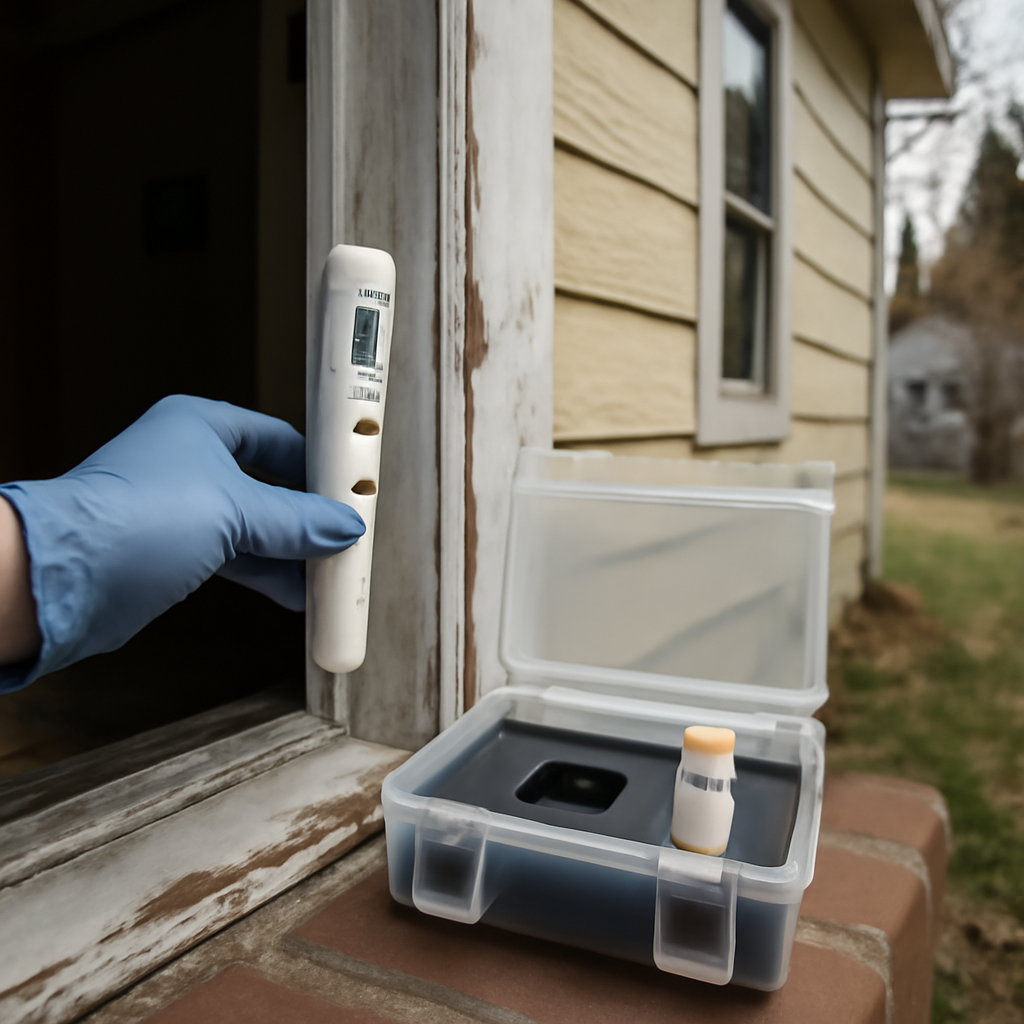
Lead testing clear creek county residents look into usually involves an old mining-town home with original paint, a cabin being readied for a young family, or a private well on a property near historic mine workings. Clear Creek County is a narrow I-70 mountain corridor west of Denver, rising from about 7,500 to over 10,000 feet, built around 1800s silver and gold mining towns whose housing is heavily pre-1978. This page is a county-level hub covering where lead shows up across Georgetown, Idaho Springs, Silver Plume, Empire, Dumont, Downieville, and Lawson, how testing works, local costs, and how to act. This summary reflects EPA, HUD, and CDC guidance current as of 2026; consult a certified professional for testing decisions and your physician for any health concerns.
Part of our Lead Paint & Lead Testing guide — start there for the full picture →
Asbestos or biohazard concern? Speak with a certified contractor.
📞 Call (877) 742-8496Lead testing in Clear Creek County: what to know
Lead testing identifies lead in the places it most threatens a household: paint and the dust it sheds, soil around the foundation and yard, and drinking water from plumbing and fittings. Age is the single biggest predictor. Homes built before 1978, when lead in residential paint was banned, carry the highest likelihood of lead-based paint, and the county’s deep stock of 1800s mining-era housing falls well within that window, often with many layers of old paint.
For paint and dust, a certified risk assessor uses an XRF analyzer that reads lead content through layers without damaging the surface, plus dust-wipe samples sent to a lab. For water, a first-draw sample captures what has been sitting in the pipes overnight. These methods follow EPA and HUD protocols, so the result holds up whether it informs a renovation, a sale, or a worry about a young child. For the broader picture of how lead and asbestos hide in older housing, our pre-1978 housing hazard guide walks through the fundamentals.
Lead is invisible and cannot be judged by appearance. Intact paint on a well-kept Georgetown home may pose little immediate risk, while the same paint on a window jamb sheds fine dust every time the sash moves. Testing identifies which surfaces are actually hazardous rather than leaving a family to guess from the home’s age alone, which matters in a county where nearly every historic home predates the paint ban.
Why Clear Creek County homes need lead testing
Housing era is the overwhelming driver. The county’s mining towns date to the 1800s, so homes in Georgetown’s historic landmark district, Silver Plume, and old Idaho Springs commonly carry many layers of old paint, frequently including lead-based coats under newer ones. When those layers are disturbed by a remodel, a window replacement, or simple wear on a door frame or stair rail, they release lead dust that settles where children crawl and play.
Additions and weathering spread it. These homes have been expanded and re-painted across more than a century, layering surfaces and leaving exterior paint to weather and shed lead into the surrounding soil. On steep mountain lots and around old porches and outbuildings, weathered exterior paint can contaminate the limited yard space where children play, which makes soil sampling part of a complete assessment on an older property.
The mining setting adds a soil dimension. Clear Creek County’s landscape includes historic mine tailings, and while lead in homes comes mainly from old paint and plumbing, properties near former workings sit in a setting where soil contamination history is worth understanding. A thorough assessment near such areas considers soil alongside paint and water, giving a family the full exposure picture.
Water is the third path, and wells complicate it. Many homes in Empire, Dumont, and the canyon communities draw from private wells, and lead in drinking water rarely comes from the source; it comes from older household plumbing, pre-1986 lead solder, and brass fittings that leach lead. Because private wells are not covered by routine utility testing, a first-draw water test is the only way to know, and it is worth doing on any older mountain home.
What a Clear Creek County lead assessment covers
A thorough assessment begins with the home’s age and history, then targets the surfaces and pathways most likely to be hazardous. The assessor prioritizes friction and impact surfaces, windows, doors, stair rails, and porch components, because those wear and shed dust even when the paint looks intact.
Paint, dust, and soil
An XRF analyzer reads paint lead content on walls, trim, and exterior siding without scraping, layer by layer. Dust-wipe samples from floors and window sills measure what has already settled, the form most readily ingested by a crawling child. On a steep-lot property or one near old mine workings, soil samples near the foundation and play areas check whether weathered exterior paint or historic contamination has reached the yard.
Drinking water on wells and town supply
A first-draw water sample, collected after water has sat overnight, captures the worst-case lead level from plumbing and fittings. This matters most for the county’s many private-well homes, where no utility tests the tap, but it applies to older Georgetown and Idaho Springs homes on town water too, since the lead comes from the home’s own pipes rather than the supply.
Lead testing cost in Clear Creek County
A focused lead paint test on a few suspect surfaces in the Clear Creek County market typically runs about $250 to $500, with mountain travel nudging the range higher. A full lead risk assessment covering paint, dust wipes, and soil generally falls between $400 and $800 depending on home size and the number of samples, and a standalone first-draw water lead test adds roughly $50 to $150 in lab fees.
Historic homes with many layered surfaces, steep-lot properties, and remote cabins with difficult access sit toward the higher end because there is more to sample and more travel involved. Against the cost of a child’s elevated blood-lead level, the assessment is modest, and it pinpoints which surfaces need attention rather than forcing a costly whole-house abatement on guesswork.
Colorado regulations and disclosure
Federal law drives most lead rules. Under the EPA Renovation, Repair and Painting (RRP) Rule, contractors disturbing painted surfaces in pre-1978 homes must be certified and follow lead-safe work practices, which is worth confirming before any remodel on a historic Georgetown or Idaho Springs home. The federal Lead Disclosure Rule requires sellers and landlords of pre-1978 housing to disclose known lead-based paint and provide the EPA’s lead pamphlet.
Colorado’s Seller’s Property Disclosure also asks sellers to report known lead and environmental hazards, so a documented assessment protects both sides of a Clear Creek County sale. Because the state does not separately license lead inspectors, look for EPA or HUD recognized certification and a written report with XRF readings, lab results, and photographs rather than a verbal opinion.
Communities and areas served across Clear Creek County
Lead concerns track the county’s historic housing. Georgetown, the county seat and a Victorian-era landmark district, and Silver Plume hold some of the oldest, most paint-layered homes in the county. Idaho Springs, the largest town, mixes 1800s housing with newer construction, so testing follows the specific home’s build era. Empire, Dumont, Downieville, and Lawson add older homes and cabins on private wells, where both deteriorated paint and well-plumbing lead deserve attention.
For related needs on the same homes, our pages on asbestos testing in Clear Creek County and home inspection in Clear Creek County cover the companion pre-1978 hazard and the broader condition assessment. Coverage commonly extends down I-70 toward neighboring Jefferson County and mountain communities like Conifer, which share Clear Creek’s older mountain housing and well patterns.
Lead and children’s health in the mountains
The reason lead testing carries such weight is the health stakes for young children. Lead is a neurotoxin, and the CDC is clear that no safe blood-lead level in children has been identified. Even low-level exposure is associated with learning and behavioral effects, and because children absorb lead more readily than adults and spend time on floors where dust settles, an old mining-town home with deteriorating paint is a real and preventable risk to the youngest residents.
In a Clear Creek County home, the exposure paths can stack up in ways that are easy to miss. A toddler crawling near a window with worn paint, playing in soil by a weathered porch or old outbuilding, or drinking water drawn from a well through old plumbing can encounter lead from several directions at once. An assessment that maps each path gives a family a clear plan, a lead-safe window replacement, a soil barrier in a play area, or a plumbing fix, rather than worrying about a hazard they cannot see in a beloved historic home.
Renovation timing and the mining-town soil question
Lead testing is timely in Clear Creek County precisely because owners are steadily restoring old mining-town homes. Bringing a Georgetown Victorian or a Silver Plume cottage up to modern comfort means stripping and repainting trim, replacing single-pane windows, and opening walls, and each of those tasks disturbs the many layers of old paint these century-old homes carry. The fine dust that results settles where it is hardest to see and easiest for a child to ingest. Testing before the work identifies which surfaces are lead-bearing, so a contractor can apply lead-safe methods exactly where they are needed and proceed normally on the rest.
The mining landscape raises a soil question a flatland home does not face. Clear Creek County’s terrain includes historic mine workings and tailings, and while the lead in a home comes mainly from old paint and plumbing, properties near former mine sites sit in a setting where soil contamination history is worth understanding. On the limited, often steep yard space of a mountain lot, where weathered exterior paint from porches and outbuildings also sheds into the ground, soil sampling near play areas gives a family the full exposure picture rather than just the indoor one.
Water completes the map on well-served homes. Many properties in Empire, Dumont, and the canyon communities draw from private wells, and lead at the tap typically comes from the home’s own older plumbing, pre-1986 solder, and brass fittings rather than the water source. Because no utility tests a private well, a first-draw water sample is the only way a family learns whether their drinking water carries lead, and it is an inexpensive addition that closes the last gap in a complete assessment of a historic mountain home.
How to choose a Clear Creek County lead testing provider
Ask whether the provider is EPA or HUD certified for lead risk assessment and uses an XRF analyzer plus lab-analyzed dust and water samples rather than consumer swab kits, which can miss lead under upper layers, a real limitation in homes with a century of paint. A provider who understands that the county’s risk concentrates in pre-1978 mining-town homes and well-fed cabins, and who tests accordingly, knows the local housing.
For a purchase, bundling the lead assessment with a full inspection gives one coordinated report on the home’s hazards. A defensible written report, with XRF readings, dust-wipe and water lab results, and photographs, carries weight in a negotiation and gives the family a clear remediation roadmap rather than a vague warning about an old house.
References
- Protect your family from lead — U.S. Environmental Protection Agency
- Childhood lead poisoning prevention — Centers for Disease Control and Prevention
- Lead-safe housing and disclosure — U.S. Department of Housing and Urban Development
Frequently asked questions
Which Clear Creek County homes are most likely to have lead?
Homes built before 1978, which describes most of the county's 1800s mining-town stock in Georgetown, Silver Plume, and Idaho Springs. These homes often carry many layers of old paint, frequently including lead-based coats under newer ones.
Does lead in water matter for mountain wells here?
Yes. Lead in water usually comes from old household plumbing, pre-1986 solder, and brass fittings rather than the well source. Because private wells are not routinely tested by a utility, a first-draw water test is the only way to know.
How much does lead testing cost in Clear Creek County?
A focused paint test runs about $250 to $500, a full risk assessment with dust and soil sampling runs roughly $400 to $800, and a standalone water lead test adds about $50 to $150 in lab fees. Mountain access nudges the ranges higher.
Do I need a certified contractor to renovate a historic mountain home?
For pre-1978 homes, the EPA RRP Rule requires renovators who disturb paint to be certified and use lead-safe work practices, which prevents a remodel from spreading lead dust through a historic house.
A pre-1978 Clear Creek County home, whether a Georgetown Victorian or a canyon cabin on a well, deserves a clear answer on lead before a renovation or a young child moves in. To connect with a vetted local lead assessor, get in touch through our contact page.