Lead Paint Inspector Near Me: 2026 Service Guide
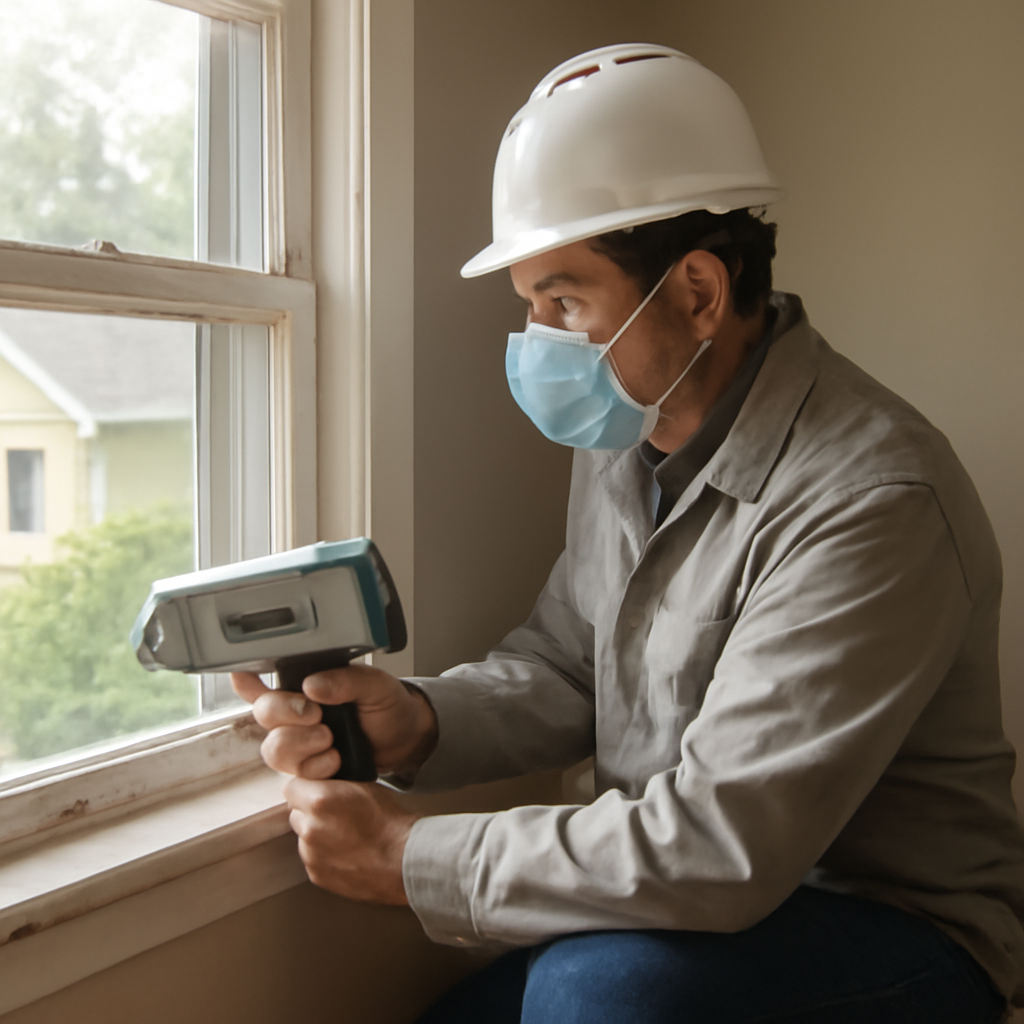
A search for “lead paint inspector near me” usually comes from a buyer, homeowner, or landlord who specifically wants paint-only testing rather than a broader lead hazard assessment that also covers water, soil, and dust. This guide summarizes EPA, HUD, and CDPHE guidance current as of 2026; consult an EPA-certified Lead Inspector or Risk Assessor for testing decisions and a physician for any health symptoms. The lead paint inspector role is distinct from a general lead inspector who tests multiple environmental media. This guide explains the Lead Inspector versus Risk Assessor credential distinction, the XRF and paint-chip testing methods specific to painted surfaces, where to find a credentialed provider, what to budget, and how to vet the inspector arriving at your door.
Part of our Lead Paint & Lead Testing guide — start there for the full picture →
Is this mold, asbestos, or water damage? Get a free instant screen
Upload a clear photo of the suspect area. You'll get an instant AI screening opinion and what to do next. This is screening guidance, not a professional determination.
Screening guidance only. AI can be wrong. Confirm asbestos, mold type, or lead with lab testing or a licensed professional before acting.
What a lead paint inspector specifically does
An EPA-certified Lead Inspector documents whether lead-based paint is present on specific surfaces in a property. The inspection produces a written report listing every painted surface tested, the test method (XRF or paint-chip lab analysis), the result in mg/cm² or weight percent, and a positive or negative determination per surface. The inspection does not determine whether the lead-based paint is currently a hazard (that is the Risk Assessor’s job, a higher credential).
The “lead paint inspector” framing distinguishes this service from a general lead inspector who may also test water, dust on surfaces, soil around the property, and the paint itself. General lead inspectors typically hold Risk Assessor credentials and address the full set of lead exposure pathways. Paint-only inspectors focus exclusively on painted surfaces and produce a narrower (and cheaper) report.
The choice between paint-only and full-hazard inspection depends on the homeowner’s purpose. Pre-purchase inspection of a pre-1978 home with no specific health concerns: paint-only is often sufficient. Investigation of a child’s elevated blood lead test: full Risk Assessment covering paint, dust, soil, and water is the right scope. Pre-renovation testing for RRP compliance: paint-only is sufficient. Landlord disclosure documentation: paint-only is usually sufficient unless tenants have raised specific health concerns. The asbestos and lead pillar guide covers the full pre-1978 housing framework.
EPA Lead Inspector vs Risk Assessor credentials
Federal rules define two related but distinct credentials. The Lead Inspector credential covers paint-only testing. Training is 24 hours of EPA-accredited initial coursework plus an 8-hour refresher annually. Lead Inspectors can perform XRF testing, collect paint-chip samples for lab analysis, and write inspection reports documenting lead-based paint presence on specific surfaces.
The Lead Risk Assessor credential is the higher tier. Risk Assessor training is 40 hours of initial coursework (24 hours Lead Inspector plus 16 additional hours for the Risk Assessor module) plus an 8-hour refresher annually. Risk Assessors can perform everything a Lead Inspector does, plus dust-wipe sampling, soil sampling, water sampling, and hazard determinations. The Risk Assessor’s report adds a hazard interpretation: which surfaces are currently a hazard (deteriorating, in friction surfaces, accessible to children) versus which are present but intact and stable.
Many providers hold both credentials. When the homeowner only needs paint-only inspection, a Lead Inspector credential is sufficient. When the scope expands to dust, soil, water, or hazard interpretation, the Risk Assessor credential is required. Always confirm the credential matches the work scope before booking.
How to find a credentialed paint inspector near you
The federal EPA certified individual finder at epa.gov/lead/find-lead-inspector-firm is the primary directory. The directory accepts a zip code and search radius and returns EPA-certified Lead Inspectors and Risk Assessors with active credentials. Each listing shows the firm name, contact information, certification number, and certification expiration date.
Colorado homeowners should also search the CDPHE lead program directory for state-certified providers. CDPHE adds Colorado-specific training and reporting requirements on top of the federal EPA program. A provider working in Colorado without CDPHE certification is operating outside state requirements regardless of federal status.
The typical search returns 15 to 30 EPA-certified Lead Inspectors within 25 miles of the Denver metro core. Smaller markets like Pueblo or Greeley may return 5 to 10 results. Always request three quotes before booking, and verify credentials through the public directory rather than relying on the firm’s marketing materials.
XRF versus paint-chip testing methods
The on-site testing method is typically X-Ray Fluorescence (XRF) analysis using a handheld instrument like the Niton XL2 or RMD LPA-1. XRF scans painted surfaces non-destructively and returns a milligram-per-square-centimeter (mg/cm²) reading. The EPA action threshold is 1.0 mg/cm². Surfaces at or above the threshold are classified as lead-based paint.
Paint-chip sampling is the alternative for surfaces XRF cannot reliably scan. Multiple paint layers on detail moldings, curved trim, peeling paint, and surfaces with high background interference all warrant paint-chip sampling. The inspector collects a small chip (about the size of a fingernail), seals it in a sample container, and ships it to an EPA-recognized laboratory. The lab returns the result in parts per million (ppm) or weight percent. The federal threshold for lead-based paint via lab testing is 0.5 percent by weight (5,000 ppm).
Most inspections combine both methods. XRF is the primary tool because it tests every painted surface in real time. Paint-chip sampling handles the surfaces XRF struggles with. A typical inspection collects 0 to 5 paint chips on a 2,000-square-foot single-family home, with the rest of the surfaces tested by XRF.
What the inspection actually looks like on-site
A typical paint-only inspection runs 90 minutes to 3 hours depending on property size and complexity. The inspector arrives with the XRF instrument, calibration check standards, paint-chip sampling kits, a property diagram template, personal protective equipment, and a written work order.
First, the inspector calibrates the XRF instrument against a known-positive and known-negative standard. The calibration check is documented in the report with date and time. Second, the inspector walks the property with the homeowner and identifies every painted surface to be tested: walls, ceilings, trim, doors, window frames, baseboards, stair risers, exterior siding, porch railings, and outbuildings. The homeowner can request specific surfaces of concern be prioritized.
Third, the inspector takes XRF readings at each surface following EPA-recommended sampling methodology. Most components get three readings, with the average reported. Some components (large flat walls) get a single representative reading. Fourth, the inspector documents each reading on a property diagram showing surface locations. Fifth, paint-chip samples are collected from ambiguous surfaces and sealed for lab analysis. Sixth, the inspector produces a written report typically delivered within 3 to 5 business days.
What the report should contain
A credentialed lead paint inspection report contains specific elements required for legal compliance and any subsequent litigation. Buyers should verify each element is present before paying the final invoice. Inspector credential information including full name, EPA Lead Inspector certification number, certification expiration date, and firm name with EPA firm certification number. Property identification including full street address, year built, total square footage tested, and a property diagram showing surface locations.
XRF instrument identification including make, model, serial number, and isotope source. Calibration verification with pre-inspection and post-inspection calibration checks documented. Surface-by-surface results listing every surface tested, the reading or lab result, and the determination. Paint-chip sample chain-of-custody documentation if applicable. Photographs of surfaces with positive results (recommended but not universally provided). The EPA Lead Inspector credential overview documents the federal requirements for inspector reports.
Cost expectations: $300 to $600
A credentialed paint-only inspection runs $300 to $600 in the Denver metro for a single-family home as of 2026. Larger properties scale to $700 to $900. Multi-unit properties scale by unit count. The fee covers the on-site inspection, XRF instrument use, 0 to 5 paint-chip samples to the lab, and the written report.
Add-on fees include rush turnaround on the report (typically $100 to $200 for 24-hour delivery), expanded sampling beyond the typical 5 paint chips (typically $25 to $50 per additional sample), and exterior-only or interior-only scope adjustments. A full Risk Assessment (covering dust, soil, and water in addition to paint) typically costs $500 to $900 for a single-family home, reflecting the broader scope and the higher Risk Assessor credential. The lead-based paint inspection cost guide breaks down related fee structures.
How to vet a lead paint inspector before booking
The EPA directory confirms the inspector holds an active certification. Vetting goes further. Five questions separate strong providers from weak ones, and homeowners should ask each before booking.
First, will the EPA-certified individual be the person performing the inspection on-site, or will the firm send an uncertified technician? Federal rules require the certified individual to perform the inspection personally. Second, will the report include a property diagram and surface-by-surface XRF readings, not just a summary statement? Third, does the firm carry general liability insurance and a current certificate of insurance? Fourth, does the firm offer Risk Assessment in addition to Inspection? Fifth, can the inspector explain the difference between XRF and paint-chip testing and when each is appropriate?
An inspector who hesitates on any of these answers is signaling lower competence or experience. The HUD Office of Lead Hazard Control and Healthy Homes publishes additional vendor-vetting templates.
When to choose a paint inspector versus a Risk Assessor
Choose a paint-only Lead Inspector when the homeowner wants documentation of lead-based paint presence on specific surfaces without hazard interpretation. Pre-purchase inspections, pre-renovation testing for RRP compliance, and landlord disclosure documentation typically fit this scope.
Choose a Lead Risk Assessor when the homeowner wants the full hazard interpretation: which surfaces are currently a hazard, what abatement methods are recommended, and what the dust, soil, and water exposure levels look like. Risk Assessment is the right scope after a child’s elevated blood lead test, before a major renovation involving significant paint disturbance, and before deciding between interim controls and full abatement.
Scheduling and access logistics
The inspector needs access to every painted surface in the property, which has practical scheduling implications. Furniture along painted walls should be moved 18 inches away from the wall before the inspection. Closets need to be empty enough that the inspector can scan interior surfaces. Exterior surfaces should be dry; rainy or snowy weather can delay the exterior portion of the inspection. The homeowner or tenant should plan to be present for the full duration to discuss specific surfaces of concern.
For tenant-occupied properties, landlords scheduling a lead paint inspection must provide proper notice per state and local landlord-tenant law. In Colorado, the standard notice period is 24 hours unless the lease specifies otherwise. The inspector typically works around the occupants and does not require the unit to be vacated for paint-only XRF testing.
How long does the inspection report stay valid?
A lead paint inspection report remains valid as long as the painted surfaces remain intact. Repainting a surface with non-lead paint does not invalidate the underlying inspection, because the lead-based paint is still present below the new paint layer. Renovation that removes or replaces tested surfaces requires a fresh inspection of the newly-exposed substrate. Some buyers ask for an inspection report from the past 12 months; legally the report has no formal expiration but most practitioners refresh it every 5 to 10 years for due-diligence purposes.
Red flags during inspector selection
Three patterns signal a problematic provider. A bid significantly below the typical $300 to $600 range, often signaling shortcuts on instrument calibration, sample quantity, or report quality. Reluctance to provide an EPA certification number or to name the individual inspector. A summary report format with no surface-by-surface readings or property diagram.
Front Range homeowners looking for a connection to a vetted EPA-certified lead paint inspector can get in touch through our contact page for a local referral.
References
- EPA certified lead firm and individual finder — Environmental Protection Agency
- HUD Office of Lead Hazard Control and Healthy Homes — US Department of Housing and Urban Development
- CDPHE Colorado lead program — Colorado Department of Public Health and Environment
- CDC childhood lead poisoning prevention — Centers for Disease Control and Prevention
- LeadInfo consumer lead-safety resources — LeadInfo
Frequently asked questions
What is the difference between a Lead Inspector and a Risk Assessor?
A Lead Inspector documents whether lead-based paint is present on specific surfaces (a 24-hour training credential). A Risk Assessor does everything a Lead Inspector does plus dust, soil, and water testing and hazard determinations (a 40-hour training credential). Choose Lead Inspector for paint-only testing; choose Risk Assessor for full hazard scope after a child's elevated blood lead test or before major renovation.
How much does a lead paint inspector near me charge in 2026?
A credentialed paint-only inspection runs $300 to $600 in the Denver metro for a single-family home. Larger properties scale to $700 to $900. Add-on fees include rush turnaround at $100 to $200 and expanded sampling at $25 to $50 per additional paint chip. Full Risk Assessment runs $500 to $900.
How do I find a credentialed lead paint inspector?
Search the EPA certified firm finder at epa.gov/lead/find-lead-inspector-firm using your zip code. In Colorado, also search the CDPHE lead program directory. Confirm both federal and state certifications are active. Ask the inspector for their certification number and verify it through the public directory before booking.
Do I need a lead paint inspection before buying a pre-1978 home?
Federal Title X gives buyers a 10-day lead paint inspection contingency on pre-1978 properties. The inspection is not legally required, but it is strongly recommended if children under six will live in the home, if peeling paint is visible, or if renovation work is planned. The credentialed report supports any subsequent remediation or disclosure obligations.
Front Range homeowners looking for a connection to an EPA-certified lead paint inspector can reach out through our contact page for a vetted local referral.
Lead paint test kits
Instant swab kits flag lead on painted surfaces in minutes — useful before a renovation in any pre-1978 home.
| Product | Why | Buy |
|---|---|---|
 3M LeadCheck Swabs 3M LeadCheck Swabs | EPA-recognized instant swabs. | Amazon — $15.00 |
 Lead Test Kit (lab-based) Lead Test Kit (lab-based) | Mail-in for a documented result. | Amazon — $35.00 |