Kidde Smoke and Carbon Monoxide Detector Guide
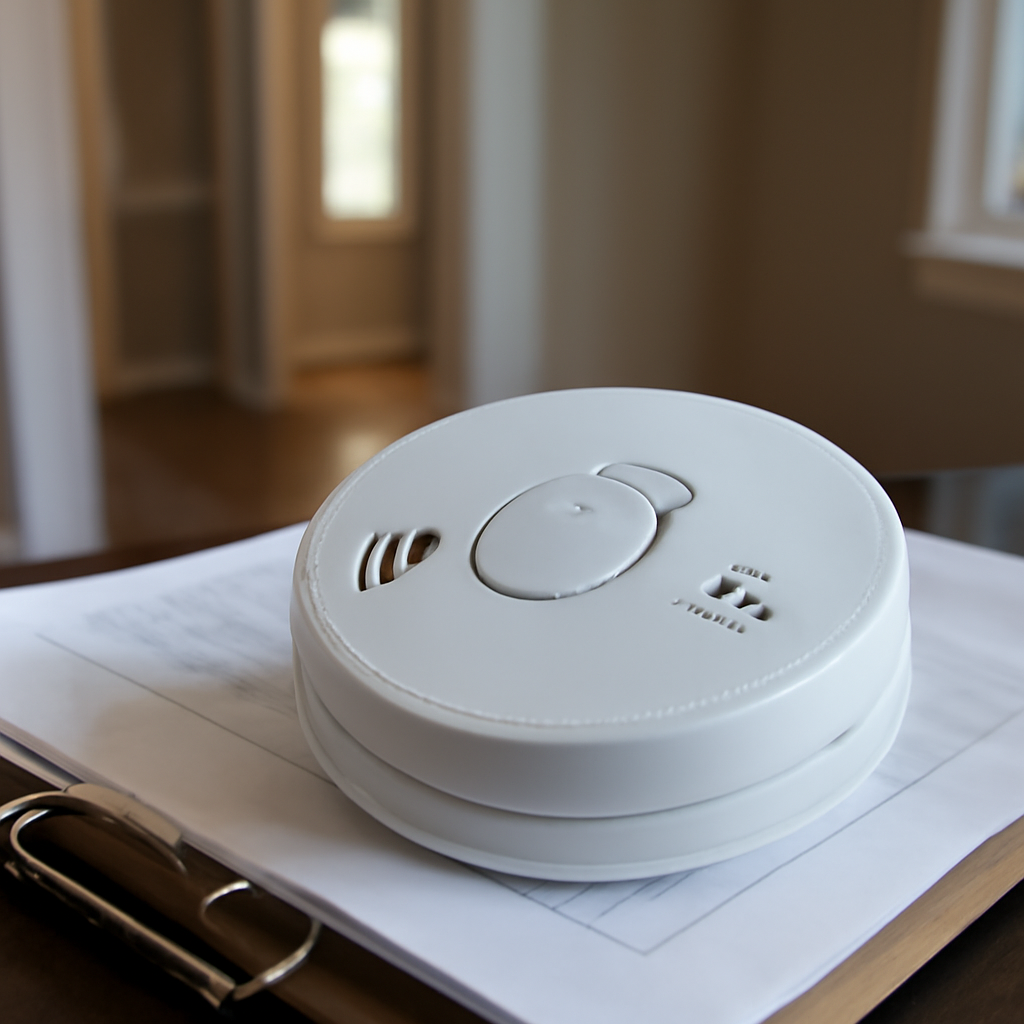
A Kidde smoke and carbon monoxide detector packs two life-safety functions into a single ceiling-mounted unit: it watches for the smoke of a fire and the colorless, odorless threat of carbon monoxide at the same time. Combination alarms have grown popular because they cut clutter and ensure both hazards are covered in one device. Kidde is among the most widely sold brands in North American homes, so understanding how its detectors work, what the different chirps and beeps mean, and how long the units last helps Front Range homeowners keep their protection reliable. This guide walks through the technology, the model differences, placement, and maintenance without favoring any single product.
Part of our Home Inspection Tools guide — start there for the full picture →
What Is a Kidde Smoke and Carbon Monoxide Detector?
A Kidde combination detector is a single alarm that contains both a smoke sensor and a carbon monoxide sensor. When it detects smoke, it sounds one alarm pattern; when it detects CO, it sounds a different pattern. The unit also typically voices or signals which threat it found, helping occupants respond correctly. Because fire and carbon monoxide call for different reactions, escape the building for smoke, get to fresh air and call for help for CO, knowing which alarm is sounding matters.
Kidde produces these in several power configurations: battery-only models, models with sealed ten-year batteries, and hardwired units with battery backup that interconnect so every alarm in the house sounds together. The CO portion uses an electrochemical sensor, the same reliable technology found across quality CO alarms and discussed in our broader guide to CO detectors. The smoke portion uses either ionization sensing, photoelectric sensing, or both, depending on the model.
How Do These Combination Detectors Work?
The carbon monoxide sensor is electrochemical. CO molecules entering a sealed cell trigger a chemical reaction that produces a current proportional to the gas level, and the unit decides whether the concentration and duration warrant an alarm. This design is accurate and long-lived, which is why it dominates residential CO detection.
The smoke sensor uses one of two methods. Ionization sensing runs a tiny electric current through ionized air; smoke particles disrupt that current, triggering the alarm, and this type responds fastest to flaming fires. Photoelectric sensing shines a light beam that smoke particles scatter onto a sensor, and it responds fastest to smoldering fires. Many newer combination units, including dual-sensor Kidde models, include both to cover both fire types. Fire-safety authorities recommend having both sensing technologies present in a home, which a dual-sensor unit accomplishes in one device.
Reading the Alarm and Chirp Patterns
The signals carry specific meaning. A continuous loud pattern of three beeps, pause, three beeps generally indicates smoke and a fire emergency. A pattern of four quick beeps, pause, four beeps generally indicates carbon monoxide. A single chirp every minute or so usually means a low battery, while a different chirp pattern can signal the unit has reached end of life or has a malfunction. Because exact patterns vary by model, the user manual is the authority, and homeowners should keep it or note the patterns somewhere accessible. Mistaking a CO alarm for a fire alarm, or ignoring an end-of-life chirp, undercuts the whole point of the device.
Where to Install a Kidde Combination Detector
Placement blends the rules for smoke and CO. Install a unit on every level of the home, inside each bedroom, and outside each sleeping area. On a given level, the combination unit covers both threats from one spot, which is part of its appeal. Mount on the ceiling or high on a wall per the instructions, keeping the device away from sources of nuisance alarms.
Avoid placing units within a few feet of cooking appliances, inside steamy bathrooms, near supply registers, or in dead-air corners, all of which cause false alarms or weak coverage. For CO specifically, keep a few feet of distance from fuel-burning appliances to avoid brief startup triggers. In a multi-level Front Range home with a basement furnace, that typically means combination units in the basement, on the main level, and on the bedroom floor, interconnected if the wiring allows. Choosing and placing these alarms is part of any thorough review of home inspection tools and household safety equipment. The same logic applies to a standalone Kidde carbon monoxide detector where a separate CO unit is preferred.
How Long Does a Kidde Detector Last?
Combination detectors do not last forever, and the two sensors age on their own schedules. Carbon monoxide sensors typically have a service life of seven to ten years, while smoke sensors are generally rated for ten years. Kidde, like other manufacturers, prints a manufacture date and an end-of-life date on the unit, and the device should be replaced by that date regardless of how new it looks.
Many current models announce end of life with a distinct chirp and cannot be reset once expired, forcing replacement, which is a safety feature rather than a defect. Homeowners should check the date stamped on the back of each unit and write the replace-by date where it is easy to track. A combination alarm bought a decade ago is past its useful life even if it still powers on. Sealed ten-year-battery models simplify this, since the battery and the recommended replacement window line up.
What to Do When the Alarm Sounds
Because a combination unit can signal two different emergencies, the response depends on which alarm is sounding. For the smoke pattern, treat it as fire: get everyone out of the building immediately using your escape plan, and call 911 from outside. Do not stop to gather belongings. For the carbon monoxide pattern, get everyone, including pets, into fresh air outdoors, then call 911 or the fire department from outside, and seek medical attention for anyone with headache, dizziness, or nausea.
In both cases, do not silence the alarm and go back to sleep, and do not re-enter until responders confirm it is safe. Our walkthrough of a carbon monoxide detector going off covers the CO scenario in detail. After any real CO event, a licensed HVAC technician should inspect combustion appliances before they are used again, since the cause, often a cracked heat exchanger or a blocked flue, must be found and fixed.
Power Options: Battery, Sealed, and Hardwired
Combination detectors come in several power configurations, and the right choice depends on the home and the wiring available. Battery-only models are the simplest to install, requiring no wiring, which makes them ideal for older homes, rentals, or rooms without a smoke-detector circuit. Their drawback is the maintenance: replaceable batteries must be changed regularly, and a dying battery announces itself with a chirp that always seems to start at night. For these, a yearly battery change on a set schedule prevents the nuisance and the protection gap.
Sealed ten-year-battery models solve the battery chore by enclosing a lithium cell rated to last the unit’s full service life. There is nothing to replace; when the battery and sensor reach end of life together, the whole unit is swapped. This configuration has become popular because it removes the most common reason detectors fail, a dead or missing battery. Hardwired models connect to the home’s electrical system and almost always include a battery backup so they keep working during a power outage. Their biggest advantage is interconnection: when one alarm in an interconnected system detects smoke or CO, every alarm in the house sounds, alerting sleepers in a distant bedroom to a basement fire. For larger or multi-level Front Range homes, interconnected hardwired units offer the strongest coverage, though they require professional installation if the wiring is not already present.
Combination Unit Versus Separate Alarms
A recurring question is whether to install combination smoke-and-CO units or separate dedicated alarms for each threat. Combination units have clear appeal: one device on the ceiling covers two hazards, reducing clutter and simplifying installation and maintenance. For many homes, especially where ceiling space or budget is limited, a quality combination unit is a sound, practical choice that ensures both protections are present in each location.
Separate alarms have their own merits. A standalone CO alarm can be placed at a height optimized purely for carbon monoxide, and replacing one failed sensor does not mean discarding a still-good sensor of the other type. Because CO and smoke sensors age on different schedules, a combination unit is retired when either sensor reaches end of life, which can mean tossing a smoke sensor with life left in it, or vice versa. Some homeowners prefer separates for that reason, while others value the simplicity of one device. There is no universally correct answer; the key is that every level and every sleeping area is covered for both fire and carbon monoxide, whether by combination units, separate alarms, or a mix. A standalone plug-in carbon monoxide detector can fill gaps where a hardwired unit is impractical.
Maintaining Your Detectors
Reliable protection comes from simple, consistent upkeep. Test each unit monthly with the test button, which checks the alarm and electronics. Replace batteries on schedule for battery-powered units, or choose sealed ten-year models to skip that chore. Vacuum dust from the vents periodically, since buildup can blind either sensor. Never paint over a detector or block its vents.
Most critically, honor the end-of-life date on each unit and replace it on time. Keeping a short log of install dates inside a closet door helps a household stay ahead of expirations. For Front Range buyers and sellers, confirming that working, in-date combination alarms are installed on every level and near every sleeping area is both a safety essential and, in many Colorado homes, a code requirement. A combination detector that is tested, dust-free, and within its service life delivers exactly the dual protection it was designed to provide.
Troubleshooting Common Detector Complaints
Combination detectors generate a handful of recurring complaints, and most have simple explanations. The 3 a.m. chirp is the classic one: a single chirp roughly once a minute almost always means a low battery, and the cold overnight temperatures that thin a marginal battery’s output explain why it starts at night. Replacing the battery, or switching to a sealed ten-year unit, resolves it. A chirp that persists after a fresh battery often signals that the unit has reached its end-of-life date, which on many models cannot be reset and requires replacing the whole device.
Nuisance alarms are another frequent gripe. A unit that alarms during cooking is usually mounted too close to the stove and should be relocated farther away, while one that trips in a bathroom is reacting to steam. Dust accumulation can cause erratic behavior, so vacuuming the vents often quiets a unit that has been chirping or false-alarming without obvious cause. A combination unit that announces a CO warning while no fuel appliance is obviously malfunctioning should never be dismissed as a glitch, however; the safe response is to treat it as real, get to fresh air, and investigate, since low-level CO from a backdrafting appliance is exactly the kind of hazard the device exists to catch. When troubleshooting fails to explain a CO alarm, the unit has likely done its job. Knowing which complaints are routine, low battery, end of life, dust, misplacement, and which demand an emergency response keeps a household from either ignoring a real warning or being driven to disconnect a working alarm out of frustration.
The worst outcome of unresolved nuisance alarms is a disconnected detector, which leaves a home unprotected against the very threats the device guards against. If a unit alarms repeatedly without an emergency, the fix is to relocate it, clean it, or replace an expired sensor, never to remove the battery and leave it off. A detector taken down to stop the chirping is the leading reason alarms fail to sound during a real event. Addressing the root cause, and choosing sealed ten-year units to eliminate the most common chirp entirely, keeps protection in place. For Front Range homes that run gas heat through long winters, a reliably working, properly placed combination detector is too important to disable over an annoyance that usually has a simple, lasting solution.
References
- Smoke and CO alarm placement — NFPA
- Carbon monoxide poisoning prevention — CDC
- Carbon monoxide and indoor air — U.S. EPA
Frequently asked questions
How do I tell a Kidde smoke alarm from a CO alarm?
The smoke alarm typically sounds three loud beeps, pause, three beeps, while the CO alarm sounds four quick beeps, pause, four beeps. A single chirp every minute usually means low battery, and a different chirp can signal end of life. Patterns vary by model, so check the manual.
How long does a Kidde combination detector last?
CO sensors generally last seven to ten years and smoke sensors about ten years. Kidde prints a manufacture and end-of-life date on each unit; replace it by that date even if it still powers on. Many models chirp at end of life and cannot be reset.
Where should I install a combination smoke and CO detector?
Install one on every level of the home, inside each bedroom, and outside each sleeping area. Keep units a few feet from cooking appliances and fuel-burning equipment, and away from steamy bathrooms and dead-air corners to avoid false alarms.
CO & gas detectors
A carbon monoxide alarm is the cheapest life-safety device in the house. Combination CO + explosive-gas units add a layer near furnaces and gas lines.
| Product | Why | Buy |
|---|---|---|
 First Alert CO Alarm First Alert CO Alarm | Plug-in with battery backup. | Amazon — $21.99 |
 Kidde Nighthawk CO + Gas Kidde Nighthawk CO + Gas | Detects CO + natural/propane gas. | Amazon — $57.47 |