Is Mold Fungal? What Homeowners Need to Know
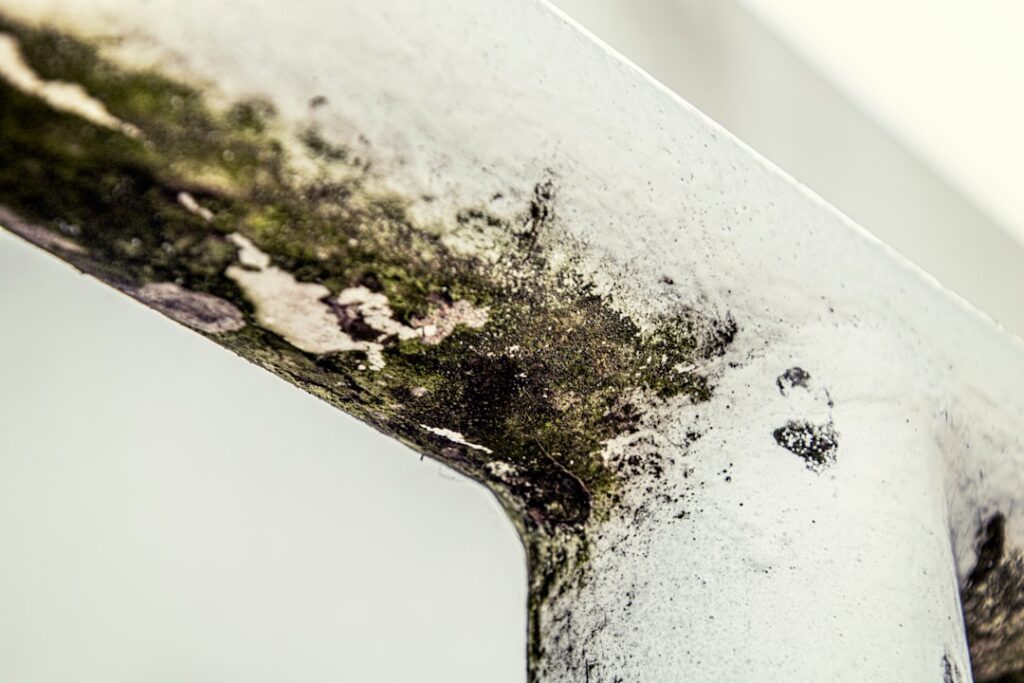
Behind every mold test kit and remediation decision sits a basic biology question that homeowners rarely pause on: is mold fungal, and why does the answer matter for how you find and remove it? Mold is indeed a fungus, and that single fact explains its spores, its hunger for moisture, and the logic of every sampling method. This guide summarizes EPA and CDC guidance current as of 2026; consult your physician for symptoms and a certified professional for testing decisions tied to a sale or cleanup.
Part of our Types of Mold guide — start there for the full picture →
Is this mold, asbestos, or water damage? Get a free instant screen
Upload a clear photo of the suspect area. You'll get an instant AI screening opinion and what to do next. This is screening guidance, not a professional determination.
Screening guidance only. AI can be wrong. Confirm asbestos, mold type, or lead with lab testing or a licensed professional before acting.
Is mold fungal? Yes, and here is what that means
Mold belongs to the kingdom Fungi, the same broad group as mushrooms and yeasts. Fungi are neither plants nor animals. They lack chlorophyll, so they cannot photosynthesize, and instead absorb nutrients from the organic material they grow on, such as drywall paper, wood, and dust.
Classifying mold as a fungus is not trivia. It dictates how mold reproduces, spreads, and responds to control measures, all of which shape testing and remediation.
How fungal biology drives spore spread
Fungi reproduce by releasing spores, microscopic particles that drift through the air until they land somewhere with enough moisture and food to germinate. This is why air sampling works: a spore-trap cassette captures these airborne particles for a lab to count.
It also explains why spores are everywhere. The CDC notes that fungal spores are present in virtually all indoor and outdoor environments, which is why a positive test alone does not prove a problem.
Hyphae and the colony
Once a spore germinates, it grows thread-like filaments called hyphae that spread into a colony, the visible fuzzy or slimy patch you recognize as mold. Labs identify genera partly by the structure of these spores and hyphae under magnification, which is why surface tape-lifts preserve them intact.
Best At Home Mold Test Kit: our top 3 picks
| Product | Best for | Key features | Price | Buy |
|---|---|---|---|---|
| Varify 6-Pack | All-round DIY plate kit |
| $13.39as of Nov 25, 2026 9:07 pm GMT+0000 | Buy now →Check current price |
| KAYENQO 12-Test | Testing many rooms |
| $21.65as of Nov 25, 2026 9:07 pm GMT+0000 | Buy now →Check current price |
| Detekt Indoor Air Quality Kit | HVAC vents |
| $36.99as of Nov 25, 2026 9:07 pm GMT+0000 | Buy now →Check current price |


Prices are Amazon’s listed prices as of the time shown and change often; check Amazon for today’s price. As an Amazon Associate we earn from qualifying purchases.
Why mold needs moisture
As a fungus absorbing nutrients, mold requires water to grow. Sustained dampness above roughly 50 to 60 percent relative humidity, or any wet material, lets dormant spores germinate. Remove the moisture and the fungus cannot establish, which is why the EPA frames moisture control as the entire strategy.
This is the practical heart of the biology. You are not fighting the spores, which are unavoidable; you are denying them the water they need.
Mold versus mildew versus yeast
All three are fungi. Mildew is a common term for certain flat, powdery surface molds, often on bathroom tile or fabric. Yeasts are single-celled fungi. Molds are multicellular and form the hyphal colonies described above. The distinctions are mostly about growth form, not a fundamentally different organism.
For homeowners, the practical point is that all of them need moisture and all of them respond to the same control: dry the surface and fix the source. The explainer on whether mold is a living thing goes deeper into the organism itself.
Why species identification rarely changes the action
Because mold is fungal and all indoor fungal growth warrants removal, the EPA and CDC advise cleaning visible mold and fixing the moisture regardless of which genus it is. Identifying whether a patch is Aspergillus, Cladosporium, or Stachybotrys does not change the core response.
Testing confirms a genus and quantifies airborne load, which can matter for verification or unexplained symptoms, but the biology means the cleanup logic is the same across species.
What testing actually detects
Air spore traps capture airborne fungal spores; surface swabs and tape-lifts capture spores and hyphae from a surface; culture methods grow living spores on medium. Each leverages a different feature of fungal biology, and each answers a slightly different question. The homeowner mold inspection hub compares the methods.
None of them changes the fact that spores are ubiquitous. A useful result compares indoor levels to an outdoor control rather than treating any detection as proof of a problem.
Health effects rooted in the biology
Fungal spores and fragments can irritate airways and trigger allergic responses in sensitive people. The NIEHS notes that mold exposure may worsen asthma and cause congestion or eye irritation in some individuals. Reactions vary widely because immune sensitivity differs from person to person.
This variability is why a spore count is not a personal risk score. Anyone with persistent symptoms should consult a physician rather than rely on a test number.
Where mold sits in the fungal kingdom
The kingdom Fungi is vast, and mold is not a single organism but a growth habit shared by thousands of species across many genera. Aspergillus, Penicillium, Cladosporium, and Stachybotrys are all genera commonly found indoors, each containing numerous species. The familiar mushroom is the fruiting body of a different group of fungi, while yeasts are single-celled members of the same kingdom.
Calling something mold describes how it grows, as a network of filaments forming a visible colony, rather than naming one creature. This is why a lab reports a genus rather than simply confirming mold. The shared fungal biology, though, means the practical control measures apply across the whole group, which simplifies the homeowner’s job considerably.
How fungi differ from bacteria
Homeowners sometimes lump mold in with bacteria, but the two are biologically distinct, and the difference affects testing. Bacteria are single-celled organisms without the nucleus and complex cell structures that fungi possess. Mold tests target fungal spores and structures specifically, which is why a mold kit does not detect bacterial contamination and a general microbial swab does not identify mold genera.
This distinction matters when interpreting an instant-read gadget that claims to detect microbes. Such a device may respond to bacteria, fungi, or both without telling them apart. If the question is specifically about mold, only a method that identifies fungal structures answers it. Knowing fungi are a separate group keeps you from misreading a generic microbial signal as proof of mold.
The fungal life cycle and recurrence
Understanding the life cycle explains why mold comes back. A spore lands, finds moisture, germinates into hyphae, forms a colony, and releases new spores that drift off to start the cycle elsewhere. Killing a visible colony with a cleaner addresses one stage but does nothing about the spores already in the air or the moisture that invited them.
This is the biological reason the EPA stresses moisture control over chemical treatment. Spores are unavoidable and persistent; deny them water and the cycle stalls at germination. A homeowner who wipes away growth but leaves the dampness simply resets the cycle, which is why recurrence is so common after a surface-only cleanup.
Dormant spores and why tests stay positive
Fungal spores can remain dormant for long periods, surviving dry conditions until moisture returns. This durability is part of why air samples almost always detect some spores, even in a clean home, and why the EPA and CDC note that spores exist everywhere indoors and out.
For testing, dormancy reinforces the need for an outdoor control. Because some spore level is normal and unavoidable, a meaningful result depends on comparing indoor counts to the outdoor baseline rather than treating any detection as a problem. The biology guarantees you will find spores; interpretation is about whether you found too many of the wrong kind.
Front Range context
Colorado’s dry climate keeps ambient humidity low, which suppresses fungal growth outdoors and in most living spaces. The fungus still finds the moisture it needs in basements, crawl spaces, and rooms touched by snowmelt or swamp-cooler condensation.
The biology is the same everywhere; only the moisture sources differ. Locally, the water tends to be a contained leak or seasonal intrusion rather than chronic humidity.
What mold eats and why that matters at home
As a fungus, mold absorbs nutrients from organic material, and modern homes are full of its preferred foods. The paper facing on drywall, wood framing and trim, cardboard, natural-fiber carpet, dust, and even the organic film on painted surfaces all feed fungal growth. Add moisture and these everyday materials become a buffet.
This explains why mold appears where it does. A damp basement wall faced with paper-backed drywall offers both water and food, an ideal combination. Understanding the fungus as a feeder also informs prevention: using mold-resistant materials in wet-prone areas removes part of the equation. The other part, moisture, remains the primary lever, but denying the fungus its food source in high-risk spots adds a useful layer of defense.
Temperature and fungal growth
Fungi favor a temperature range that overlaps neatly with comfortable indoor conditions, roughly the same range humans keep their homes. This is part of why mold thrives indoors year-round when moisture is present. Extreme cold slows growth without killing dormant spores, and most household molds do not require heat to flourish.
The practical implication is that you cannot reliably temperature-control your way out of a mold problem in a livable home. Lowering the thermostat may slow growth slightly but will not stop it while moisture remains. This reinforces, once more, that water is the controllable variable. Temperature is largely fixed by the need for comfort, so the strategy centers on keeping surfaces and air dry rather than cold.
Why bleach is not a cure-all
A common assumption is that killing mold ends the problem, and bleach is the reflexive weapon. The fungal biology complicates this. On porous materials like drywall and wood, hyphae penetrate below the surface where a liquid cleaner cannot reach, and dead spores still carry allergenic potential. Wiping the surface can leave living roots and residual spores behind.
The EPA’s guidance leans on physical removal and moisture control rather than chemical killing. On hard, non-porous surfaces, cleaning with detergent and water and drying thoroughly is generally sufficient. On porous materials with significant growth, removal and replacement may be necessary. Treating mold as a living organism with roots, rather than a stain to bleach away, leads to a more durable result.
Putting the biology to work
Knowing mold is a fungus tells you the winning move: control moisture. Keep humidity below the growth range, ventilate damp rooms, fix leaks quickly, and dry wet materials within a day or two. Deny the fungus water and the ubiquitous spores stay dormant.
Testing has its place for hidden growth and verification, but the biology points relentlessly back to the same fix. Manage the moisture, and the organism cannot establish.
The bottom line on mold as a fungus
Mold is a fungus, and that one fact organizes everything a homeowner needs to know. It reproduces by airborne spores, which is why air sampling works and why spores turn up everywhere. It absorbs nutrients from organic materials and needs water to grow, which is why moisture control, not chemical killing, is the durable fix. Its roots penetrate porous materials, which is why surface cleaning alone often fails.
Because all indoor fungal growth warrants removal, identifying the exact species rarely changes the response. Testing has its place for hidden growth and verification, but the biology points relentlessly back to the same move. Deny the fungus the moisture it requires, and the ubiquitous spores stay dormant rather than establishing a colony in your home.
More Questions About Mold as a Fungal Organism
Can mold cause fungal infections?
Household mold rarely causes infections in healthy people, but some molds, such as certain Aspergillus species, can cause infections in people with weakened immune systems or chronic lung disease. Allergic reactions and respiratory irritation are far more common effects.
People who have had an organ transplant, are receiving chemotherapy, or have other conditions affecting immunity are at higher risk and may need to avoid exposure to mold. Anyone with concerns about infection or persistent symptoms should speak with a doctor, who can decide whether testing or treatment is appropriate.
Do antifungal medications treat mold exposure?
Antifungal medications are used to treat actual fungal infections, not ordinary symptoms from mold exposure like allergies or irritation. Most people affected by household mold need exposure reduction and, where appropriate, allergy or asthma care.
A doctor decides whether antifungal treatment is needed based on medical testing and the patient’s health. Taking antifungal drugs without a diagnosis is not recommended because of side effects and drug interactions. On the home side, fixing moisture and removing mold growth is the main step.
What kills mold fungus on walls?
On painted or hard walls, scrubbing with detergent and water removes most surface mold, and products labeled for mold and mildew can be used as directed. Diluted bleach can work on non-porous surfaces but is less effective on porous drywall.
Mold that has grown into drywall paper or behind the wall usually requires removing and replacing the affected material. Whatever product is used, the wall must be dried thoroughly and the moisture source fixed. Areas larger than about 10 square feet are typically handled by a professional.
Is mold fungus harmful to touch?
Touching mold briefly is unlikely to harm healthy people, but direct contact can irritate skin and may trigger reactions in people with allergies. Handling moldy materials also releases spores into the air.
Gloves, eye protection, and an N95 respirator are recommended when cleaning mold. Washing hands afterward and laundering clothing reduces spreading spores to other areas. People with sensitive skin, allergies, asthma, or weakened immune systems should avoid handling mold and let others or a professional do the cleanup.
References
- CDC on mold as a fungus and spores — Centers for Disease Control and Prevention
- EPA on mold growth and moisture control — U.S. Environmental Protection Agency
- NIEHS on mold biology and health — National Institute of Environmental Health Sciences
Frequently asked questions
Is mold a fungus?
Yes. Mold belongs to the kingdom Fungi, alongside mushrooms and yeasts. It lacks chlorophyll and absorbs nutrients from organic materials like drywall and wood, which is why it needs moisture to grow.
How does fungal biology affect mold testing?
Mold reproduces by releasing airborne spores, which is what air sampling captures. Because spores are present everywhere, a useful test compares indoor levels to an outdoor control rather than treating any detection as a problem.
Are mold and mildew the same thing?
Both are fungi. Mildew usually refers to flat, powdery surface molds, while mold often describes thicker hyphal colonies. The control approach is identical: dry the surface and fix the moisture source.
Does it matter which mold species I have?
Usually not for cleanup. The EPA and CDC advise removing all indoor mold and fixing the moisture regardless of genus, so identification rarely changes the response.
Is mold fungus edible?
Most household mold is not edible and should not be eaten. Some foods, like certain cheeses, use specific molds intentionally, but mold on bread, fruit, or leftovers can spread beneath the surface and some produce toxins. Food safety guidance generally recommends discarding soft foods with visible mold.
Can fungal mold grow without light?
Yes, mold grows well without light because, unlike plants, it does not photosynthesize. It gets energy by breaking down organic materials such as wood, paper, and dust. Dark spaces like crawlspaces, attics, and wall cavities often support mold when moisture is present.
What temperature kills mold fungus?
High heat can kill mold, but household temperatures rarely reach levels that eliminate it reliably, and dead mold can still trigger allergies. Freezing generally makes mold dormant rather than killing it. Controlling moisture and physically removing growth is the dependable approach in a home.
Front Range homeowners who want a vetted inspector to assess fungal growth and recommend next steps can reach out through our contact page.