Is Lead Paint Dangerous? What Homeowners Should Know
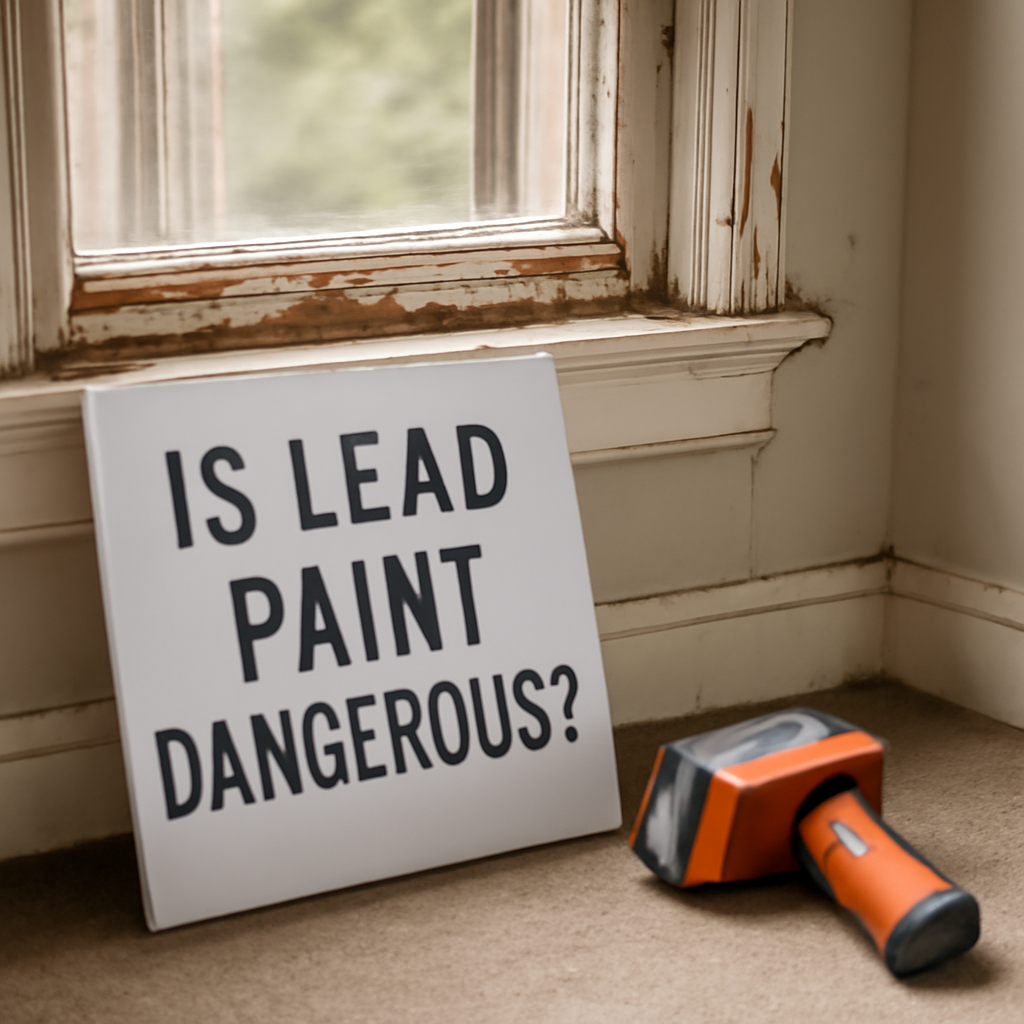
Lead paint is one of the most common hazards hiding in older American homes, and the question of whether it is dangerous has a clear answer with important nuance. Is lead paint dangerous? Yes, lead is a confirmed toxin, but the risk depends heavily on the paint’s condition and on who lives in the home. This guide summarizes EPA, CDC, and HUD guidance current as of 2026; consult your physician about symptoms or a blood-lead test, and a certified professional for testing and abatement decisions.
Part of our Lead Paint & Lead Testing guide — start there for the full picture →
Is this mold, asbestos, or water damage? Get a free instant screen
Upload a clear photo of the suspect area. You'll get an instant AI screening opinion and what to do next. This is screening guidance, not a professional determination.
Screening guidance only. AI can be wrong. Confirm asbestos, mold type, or lead with lab testing or a licensed professional before acting.
Is lead paint dangerous? The direct answer
Lead paint is dangerous when it deteriorates into dust or chips, or when it is disturbed by sanding, scraping, renovation, or friction on surfaces like windows and doors. Intact, well-maintained lead paint that is not peeling or chipping poses a much lower immediate risk because the lead is locked in the film. The danger arises when that film breaks down and lead enters the body, primarily through ingestion of dust and chips, and to a lesser degree through inhalation of dust during disturbance.
According to the CDC, there is no known safe blood-lead level in children. That is why even small exposures matter. Homes built before 1978, when the federal government banned lead in residential paint, are the ones to watch. The broader picture of lead and asbestos in older housing is covered in the pre-1978 housing hazard guide.
Why lead is harmful to the body
Lead is a heavy metal with no biological function in humans. Once absorbed, it interferes with the nervous system, blood, and other organs. The EPA and CDC document that lead accumulates in the body over time, storing in bone and re-entering the bloodstream years later.
Effects in children
Young children are most vulnerable because their developing brains absorb lead more readily and because they put hands and objects in their mouths. Exposure is linked to lowered IQ, attention and behavioral problems, slowed growth, and learning difficulties. These effects can be permanent, which is why prevention matters far more than treatment after the fact.
Effects in adults
Adults face risks too, including high blood pressure, kidney damage, reproductive harm, and cognitive effects at higher exposures. Pregnant women are a special concern because lead crosses the placenta and can harm the developing fetus. Renovation workers and DIY remodelers face elevated exposure when they disturb old paint without proper controls.
When intact lead paint is lower risk
Not every home with lead paint is an emergency. Lead paint in good condition, painted over and not chipping, is generally considered lower risk than deteriorating paint. The federal approach often favors managing intact paint in place rather than aggressively stripping it, because improper removal can create far more hazardous dust than leaving stable paint undisturbed.
The friction and impact surfaces are the exceptions. Window sashes that rub, door edges, stair treads, and porch floors grind paint into dust through normal use, so these areas deserve closer attention even when the rest of the home looks fine. Recognizing the warning signs early, covered in the guide to spotting lead paint, helps a homeowner decide where to test first.
How lead actually enters the body
Understanding the exposure routes makes the risk concrete and points to the right precautions. The dominant pathway in homes is ingestion of lead-contaminated dust and paint chips. Dust settles on floors, windowsills, and toys; a crawling child transfers it hand-to-mouth without anyone noticing. Paint chips taste faintly sweet, which historically led children to eat them, though the dust route is now considered the larger everyday hazard.
Inhalation matters during disturbance. Sanding, scraping, demolition, or torch work on old paint sends fine lead particles into the air, exposing both the worker and the household. This is why the EPA’s Renovation, Repair, and Painting Rule exists, requiring trained, certified contractors and containment when disturbing lead paint in pre-1978 homes and child-occupied facilities. Lead can also reach the body through contaminated soil tracked indoors, which is common near old exterior paint that has weathered into the surrounding ground. Recognizing these routes explains why intact paint is lower risk and disturbed paint is the real danger.
Lead beyond paint: other household sources
Paint is the most common source in older homes, but it is not the only one, and a complete picture helps a family reduce total exposure. Old plumbing with lead pipes or lead solder can leach into drinking water, especially where water sits in the lines overnight. Imported pottery, certain traditional cosmetics and remedies, and some older painted toys or furniture can also carry lead.
For homeowners concerned about water, testing the tap is straightforward and separate from paint testing; the guide to a lead test kit for water walks through the basics. Soil testing is worth considering for families that garden near an older home’s foundation. The point is that lead exposure is cumulative across sources, so a family reducing risk should think beyond the walls to water, soil, and household items, not only the visible paint.
What to do if you suspect lead paint
Start with the home’s age. If it was built before 1978, assume lead paint may be present until tested. Confirm with a certified lead inspector or risk assessor, who can use XRF analysis and dust-wipe sampling to identify lead and measure hazards. Avoid DIY sanding or dry scraping of suspected lead paint, because that is the fastest way to create dangerous dust.
For everyday management, keep painted surfaces intact, clean with wet methods to avoid spreading dust, wash children’s hands and toys, and address chipping paint promptly using lead-safe practices. When renovation is unavoidable, hire contractors certified under the EPA’s Renovation, Repair, and Painting Rule. If a child may have been exposed, ask a physician about a blood-lead test, which is the only way to know an individual’s exposure. The HUD guidelines emphasize that controlling dust and maintaining paint are the practical front line for most families.
How lead paint is tested and confirmed
Because the danger depends on whether lead is present and whether it is being disturbed, confirmation through testing drives the right response. Two professional methods dominate. X-ray fluorescence, known as XRF, uses a handheld analyzer that reads lead content through multiple paint layers without damaging the surface, giving an inspector a fast, non-destructive map of where lead exists in the home. Dust-wipe sampling, by contrast, measures the lead hazard actually present on floors and windowsills by collecting settled dust on a wipe that goes to a laboratory.
The two methods answer different questions, and a thorough assessment often uses both. XRF tells you whether the paint contains lead; dust-wipe sampling tells you whether that lead is currently creating an exposure risk. A certified lead inspector or risk assessor interprets the results together to recommend whether intact paint can be managed in place or whether a hazard requires control. Consumer swab kits exist and can be a useful first screen, but they carry limits in sensitivity and reliability, so a professional assessment is the dependable route before a renovation or for a home with young children. Homeowners curious about the consumer option can review how a typical kit works in the rundown of the 3M lead test kit.
Reducing risk in a home with lead paint
For the many families living in pre-1978 homes, the realistic goal is controlling exposure rather than eliminating every trace of lead overnight. Several everyday practices, drawn from EPA and HUD guidance, meaningfully lower risk.
Dust control
Because lead-contaminated dust is the main exposure route, wet-cleaning floors, windowsills, and window wells regularly captures dust rather than spreading it, as dry sweeping would. Using a vacuum with a HEPA filter adds a further layer of control. Frequent handwashing for children, and washing toys and pacifiers, interrupts the hand-to-mouth pathway that drives childhood exposure.
Maintaining paint
Keeping painted surfaces intact and promptly addressing any chipping with lead-safe methods prevents stable paint from deteriorating into hazardous dust. Friction surfaces such as windows and doors deserve priority because normal use grinds paint into dust. Covering or stabilizing deteriorating areas, rather than aggressively stripping them, often reduces risk more effectively than removal, which can release large amounts of dust if done improperly.
When renovation is unavoidable, hiring contractors certified under the EPA’s Renovation, Repair, and Painting Rule ensures the work is contained and the dust controlled. These practices, applied consistently, allow a family to live safely in a home with lead paint while the underlying material is managed responsibly.
Lead paint and the home-buying decision
For buyers considering a pre-1978 home, lead paint is a factor to understand rather than an automatic dealbreaker. Federal law requires sellers and landlords of pre-1978 housing to disclose known lead-based paint and hazards and to provide the EPA’s lead pamphlet, and buyers have the right to a 10-day window to test for lead before being obligated under the contract. Knowing these rights lets a buyer investigate without pressure.
Many older homes with intact, well-maintained paint are perfectly livable, and the presence of lead paint is reflected in the broad stock of historic and mid-century housing across the Front Range. The practical questions are the paint’s condition, whether young children will live there, and whether renovations are planned that would disturb it. A buyer can budget for professional testing, factor potential lead-safe maintenance into the offer, and proceed with clear information. Treating lead paint as a manageable known rather than a hidden terror is what allows families to buy and live safely in the older homes that make up much of the region’s character. The wider context of these older-housing hazards is mapped in the pre-1978 housing hazard guide.
When professional help is warranted
Certain situations move lead paint from a manage-at-home issue to one that calls for professionals. A home with young children, a planned renovation that will disturb painted surfaces, deteriorating paint that resists simple maintenance, or a confirmed elevated blood-lead level in a household member all warrant expert involvement. In these cases, a certified lead inspector or risk assessor identifies and measures the hazard, and a certified abatement contractor or lead-safe renovator addresses it properly.
Professionals bring the containment, equipment, and trained methods that prevent removal from becoming more hazardous than the original paint. The EPA’s Renovation, Repair, and Painting Rule exists precisely because disturbing lead paint without controls spreads dangerous dust. For families weighing the cost, professional inspection and any needed control is an investment in preventing the permanent, irreversible harm lead can do to a developing child. Pairing that professional involvement with everyday lead-safe habits, keeping paint intact, wet-cleaning, and washing hands, is the comprehensive approach that protects a household living with lead paint in an older home.
Lead paint in Colorado’s older housing
The Front Range has substantial pre-1978 housing, from historic neighborhoods in Denver and Colorado Springs to mid-century homes across the metro counties, so lead paint is a relevant consideration for many local owners and buyers. The federal 1978 ban is the dividing line, and any home built before it should be treated as potentially containing lead paint until tested. This does not make those homes unlivable; it means owners should understand the paint’s condition and manage it sensibly.
For Colorado families, the practical priorities are the same as elsewhere: keep paint intact, watch friction surfaces like windows and doors, clean with wet methods, and test before any renovation that would disturb painted surfaces. Families with young children in older homes have the strongest reason to confirm lead status through professional testing and to ask a physician about blood-lead screening. Treating lead paint as a known, manageable feature of older housing, rather than a hidden catastrophe, lets residents enjoy the character of the region’s established neighborhoods while protecting their households through informed, lead-safe practices.
References
- Protect Your Family From Sources of Lead — EPA
- About Childhood Lead Poisoning Prevention — CDC
- Lead Hazard Control and Healthy Homes — HUD
Frequently asked questions
Is lead paint dangerous if it is not peeling?
Intact, well-maintained lead paint that is not chipping poses a much lower immediate risk because the lead is locked in the film. The danger rises sharply when paint deteriorates into dust or chips, or when sanding and scraping disturb it.
Who is most at risk from lead paint?
Young children and pregnant women are most vulnerable. Children's developing brains absorb lead readily and they often put hands and objects in their mouths, while lead can cross the placenta and harm a developing fetus.
How do I know if my home has lead paint?
Homes built before 1978 may contain lead paint. The way to confirm is to hire a certified lead inspector or risk assessor, who uses XRF analysis and dust-wipe sampling to identify lead and measure hazards.
Can I remove lead paint myself?
Avoid DIY sanding or dry scraping, which creates dangerous dust. For renovation, hire contractors certified under the EPA Renovation, Repair, and Painting Rule, and otherwise focus on keeping paint intact and cleaning with wet methods.
If you own an older Front Range home and want help arranging certified lead testing before a renovation or purchase, reach out through our contact page to connect with a qualified local professional.
Lead paint test kits
Instant swab kits flag lead on painted surfaces in minutes — useful before a renovation in any pre-1978 home.
| Product | Why | Buy |
|---|---|---|
 3M LeadCheck Swabs 3M LeadCheck Swabs | EPA-recognized instant swabs. | Amazon — $15.00 |
 Lead Test Kit (lab-based) Lead Test Kit (lab-based) | Mail-in for a documented result. | Amazon — $65.00 |