Is Black Mold on a Bathroom Ceiling Dangerous?
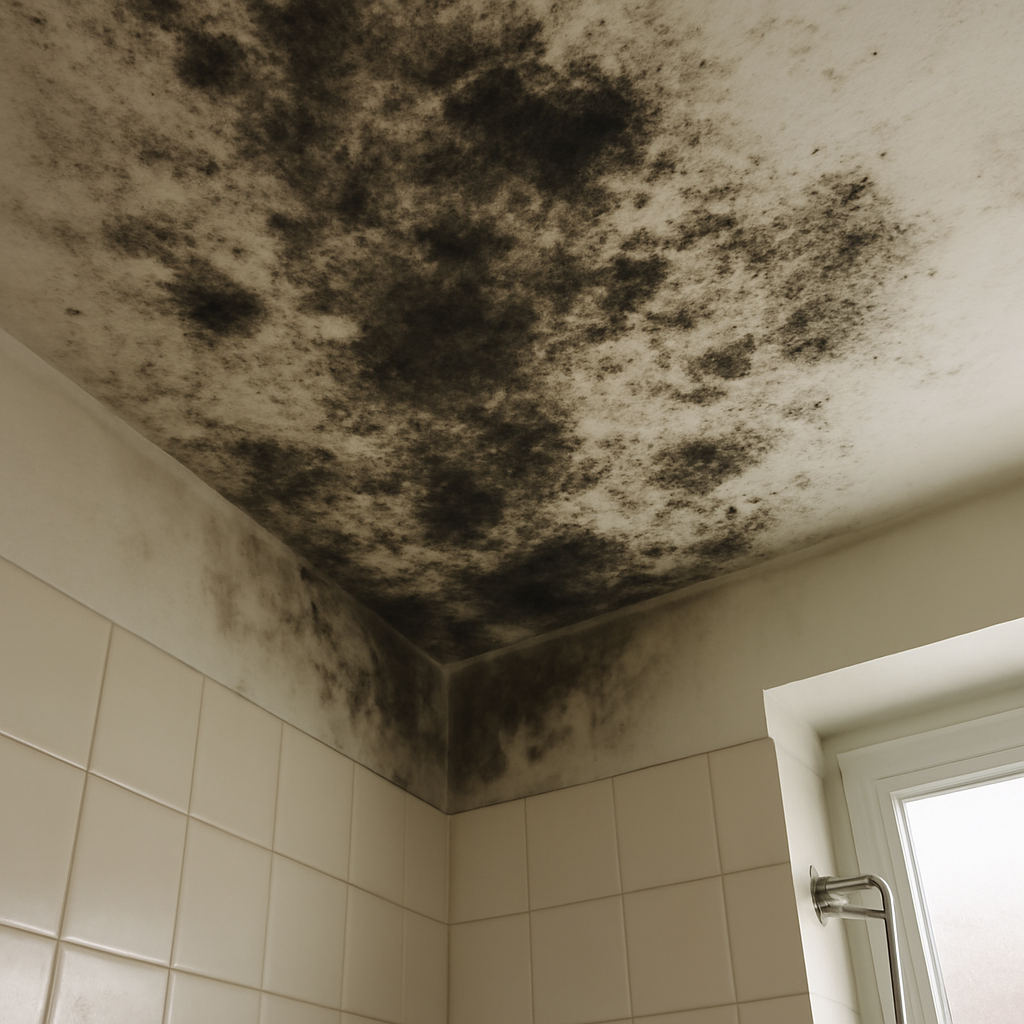
Dark speckles spreading across a bathroom ceiling are one of the most common mold complaints homeowners raise, and they raise an understandable worry: is this the dangerous “black mold” people warn about? The honest answer is more measured than the headlines. Most bathroom ceiling mold is a manageable moisture problem, not a medical emergency — but it should not be ignored, and a few situations do call for caution. This guide summarizes EPA and CDC guidance current as of 2026 and is educational only; consult a physician about symptoms and a certified professional for testing and removal decisions.
Part of our Black Mold & Your Health guide — start there for the full picture →
Is this mold, asbestos, or water damage? Get a free instant screen
Upload a clear photo of the suspect area. You'll get an instant AI screening opinion and what to do next. This is screening guidance, not a professional determination.
Screening guidance only. AI can be wrong. Confirm asbestos, mold type, or lead with lab testing or a licensed professional before acting.
Is Black Mold on a Bathroom Ceiling Dangerous?
For most healthy people, the small patches of mold that appear on a poorly ventilated bathroom ceiling are a nuisance and a sign of excess moisture rather than an acute danger. The CDC states that there is no scientifically established link between common indoor mold exposure and serious illness in otherwise healthy individuals, and that no specific “toxic black mold” diagnosis is recognized for typical household exposure.
That said, mold of any color can trigger real symptoms in people who are sensitive: nasal congestion, throat irritation, coughing, wheezing, and itchy eyes. People with asthma, allergies, weakened immune systems, or chronic lung conditions face higher risk and should limit exposure. The practical takeaway is that bathroom ceiling mold is worth removing promptly and correcting at the source — not panicking over, but not living with either. Our broader explainer on whether mold on the ceiling is dangerous goes deeper on the health picture, and our mold inspection and testing hub covers how assessment fits in.
There is also a structural dimension that gets less attention than the health question. A bathroom ceiling that keeps growing mold is telling you moisture is collecting there repeatedly, and over time that moisture can soften drywall, corrode fasteners, and — if a roof or upstairs plumbing leak is involved — rot the framing above. So even when the health risk to a healthy household is modest, the message the mold sends about water is worth heeding. Treat the discoloration as a symptom of a moisture pattern, not just a cosmetic blemish.
What That Black Mold on Your Ceiling Usually Is
Not every dark spot is Stachybotrys chartarum, the species most people mean by “toxic black mold.” Stachybotrys needs sustained, heavy moisture on cellulose materials and tends to look slimy and dark greenish-black. The speckled growth more typical of bathroom ceilings is often Cladosporium, Aspergillus, or Penicillium — common molds that appear black, gray, or green and thrive on the thin film of moisture left by showers.
Color alone cannot identify a species; that requires lab analysis. From a homeowner’s standpoint, the species matters less than the response: the EPA advises treating all indoor mold the same way regardless of color, because the cleanup and the underlying moisture fix are identical. If you are unsure whether what you see is even mold rather than soap scum or a water stain, our guide to telling black mold from dust can help you make the call.
What the Science Actually Says About Health Effects
Public discussion of “toxic black mold” runs well ahead of the published evidence, and it is worth understanding what authorities have and have not established. The CDC’s position is that while damp indoor environments are linked to upper-respiratory symptoms, coughing, and wheezing — particularly in people with asthma — there is no proven causal link between common indoor mold and the dramatic systemic illnesses sometimes attributed to it in healthy people. The agency does not recognize a specific “toxic mold” diagnosis from ordinary household exposure.
What is well supported is that mold produces allergens, irritants, and in some cases mycotoxins, and that sensitive individuals react to them. The Institute of Medicine and later reviews have found sufficient evidence linking indoor dampness and mold to respiratory symptoms and asthma exacerbation, but insufficient evidence to confirm many of the rarer claims. The practical upshot for a homeowner staring at a bathroom ceiling is reassuring and clear at once: the patch is unlikely to be the catastrophe the internet suggests, but it is a genuine respiratory irritant worth removing — and the surest way to protect everyone is to keep the surface dry so it cannot grow at all.
Why Bathroom Ceilings Grow Mold in the First Place
Bathrooms concentrate the exact conditions mold needs. Every hot shower releases steam that rises and condenses on the cooler ceiling surface. Without strong ventilation, that moisture lingers for hours, and the painted drywall or textured surface gives spores a place to settle.
The usual culprits are a missing or underpowered exhaust fan, a fan that vents into the attic instead of outdoors, a habit of leaving the fan off during and after showers, and inadequate ceiling insulation that keeps the surface cold enough to condense moisture. Recessed light fixtures and the area directly above the shower are typical first sites. In colder climates and Colorado’s chilly winter mornings, the temperature gap between warm shower air and a cold ceiling widens, accelerating condensation.
When Bathroom Ceiling Mold Is More Than Cosmetic
A few signs suggest the problem runs deeper than surface condensation. Mold that keeps returning within weeks of cleaning, growth that covers a large area, sagging or soft drywall, brown water staining alongside the mold, or a musty smell that persists after cleaning all point to an active water source — often a roof leak, a leaking pipe in the ceiling, or a bathroom above with a failing seal.
In those cases the mold on the ceiling is a symptom, and scrubbing it off treats only the symptom. If the drywall is soft to the touch or the area is larger than roughly 10 square feet, that is the point to bring in a professional rather than handle it yourself, particularly if anyone in the home has respiratory concerns.
Who Is Most at Risk From Bathroom Ceiling Mold
The health picture depends heavily on who lives in the home. For the general healthy population, the small mold patches typical of a bathroom ceiling are unlikely to cause more than occasional irritation. Certain groups, though, warrant more caution, and the CDC and American Lung Association both flag them.
People with asthma may experience attacks or worsened symptoms in damp, moldy environments. Those with mold allergies react with hay-fever-like symptoms on exposure. Infants and young children, older adults, and anyone with a chronic respiratory disease such as COPD tend to be more sensitive. The group at greatest risk is people with weakened immune systems — those undergoing chemotherapy, organ-transplant recipients, or individuals with conditions like advanced HIV — because certain molds can cause opportunistic infections in immunocompromised lungs. For households that include anyone in these categories, removing bathroom mold promptly and keeping the room dry is not just tidiness; it is a sensible precaution.
If household members notice symptoms that consistently improve when they are away from home and return indoors, that pattern is worth discussing with a physician. Mold is only one possible cause, but the connection is worth investigating rather than dismissing.
How to Remove Bathroom Ceiling Mold Safely
For a small surface patch on intact drywall, homeowners can usually handle the cleanup following EPA methods.
Ventilate the room and wear protection: an N95 respirator, gloves, and eye protection without vents. Working on a ceiling means debris and cleaning solution can fall toward your face, so eye protection matters more here than on a wall. Clean nonporous surfaces with detergent and water, or a commercial cleaner, and dry thoroughly. The EPA notes that bleach is not required to clean mold from hard surfaces; soap and water with thorough drying are effective, and bleach should never be mixed with ammonia-based cleaners.
If the painted surface is intact, scrubbing usually lifts the growth. If the drywall is stained, soft, or the paper layer is compromised, the affected section should be cut out and replaced rather than painted over — painting over mold traps it and lets it return. Never simply paint or use “mold-resistant” primer on an active colony without removing it first.
Working overhead adds practical challenges worth planning for. Position a stable ladder or work platform rather than reaching from the edge of a tub, since slips on a wet bathroom floor are a real hazard during cleaning. Keep the cleaning solution from running down your arm by using a well-wrung sponge rather than a soaking one. And resist the urge to power through a large ceiling area in one session; if the patch is bigger than expected once you start, that is a signal to stop and reassess rather than to spread spores across the whole room. A textured or “popcorn” ceiling complicates things further, because the texture traps growth and, in older homes, may contain asbestos — a reason to test before disturbing it and to bring in a professional if asbestos is a possibility.
Preventing It From Coming Back
Removal is temporary unless the moisture is controlled. Run the exhaust fan during every shower and for 20 to 30 minutes afterward, and confirm the fan actually vents outdoors, not into the attic. If the existing fan is weak, upgrade to one sized for the room’s square footage. Keep the bathroom door open after showering when possible, wipe down lingering condensation, and keep indoor humidity below 60 percent. Adequate ceiling insulation reduces the cold-surface condensation that starts the cycle. These habits are the difference between a one-time cleanup and a recurring chore, and they reflect the EPA’s core message that controlling moisture is the only durable way to control mold.
A few targeted upgrades pay off in stubborn cases. A fan with a humidity sensor runs automatically until the moisture clears, removing the human-memory factor that defeats most ventilation plans. A timer switch accomplishes something similar for a lower cost. In rooms where the ceiling stays cold — over an unheated space or beneath a poorly insulated attic — adding insulation above the ceiling raises the surface temperature enough to cut condensation at its source. And replacing standard paint with a quality bathroom-rated, mildew-resistant finish gives mold a less hospitable surface, though it is a supplement to ventilation, never a replacement for it.
When to Worry and When to Relax
It helps to keep the risk in proportion. A few small dark spots on a bathroom ceiling, in a home with healthy occupants, that clean off easily and stay gone once ventilation improves, is a routine maintenance issue rather than a hazard. There is no need to test it, evacuate, or panic.
The situations that genuinely warrant concern are different: mold spreading across a large area, growth that keeps returning despite cleaning and better ventilation, soft or sagging drywall, brown water staining that signals a leak from above, or a household member with asthma or a compromised immune system who is having symptoms. Those signs point either to an active hidden water source or to a population that should not be exposed, and both call for prompt action and often a professional. Matching your response to the actual situation — quick cleanup for the routine case, investigation for the worrying one — keeps you from both neglect and overreaction.
References
- About Mold and Your Health — Centers for Disease Control and Prevention
- Mold Cleanup in Your Home — U.S. Environmental Protection Agency
- Mold and Dampness — American Lung Association
Frequently asked questions
Can black mold on a bathroom ceiling make you sick?
It can cause allergy-like symptoms — congestion, coughing, eye and throat irritation — especially in people with asthma, allergies, or weakened immunity. For most healthy people, small bathroom ceiling mold is a nuisance rather than a serious health threat, but it should still be removed.
Is the black mold on my bathroom ceiling toxic?
Most bathroom ceiling mold is common species like Cladosporium or Aspergillus, not toxic Stachybotrys. Color cannot confirm a species. The EPA recommends treating all indoor mold the same regardless of type, since cleanup and moisture control are identical.
Should I just paint over mold on my bathroom ceiling?
No. Painting over active mold traps it and it returns. Remove the mold first; if the drywall is soft or stained through, cut out and replace that section rather than painting over it.
Why does mold keep coming back on my bathroom ceiling?
Recurring mold means the moisture source is still active — usually poor ventilation, a fan that vents into the attic, or a hidden leak. Fix the moisture and improve airflow, or cleaning will only be temporary.
If bathroom mold keeps returning and you suspect a hidden leak, Front Range homeowners can connect with a vetted local inspector through our contact page to find the source before it spreads.
Mold removal & cleanup picks
For a small, contained patch (under ~10 sq ft) these EPA-friendly removers handle surface mold. Larger or recurring growth warrants a professional assessment first.
| Product | Why | Buy |
|---|---|---|
 RMR-86 Instant Mold Stain Remover RMR-86 Instant Mold Stain Remover | Fast-acting on stains; ventilate and wear PPE. | Amazon — $29.99 |
 Concrobium Mold Control Concrobium Mold Control | No-bleach formula that also helps prevent regrowth. | Amazon — $11.26 |
 Mold Armor Mold & Mildew Remover Mold Armor Mold & Mildew Remover | Widely stocked bathroom/surface remover. | Amazon — $22.98 |