Drone With Night Vision and Thermal Camera: Reality Check
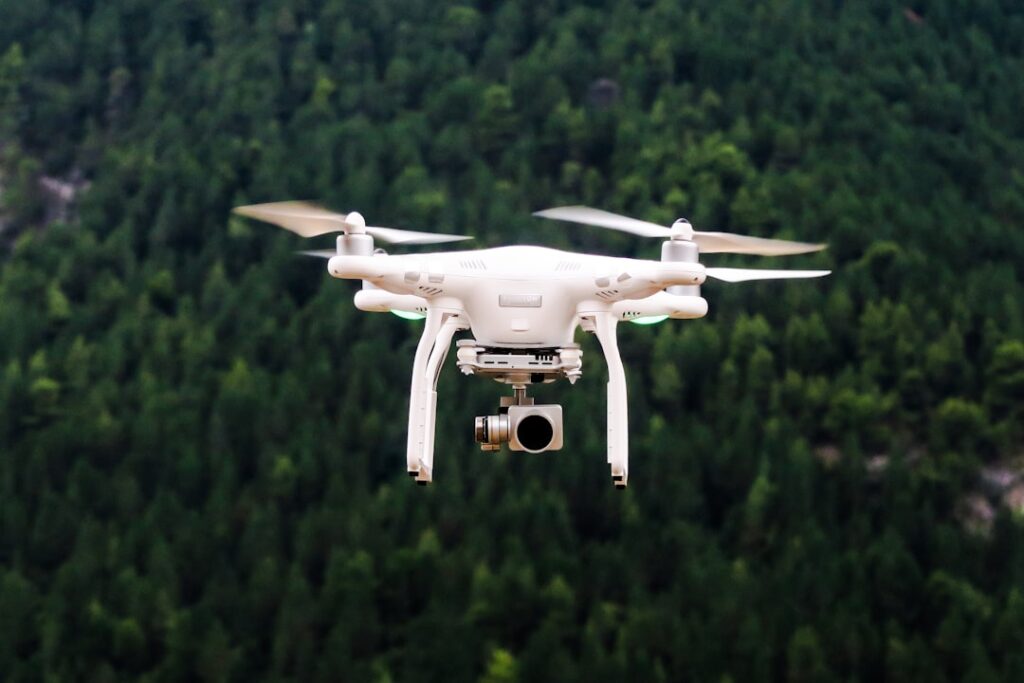
The phrase “drone with night vision and thermal camera” sounds like a single off-the-shelf product. In the residential and small-commercial market it rarely is. Drones with true dual-sensor packages combining image-intensified night vision and thermal imaging exist primarily in military and specialty tactical applications. Most homeowners who type the phrase actually want a drone with thermal imaging, sometimes with low-light photography from a standard visible-light camera, neither of which is “night vision” in the technical sense. This guide explains why the dual-sensor residential market is small, what realistic options actually exist, and what use cases drive the decision. Citations point to industry references on aerial thermography and inspection rather than to any manufacturer.
Part of our Thermal Imaging for Homes guide — start there for the full picture →
The Technology Reality
Two distinct technologies show up in this conversation, and they are not the same.
Night Vision
Image-intensification night vision amplifies available starlight, moonlight, or IR illuminator light to produce a visible-spectrum image. The output looks like a green-tinged photograph. Night vision sensors are usually image-intensification tubes (military and high-end commercial) or low-light CMOS sensors with on-screen enhancement (consumer digital night vision). True image-intensification optics are export-controlled, expensive, and rare on consumer drones.
Thermal Imaging
Thermal sensors detect long-wave infrared emission from objects directly. Warmer objects appear brighter; cooler objects appear darker. Thermal works in total darkness, requires no light at all, and produces a temperature-based image rather than a visible-scene image. Thermal sensors are increasingly common on inspection-grade drones because the use case for aerial thermography is large.
Why the Combination Is Rare on Drones
Dual-sensor packages add weight, complexity, and significantly more cost. Military operators justify it for tactical reconnaissance. Search-and-rescue and law-enforcement operators sometimes justify it for night operations. Residential and small-commercial inspection rarely justifies it because the workflow does not need image-intensification night vision; the thermal sensor alone provides the inspection-relevant data, and visible-light context can be provided by the drone’s main RGB camera or by daytime operation.
What Drones Actually Have
DJI Matrice 30T and Matrice 350 Series
These professional-grade DJI platforms include radiometric thermal sensors, high-resolution visible-light cameras, and laser rangefinders. They are widely used in commercial inspection, search-and-rescue, and public safety. They have low-light visible capability via their RGB sensor but are not “night vision” drones in the image-intensification sense.
DJI Mavic 3T (Thermal)
A smaller, more accessible thermal drone with a 640 by 512 thermal sensor and a 48 MP visible camera. Common in residential and small-commercial inspection use. Thermal-only, with no night-vision-specific sensor.
Autel EVO II Dual
A competitor platform with a 640 by 512 thermal sensor and a 48 MP visible camera, similar positioning to the Mavic 3T.
True Dual-Sensor Drones
These exist in tactical, defense, and specialty law-enforcement markets. They are not commonly available off the shelf to residential buyers, are subject to additional regulatory constraints, and carry price tags in the tens of thousands of dollars. The sibling guide on DJI thermal camera drone selection covers the platform-by-platform comparison.
What Most Homeowners Actually Need
The realistic homeowner question is almost always thermal, not night vision. Use cases include:
- Roof inspection for missing or wet insulation in the deck, leak tracking, and post-storm damage assessment.
- Solar panel array thermography to identify failed cells, hot spots, and connection issues.
- Large-property foundation thermography to find heat-loss patterns and moisture-cooled spots.
- Wildlife observation on rural property, where thermal detects animals at distance.
- Search and rescue support for missing persons or pets at night.
None of these require image-intensification night vision. Thermal alone produces the relevant data. The drone’s standard RGB camera handles visible context during daytime work, and most consumer drones are not flown at night legally in residential areas without specific waivers anyway. The home inspection tools hub covers thermal drone selection for residential and inspection workflows.
Regulatory Constraints on Night Flight
Even if a homeowner did have a true night-vision drone, US Federal Aviation Administration Part 107 rules and recreational drone rules constrain when and how it can be flown.
Part 107 operators can fly at night with appropriate training, anti-collision lighting visible from three statute miles, and proper aeronautical knowledge. Recreational flyers (under the FAA exception) have similar lighting requirements and must follow community-based organization guidelines. Flying over people or moving vehicles at night requires additional waivers. For residential inspection use, most operators fly during daylight or twilight where the thermal sensor still produces useful imagery and the regulatory burden is lighter.
Cost Comparison
The pricing tells the story of why most homeowners settle on thermal-only.
Thermal-Only Inspection Drones
DJI Mavic 3T and similar platforms: roughly $5,000 to $7,000 for a complete kit. Smaller thermal drones for hobbyist use: $1,500 to $3,000 with reduced resolution and capability. Older or refurbished thermal platforms: under $1,500 in some cases.
Professional Multi-Sensor Drones
DJI Matrice 30T or 350 with thermal, RGB, and laser rangefinder: $15,000 to $30,000 depending on configuration and payloads. Used in commercial inspection, public safety, and emergency response.
True Dual-Sensor Tactical Drones
Specialty platforms with thermal and image-intensification night vision: typically $25,000 to $100,000+, often restricted to government, military, and specific commercial buyers. Not a realistic residential purchase.
The dollar spread alone explains why the residential market is essentially thermal-only. A homeowner spending $5,000 on a thermal drone for occasional roof and property inspection is making a reasonable investment; the same homeowner spending $40,000 for night vision capability they cannot legally use at night without waivers is not.
What If a Buyer Really Needs Both
Several legitimate use cases require both technologies on the same airframe, mostly outside residential applications.
Law-enforcement aerial support operations benefit from thermal to detect subjects and night vision for visible identification and scene awareness. Search-and-rescue at night may use thermal to find missing persons and night vision to navigate terrain. Military reconnaissance is the original driver of the dual-sensor concept. Commercial security firms protecting large facilities sometimes deploy dual-sensor drones for after-hours patrol.
If a buyer truly fits one of these use cases, the conversation moves out of consumer products and into specialty distributors. The platforms are different, the regulatory environment is different, and the training requirements are different. The residential roof-inspection conversation and the tactical reconnaissance conversation share almost nothing in common except the word “drone.”
Practical Recommendation
For residential and small-commercial inspection, buy a thermal-only drone with a reputable platform (DJI Mavic 3T, DJI Matrice 30T for higher budgets, Autel EVO II Dual). Skip the night-vision conversation entirely. Fly during daylight for routine inspection and during twilight or early morning when thermal contrast is strongest. Use the drone’s RGB camera for visible-light context. Pair with appropriate Part 107 certification if commercial use is intended.
For tactical, security, or specialty applications where both technologies are genuinely required, work with specialty distributors who understand the regulatory and training environment those platforms involve. The residential market is not where these systems are sold, marketed, or supported.
Why “Low-Light Camera” Is Not Night Vision
Some consumer drones advertise “night mode” or “low-light photography” on their visible-light cameras. These are not night vision in the technical sense. The drone’s standard RGB camera uses long exposures, larger apertures, and image processing to produce reasonable photos in dim conditions, but it still depends on ambient light reaching the sensor. In genuinely dark conditions — overcast night, no moon, no urban light leakage — the camera produces noisy or unusable images.
Image-intensification night vision is different. It actively amplifies available photons through a vacuum tube to produce a usable image at light levels where a normal camera produces nothing. Adding image intensification to a drone payload requires the tube hardware, the optics to feed it, and the display or recording chain to use the output. These are non-trivial additions in weight, cost, and regulatory complexity, which is why they remain rare on consumer platforms.
For practical purposes, a homeowner shopping for a drone “that can see at night” is usually best served by a thermal drone (which truly works in total darkness on a different principle) flown during legal twilight hours or under appropriate Part 107 night-flight provisions with proper anti-collision lighting. The combination delivers most of the “night drone” capability homeowners imagine without the cost and complexity of true dual-sensor systems.
Use-Case Audit Before Buying Anything
Before committing to any thermal or thermal-plus-night-vision drone purchase, a simple use-case audit clarifies what is actually needed.
How Often Will the Drone Fly?
Monthly or quarterly flights for property inspection justify a thermal drone purchase. Once-a-year or less suggests hiring a service is more economical.
What Time of Day Will the Flights Happen?
Daytime flights with thermal contrast in early morning handle most residential thermography. If the use case genuinely requires after-dark operations, regulatory questions multiply and the value of true night vision rises.
Who Will Operate the Drone?
Personal use for noncommercial inspection of one’s own property has different rules than paid commercial inspection of other people’s properties. Part 107 certification, insurance, and ongoing training all factor into the decision when the drone is part of a business.
What Specific Findings Are the Drone Meant to Produce?
Roof moisture mapping needs radiometric thermal output. Solar array inspection needs the same. Visible-light photography of the roof needs the RGB sensor. Search and rescue for a missing pet needs thermal detection capability. Each finding type favors specific sensor and software combinations.
The audit usually rules out night vision for residential users. The sibling guide on thermal camera drone specs and radiometric data covers the buy-decision in more depth.
Insurance and Liability Considerations
Anyone using a drone for commercial inspection work needs aviation liability insurance beyond standard homeowner policies. Crash damage to property, injury to bystanders, and lost equipment are all routine risks that residential drone insurance covers. Annual premiums for commercial drone liability typically run several hundred to a few thousand dollars depending on coverage limits and the operator’s claims history.
For personal noncommercial use, some homeowner policies include limited drone coverage, but verify with the carrier before assuming coverage exists. Many policies specifically exclude drone-related losses. Riders are available to add coverage at modest cost. The investment is small compared to the cost of a midair collision or a property-damage claim, and worth confirming before the first flight rather than after the first incident.
Training Beyond Part 107
Part 107 certification covers regulatory knowledge and basic operational understanding. It does not cover thermal image interpretation, which is a separate skill. Operators producing thermal data for inspection reports benefit from ASNT Level I or Level II thermography certification, which covers IR physics, emissivity correction, inspection methodology, and report writing. Without that training, thermal images are interesting pictures rather than useful diagnostic findings. Several training providers offer thermography courses that combine well with Part 107 certification for inspectors building a complete aerial inspection practice.
More Questions About Night Vision and Thermal Drones
How far can a drone thermal camera detect a person at night?
A drone thermal camera can often detect a person-sized heat source from several hundred meters away at night, but recognizing what the object is requires a much shorter distance. Detection range depends on sensor resolution, lens focal length, thermal zoom and conditions such as humidity and background temperature. A 640 x 512 sensor detects at longer distances than a 320 x 256 sensor. Search and rescue teams use this ability, but residential inspection drones are rarely flown far from the property. Fog, rain and dense trees shorten the effective range considerably.
Is thermal imaging or night vision better for spotting animals around a property?
Thermal imaging is generally better than night vision for spotting animals around a property, because it shows body heat clearly against cooler ground and does not need any ambient light. Night vision amplifies available light, so it shows more natural detail but struggles in deep shadow or overcast conditions without an infrared illuminator. Thermal can pick out an animal in tall grass or brush that night vision would miss. Night vision can be better for identifying exactly what the animal is once it has been located. For most property owners, a thermal view is the more useful starting point.
Can a thermal drone be used for home security at night?
A thermal drone can be used to check a property at night, but it is a poor substitute for fixed security cameras and alarms. Drone flights are limited by battery life, weather and FAA rules, and they need an attentive pilot. Fixed thermal or low-light security cameras watch continuously without any of those limits. Some large rural properties use drones occasionally to check fence lines or outbuildings. Anyone flying at night must follow night-flight rules, including anti-collision lighting, and should avoid flying over neighbors’ homes, where state privacy laws may apply.
What is digital night vision on a consumer drone?
Digital night vision on a consumer drone usually means a low-light camera or a standard camera paired with infrared illumination, not true image-intensifier night vision. These cameras boost the image in dim conditions and often switch to black and white. They can be useful for general orientation, but they do not show heat patterns, so they cannot find roof moisture or heat loss. Marketing terms such as night mode or night vision vary between brands. Checking for a listed thermal sensor resolution is the clearest way to know whether a drone actually has thermal imaging.
Does fog or rain block a drone thermal camera at night?
Yes, fog, rain and heavy humidity significantly reduce what a drone thermal camera can see at night, because water droplets absorb and scatter infrared energy. Light haze may only soften the image, but dense fog can hide objects entirely. Rain also equalizes surface temperatures, which erases the contrast needed for roof or building inspections. Most consumer and prosumer drones are not rated to fly in rain anyway. Thermal surveys and night checks are usually planned for dry, calm, clear nights for the best results.
References
- Aerial Thermography for Home Inspectors — International Association of Certified Home Inspectors
- ENERGY STAR: Seal and Insulate — U.S. Environmental Protection Agency (ENERGY STAR)
- ASHI Standards of Practice — American Society of Home Inspectors
- International Residential Code — International Code Council
Frequently asked questions
Does a residential thermal drone include night vision?
Generally no. Most thermal drones in the residential and small-commercial market include a thermal sensor and a standard RGB visible-light camera, but not image-intensification night vision. True dual-sensor packages with both technologies are largely a military and tactical product category.
What do I actually need for home aerial inspection?
A thermal-only drone with reasonable resolution (typically 640 by 512 thermal pixels) and a quality RGB camera handles roof inspection, solar array thermography, foundation surveys, and most residential use cases. Flying during daylight provides full visible context without needing night vision.
Can I fly any drone at night legally?
FAA rules allow night flight for Part 107 operators with appropriate training and anti-collision lighting visible from three statute miles. Recreational flyers follow community-based organization rules with similar lighting requirements. Flying over people or moving vehicles at night may require additional waivers.
Are dual-sensor tactical drones available to consumers?
Generally no. True dual-sensor platforms with thermal and image-intensification night vision are typically sold to government, military, law enforcement, and specific commercial buyers. They carry price tags well above residential drone budgets and involve additional regulatory considerations.
Can a night vision camera show heat loss from a house?
No, a night vision camera cannot show heat loss from a house, because it amplifies light rather than measuring heat. Finding air leaks, missing insulation or warm roof areas requires a thermal camera. Night vision images may look similar in black and white, but they carry no temperature information.
Is it legal to fly a thermal drone over a neighbor's property at night?
Flying a thermal drone over a neighbor's property at night may be legal under FAA airspace rules, but state privacy and trespass laws can still apply, and rules vary by location. Hovering over someone else's home or recording them without consent can lead to complaints or legal trouble. Keeping flights over one's own property is safest.
Do thermal drone images show color at night?
Thermal drone images show false color, not true color, at night or in daytime. The camera assigns colors such as white-hot, iron or rainbow palettes to temperature values. Those colors represent heat levels only. The drone's visible camera shows real color, but only when there is enough light.
Thermal imaging cameras
Infrared cameras reveal hidden moisture, missing insulation, and air leaks. Phone-attachment models are the budget entry point; standalone units have higher resolution.
| Product | Why | Buy |
|---|---|---|
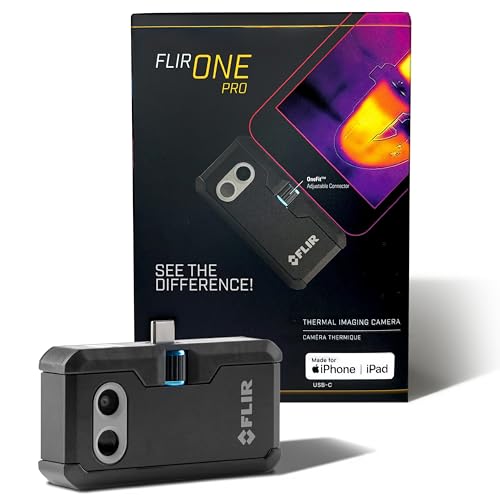 FLIR ONE Pro (phone) | Plugs into iPhone/Android; inspector favorite. | Amazon — $296.65 |
 Topdon TC001 | High-res phone module at a low price. | Amazon — $249.00 |
 FLIR C5 Compact | Standalone pocket camera with Wi-Fi. | Amazon — $593.99 |