CPVC Pipe: Brittleness, Fittings and When to Replace It
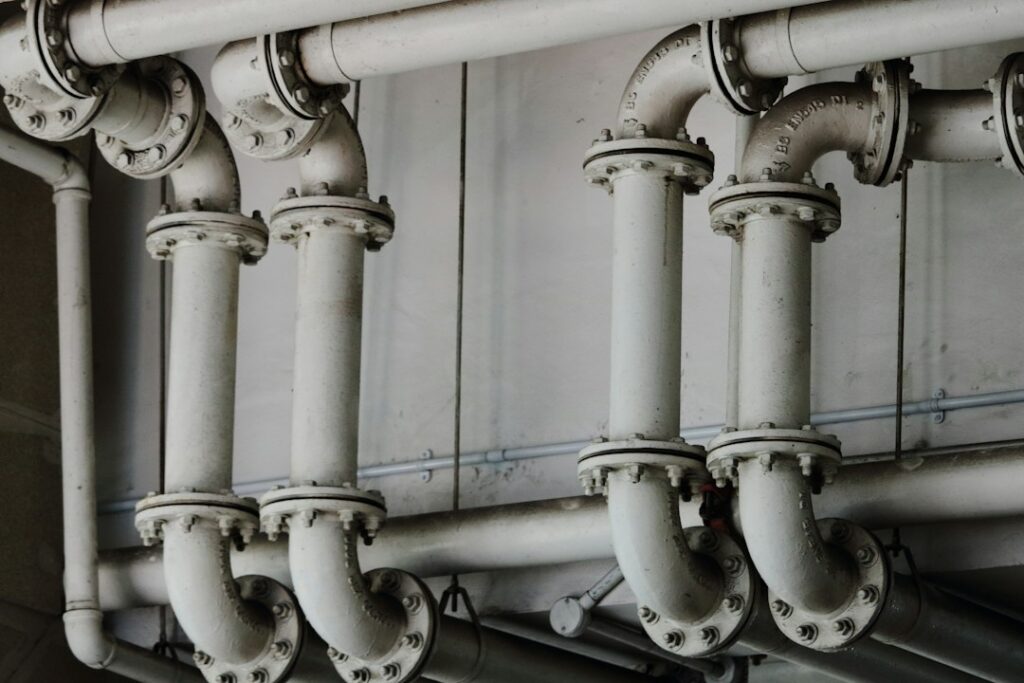
That cream- or tan-colored plastic tubing running to the water heater or under the bathroom sink is probably CPVC pipe. Chlorinated polyvinyl chloride became a popular alternative to copper in the 1980s and 1990s because it was cheaper, did not corrode and could be joined without a torch. Plenty of Front Range homes, especially those built or replumbed in that era, still have it. Most CPVC systems do their job quietly. Some, however, become brittle with age, crack when bumped or develop leaks after contact with incompatible chemicals. This guide explains how CPVC differs from ordinary PVC, how its fittings work, why it can turn fragile, which warning signs inspectors look for, and when repair or replacement makes more sense. Cost figures are general ranges and vary by home, region and contractor, and product-specific limits should always be checked against the manufacturer’s literature.
Part of our Plumbing & Water guide — start there for the full picture →
Plumbing problem? Talk to a local plumber now.
📞 Call (877) 637-1527What CPVC Pipe Is and How It Differs From PVC
CPVC is PVC resin that has gone through an additional chlorination step. That extra chlorine changes the material’s properties, most importantly how much heat it can tolerate. Standard white PVC is widely used for drains, irrigation and cold-water lines in some settings, but it is generally not rated for hot water. CPVC is made specifically to handle both hot and cold potable water in homes.
Manufacturers commonly rate residential CPVC for continuous service at temperatures up to about 180°F at a reduced pressure, while PVC is typically limited to roughly 140°F. Exact pressure and temperature ratings vary by product, size and standard, so the printed markings and the maker’s data sheet are the authority. Because household water heaters are usually set well below those limits, CPVC handles normal domestic use. Problems tend to arise from other factors: age, physical stress, freezing and chemical exposure.
Other ways to tell the two apart:
- Color: residential CPVC is usually cream, tan or light yellow. Plumbing PVC is usually white or gray.
- Sizing: most residential CPVC follows copper tube size (CTS), so a half-inch CPVC line has roughly the same outside diameter as half-inch copper. PVC typically follows iron pipe size, which is larger.
- Markings: the printed line along the pipe lists the material, size, standard, pressure rating and manufacturer.
Cement and fittings are not interchangeable between the two. Using PVC cement or PVC fittings on a CPVC hot-water line is a mistake inspectors and plumbers occasionally find, and it can lead to joint failure.
The ASHI Standard of Practice requires home inspectors to describe interior water supply, drain, waste and vent piping materials. A report that lists “CPVC” for supply piping is simply documenting what is there. What matters is the condition notes that follow.
Why CPVC Becomes Brittle With Age and Handling
New CPVC has a bit of flex to it. Over years of heat cycling, exposure to chlorinated water and, in some cases, contact with incompatible substances, many installations become noticeably stiffer. Older lines can crack or shatter when someone bumps them, steps on them in an attic, or tries to bend them slightly while replacing a fixture.
Several factors are commonly associated with brittleness, though the relative importance varies from house to house:
- Heat cycling: lines close to water heaters and in hot attics see the most temperature swings.
- Cold temperatures: CPVC is less impact resistant when it is cold, so work in unheated garages or crawl spaces during winter carries more risk.
- Stress at installation: pipes forced into place, bent around obstacles or clamped too tightly can carry built-in stress that later shows up as cracks.
- Thermal expansion: long runs of hot-water CPVC lengthen and shorten as they heat and cool. If straps hold them rigidly without room to move, joints and elbows absorb the strain.
- Chemical exposure: discussed in more detail below, this is one of the better-documented causes of stress cracking in CPVC.
Brittleness itself is not always a reason to replace the system. Many brittle CPVC lines continue holding pressure for years. The concern is that any future repair, remodel or accidental bump can turn a small job into a larger one. Plumbers working on older CPVC often cut back several inches past a fitting, support the pipe carefully and avoid twisting it.
CPVC Fittings and Solvent Cement
CPVC is usually joined with solvent cement. The cement softens the surface of both the pipe and the fitting socket so they fuse together as the solvent evaporates. Done correctly, the joint becomes essentially one piece of plastic. Done poorly, it can fail days or years later.
One-step and two-step cements
Some CPVC cements are labeled as one-step products that do not require a separate primer, often recognizable by their yellow or orange color. Others are used with a primer. Which approach is acceptable depends on the cement manufacturer’s instructions and the plumbing code adopted locally. Common workmanship problems include dry spots where cement did not cover the full socket, too little insertion depth and joints that were disturbed before the cement set.
Working safely with solvent cements
Many solvent cements and primers list tetrahydrofuran (THF) or similar solvents on their safety data sheets. The National Institute for Occupational Safety and Health describes tetrahydrofuran as a colorless liquid with an ether-like odor, classifies it as a Class IB flammable liquid with a flash point of 6°F, and lists symptoms of exposure that include irritation of the eyes and upper respiratory system, nausea, dizziness and headache. That is why product labels call for good ventilation and no open flames nearby. Homeowners doing small repairs should read the label and safety data sheet for the specific product.
Transition and mechanical fittings
Where CPVC connects to a water heater, a metal valve or another material, transition fittings are used. Some manufacturers require a metal nipple or a minimum distance from a gas water heater’s flue. Push-fit fittings are another option for repairs, provided they are listed for CPVC and the pipe is cut square and deburred. Threaded plastic connections can crack if overtightened, especially in brittle pipe.
Chemical Compatibility: Sealants, Foams and Other Products
CPVC is resistant to the chlorine in tap water, but it can be damaged by some chemicals that come into contact with the outside of the pipe. Manufacturers have documented environmental stress cracking when certain substances meet CPVC that is under pressure or stress. The pipe may look normal until a crack appears weeks or months later.
Product categories that CPVC makers frequently flag for compatibility checks include:
- Some spray foam insulations and expanding foam sealants.
- Certain fire-stop caulks and sealants used where pipes pass through fire-rated assemblies.
- Some thread sealants and pipe dopes not labeled for CPVC.
- Some termiticides and insecticides applied near plumbing.
- Certain cable lubricants, cooking oils and plasticizers found in flexible vinyl products.
Not every product in these categories is a problem. Many manufacturers test products and publish compatibility lists or run compatibility programs, and fire-stop and foam makers often state whether their product is safe for CPVC. The safe approach is to check the CPVC manufacturer’s guidance and the other product’s label before applying anything to or near the pipe. Insulation contractors and pest-control services working in homes with CPVC should be told that it is there.
For inspectors, a crack near a foam-sealed penetration or a fire-caulked hole is a clue worth reporting even if the cause cannot be confirmed visually.
Common CPVC Failure Signs
CPVC failures tend to fall into a handful of patterns. Recognizing them helps a homeowner decide whether a leak is a one-off or part of a larger trend.
- Cracks at fittings: hairline cracks that start at the shoulder of an elbow or tee are among the most common failures, often linked to stress or brittleness.
- Longitudinal splits: long cracks running along the pipe can result from freezing or chemical attack.
- Weeping joints: slow seepage at a cemented joint may point to poor solvent welding at installation.
- Discoloration: pipe that has yellowed or darkened near a heat source may be more fragile than the rest of the system.
- Sagging runs: hot-water lines that droop between supports have likely been heated without adequate support spacing.
- Repeated repairs: several couplings or push-fit patches along a run suggest a history of failures.
Freezing deserves special mention in Colorado. Like other rigid pipe, CPVC can split when water inside it freezes, and cold makes the material less forgiving of impact. The guides on frozen pipes and burst pipe repair explain prevention and first steps after a break. High household pressure also stresses older plastic; a water pressure test is a quick way to rule that out.
What Home Inspectors Look for on CPVC Supply Lines
A standard home inspection is visual and limited to readily accessible areas, so much of a CPVC system hidden in walls and ceilings will not be seen. Inspectors focus on the places where problems tend to show: the water heater connections, the main shutoff area, exposed runs in basements and crawl spaces, the cabinets under sinks and any attic runs that can be viewed safely.
Typical observations in a report include:
- Active drips or mineral tracks below joints, which suggest a past or present weep.
- Repair couplings or mixed materials spliced into the line.
- Missing or overly tight straps on hot-water runs, or pipe pressed hard against framing with no room to expand.
- CPVC installed too close to a gas water heater flue without the transition the manufacturer specifies.
- Pipe passing through foam-sealed or fire-caulked penetrations, noted for further evaluation when cracking is visible.
- Exposed CPVC in unheated spaces with no insulation, which raises freeze risk during Colorado cold snaps.
Inspectors generally do not cut into walls, flex pipe to test brittleness or identify the brand of cement used. When a report recommends evaluation by a licensed plumber, that plumber can open specific areas, check how the pipe responds to handling and give a more specific opinion on repair versus replacement. Buyers can also ask sellers whether there have been leaks, insurance claims or recent plumbing work, and whether any water damage was repaired with permits.
Because CPVC and copper share the same outside dimensions in common residential sizes, it is not unusual to find both in one house, with plastic added during a later repair or remodel. That mix is not a defect, but each transition is a joint worth looking at.
When to Repair and When to Replace CPVC Pipe
There is no universal age at which CPVC must come out. The decision usually comes down to how often it fails, how brittle it has become and what else is planned for the house.
Repair makes sense when
- A single leak has an obvious cause, such as a frozen line or a damaged fitting.
- The rest of the pipe still has some flex and does not crack during careful handling.
- Remaining lines are accessible and in good visible condition.
Replacement deserves serious thought when
- Several leaks have occurred in different parts of the house within a few years.
- Pipe cracks during routine fixture replacements.
- A large remodel will open walls and ceilings anyway.
- Insurance carriers raise questions after repeated water claims.
Most whole-house repipes today use PEX, which is flexible, fast to install and more forgiving of freezing. The PEX pipe guide covers its types, fittings and limits. Copper remains an option for owners who prefer metal; the sibling guide on copper pipe explains wall types, pinhole leaks and corrosion concerns. Whatever material is chosen, the EPA notes that the Safe Drinking Water Act sets a “lead free” definition for pipes, fittings, fixtures, solder and flux used in drinking water plumbing, and it publishes guidance on identifying lead-free certification marks, which is worth checking on any repair parts.
CPVC Compared With Other Pipe Materials in Older Homes
CPVC is one of several materials buyers encounter in resale homes, and each has its own reputation.
Galvanized steel, common in homes built before the 1960s, tends to corrode and narrow from the inside, reducing flow; the guide on galvanized pipes explains what to expect. Polybutylene, a gray plastic used from roughly the late 1970s into the mid-1990s, has a history of failures and is often a concern for insurers; see the guide on polybutylene pipes. Black ABS is a drain-and-vent material rather than a supply pipe, and the ABS pipe guide covers its typical issues.
Compared with these, CPVC generally sits in the middle: it does not rust like steel or have polybutylene’s track record, but it is not as flexible or freeze-tolerant as PEX. Research on how plastic pipes interact with water quality is still developing. A critical review published through the National Institutes of Health notes that plastic pipes can leach organic carbon and that leaching potential varies by type of plastic and by proprietary stabilizers and processes, which is one reason material choice is still studied.
Typical CPVC Repair and Repipe Costs
Costs vary widely with access, the number of fixtures and local labor rates. The ranges below are general 2026 estimates, not quotes.
- Single accessible leak repair: often somewhere in the low hundreds of dollars, plus drywall repair if a wall or ceiling must be opened.
- Replacing a section or several runs: commonly several hundred to a few thousand dollars, depending on length and access.
- Whole-house repipe with PEX: frequently quoted somewhere around $4,000 to $15,000 or more for a typical single-family home.
- Whole-house repipe with copper: usually higher than PEX because of material and labor costs.
Ask whether permits, inspection fees, drywall patching and paint are included, and get the pipe type and fitting system in writing. For a broader look at buying a home with older plumbing, see the guide to hiring a home inspector, and browse related supply and drain topics in the plumbing and water hub.
More Questions About CPVC Pipe
Is CPVC pipe safe for drinking water?
Yes, CPVC pipe is approved for potable water when it is listed for that use and installed according to code. It has been used in homes for decades for hot and cold water supply lines.
Water from new CPVC lines may have a temporary taste or odor until the system is flushed. Using the correct cement and allowing proper cure time are important. Homeowners with water-quality concerns can test water for contaminants or ask a plumber about flushing after repairs. Pipe and fittings should carry a potable-water listing mark printed on the surface.
Does CPVC pipe freeze and burst easily?
CPVC pipe can crack or burst if water freezes inside it, especially when the pipe is older and brittle. It is somewhat more flexible than metal when new, but it is not freeze-proof.
Pipes in exterior walls, crawl spaces and garages need insulation and protection from cold drafts. Brittle CPVC is more likely to crack during freezing or when bumped during repairs. Shutting off and draining exposed lines before freezing weather helps prevent damage. Heat tape rated for plastic pipe and keeping cabinet doors open under sinks on outside walls during cold snaps are other common precautions.
Is CPVC pipe allowed by plumbing codes?
CPVC pipe is allowed by many plumbing codes for water supply lines, but local codes and amendments determine where it can be used. It is commonly approved for hot and cold potable water distribution.
Code requirements may cover support spacing, fittings, solvent cement, fire-rated penetrations and protection from damage. Some jurisdictions or builders prefer PEX or copper for certain applications. A licensed plumber can confirm local requirements before repairs or repiping. Permits are often required for repiping, and inspectors may check support, cement type and pressure testing before walls are closed.
Can CPVC pipe be used outdoors in sunlight?
CPVC pipe should not be left exposed to direct sunlight unless it is protected or specifically rated for that exposure. UV light can weaken some plastics over time.
Outdoor CPVC is usually painted with a compatible latex paint or covered to protect it. Exposed pipes also face freeze risks and physical damage. For outdoor plumbing, homeowners should check manufacturer guidance and local code before choosing CPVC. Hose bibs and irrigation connections are usually better served by freeze-resistant fittings and materials suited to outdoor exposure. Any outdoor CPVC that has turned chalky or discolored should be checked for brittleness.
References
- ASHI Standard of Practice for Home Inspections — American Society of Home Inspectors
- NIOSH Pocket Guide to Chemical Hazards: Tetrahydrofuran — Centers for Disease Control and Prevention, NIOSH
- Use of Lead Free Pipes, Fittings, Fixtures, Solder, and Flux for Drinking Water — U.S. Environmental Protection Agency
- Critical Review: Propensity of Premise Plumbing Pipe Materials to Enhance or Diminish Growth of Legionella and Other Opportunistic Pathogens — National Institutes of Health (PubMed Central)
Frequently asked questions
What is the difference between CPVC and PVC pipe?
CPVC is PVC that has been further chlorinated so it can handle hot water. Manufacturers commonly rate CPVC for service up to about 180°F, while PVC is typically limited to around 140°F and is generally not used for hot water supply. Their cements and fittings are not interchangeable.
Why does CPVC pipe become brittle?
Heat cycling, age, stress from installation, cold temperatures and contact with incompatible chemicals are commonly associated with brittleness. Brittle CPVC may still hold pressure, but it can crack when bumped or bent during repairs.
What should not touch CPVC pipe?
CPVC manufacturers flag some spray foams, fire-stop sealants, thread sealants, insecticides and plasticized vinyl products as potential causes of stress cracking. Not every product is a problem, so check the CPVC maker's compatibility guidance and the other product's label first.
How long does CPVC pipe last?
Service life varies widely with water temperature, installation quality and exposure. Many systems last decades, while others become brittle and start cracking sooner. Repeated leaks in different areas are a better replacement signal than age alone.
Should CPVC be replaced when buying a house?
Not automatically. If the pipe is in good visible condition and there is no history of repeated leaks, many buyers keep it and budget for future repairs. Frequent failures, very brittle pipe or a planned remodel can make a repipe worth pricing before closing.
What temperature can CPVC pipe handle?
CPVC pipe is commonly rated for hot water use up to about 180 degrees Fahrenheit at its rated pressure. Exact ratings depend on pipe size and manufacturer. Water heaters should be set and installed according to code to avoid excessive temperatures.
Is CPVC cheaper than copper?
CPVC is usually cheaper than copper in material cost and often easier to install. Labor can still be significant for repiping. Copper may last longer in some conditions, while CPVC resists corrosion but can become brittle. Water chemistry and installation quality affect both materials.
Can CPVC be glued to PVC?
CPVC should not be glued directly to PVC unless the fitting, cement and application are specifically approved for that transition. The two plastics have different temperature ratings and uses. Use proper transition fittings and follow code. A plumber can choose the right transition for the job.
Looking at a Front Range home with cream-colored plastic supply lines and a few too many repair couplings? Get in touch here and we can connect you with a local inspector who will document the plumbing before you commit.