Breathed in Black Mold: What Homeowners Need to Know
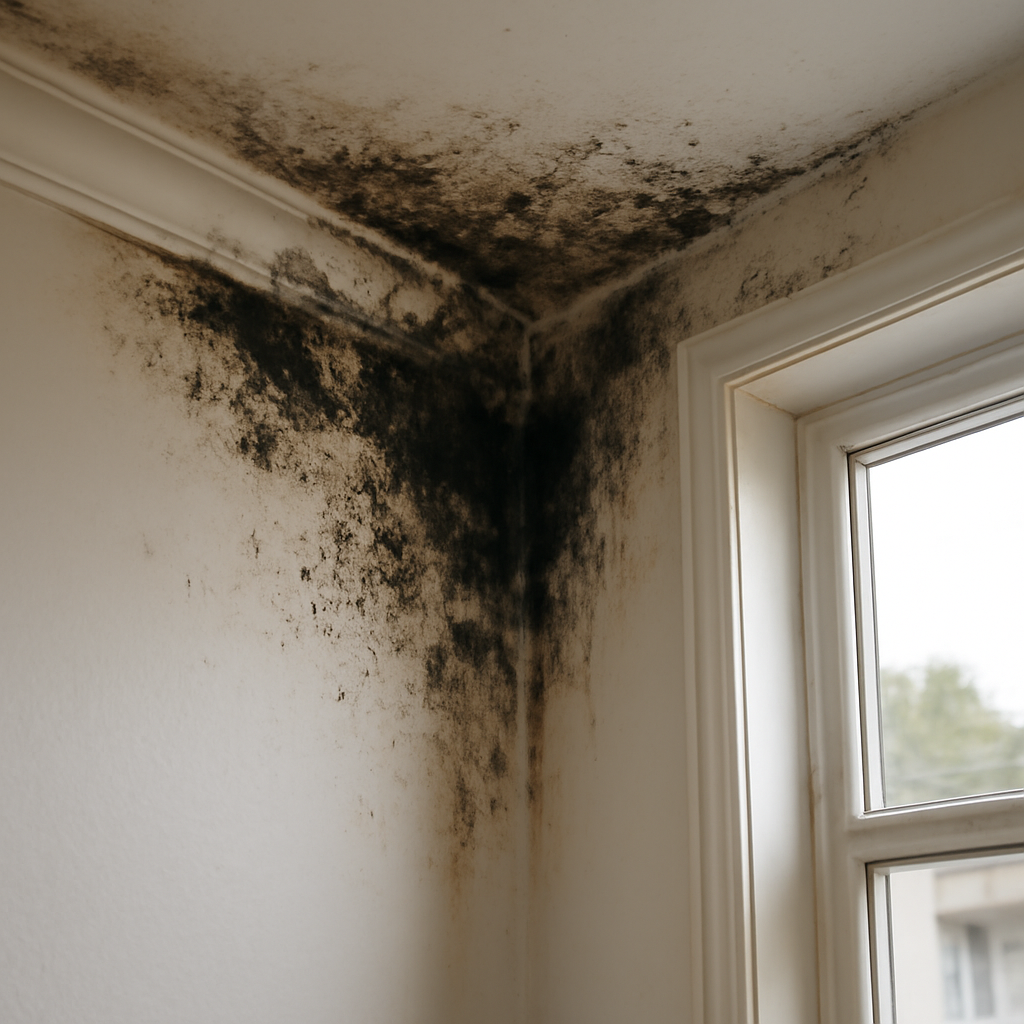
A homeowner who realizes they have breathed in black mold usually wants two answers in the same minute: am I in medical trouble, and what do I do about the wall I just found? This guide separates those two questions clearly. The medical side belongs to a physician. The home side belongs to a moisture investigation that targets the underlying leak, condensation, or saturated material before any cleanup begins. This article summarizes EPA, CDC, and NIEHS guidance on residential mold for homeowners and is not medical advice. If you are experiencing symptoms you believe may be related to mold exposure, please consult a physician.
Is this mold, asbestos, or water damage? Get a free instant screen
Upload a clear photo of the suspect area. You'll get an instant AI screening opinion and what to do next. This is screening guidance, not a professional determination.
Screening guidance only. AI can be wrong. Confirm asbestos, mold type, or lead with lab testing or a licensed professional before acting.
What it means when you have breathed in black mold
Every indoor environment contains some level of fungal spores. Outdoor air pushes them inside through doors, windows, and HVAC intakes. The phrase “black mold” is shorthand the public uses for many dark fungi, but it usually points to Stachybotrys chartarum, a greenish-black mold that grows on chronically wet cellulose materials like drywall paper, ceiling tile, and old wallpaper. Other dark species such as Cladosporium, Alternaria, and Aspergillus niger share a similar visual look. From the homeowner’s standpoint, color alone does not determine risk. Moisture, surface area, and the occupants’ health status determine risk.
Breathing a small number of spores during one short cleanup or wall-cavity inspection is different from spending months in a bedroom whose closet harbors a hidden leak. The CDC has consistently stated that the health effects from mold exposure can include nasal stuffiness, throat irritation, coughing, eye irritation, and in some sensitive individuals, more severe reactions. That is the spectrum a primary-care clinician triages. Your role as a homeowner is to stop the moisture, contain the source, and arrange remediation. Your physician’s role is to evaluate symptoms, history, and any pre-existing respiratory or immune conditions.
One-time inhalation vs ongoing exposure
A brief, accidental inhalation event (you bumped a moldy box in storage and a puff of spores rose) is different in kind from sleeping eight hours a night for two years next to a mold-colonized wall cavity. Both are worth attention. Only one is likely to provoke chronic, layered symptoms. If your concern is a single short event, document what you saw, photograph the source, and watch for symptoms over the next few days. If your concern is months of unexplained respiratory issues in a specific room, that is a higher-priority physician conversation.
Who should call a doctor first
EPA and CDC guidance is clear that certain groups face higher risk from mold exposure: infants and children, older adults, people with weakened immune systems (chemotherapy, transplant recipients, uncontrolled HIV), pregnant women, and anyone with asthma or chronic obstructive pulmonary disease. If anyone in those categories has breathed in black mold and is symptomatic, the right next step is a call to a clinician, not a deep-dive on remediation pricing. Bring your physician a short timeline: when you noticed the mold, how long you were in the room, what symptoms appeared, and whether anything has changed since you left the room.
Healthy adults with no symptoms typically do not need testing. There is no blood or urine panel that reliably confirms “you breathed in this specific mold on this date.” Allergists can run IgE panels for fungal sensitization in patients with allergy patterns. Pulmonologists handle suspected mold-induced asthma or hypersensitivity pneumonitis. Infectious-disease specialists handle suspected invasive infection in the rare immunocompromised case. The decision tree is medical, not homeowner DIY.
Finding the moisture source on the home side
Mold is a symptom. Water is the disease. Every successful remediation starts with a moisture-source investigation, not with a bottle of bleach. Walk the room and ask three questions: where is water entering, where is it accumulating, and why has it not dried out? Plumbing leaks under sinks and behind toilets, slow roof leaks above ceiling stains, condensation on cold-side surfaces, exterior grading that pushes water against the foundation, and bathroom exhaust fans that vent into attics rather than outdoors are the most common culprits in Colorado homes.
A moisture meter is the field tool that confirms whether a wall surface is currently elevated. Pin meters drive two small probes into the substrate and report a moisture content percent. Pinless meters scan a roughly three-quarter-inch deep slab through the surface without piercing it. Either tool can confirm that the drywall behind a stain is still wet. A normal painted gypsum reading sits below the meter’s manufacturer-defined dry range; readings well above that range mean active moisture. Pair the moisture meter with a flashlight, a phone camera, and patience.
When the visible area is small
EPA’s residential guidance allows trained homeowners to clean small mold areas (under roughly 10 square feet) themselves with detergent and water, using PPE that includes an N95 respirator, gloves, and goggles. Anything larger, anything inside the HVAC system, anything affecting drinking water, or anything that exceeds your comfort or capacity is professional work. Drywall paper that has been wet for more than a few days is generally not salvageable; it is usually cut out at least 12 inches past the visible mold edge and replaced.
What professional mold remediation looks like
A qualified remediation contractor follows the IICRC S520 standard. The workflow contains containment (plastic sheeting plus negative-air pressure), source removal (cutting out colonized porous materials), HEPA-vacuuming and damp-wiping all surfaces inside containment, drying the cavity to normal moisture content, and a post-remediation verification (PRV) inspection. PRV often includes an air sample compared to an outdoor baseline. Costs in Front Range Colorado typically run between $1,500 and $6,000 for a single-room residential job. Larger contaminations push higher.
For broader homeowner context on what indoor mold actually is and how testing works, our hub on mold inspection and testing for homeowners walks through the testing-vs-remediation decision in plain language. Readers who specifically want the longer-term physiology view should also see our companion guide on breathing in black mold.
What to watch for over the next days and weeks
After a brief inhalation event, most healthy adults experience no lingering effects. Some experience a few days of nasal stuffiness, scratchy throat, or mild cough that fade as exposure ends. Symptoms that persist beyond two to three weeks, worsen instead of improving, or include shortness of breath, chest tightness, fever, or new wheezing warrant a clinician visit. Keep a simple log: date, symptom, severity from one to ten, and whether you spent significant time in the affected room that day. A log helps your doctor far more than guessing two months later.
Do not start over-the-counter supplements, “detox” protocols, or off-label antifungals on your own. The body clears most spore exposures without intervention. Real treatment for confirmed mold-related illness is targeted by a physician. Avoiding ongoing exposure is the single most effective step you can take.
Front Range-specific considerations
Colorado’s semi-arid climate means whole-house humidity often runs lower than in coastal states, which slows surface mold growth. The flip side is that Front Range mold typically hides: ice-dam leaks in winter, swamp-cooler condensation in summer, sprinkler overspray against stucco, and basement seepage during spring snowmelt. Denver and Boulder housing stock includes a meaningful share of pre-1978 homes with original tar-paper sheathing and limited cavity insulation, which slows drying after a wetting event. When the visible mold patch is on a basement wall, look for the grading and drainage upstream of that wall first.
When to step back and call a professional
Call a remediator when the visible area is greater than 10 square feet, when mold appears inside HVAC supply or return ducts, when the wetting source was sewage or rising groundwater, when occupants are in any of the higher-risk categories above, or when you simply do not feel equipped to do the work safely. Ask the contractor whether they hold IICRC S520 certification, whether they use third-party post-remediation verification, and whether they provide a written scope of work. Avoid contractors who diagnose and remediate without ever identifying the moisture source.
How to document the area before anything moves
Documentation matters even on small homeowner-managed cleanups. Take wide-frame photos of the room showing context, mid-range photos of the affected wall or ceiling, and close-ups of the visible growth pattern with a ruler or scale object in the frame. Save the images with date metadata. Note the temperature and humidity in the room using a small hygrometer. Record any musty odors, stains on adjacent surfaces, and the date you first noticed the problem. This information helps remediators scope the work, helps physicians evaluate exposure timelines, and helps insurance adjusters classify the loss type if a claim becomes relevant.
Move undamaged contents out of the affected zone before any disturbance begins. Soft furnishings, paper records, electronics, and clothing all absorb spores when growth is agitated. Cleaning these items after the fact is expensive and sometimes impossible. Bagging contents in plastic for relocation prevents secondary contamination of clean areas of the home. Hard-surfaced furniture can usually be HEPA-vacuumed and damp-wiped post-remediation; soft items face a higher loss rate.
What insurance covers and excludes
Standard homeowner’s policies in Colorado generally cover mold remediation when the precipitating water event is itself a covered peril (a sudden pipe burst, an appliance failure, a windstorm-driven roof breach). Mold coverage frequently caps at a sublimit of $5,000 to $10,000 even when the underlying water event is fully covered. Long-term seepage, gradual deterioration, surface flooding, and maintenance-related leaks are typically excluded. Read the declarations page of your policy before assuming coverage. A separate flood insurance policy under the NFIP program covers some of the gaps that homeowner’s policies exclude.
If you decide to file a claim, document the moisture source, the discovery date, and the scope of work in writing before agreeing to any contractor’s bid. Insurance adjusters require chain-of-evidence on the source of loss. Photographs taken before remediation begins are usually the strongest documentation you can provide. Some homeowners delay starting work until an adjuster has inspected; verify timing requirements with your carrier directly to avoid jeopardizing coverage.
References
- EPA Mold Cleanup in Your Home — U.S. Environmental Protection Agency
- CDC Basic Facts About Mold and Dampness — Centers for Disease Control and Prevention
- NIEHS Mold Health Topic — National Institute of Environmental Health Sciences
- CDPHE Mold and Indoor Air — Colorado Department of Public Health and Environment
If you are a Front Range homeowner who wants a qualified eye on a mold or moisture finding before remediation begins, reach out through our contact page and we will help connect you with a vetted local inspector.