Blood Lead Test: How It Works and What Results Mean
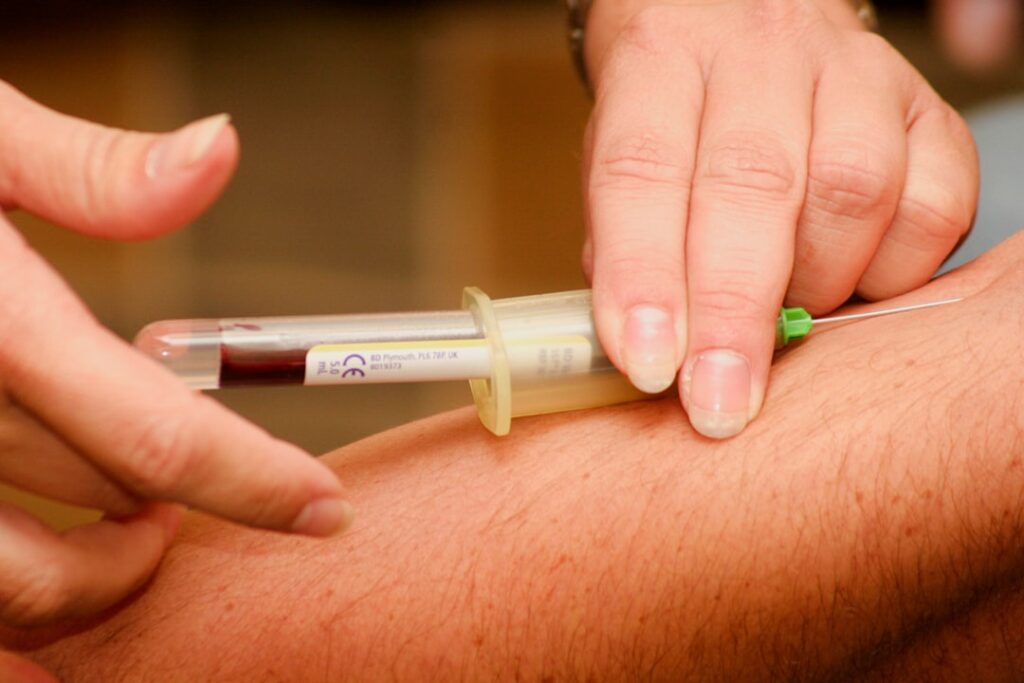
A blood lead test is the standard way to measure how much lead is in a person’s body. Lead does not stay in the bloodstream forever; it moves into bone and soft tissue, so a blood test reflects recent and ongoing exposure rather than a lifetime total. The test is simple, widely available, and the only reliable method to confirm exposure, since lead poisoning often produces no clear symptoms. This guide summarizes CDC and EPA guidance current as of 2026 on how the test works, the difference between capillary and venous samples, what the numbers mean, and how a result connects back to hazards in a home. It is educational; medical interpretation belongs to a clinician.
Asbestos or biohazard concern? Speak with a certified contractor.
📞 Call (877) 742-8496What a Blood Lead Test Measures
The test reports the concentration of lead in blood, expressed in micrograms per deciliter (µg/dL). Because lead is distributed throughout the body, the blood level captures recent exposure and continuing exposure more than it captures lead already stored in bone. That makes the test useful for catching active hazards while there is still time to remove the source.
Laboratories analyze the sample using sensitive instruments capable of detecting low concentrations. The result is a number, but the meaning of that number depends on age, exposure history, and clinical context. For children especially, the value is read against a population-based reference rather than a fixed safety line.
A blood test answers the “how much” question. It does not, by itself, answer “from where.” Pairing a result with a source investigation, often starting with an older home, is what turns a number into action. The relationship between exposure and pre-1978 housing runs through the entire asbestos and lead housing-hazard hub.
One point often surprises people: a blood lead level can decline even while harm continues, because lead moves out of the blood and into bone over weeks. This means a single normal reading does not prove there was never significant exposure, and a falling level does not necessarily mean the body burden is gone. Clinicians interpret a blood result in light of timing and history, which is another reason the number belongs in a medical context rather than being read in isolation.
Why Lead Poisoning Often Goes Unnoticed
Lead rarely announces itself. At the low and moderate levels most affected people experience, there are usually no clear symptoms, and any effects can be vague enough to attribute to other causes. This silence is the central reason testing matters. Relying on how a person feels is unreliable, because measurable exposure and even meaningful health effects can occur long before anything obvious appears.
That is especially true for children, whose developing nervous systems are sensitive to amounts that would not visibly affect an adult. For adults with occupational exposure, symptoms may also lag behind a rising body burden. The blood lead test exists precisely to detect exposure that the senses cannot, while there is still time to find the source and stop further intake.
Capillary vs. Venous Sampling
There are two ways to collect the blood. A capillary sample comes from a finger prick (or a heel prick in infants) and yields a few drops, often used for fast screening. A venous sample is drawn from a vein with a needle and is the confirmatory gold standard.
The trade-off is accuracy versus convenience. Capillary collection is quick and child-friendly but vulnerable to contamination from lead dust on the skin, which can produce a falsely high reading. CDC guidance therefore recommends confirming any elevated capillary result with a venous draw before drawing conclusions or beginning follow-up. The finger-prick method and its limits are explained further in the guide to the finger-prick lead test.
Why Confirmation Matters
Acting on an unconfirmed capillary number can cause unnecessary worry or, worse, miss a real exposure if the sample was diluted. Venous confirmation removes the skin-contamination variable and gives a level that clinicians and public-health programs can rely on for decisions.
The CDC Blood Lead Reference Value
For children, the CDC does not define a safe level. Instead it publishes a blood lead reference value (BLRV) to identify children whose levels are higher than most. The current value is 3.5 µg/dL. A result at or above that mark flags a child for follow-up testing, a source investigation, and case management where programs exist.
The reference value is recalculated periodically based on national survey data, so it can shift over time. It is a screening trigger, not a threshold of harm. Any detectable lead is a reason to look for and remove the source, and the clinical significance of a specific value is determined by a physician.
Adults are evaluated against different benchmarks than children, often in the context of occupational exposure. Workplace monitoring programs track adult blood lead levels and trigger actions such as removal from exposure at thresholds set under OSHA-related standards. Pregnant people are a special case because lead crosses the placenta, so guidance treats their results with particular care. The common thread is that the meaning of a number depends on who the person is and why they were tested.
Who Should Get Tested
Testing focuses on those most at risk. Young children, particularly those in or visiting pre-1978 housing, are the priority group, and Medicaid rules require testing at set ages. Pregnant people with known exposure may be tested because lead crosses the placenta. Adults with occupational exposure, such as in renovation, demolition, battery work, or shooting ranges, are screened under OSHA-related monitoring programs.
For children specifically, audience-targeted guidance differs by age. The considerations for older children are covered in the guide to the lead test for kids, while infants have their own screening schedule. A pediatrician or occupational-health provider decides who needs testing and when.
Sources Behind an Elevated Result
When a test comes back elevated, the next step is finding the source. The most common one in homes is deteriorating lead-based paint and the dust it sheds, especially around windows and doors in houses built before the 1978 ban. Other sources include lead in drinking water from older service lines or plumbing, contaminated soil, imported pottery and remedies, and occupational dust carried home on clothing.
EPA and HUD guidance stress identifying and controlling these sources rather than relying on the body to clear lead on its own. For paint and dust hazards, that often means a professional risk assessment and, where needed, certified abatement. Removing the source prevents further exposure, which is the goal a blood test is meant to support.
The investigation is often a process of elimination. A clinician and, where available, a public-health program will ask about the age of the home, recent renovations, the family’s occupations and hobbies, water source, and imported goods in the household. Each answer narrows the list. A pre-1978 home with peeling paint points one way; a parent who works in battery manufacturing or a hobby involving lead solder points another. Matching the source to the exposure is what makes removal effective rather than guesswork.
How Lead Is Measured in the Lab
Once collected, the sample is analyzed with instruments sensitive enough to detect lead at very low concentrations. Laboratories that report blood lead results participate in quality programs designed to keep their measurements accurate and comparable, which matters because clinical and public-health decisions hinge on small differences in the reported value. The unit is always micrograms per deciliter, so results from different labs can be read against the same reference value.
This is also why a point-of-care capillary screen and a laboratory venous test are treated differently. A point-of-care device gives a fast answer in the clinic, useful for deciding whether further action is needed, while the laboratory venous analysis is the value relied upon for diagnosis and management. Understanding which method produced a number explains why a quick screening result might differ from a later confirmatory one, and why the confirmatory value is the one that counts.
What Happens After a High Result
A clinician guides the response. The typical sequence is confirming a capillary result venously, repeating the test to monitor the trend, investigating the environment, and reducing contact with the source. Families can reach Poison Control at 1-800-222-1222 for exposure guidance. Higher levels may prompt additional medical evaluation, all determined by the treating physician rather than self-directed.
Follow-up testing tracks whether the intervention is working. Once a source is removed or controlled, a clinician schedules repeat blood tests to confirm the level is trending down. A level that does not fall suggests an ongoing exposure that has not been fully addressed, prompting another look at the environment. This loop of test, intervene, and retest is the backbone of managing lead exposure, and it depends entirely on accurate blood measurements at each stage.
How to Prepare for the Test
The blood lead test requires little preparation. There is no need to fast, and the procedure is quick. For a capillary screen, thorough handwashing before the prick reduces the chance that surface dust contaminates the sample, which is a small step that improves reliability. For a venous draw, the standard considerations of any blood test apply, and a clinician will explain anything specific to the situation.
The more important preparation is informational. Coming to the appointment ready to describe the home’s age, any recent renovations, the family’s occupations and hobbies, and the water source helps a clinician interpret the result and plan an investigation if the level is elevated. The test measures the body; the history points toward the source, and the two together drive an effective response.
How Often to Repeat a Blood Lead Test
There is no single schedule that fits everyone, because repeat testing depends on the level found and the person’s ongoing risk. For children with an elevated result, a clinician sets a recheck interval to confirm the level is falling once a source has been addressed, with closer follow-up for higher levels. For adults with occupational exposure, workplace monitoring programs test on a recurring schedule tied to their exposure.
For people at risk who tested in the normal range, the question is whether their exposure situation has changed. Moving into an older home, beginning a renovation, or starting a job with lead exposure are all reasons to test again. A single reassuring result reflects a moment in time, so anyone whose circumstances change should revisit testing with their clinician rather than assume the earlier result still holds.
Where to Get a Blood Lead Test
For most people, a blood lead test is arranged through a primary care provider or pediatrician, who can order it during a routine visit. Public-health clinics and community health centers also offer testing, often as part of childhood screening programs, and may provide it at low or no cost for eligible families. Workers with occupational exposure are typically tested through employer-arranged programs that follow workplace monitoring requirements.
Accessing testing is rarely the hard part; the more important step is acting on the result. A clinician can order the test, interpret the number against the appropriate reference, and coordinate follow-up if the level is elevated. Families with exposure concerns can also reach Poison Control at 1-800-222-1222 for guidance, and for the home side of any investigation, a certified lead professional identifies whether paint, dust, or water is the source. The blood test and the home assessment together turn a concern into an actionable plan.
References
- CDC blood lead reference value and testing guidance — Centers for Disease Control and Prevention
- EPA lead paint, dust, and water hazard information — U.S. Environmental Protection Agency
- OSHA occupational lead exposure and monitoring — Occupational Safety and Health Administration
- HUD lead hazard control standards for housing — U.S. Department of Housing and Urban Development
Homeowners on the Front Range who want a lead hazard assessment behind an elevated test can get in touch with a vetted local inspector here to pinpoint paint, dust, or water sources.