Finger Prick Lead Test: How the Capillary Method Works
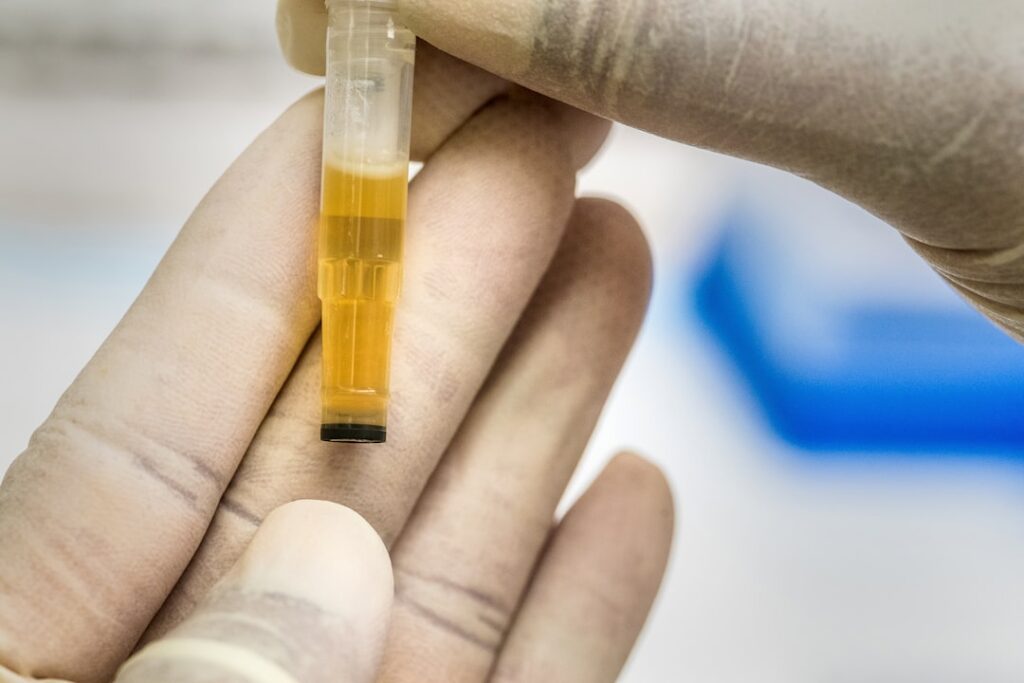
A finger prick lead test is the quick, low-stress way clinics screen children and adults for lead exposure. A lancet pricks a fingertip, a few drops of blood are collected, and the sample is analyzed for lead content. The method is fast and convenient, which makes it popular for screening, but it carries an important limitation: capillary samples can be contaminated by lead on the skin, so an elevated result needs venous confirmation. This guide summarizes CDC and EPA guidance current as of 2026 on how the capillary method works, where it fits in screening, and how to interpret results. It is educational; testing and medical decisions belong to a clinician.
Part of our Lead Paint & Lead Testing guide — start there for the full picture →
Asbestos or biohazard concern? Speak with a certified contractor.
📞 Call (877) 742-8496How the Finger Prick Lead Test Works
The procedure is brief. The skin is cleaned, a spring-loaded lancet makes a small puncture on a fingertip (or a heel in infants), and drops of blood are collected onto a test card or into a small tube. Depending on the setting, the sample is read on a point-of-care analyzer for an immediate result or sent to a laboratory.
Because only a few drops are needed and no vein is involved, the test is well suited to young children and to screening programs that test many people quickly. It produces a lead concentration in micrograms per deciliter (µg/dL), the same unit a venous test reports.
The capillary test answers whether further attention is warranted. It is a first pass, not the last word. Where it fits among the broader set of lead tests, and how it relates to confirmatory methods, is part of the wider picture covered in the asbestos and lead pre-1978 housing hub.
The appeal of the method comes down to access. A finger prick can be done in a pediatric office, a community clinic, a mobile screening van, or a workplace health station, often with results available the same visit when a point-of-care analyzer is used. That accessibility is what makes broad screening programs possible. A test that required a venous draw for every child would screen far fewer of them, so the capillary prick lowers the barrier to catching exposure early.
Point-of-Care vs. Lab-Analyzed Samples
Not all finger-prick tests are processed the same way. Some clinics use a point-of-care analyzer that reads the drop of blood on the spot and gives an immediate number. Others collect the capillary sample onto a card or into a small tube and send it to a laboratory for analysis. Both are capillary collections, and both share the same vulnerability to skin contamination, but they differ in turnaround.
The point-of-care approach has the advantage of an answer during the visit, which is valuable for families who might not return for results. The lab-analyzed approach can offer high precision but takes longer. In either case, the screening result is provisional. An elevated number from a point-of-care device or a mailed-in capillary card still calls for venous confirmation before a clinician treats it as a true level.
Capillary Screening vs. Venous Confirmation
The central distinction in lead testing is between screening and confirmation. The finger-prick capillary sample is a screening tool. A venous draw, taken from a vein with a needle, is the confirmatory standard because it is far less prone to skin contamination.
CDC guidance is explicit: an elevated capillary result should be confirmed with a venous test before a clinician acts on it. The reason is that lead dust on the fingertip, common in a dusty older home, can cling to the skin even after cleaning and inflate the reading. A clean venous draw removes that variable. This two-step approach, screen then confirm, is the standard workflow, and it is the same one described in the guide to the blood lead test.
Why Contamination Skews Capillary Results
A child playing on a floor with settled lead dust may have lead on their hands. Even with cleaning, trace dust can transfer to the drop of blood as it forms, raising the measured level above the true blood concentration. Venous collection bypasses the skin surface, which is why it is trusted for decisions.
Careful technique reduces but does not eliminate the risk. Thorough handwashing before the prick, wiping the finger, and discarding the very first drop all help lower surface contamination. These steps improve the reliability of a capillary screen, yet the possibility of residual dust is exactly why guidance still calls for venous confirmation of any elevated result. The contamination risk is a property of sampling at the skin surface, not a flaw in any particular clinic’s procedure.
Reading a Finger Prick Result
Results are reported in µg/dL. For children, the CDC uses a blood lead reference value of 3.5 µg/dL to flag those with more lead than most of the population. A capillary result at or above 3.5 µg/dL is a signal to confirm venously, not a confirmed diagnosis.
There is no known safe level of lead, so even a modest detectable result is a reason to look for the source. But a single elevated finger-prick number should not trigger panic or treatment on its own. The venous confirmation establishes the real level, and a clinician interprets what it means for the individual.
Where the Finger Prick Test Is Used
Capillary screening shows up in pediatric offices, public-health clinics, mobile screening events, and community programs. Its speed and tolerability make it ideal for screening large numbers of young children, the group at highest risk. Some adult occupational programs also use point-of-care capillary testing as an initial check, with venous follow-up for anyone flagged.
For children, the screening schedule and risk factors differ by age. Infants and young children have specific recommendations described in the guides to the lead test for kids and lead testing for babies. The finger-prick method is simply the collection technique most of those screens use.
Public-health programs lean on capillary screening because it scales. During radon and lead awareness efforts, community events, and well-child campaigns, screening many children quickly is the goal, and a finger prick fits that need far better than a venous draw. The two-step model, screen broadly with capillary tests, then confirm the flagged cases venously, is an efficient way to catch exposure across a population while reserving the more involved procedure for the children who actually need it.
What Drives an Elevated Reading
When a result comes back high, the source is usually environmental. Deteriorating lead-based paint and its dust in pre-1978 homes lead the list, followed by lead in drinking water from older plumbing, contaminated soil, and imported consumer goods. EPA and HUD guidance emphasize finding and controlling the source, because lowering exposure depends on removing the cause rather than on the body clearing lead over time.
For families, an elevated screen is often the first clue that an older home needs a lead hazard assessment. Confirming the blood level venously and investigating the home typically happen in parallel.
After an Elevated Finger Prick Test
A clinician directs next steps: venous confirmation, repeat testing to follow the trend, and a source investigation of the home and environment. Families can contact Poison Control at 1-800-222-1222 for exposure guidance. Reducing contact with the source, frequent wet-cleaning of floors and surfaces, and addressing paint hazards through certified professionals are common responses. Any medical management of higher confirmed levels is decided by the treating physician.
What the Finger Prick Test Cannot Tell You
The capillary screen is good at one thing: flagging whether a person’s blood lead may be elevated enough to warrant a closer look. It does not diagnose the cause, it does not measure the body’s total lead burden stored in bone, and an unconfirmed elevated reading does not establish a true level. Treating the finger-prick number as the final answer, in either direction, misreads what the test is designed to do.
A low capillary result is reassuring but should still be considered alongside a person’s exposure history, since a single reading reflects mostly recent exposure. A high capillary result is a prompt to confirm, not a verdict. Understanding these limits keeps the test in its proper role as a first step. The reliable level, the source, and the plan all come from the steps that follow, guided by a clinician and, for the home, a certified lead professional.
What to Expect at a Screening Appointment
For parents bringing a child in for a finger-prick screen, the visit is brief and low-stress. A clinician cleans the fingertip or heel, uses a small lancet, and collects a few drops of blood. Distraction and a quick technique usually keep discomfort minimal. If the clinic uses a point-of-care analyzer, results may be ready before the family leaves; otherwise the sample goes to a laboratory and results follow.
Coming prepared helps the clinician act on the result. Knowing the age of the home, whether any renovation is underway, the family’s occupations and hobbies, and the water source gives context if a number comes back elevated. The screen measures the blood; the history points toward a possible source. Together they let a clinician decide whether venous confirmation and a home investigation are warranted.
From Screen to Action
The value of the finger-prick test lies in what it sets in motion. A normal result in a low-risk setting may simply mean continuing routine care. An elevated result moves a family into a clear sequence: venous confirmation to establish the true level, repeat testing to follow the trend, and a look at the home and environment to find the source. Families can reach Poison Control at 1-800-222-1222 for exposure guidance along the way.
For the home side of that investigation, a certified lead professional can identify whether lead-based paint and dust are present and where. Pairing the medical follow-up with an environmental assessment is what converts a flagged screening result into an effective response. The finger prick is the inexpensive, accessible doorway; the steps beyond it are where exposure is confirmed, sourced, and stopped.
Finger Prick Testing for Adults
Although capillary screening is most associated with children, adults are sometimes screened this way too, particularly in occupational settings. Workers in construction, demolition, renovation of older buildings, battery manufacturing, and certain hobbies involving lead solder or ammunition can accumulate lead, and a point-of-care finger-prick test offers a fast initial check. As with children, an elevated adult capillary result is confirmed with a venous draw before any action.
The principle is identical across ages: the finger prick screens, and the venous draw confirms. What differs is the benchmark used to interpret the number and the follow-up that results, which for occupational exposure ties into workplace monitoring requirements. Adults with potential exposure who screen elevated should follow up with their clinician or occupational-health program for venous confirmation and guidance, and address any take-home exposure that could affect children in the household.
The Bigger Picture of Lead Screening
The finger-prick test fits into a broader public-health strategy aimed at catching lead exposure early and removing its sources. Widespread, low-barrier screening identifies people who need closer attention, while the confirmatory and environmental steps that follow address the actual problem. No single test does everything; each plays a defined role in a sequence designed to protect health.
For families, the practical takeaway is to treat a finger-prick result as the start of a conversation with a clinician rather than a final answer. A normal result in a low-risk setting offers reassurance, an elevated one prompts confirmation and investigation, and either way the next steps belong to a professional. Understanding the test’s role keeps expectations realistic and ensures the right follow-up happens when it matters.
References
- CDC guidance on capillary screening and venous confirmation — Centers for Disease Control and Prevention
- EPA lead paint, dust, and water hazard information — U.S. Environmental Protection Agency
- HUD lead hazard control in older housing — U.S. Department of Housing and Urban Development
- NIEHS research on lead exposure and health — National Institute of Environmental Health Sciences
Frequently asked questions
Is a finger prick lead test accurate?
It is a reliable screening tool but can read falsely high if lead dust on the skin contaminates the sample. CDC guidance calls for confirming any elevated capillary result with a venous blood draw.
Why does a high finger prick result need venous confirmation?
Lead dust on the fingertip can transfer to the blood drop and inflate the reading. A venous draw bypasses the skin and gives a level clinicians rely on for decisions.
What level on a finger prick test is concerning?
For children, the CDC reference value is 3.5 µg/dL. A capillary result at or above that flags the need for venous confirmation, not a confirmed diagnosis. A clinician interprets the result.
Who usually gets a finger prick lead test?
Young children are the main group, since capillary screening is fast and tolerable. Public-health clinics, pediatric offices, and some adult occupational programs use it as a first-pass screen.
Front Range homeowners who want the source behind an elevated screen identified can get in touch with a vetted lead inspector here.