Best Wood Glue (2026): 7 Picks Compared for Home Repairs

The best wood glue for a house is rarely the strongest one on the shelf. Almost every yellow or tan wood glue sold today claims a bond stronger than the wood itself, so the real choice comes down to water resistance, working time, cleanup and the job in front of you. A loose chair rung, a split cabinet face frame, an exterior window trim joint and a hairline crack in a picture frame each want something different. This guide sorts current listings by those jobs, explains the water-resistance ratings printed on the bottles, and flags the repairs where glue is only covering up a moisture or rot problem.
Part of our Structure & Exterior guide — start there for the full picture →
As an Amazon Associate we earn from qualifying purchases.
How we compared: we compared 14 current Amazon listings on what each listing states: glue chemistry, water-resistance rating, open and clamp time, cure time, minimum application temperature, color and cleanup. Several listings are different bottle sizes of the same formula, so the 14 listings cover 7 distinct glues. We did not lab-test these products or use them hands-on, and prices and availability change, so check the current listing before buying.
Quick picks: the best wood glue by job
| Product | Best for | Key features | Price | Buy |
|---|---|---|---|---|
| Titebond III Ultimate (16 oz) | Best all-round wood glue |
| $9.61as of Nov 10, 2026 8:02 pm GMT+0000 | Buy now →Check current price |
| Gorilla Ultimate Waterproof | Outdoor builds needing working time |
| $5.97as of Nov 10, 2026 8:02 pm GMT+0000 | Buy now →Check current price |
| Titebond II Premium (16 oz) | Water-resistant everyday glue |
| $7.57as of Nov 10, 2026 8:02 pm GMT+0000 | Buy now →Check current price |
| Titebond Original (8 oz) | Indoor furniture and trim |
| $3.68as of Nov 10, 2026 8:02 pm GMT+0000 | Buy now →Check current price |
| Gorilla Wood Glue (8 oz) | Fast clamp, quick projects |
| $4.37as of Nov 10, 2026 8:02 pm GMT+0000 | Buy now →Check current price |
| LMQ Wood Super Glue (thick) | Instant fixes on small parts |
| $7.99as of Nov 10, 2026 8:02 pm GMT+0000 | Buy now →Check current price |
| Weldbond Multi-Surface | Clear-drying, mixed materials |
| $9.99as of Nov 10, 2026 8:02 pm GMT+0000 | Buy now →Check current price |
Prices are Amazon’s listed prices as of the time shown and change often; check Amazon for today’s price. As an Amazon Associate we earn from qualifying purchases.
The 7 picks, compared listing by listing
1. Titebond III Ultimate Wood Glue (16 oz, 1414) — Best All-Round Wood Glue

Waterproof wood glue for interior and exterior work, with a stated 8 to 10 minute open time and 30 minute clamp time.
Check price on Amazon$9.61 as of Nov 10, 2026 8:02 pm GMT+0000 — prices change; see Amazon for current price.Why we like it
- One bottle covers indoor and outdoor repairs
- Longer open time than the fast-set yellow glues
- Listing says it sands easily and resists heat
- Water cleanup while still wet
| Specification | Details |
|---|---|
| Glue type | One-part waterproof wood glue (tan when dry) |
| Water resistance | Sold as waterproof; the 4 oz and gallon listings of this formula state ANSI/HPVA Type 1 |
| Open / clamp time | 8 to 10 minute open time (title); about 30 minute clamp time |
| Safety labeling | Listing cites conformance to ASTM D4236 |
| Size | 16 fl oz bottle, model 1414 |
| Warranty | Listing states no guarantee or warranty |
Titebond III 1414 — 16 fl oz, waterproof one-part, 8–10 min open, 30 min clamp, water cleanup, ASTM D4236
The Only Formula Here Sold in Three Sizes With a Type 1 Claim
Titebond III appears three times on this shelf: a 4 oz bottle, this 16 oz bottle and a gallon jug. Only three of the 14 listings state an ANSI/HPVA Type 1 water-resistance result at all, and two of those three are Titebond III (the 4 oz and the gallon); the third is Gorilla Ultimate. The 16 oz listing itself leans on the word “waterproof” and on its interior and exterior claim rather than repeating the standard, so treat the Type 1 result as coming from the sibling listings of the same formula.
The smaller 4 oz listing adds details this one skips: an application threshold as low as 45°F, low-VOC, solvent-free wording, and a longer open assembly time aimed at complex glue-ups. The gallon listing adds FDA approval for indirect food contact, which matters for cutting boards and wooden utensils. For a household, the 16 oz size is the practical middle: enough for a season of repairs, small enough not to skin over before you use it.
What the listing does not state is a cure time to full strength, a shelf life, or any coverage figure. It also lists no warranty at all, unlike the Titebond Original and Titebond II listings, which carry a replacement-only guarantee from Franklin International.
Pros
- Same bottle handles interior and exterior joints
- Longer open time for multi-part glue-ups
- Sibling listings state Type 1 and a 45°F minimum
- Cleans up with water before it cures
Cons
- This listing does not restate the Type 1 standard
- Dries tan, which can show on light woods
- No warranty stated on this size
Check Titebond III Ultimate (16 oz) price on Amazon
2. Gorilla Ultimate Waterproof Wood Glue (8 oz) — Best for Outdoor Builds Needing Working Time

PVA wood glue that states an ANSI/HPVA Type 1 pass, up to 15 minutes of working time and a natural tan bond line.
Check price on Amazon$5.97 as of Nov 10, 2026 8:02 pm GMT+0000 — prices change; see Amazon for current price.Why we like it
- States a Type 1 water-resistance pass
- Up to 15 minutes to align parts
- No foaming, natural tan glue line
- Sandable and paintable after cure
| Specification | Details |
|---|---|
| Glue type | Water-based PVA wood glue |
| Water resistance | Passes ANSI/HPVA Type 1, per the listing |
| Working time | Extended working time of about 15 minutes |
| Exposure claims | Listing says the bond withstands water, sun and extreme temperatures |
| Size / model | 8 oz, model 104404 (an 18 oz size, 104406, is also listed) |
Gorilla Ultimate 104404 — 8 oz PVA, ANSI/HPVA Type 1, ~15 min working time, natural tan, sandable/paintable
The Longest Stated Working Time on the Shelf
Four of the 14 listings mention open or working time at all. Titebond III’s title gives 8 to 10 minutes; both Gorilla Ultimate sizes give up to 15 minutes, the longest stated on this shelf. That extra time matters on outdoor glue-ups like a planter box, a gate frame or a long trim scarf joint, where you are still squaring the assembly when a fast glue starts to grab.
The 18 oz listing of the same formula fills in more numbers: 20 to 30 minutes of clamp time, full cure in 24 hours, and an application temperature as low as 50°F. Only two listings on the shelf state any minimum temperature, and Titebond III’s 45°F is slightly lower than Gorilla’s 50°F, which can matter in a cold Front Range garage in March.
The listing does not state a shelf life or a VOC figure, and the “100% waterproof” wording on the 18 oz page is a marketing phrase; the Type 1 result on the 8 oz page is the specific claim to rely on.
Pros
- Type 1 result stated directly on this listing
- Longest working time stated here
- Natural tan line blends with many woods
Cons
- 50°F minimum on the sibling listing, higher than Titebond III
- No VOC or shelf-life figure
- Long working time slows quick repairs
Check Gorilla Ultimate Waterproof price on Amazon
3. Titebond II Premium Wood Glue (16 oz, 5004) — Best Water-Resistant Everyday Glue

Honey-cream wood glue described as the first one-part glue to pass ANSI Type 2 water resistance, with a fast set.
Check price on Amazon$7.57 as of Nov 10, 2026 8:02 pm GMT+0000 — prices change; see Amazon for current price.Why we like it
- Type 2 water resistance for covered exterior work
- Strong initial tack shortens hold time
- Heat and solvent resistant per listing
- States a 12 month shelf life
| Specification | Details |
|---|---|
| Glue type | One-part wood glue, honey cream color |
| Water resistance | ANSI Type 2; listing calls it the first one-part glue to pass |
| Set | Strong initial tack and fast set; exact clamp time not stated |
| Other claims | Heat and solvent resistant; sandable and paintable; FDA food-contact approval in title |
| Size / shelf life | 16 fl oz; 12 month shelf life stated |
Titebond II 5004 — 16 fl oz, ANSI Type 2, fast set, heat/solvent resistant, FDA food-contact, 12-month shelf life
The Only Listing That States a Shelf Life of One Year
Three listings on the shelf claim Type 2 water resistance: this bottle, the Titebond II gallon and the original Gorilla Wood Glue. Type 2 is the water-resistant tier, a step below the Type 1 waterproof tier. For a deck box under an eave, a mudroom bench or a bathroom vanity face frame, Type 2 is usually plenty; for a fully exposed exterior joint, step up to Titebond III or Gorilla Ultimate.
Two listings give a shelf life: this one at 12 months and the 4 oz Titebond Original at 24 months when sealed and stored below 75°F. Glue that has thickened, gone stringy or turned chalky in the bottle should be replaced rather than thinned. Two listings mention FDA food-contact approval, this one and the Titebond III gallon.
The listing does not give an open time, clamp time or minimum temperature, so check the bottle label before a cold-weather job.
Pros
- Type 2 resistance suits most covered exterior work
- Fast tack for quick joints
- Shelf life stated, so you know when to toss it
Cons
- Not rated for fully exposed outdoor joints
- No open or clamp time in the listing
- Short open time can rush large glue-ups
Check Titebond II Premium (16 oz) price on Amazon
4. Titebond Original Wood Glue (8 oz, 5063) — Best for Indoor Furniture and Trim

Aliphatic resin glue with fast tack, a translucent dry film and a stated VOC level under 0.2 g/L.
Check price on Amazon$3.68 as of Nov 10, 2026 8:02 pm GMT+0000 — prices change; see Amazon for current price.Why we like it
- Lowest specific VOC figure stated here
- Nonflammable, water cleanup
- Sands without softening under finish
- Also bonds hardboard, particleboard and leather
| Specification | Details |
|---|---|
| Glue type | Aliphatic resin (yellow) wood glue |
| Water resistance | No water-resistance rating stated; treat as interior glue |
| VOC | Under 0.2 g/L, per listing |
| Materials | Wood, hardboard, particleboard, leather, cloth and other porous materials |
| Size / model | 8 fl oz, model 5063 (4 oz and gallon sizes also listed) |
Titebond Original 5063 — 8 fl oz aliphatic resin, fast tack, under 0.2 g/L VOC, nonflammable, interior use
The Only Listing With a Numeric VOC Figure
Four listings mention VOCs: the three Titebond Original sizes and the 4 oz Titebond III. Only the Titebond Original listings put a number on it, under 0.2 grams per liter, and add that the formula is nonflammable. That is a useful detail for glue-ups done inside a closed house in winter, when windows stay shut.
No water-resistance rating appears in any of the three Titebond Original listings, which is the honest trade-off. This is the glue for a wobbly dining chair, a loose drawer joint, a cabinet face frame or interior baseboard miters, not for anything that will see rain or a damp crawlspace.
The listing does not state open time, clamp time or cure time, and it does not say how the dried film looks under stain beyond “unaffected by most stains, paints and finishes.”
Pros
- Specific low VOC figure and nonflammable
- Fast tack keeps clamping short
- Bonds several porous non-wood materials
Cons
- No water-resistance rating at all
- No open or clamp time stated
- Yellow line can show on pale wood
Check Titebond Original (8 oz) price on Amazon
5. Gorilla Wood Glue (8 oz) — Best Fast-Clamp Glue for Quick Projects
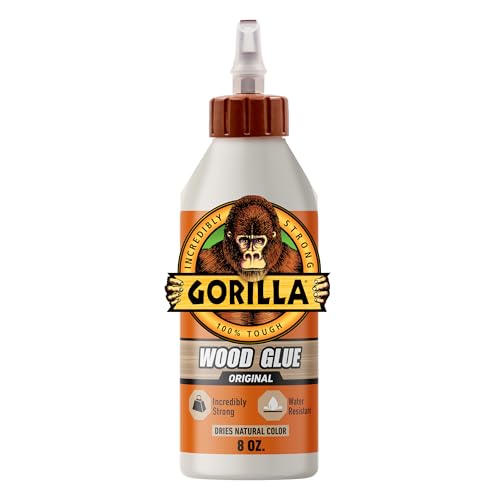
Water-resistant PVA with a 20 to 30 minute clamp time, full cure in 24 hours and an ANSI/HPVA Type 2 pass.
Check price on Amazon$4.37 as of Nov 10, 2026 8:02 pm GMT+0000 — prices change; see Amazon for current price.Why we like it
- Clear clamp and cure numbers in the listing
- Type 2 water resistance stated
- Natural color line, no foaming
- Listing says made in USA
| Specification | Details |
|---|---|
| Glue type | Water-based PVA wood glue |
| Water resistance | Passes ANSI/HPVA Type 2 |
| Clamp / cure | 20 to 30 minute clamp; fully cured in 24 hours |
| Materials | Hardwoods, softwoods and natural wood composites |
| Cleanup | Damp cloth when wet; scrape and sand once dry |
Gorilla Wood Glue 6200022 — 8 oz PVA, ANSI/HPVA Type 2, 20–30 min clamp, 24 h cure, natural color
The Only Type 2 Listing That Gives Both Clamp and Cure Times
Of the three Type 2 listings, this is the only one that spells out both a clamp window and a full-cure time. Six listings on the shelf mention clamp time in some form, but several only say “fast set” or “reduce clamp time” without a number. Knowing you can unclamp at 30 minutes and load the joint the next day makes weekend repairs easier to plan.
The listing also tells you how to remove squeeze-out once it hardens: scrape with a putty knife, razor or scraper, then sand. That is good practice for any PVA glue, because dried glue blocks stain and leaves a pale halo around the joint.
It does not state an open time, a minimum application temperature or a shelf life.
Pros
- Clamp and cure times both stated
- Type 2 covers covered exterior work
- Clear cleanup instructions
Cons
- No open time, so glue-ups can feel rushed
- Not rated waterproof
- No minimum temperature stated
Check Gorilla Wood Glue (8 oz) price on Amazon
6. LMQ Wood Super Glue, Thick (30 g) — Best for Instant Fixes on Small Parts
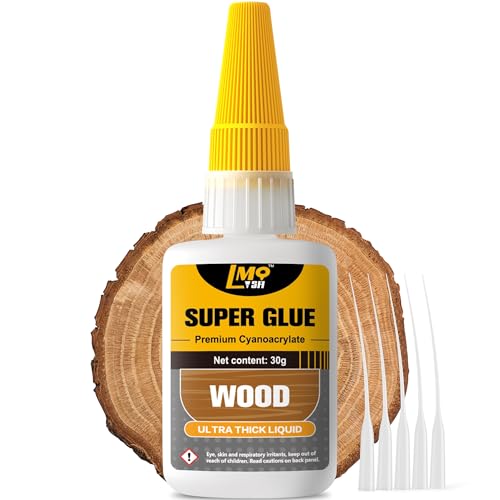
Cyanoacrylate glue for wood that dries in 30 to 60 seconds, with precision micro tips and an anti-clog cap.
Check price on Amazon$7.99 as of Nov 10, 2026 8:02 pm GMT+0000 — prices change; see Amazon for current price.Why we like it
- Sets in under a minute, no clamps
- Thick version fills small gaps
- Micro tips for tight spots
- Bonds wood to metal, glass and ceramic
| Specification | Details |
|---|---|
| Glue type | Cyanoacrylate (CA), thick viscosity |
| Set / cure | Dries in 30 to 60 seconds; full cure within 24 hours |
| Water resistance | Described as waterproof and heat resistant; no ANSI/HPVA rating stated |
| Applicator | Anti-clog cap and precision micro tips |
| Size | 30 g (about 1 oz); a thin version is also listed |
LMQ LASH LMQ-BWU-30g — thick CA glue, 30–60 s set, 24 h cure, micro tips, anti-clog cap
One of Only Two Instant Glues on the Shelf
Two of the 14 listings are cyanoacrylate rather than PVA: this thick version and a thin version from the same seller. The thin one is described as penetrating fine cracks and setting in 10 to 30 seconds; the thick one fills small gaps and sets in 30 to 60 seconds. Thick is the safer choice for most household fixes, because it stays where you put it on a vertical surface or a chipped edge.
CA glue is the right tool for a snapped picture-frame corner, a loose piece of veneer, a cracked drawer pull or a wood-to-metal joint where clamping is awkward. It is the wrong tool for structural furniture joints or anything large, where a PVA glue that soaks into the fibers gives a tougher bond.
The listing makes no water-resistance claim tied to a standard, gives no shelf life, and does not mention skin-bonding precautions. CA glue bonds skin in seconds, so keep acetone-based nail polish remover nearby and wear gloves.
Pros
- No clamping needed
- Works on mixed materials
- Precise applicator for small repairs
Cons
- Not suited to structural wood joints
- No standard-based water rating
- Small bottle; can bond fingers instantly
Check LMQ Wood Super Glue (thick) price on Amazon
7. Weldbond Multi-Surface Glue (5.4 oz) — Best Clear-Drying Glue for Mixed Materials

White glue that dries crystal clear, sets in about 20 minutes without clamping and bonds wood, tile, glass and fabric.
Check price on Amazon$9.99 as of Nov 10, 2026 8:02 pm GMT+0000 — prices change; see Amazon for current price.Why we like it
- Only glue here that dries clear
- No solvents or harsh fumes per listing
- Thins with water to prime porous wood
- Water-resistant finished bond
| Specification | Details |
|---|---|
| Glue type | Multi-surface white bonding adhesive |
| Set | Dries in about 20 minutes with no clamping |
| Water resistance | Described as water resistant; no ANSI/HPVA rating stated |
| Materials | Wood, ceramic, glass, tile, pottery, porcelain, fabric, carpet; not metal to ceramic |
| Size / model | 5.4 oz, model 8-50160 |
Weldbond 8-50160 — 5.4 oz clear-drying multi-surface glue, ~20 min set, no clamping, water-thinnable
The Only Clear-Drying Glue Among the 7 Formulas
Every PVA wood glue on this shelf dries yellow, tan, honey or natural wood color. Weldbond is the only formula whose listing says it dries crystal clear, which matters on light maple, whitewashed trim or a glued tile edge where any colored line shows.
It is also the only listing that describes thinning the glue with water and brushing it on as a primer or sealer for porous surfaces. The listing is candid that it is a bonding adhesive, not an instant glue, so the repair has to sit undisturbed while it sets, and it says it does not bond metal to ceramic.
It makes no claim to structural strength on wood joints and gives no cure time to full strength.
Pros
- Clear glue line on light surfaces
- Handles tile, glass and fabric too
- No-solvent formula per listing
Cons
- Not a dedicated structural wood glue
- No full-cure time stated
- Small 5.4 oz bottle
Check Weldbond Multi-Surface price on Amazon
How to read a wood glue label
Most wood glue bottles carry the same handful of claims, and only a few of them help you choose. Here is what each one means for a homeowner.
Water-resistance ratings: Type 1 vs Type 2
The ANSI/HPVA ratings you see on bottles come from a plywood bonding standard. Type 1 is the higher, waterproof tier; Type 2 is water resistant. A glue with no rating at all, like Titebond Original, should be treated as interior-only. In practice:
- Type 1: fully exposed exterior joints such as fence pickets, gate frames, garden furniture and outdoor planters. On this shelf, Titebond III and Gorilla Ultimate.
- Type 2: covered exterior or damp interior work such as porch furniture, mudroom benches, bathroom cabinetry and laundry shelving. On this shelf, Titebond II and the original Gorilla Wood Glue.
- No rating: dry indoor furniture, drawers, picture frames, interior trim and crafts.
Waterproof glue does not make wood waterproof. A Type 1 joint on an unsealed fence board will still fail when the board around it swells, checks and rots, so finish exterior wood with paint or stain. Our wood rot repair guide covers what to do when the wood itself is the problem.
Open time, clamp time and cure time
Open time is how long you have to assemble parts after spreading glue. Clamp time is how long the joint must stay clamped. Cure time is when the joint reaches full strength. A fast-set glue with a short open time is ideal for one quick joint, and frustrating on a six-part chair with all its rungs going in at once. When the label gives an open time, budget your glue-up to finish well inside it.
Minimum application temperature
Only two listings here state one: 45°F for Titebond III and 50°F for Gorilla Ultimate. PVA glues applied below their minimum may dry chalky and weak. That matters in an unheated Front Range garage or shed between November and April, when overnight lows routinely drop well below either number. Warm the parts and the glue indoors, and leave the clamped joint somewhere heated overnight.
Color of the dry glue line
Titebond Original dries yellow, Titebond II honey cream, Titebond III tan, Gorilla’s PVA glues a natural tan, CA glue and Weldbond clear. On dark walnut nobody will notice. On pale maple, birch or white-painted trim, a clear or natural-color glue hides better.
Which glue for which household job
Most homeowners need one PVA glue and one instant glue, not seven bottles. A sensible pairing is a Type 1 or Type 2 PVA for joints, plus a small thick CA glue for quick fixes.
- Loose chair or table joint: scrape or sand off the old glue first, since new PVA does not bond well to old dried glue. Then use Titebond Original or Titebond II and clamp.
- Cabinet face frames and drawers: Titebond Original indoors; Titebond II for a bathroom or laundry room.
- Exterior trim joints and planters: Titebond III or Gorilla Ultimate, then prime and paint. See our guide to exterior window trim for where trim usually fails first.
- Chipped edges and small cracks: fill gaps with a dedicated filler rather than glue alone; our best wood filler roundup compares options. Hairline cracks can take thin CA glue.
- Light woods and mixed materials: Weldbond for a clear line, or for gluing wood to tile or glass.
Glue only holds when parts meet tightly, so a good clamp matters as much as the glue, and a mallet or a well-chosen hammer tapped through a scrap block helps seat joints without denting them. When a repaired dresser or bookcase goes back into a child’s room, anchor it to the wall; our furniture anchors guide explains how.
Moisture, dry air and why Front Range glue joints fail
Colorado’s dry air shrinks wood. A chair or cabinet built in a humid climate and moved to the Front Range often loosens at the joints within a couple of winters as its parts lose moisture. Regluing helps, but only after the wood has acclimated to the house. If you are building something new, let lumber sit indoors for a week or two before gluing.
Wood moisture content also decides whether a glue joint will hold. Glue spread on wet lumber from a damp garage or a freshly delivered stack dries slowly and can fail as the wood shrinks. A pin or pinless meter takes the guesswork out; see our moisture meter for woodworking roundup.
The reverse problem shows up indoors. If trim or cabinet joints keep failing near a bathroom, sink or exterior wall, the cause is probably moisture, not weak glue. The EPA recommends keeping indoor relative humidity below 60 percent, ideally between 30 and 50 percent, and drying wet materials within 24 to 48 hours to prevent mold. Persistent dampness behind a joint is a leak to find, not a gluing problem.
Safety: ventilation, skin contact and old finishes
Water-based PVA wood glues are among the lower-emission products in a workshop, but the EPA lists glues and adhesives among the household products that can release volatile organic compounds, and notes that indoor levels of many VOCs run higher than outdoor levels. EPA guidance is to follow label precautions and increase ventilation while using such products, especially during short projects that generate pollutants such as sanding. In a closed winter house, open a window or run an exhaust fan while you work.
CA glue and epoxies are a different matter for skin. NIOSH notes that contact dermatitis is the most common form of reported occupational skin disease, caused by irritation or allergy from chemicals touching the skin. Nitrile gloves are a cheap safeguard.
Clamping is also a safety step. OSHA’s hand and power tool guidance advises securing work with clamps or a vise so both hands are free to operate a tool, and using the right tool for the job.
Finally, regluing old furniture or trim often means scraping or sanding off old finish first. In a home built before 1978, that finish may contain lead. The EPA’s lead-safe practices for do-it-yourselfers start with determining whether lead paint is present and then minimizing dust, for example by misting before sanding or scraping. Test before you sand.
When glue is not the answer
Glue repairs furniture and trim. It does not repair structure. A sagging deck stair, a loose railing post, a split joist or a cracked rafter needs fasteners, new lumber or a contractor, and a railing held together with glue is a fall risk. If you are buying a home and see glued-up exterior trim, soft window sills or patched deck boards, those are signs of moisture or rot worth a closer look. Our structure and exterior inspection hub explains what inspectors check on decks, siding and trim.
Front Range buyers and homeowners who want a professional look at rot, moisture or structural damage before they repair it can reach out through our contact page to connect with a vetted local inspector.
Frequently asked questions
What is the best wood glue for most home repairs?
For most households, a one-part PVA wood glue with a water-resistance rating covers the widest range of jobs. A Type 1 glue such as Titebond III handles both indoor and outdoor repairs, while a Type 2 glue suits covered exterior and damp indoor areas. Add a small thick cyanoacrylate glue for quick fixes on small parts.
What is the difference between Type 1 and Type 2 wood glue?
Both ratings come from an ANSI/HPVA water-resistance test. Type 1 is the higher, waterproof tier meant for exposed exterior joints, while Type 2 is water resistant and suits covered outdoor or damp indoor projects. Glue with no rating should be treated as interior-only.
Is wood glue stronger than screws?
A well-fitted, clamped glue joint can be stronger than the wood around it, which is why many wood glues make that claim. But glue needs tight-fitting parts and does not replace fasteners on structural work such as decks, railings or framing. Use glue for furniture and trim, and screws or bolts for anything that carries load.
How long should wood glue be clamped?
Follow the label. On this shelf, Gorilla Wood Glue and Gorilla Ultimate state 20 to 30 minutes of clamp time with a full cure in 24 hours, and Titebond III states about 30 minutes. Avoid stressing the joint until the full cure time has passed.
Can super glue be used on wood?
Yes, cyanoacrylate glue works on wood for small, quick repairs such as cracked frames, loose veneer or wood-to-metal joints. Thick CA fills small gaps and thin CA wicks into fine cracks. For structural furniture joints, a PVA wood glue that soaks into the wood fibers is the better choice.
References
- Volatile Organic Compounds’ Impact on Indoor Air Quality — U.S. Environmental Protection Agency
- Improving Indoor Air Quality — U.S. Environmental Protection Agency
- A Brief Guide to Mold, Moisture and Your Home — U.S. Environmental Protection Agency
- Lead-Safe Renovations for DIYers — U.S. Environmental Protection Agency
- Skin Exposures and Effects — CDC / NIOSH
- Hand and Power Tools (OSHA 3080) — Occupational Safety and Health Administration