Best String Trimmers (2026): 6 Gas, Battery and Corded Picks
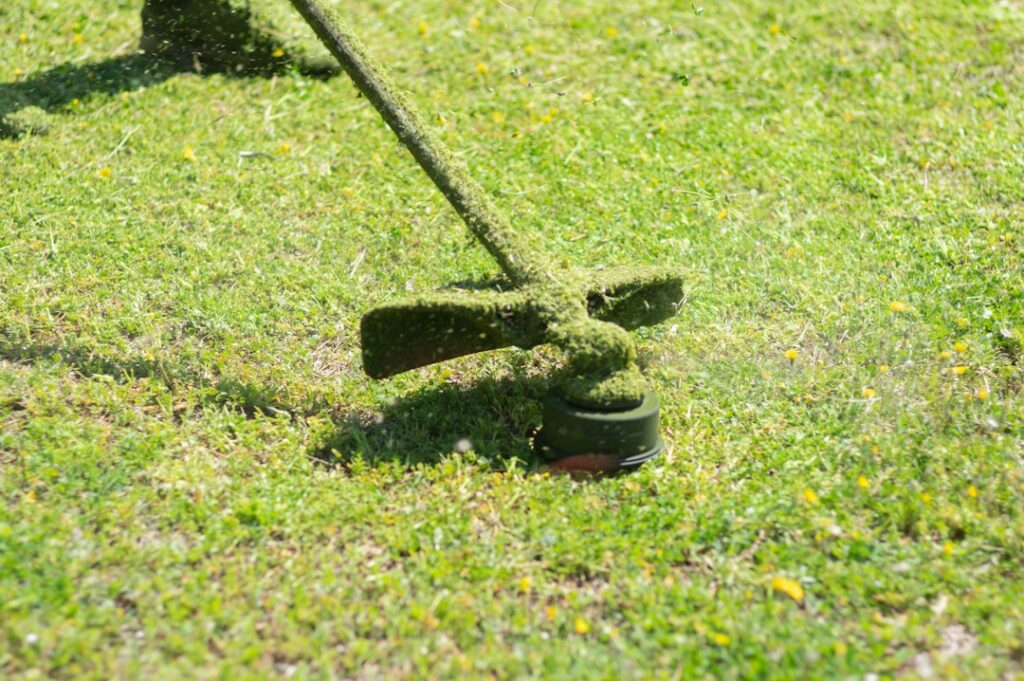
The best string trimmer is the one whose power source matches your yard. A quarter-acre lot with a fence line, a rock border and a few tree rings has very different needs from a townhouse patio strip or a half-acre with a weedy ditch out back. Gas still rules on wide, rough edges; battery models now cover most suburban lots; and a corded trimmer remains the cheapest way to get unlimited runtime if an outlet is close. Below are six picks across all three power types, each matched to a specific job, followed by a buying guide on cutting width, line, feed systems, safety and how Front Range yards actually get trimmed.
Part of our Structure & Exterior guide — start there for the full picture →
As an Amazon Associate we earn from qualifying purchases.
How we compared: we compared 13 current Amazon listings for string-line trimmers (gas, battery and corded) on what each listing states: engine or motor, cutting width, line size and feed system, battery included, weight and warranty. Three more listings that surfaced in the same search were stringless blade cutters, which we left out. We did not lab-test these trimmers or use them hands-on. Prices and availability change often, so check the current listing before buying.
Quick picks: the best string trimmers by use case
| Product | Best for | Key features | Price | Buy |
|---|---|---|---|---|
| Husqvarna 130L | Best overall for big, rough edges |
| $279.00as of Nov 11, 2026 6:22 am GMT+0000 | Buy now →Check current price |
| Craftsman V20 CMCST901M1 | Best battery all-rounder |
| $99.00as of Nov 11, 2026 6:22 am GMT+0000 | Buy now →Check current price |
| Black+Decker BESTA510 | Best corded trimmer |
| $52.00as of Nov 11, 2026 6:22 am GMT+0000 | Buy now →Check current price |
| WORX WG163 | Best for crisp edging |
| $119.28as of Nov 11, 2026 6:22 am GMT+0000 | Buy now →Check current price |
| Greenworks 40V trimmer and blower | Best trimmer plus blower kit |
| $119.99as of Nov 11, 2026 6:22 am GMT+0000 | Buy now →Check current price |
| Baococo 36cc 3-in-1 | Best for brush and overgrowth |
| — | Buy now →Check current price |
Prices are Amazon’s listed prices as of the time shown and change often; check Amazon for today’s price. As an Amazon Associate we earn from qualifying purchases.
The 6 picks, compared listing by listing
1. Husqvarna 130L — Best Overall for Big, Rough Edges

28cc straight-shaft gas trimmer with an 18-inch cutting width, Rapid Replace head and a 3-year limited warranty.
Check price on Amazon$279.00 as of Nov 11, 2026 6:22 am GMT+0000 — prices change; see Amazon for current price.Why we like it
- Widest stated cutting width on this shelf: 18 inches
- Straight shaft reaches under shrubs and decks
- Air Purge primer and Smart Start for easier pulls
- LowVib anti-vibration handle design
- 3-year limited warranty named in the listing
| Specification | Details |
|---|---|
| Power | 28cc 2-cycle gas engine; top speed listed at 8,000 rpm |
| Cutting width | 18 inches |
| Head | Rapid Replace head: align, load line and twist |
| Shaft | Straight shaft; overall length about 70 inches |
| Weight | About 12.2 lb per the listing |
| Warranty | 3-year limited (model 970514405) |
Husqvarna 130L — 28cc 2-cycle, 18-in width, straight shaft, Rapid Replace head, LowVib, 12.2 lb, 3-yr limited warranty
The Widest Cutting Path and the Only Name-Brand Gas Engine Here
Of the 13 string trimmers we compared, only two run on gasoline: this Husqvarna and the Baococo 36cc brush-cutter kit further down. Ten are battery models and one is corded. The 130L also lists the widest cutting width of the group at 18 inches; most of the battery trimmers on this shelf list 12 inches, and the next widest are the corded Black+Decker at 14 and the Craftsman at 13. A wider swath means fewer passes along a long fence or ditch bank, which is where a gas trimmer earns its extra weight.
The listing spends most of its words on starting: digital ignition, an automatic stop switch that resets to on, Smart Start and an Air Purge primer that clears air out of the carburetor and fuel system. That focus makes sense, because hard starting is the most common complaint about small 2-cycle engines, and it tends to get worse in thin mountain air (more on altitude below). The straight shaft is useful too. Curved-shaft trimmers are easier to balance for shorter users, but a straight shaft reaches farther under shrubs, deck edges and fence rails.
What the listing does not say matters. It does not name a line diameter, does not state fuel-tank capacity, and does not mention emissions certification or a fuel mix ratio, so check the manual before mixing fuel. At about 12.2 pounds it is also roughly double the weight of most battery trimmers here, so a shoulder strap is worth adding for long sessions.
Pros
- Widest stated cutting width of the shelf
- No battery runtime limit; refuel and keep going
- Starting aids called out in detail
- 3-year limited warranty from a major brand
Cons
- Heaviest string trimmer in the group at about 12 lb
- Gas mixing, storage and engine upkeep required
- Line diameter and fuel capacity not stated
- Louder than battery or corded models
Check Husqvarna 130L price on Amazon
2. Craftsman V20 CMCST901M1 — Best Battery All-Rounder

V20 kit with a 13-inch swath, two speed settings, Turn-To-Edge and a 4Ah battery rated for up to 63 minutes.
Check price on Amazon$99.00 as of Nov 11, 2026 6:22 am GMT+0000 — prices change; see Amazon for current price.Why we like it
- Up to 63 minutes of stated runtime
- 13-inch swath, wider than most battery models here
- Two speed settings trade power against runtime
- Turn-To-Edge switches to edging without tools
- 4Ah battery and charger in the kit
| Specification | Details |
|---|---|
| Power | Craftsman V20 battery platform; 4.0Ah pack (CMCB204) included |
| Cutting width | 13 inches |
| Runtime | Up to 63 minutes, per the listing’s footnoted claim |
| Line | Spool feeds 0.065-inch line |
| Modes | Two speed settings; rotates to edge |
| Weight / warranty | not stated in listing |
Craftsman CMCST901M1 — V20 4Ah kit, 13-in swath, 0.065-in line, 2 speeds, Turn-To-Edge, up to 63 min runtime
The Only Battery Trimmer Here With a Selectable Runtime-or-Power Mode
Battery trimmers live or die on runtime, and most listings on this shelf either skip the number or give a modest one: two of the budget models state about 30 minutes. The Craftsman claims up to 63 minutes on its included 4Ah pack, the highest specific trimming-time figure among the string trimmers we compared. The other half of that story is the two-speed switch. Low speed stretches the battery for routine grass; high speed is there for the weedy corner. Greenworks’ 12-inch model offers a variable-speed trigger, but the Craftsman is the only listing that frames it as a choice between runtime and power.
The 13-inch swath sits between the common 12-inch battery trimmers and the 14-inch corded Black+Decker. Turn-To-Edge means the head rotates for vertical edging along a driveway, and the adjustable handle helps taller users. Because it is part of the V20 system, the battery also runs other Craftsman cordless tools, which matters if you already own a drill or blower on that platform.
The listing leaves gaps. It does not state tool weight, warranty length, motor type or whether the spool is bump-feed or automatic. The 63-minute and “52% more power” claims both carry asterisks that point to conditions the listing does not spell out, so treat them as best-case figures.
Pros
- Highest specific runtime figure among these string trimmers
- Two speed settings for runtime control
- Wider 13-inch swath than most battery models
- Battery shared with the V20 tool line
Cons
- Weight not stated
- Warranty not stated
- Line-feed type not described
- Runtime and power claims carry unexplained footnotes
Check Craftsman V20 CMCST901M1 price on Amazon
3. Black+Decker BESTA510 — Best Corded Trimmer

6.5-amp corded trimmer and edger with a 14-inch cut path, automatic feed spool and a wheeled edge guide.
Check price on Amazon$52.00 as of Nov 11, 2026 6:22 am GMT+0000 — prices change; see Amazon for current price.Why we like it
- Never runs out of battery mid-job
- 14-inch cut path, widest among electric models here
- Wheeled edge guide for straighter edging
- Automatic feed spool, no bumping
- Cord retention hook stops accidental unplugging
| Specification | Details |
|---|---|
| Power | 6.5-amp corded electric motor with POWERDRIVE transmission |
| Cutting width | 14 inches |
| Line feed | Automatic feed spool (AFS) |
| Edging | Rotates to a wheeled edger |
| Weight | About 6.3 lb |
| Warranty | 2-year limited |
Black+Decker BESTA510 — 6.5 A corded, 14-in cut, AFS, wheeled edge guide, 6.3 lb, 2-yr limited warranty
The Only Corded String Trimmer on the Shelf
Twelve of the 13 string trimmers we compared carry their own fuel or battery. The BESTA510 is the one that plugs in, which removes runtime from the equation entirely. That trade works well on small lots where the farthest edge is within one outdoor extension cord of an outlet: townhomes, patio homes and compact front yards. It also suits anyone who trims rarely, since there is no battery to age on a shelf and no fuel to go stale over winter.
The 14-inch cut path is the widest of any electric trimmer here, ahead of the Craftsman’s 13 inches and the 12 inches most battery listings state. The trimmer rotates into a wheeled edger, and the listing calls out a cord retention system so the extension cord does not pull free as you walk. At about 6.3 pounds it is in the same weight class as the lighter battery models without the battery.
The cord is the obvious limit. You will need an outdoor-rated extension cord of the right gauge, and a GFCI-protected outlet. The listing does not state line diameter or maximum recommended cord length, so check the manual before buying a cord.
Pros
- Unlimited runtime with no battery to replace
- Widest cut path among electric trimmers here
- Wheeled edger plus automatic line feed
- Light at about 6.3 lb
Cons
- Reach limited by cord length
- Needs an outdoor cord and GFCI outlet
- Line diameter not stated
Check Black+Decker BESTA510 price on Amazon
4. WORX WG163 — Best for Crisp Edging

20V trimmer and edger with a 90-degree tilting head, support wheels, spacer guard and two Power Share batteries.
Check price on Amazon$119.28 as of Nov 11, 2026 6:22 am GMT+0000 — prices change; see Amazon for current price.Why we like it
- Head tilts 90 degrees for slopes and edging
- Rubberized wheels guide straighter edge lines
- Adjustable spacer guard protects plants and fixtures
- Two 20V batteries in the box
- Light at about 5.5 lb
| Specification | Details |
|---|---|
| Power | Two 20V Power Share batteries plus charger |
| Cutting width | 12 inches; 0.065-inch line |
| Speed | 7,600 rpm no-load |
| Line feed | Push-button Command Feed |
| Weight | About 5.5 lb |
| Warranty | not stated in listing |
WORX WG163 — 20V x2 batteries, 12-in, 0.065-in line, 7,600 rpm, Command Feed, 90° head, edging wheels, 5.5 lb
The Only Push-Button Line Feed in the Group
Most of the battery trimmers on this shelf use an automatic feed that advances line on its own. The WG163 takes a different route: you press a button and line comes out on demand. That gives you control in edging work, where an automatic system can over-feed against concrete. WORX also advertises free spools for life in the listing, a promise none of the other listings make.
The edging kit is the most complete here. The head tilts a full 90 degrees, rubberized wheels ride the sidewalk to keep the line straight, and an adjustable spacer guard keeps the line off flower stems, irrigation heads and landscape lighting. Two batteries come in the box, which lets you swap rather than wait, and they run other WORX Power Share tools.
The trade-offs: 12 inches of cutting width and 7,600 rpm are middle-of-the-pack numbers, so it is not the trimmer for knee-high weeds. The listing does not state runtime per battery or the warranty term.
Pros
- Most complete edging setup: tilt, wheels, guard
- On-demand push-button feed
- Two batteries included
- One of the lighter trimmers here
Cons
- Runtime per battery not stated
- Warranty not stated
- 12-inch width suits lawns more than heavy weeds
Check WORX WG163 price on Amazon
5. Greenworks 40V STBA40B210 — Best Trimmer Plus Blower Kit
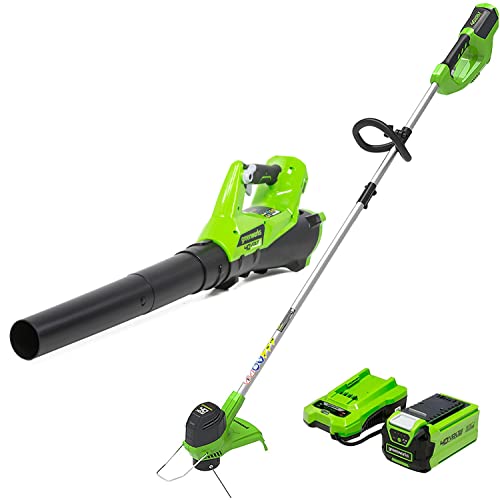
40V kit pairing a 12-inch auto-feed string trimmer with a 390 CFM blower on one 2Ah battery; 3-year warranty listed.
Check price on Amazon$119.99 as of Nov 11, 2026 6:22 am GMT+0000 — prices change; see Amazon for current price.Why we like it
- Trimmer and leaf blower share one battery
- 12-inch head with 0.065-inch auto-feed line
- Blower listed at 390 CFM with cruise control
- 3-year warranty in the listing data
| Specification | Details |
|---|---|
| Power | Greenworks 40V; one 2.0Ah battery and charger |
| Trimmer | 12-inch cut, 0.065-inch auto-feed line |
| Blower | 390 CFM, 110 mph, cruise control |
| Charge time | About 60 minutes stated |
| Warranty | 3 years per listing data |
Greenworks STBA40B210 — 40V 2Ah, 12-in auto-feed trimmer + 390 CFM blower, 60-min charge, 3-yr warranty
The Only Kit Here That Bundles a Blower
Every other pick on this list is a trimmer alone. This Greenworks listing pairs the trimmer with a 40V blower that runs on the same battery, and trimming is almost always followed by blowing clippings off the walk. If you were going to buy both, the kit saves a second charger and keeps you on one battery platform. Our cordless leaf blower picks compare stand-alone blowers if you want something stronger.
The trimmer side is a standard 12-inch head with 0.065-inch line and automatic feed. Greenworks says the 40V battery fits a wider family of its mowers, hedge trimmers and saws, and states a 60-minute charge time. That single 2.0Ah battery is the catch: one pack shared by two tools means you trim, recharge, then blow, unless you add a second battery.
The listing’s marketing bullets include savings claims and a “2+ hours” comfort claim that are not runtime figures, so we set them aside. The trimmer’s own runtime is not stated, and the 16.5-pound figure in the listing data covers the whole kit, not the trimmer alone.
Pros
- Trimmer plus blower on one battery
- Automatic line feed
- 3-year warranty listed
- Battery fits a broad 40V tool family
Cons
- Only one 2Ah battery for two tools
- Trimmer runtime not stated
- Bullets lean on marketing rather than specs
Check Greenworks 40V trimmer and blower price on Amazon
6. Baococo 36cc 3-in-1 — Best for Brush and Overgrowth

36cc 2-stroke trimmer with a string head, a 3-tooth blade, a 40-tooth blade and a shoulder strap; 25:1 fuel mix.
Check price on AmazonWhy we like it
- Largest engine here: 36cc, listed at 1 hp
- String head plus two metal brush blades
- Shoulder strap carries the weight
- Mixing bottle included for the 25:1 fuel ratio
| Specification | Details |
|---|---|
| Power | 36cc 2-stroke gas engine; 1 hp, about 8,500 rpm |
| Cutting heads | String head, 3-tooth blade, 40-tooth blade |
| Fuel | Gasoline and 2-stroke oil at 25:1 |
| Carry | Adjustable shoulder strap; safety lock on handle |
| Cutting width / weight | not stated in listing |
| Warranty | not stated in listing |
Baococo HYGXTH027X1 — 36cc 2-stroke, 1 hp, 8,500 rpm, string + 3T + 40T blades, strap, 25:1 mix
The Only Pick That Converts to a Metal-Blade Brush Cutter
A string trimmer cuts grass and soft weeds. Woody stems, thistle stalks and sapling growth along a back fence or drainage swale need a blade. This Baococo is the only string trimmer here that ships with metal brush-cutting blades, a 3-tooth for thick weeds and a 40-tooth for dense brush, plus the string head for routine work. Its 36cc engine is also the largest displacement in the group, ahead of the Husqvarna’s 28cc.
The strap matters on a tool like this. Blade work means holding the head steady at ground level for long stretches, and the listing includes an adjustable shoulder strap to take the load off your arms. It also calls for a 25:1 fuel-to-oil ratio and includes a mixing bottle, which is richer than many modern 2-cycle engines; follow the label rather than mixing to a habit.
Treat the gaps seriously. The listing does not state cutting width, weight, warranty, emissions certification or brand service support. Metal blades also throw debris harder than line, so full eye and leg protection is not optional. For a lawn-only yard, the Husqvarna or a battery model is the better buy; this one is for properties with real overgrowth.
Pros
- Only kit here with metal brush blades
- Largest engine displacement in the group
- Shoulder strap and mixing bottle included
Cons
- Weight, width and warranty not stated
- Lesser-known brand; service support unclear
- Gas maintenance and noise
- Blades raise the debris hazard
Check Baococo 36cc 3-in-1 price on Amazon
Gas vs battery vs corded: picking the power source first
Decide the power source before comparing models. It narrows the field faster than any other spec.
Gas
Gas trimmers suit large lots, long fence runs, ditch banks and anything with real brush. They run as long as you have fuel and offer the widest cutting paths; on this shelf, the two gas models list 18-inch width and metal blades. The costs are weight, noise, fuel mixing for 2-cycle engines, and seasonal maintenance: stale fuel, spark plugs and carburetors. If the trimmer will sit for months, plan to run it dry or use stabilized fuel per the manual.
Battery
Battery trimmers now dominate this category. Ten of the 13 string trimmers we compared are cordless. They start with a trigger, are far quieter, and weigh roughly half as much as the Husqvarna in most cases. The questions to ask are runtime, which battery platform you are buying into, and whether a second battery is in the box. If you want the deeper battery-only comparison, our best battery-powered weed eater guide compares the cordless field model by model.
Corded
Corded trimmers are the simplest and lightest-maintenance option, but the cord defines your reach. They make sense for small lots with an outdoor outlet near every edge. Only one corded trimmer turned up in this comparison, which tells you where the market has moved.
The specs that matter and how to read them
Cutting width
Cutting width (or swath) is the diameter of the circle the line sweeps. Most battery trimmers here list 12 inches; the Craftsman lists 13, the corded Black+Decker 14 and the Husqvarna 18. As a labeled rule of thumb rather than a measured standard: 12 to 13 inches handles typical suburban edges, while 15 inches and up earns its weight on long fence lines and open weedy areas. Wider is not better for detail work around flower beds, where a smaller head is easier to control.
Line diameter
Line diameter tells you more about cutting power than rpm claims do. The 0.065-inch line named by the WORX, Craftsman and Greenworks listings is standard for light residential work. Heavier line resists breaking on rock edging and chain-link but needs a motor that can swing it. Several listings here do not state line size at all, which makes buying refills harder; check the manual before you order spools.
Feed systems
- Automatic feed advances line on its own. Nine of the 13 listings describe some form of automatic feed. It is convenient but can over-feed and waste line on hard edges.
- Push-button feed, as on the WORX, gives line on demand.
- Quick-load heads, like Husqvarna’s Rapid Replace, focus on fast reloading instead of feeding.
Battery platform and runtime
A trimmer’s battery is often the most expensive part of the kit, and it usually only fits one brand’s tools. The Craftsman V20, WORX Power Share and Greenworks 40V listings all say their batteries run other tools in the same family. At least one budget listing on this shelf says the opposite: its battery is not compatible with any other tool from that brand. If you already own a cordless mower or blower, match it. Runtime claims vary in how they are measured, so use them to compare within a brand rather than across brands.
Weight and balance
Most listed weights among the electric trimmers fall between about 5.3 and 6.3 pounds; the Husqvarna is about 12.2. Some listings report a shipping or kit weight rather than the tool, so a figure that looks out of line probably is. An adjustable front handle matters more for comfort than a pound either way.
Safety: line, debris, fuel and power
A string trimmer throws whatever the line hits: gravel, mulch, glass, dog-run debris. The U.S. Consumer Product Safety Commission recommends long pants, long sleeves, sturdy slip-resistant shoes, eye protection, heavy gloves and hearing protection when using motor-driven lawn equipment. It also advises clearing sticks, wire, glass and stones from the work area before starting, and keeping children indoors and supervised while outdoor power equipment is running.
- Eyes: OSHA notes that thousands of people are blinded each year by work-related eye injuries that proper eye protection could have prevented. Safety glasses are cheap insurance; a face shield is worth adding for blade work.
- Hearing: NIOSH treats noise at or above 85 dBA as hazardous. Gas trimmers are loud enough that ear protection makes sense on any long session.
- Fuel: CPSC advises never refueling while equipment is running or hot, wiping up spills, and storing gasoline in an approved container away from the house. In practice that means a detached shed or a garage area away from water heaters and furnaces.
- Electric: CPSC advises against using electric power tools in wet or damp conditions and recommends GFCI protection and outdoor-rated extension cords sized for the tool. Unplug corded trimmers before clearing a tangled head.
Also stop the engine or pull the battery before clearing wrapped grass from the head; CPSC specifically advises unplugging electric tools and disconnecting spark plug wires on gas tools before clearing jams near moving parts.
Trimming on the Front Range
Colorado’s Front Range yards present a specific mix of problems for trimmers, and a few are worth planning for.
Rock borders and xeriscape
Water-wise landscaping has spread through Front Range neighborhoods, and many homes now pair a smaller lawn with rock mulch beds, steel edging and native plantings. Rock eats trimmer line. Expect to reload more often along gravel borders, consider heavier line where your head allows it, and use a spacer guard or edging wheel to keep the line off the rock. The EPA’s WaterSense program notes that landscape irrigation drives most residential outdoor water use, which is a big reason municipalities encourage these smaller-turf designs.
Drought, dry grass and debris
In dry spells, trimming throws fine dust and dry stems farther. Late-summer cheatgrass and dry weeds along back fences are also a fire concern; keep gas equipment off dry grass while it is hot, and never refuel in tall dry vegetation. Watering restrictions in some communities also mean thinner turf at the lawn edge, where a lower-power battery trimmer is often enough.
Altitude and small gas engines
Small gas engines lose some power at elevation because there is less oxygen per breath of air, and carbureted engines tuned at sea level can run rich and start harder. Starting aids like a primer bulb help. If a gas trimmer has a high-altitude adjustment or kit listed in its manual, it is worth asking a servicing dealer about it. Battery and corded trimmers are unaffected by altitude.
Cold storage
Most trimmers sit from October to April here. Store lithium-ion batteries indoors, partly charged and away from freezing temperatures as the manufacturer directs, and drain or stabilize fuel in gas units before winter.
Where trimming meets the house
Trimming along a foundation is when many homeowners first notice things worth a closer look: soil sloping toward the house, a downspout dumping next to the wall, gaps in siding or stucco near grade, or a deck ledger that looks stained. Our guide to yard drainage covers grading and runoff, and the structure and exterior hub collects our guides on siding, foundations and decks. Keep the line off weep screeds, irrigation lines and the soft caulk around utility penetrations, all of which a trimmer can chew through in a pass.
Trimming can hide problems just as easily as it reveals them. If you see cracks in foundation walls, soft wood at deck posts, or water staining at the base of siding, a trimmer will not fix it. That is the point to bring in a professional. If you are buying or selling on the Front Range and want the exterior checked properly, reach out through our contact page to connect with a vetted local inspector.
Related yard tools
A string trimmer handles the edges, but most yards need a mower and a cleanup tool too. Our best lawn mower guide compares mowers across types, and the hedge trimmer guide covers shrubs and hedges that a string trimmer should not be used on.
Frequently asked questions
What is the best string trimmer for most homeowners?
For a typical suburban lot, a battery string trimmer with a 12- to 13-inch swath, automatic or push-button feed and a second battery or a long stated runtime covers most edges. Gas still makes sense for large lots, long fence lines and brush. Corded models suit small yards close to an outdoor outlet.
Is a gas or battery string trimmer better?
Gas trimmers offer wider cutting paths and unlimited runtime with refueling, and some accept metal brush blades. Battery trimmers are lighter, quieter and need almost no engine maintenance. For lots under about half an acre without heavy brush, battery models are usually the easier choice.
What size trimmer line should a homeowner use?
Use the diameter the manufacturer lists for your head. Many residential battery trimmers use 0.065-inch line, while larger gas and premium battery models use heavier line. Heavier line resists breaking on rock and fencing but needs a stronger motor to swing it.
Do string trimmers need special safety gear?
Yes. The CPSC recommends eye protection, long pants and sleeves, sturdy shoes, heavy gloves and hearing protection with motor-driven lawn equipment. Clear stones and debris from the area first and keep children and pets well away while trimming.
Does altitude affect gas string trimmers in Colorado?
Thinner air at elevation means less oxygen for combustion, so small carbureted engines can lose some power and run rich. Starting aids help, and some manufacturers list altitude adjustments in the manual. Battery and corded trimmers are not affected by altitude.
References
- Lawn and Garden Safety Tips: CPSC Urges Care With Springtime Chores — U.S. Consumer Product Safety Commission
- Eye and Face Protection — Occupational Safety and Health Administration
- About Noise and Occupational Hearing Loss — National Institute for Occupational Safety and Health (CDC)
- WaterSense: Outdoors — U.S. Environmental Protection Agency