Best Lawn Tractor (2026): How to Choose the Right One
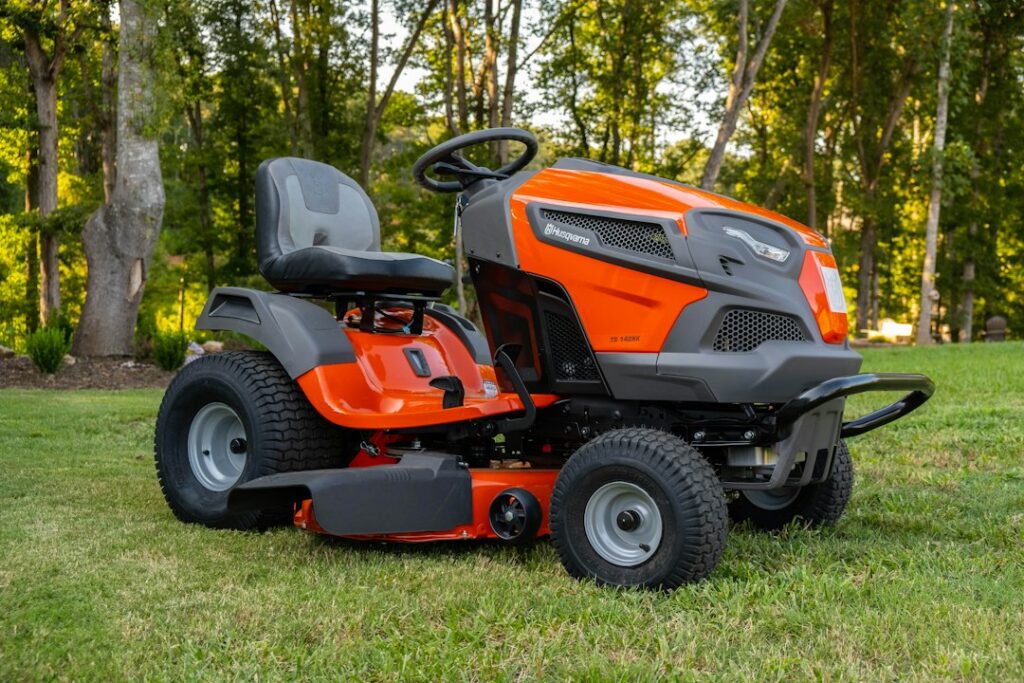
The best lawn tractor is the one that does more than mow. If all you need is to cut grass fast around trees, a zero-turn may serve you better; a lawn tractor earns its place when you also want to tow a dump cart, pull a spreader or aerator, sweep leaves, or clear snow from a long driveway. That means the specs that matter most are the ones buyers skip: the transmission, the frame and front axle, the hitch, and which attachments the maker actually sells for that model. This guide explains how lawn tractors differ from other riding mowers, how to size one, and what to check before you buy. A note on method: we don’t test tractors. The guidance below comes from manufacturer specifications, CPSC safety guidance and the conditions Colorado Front Range homeowners deal with.
Part of our Structure & Exterior guide — start there for the full picture →
This page contains affiliate links; we may earn a commission at no extra cost to you.
Quick Decision Table: Which Class of Lawn Tractor Do You Need?
Lawn tractors share one layout: engine in front, steering wheel, deck mounted under the middle of the machine, and a hitch at the back. Within that layout there are distinct classes. Price bands are typical 2026 ranges and move with engine, transmission, deck and promotions.
| Class | Who it suits | Typical price band | Key spec to check |
|---|---|---|---|
| Entry lawn tractor | About one acre of open, mostly flat lawn; occasional light towing | Typical $1,900–$2,600 | 42-in. deck, manual or automatic drive, hitch included or optional |
| Mid-range lawn tractor | One to two acres with some turning; regular towing of a cart or spreader | Typical $2,600–$3,800 | 46–48-in. deck, hydrostatic drive, V-twin option |
| Large-deck lawn tractor | Two to three acres of open lawn | Typical $3,500–$4,800 | 50–54-in. fabricated or reinforced deck, heavier front axle |
| Garden tractor | Owners who need ground-engaging attachments, heavy snow work or larger lots | Typical $4,500–$8,500 | Heavy-duty hydrostatic drive, cast-iron front axle, rated drawbar or ground-engaging capacity |
| Battery-electric lawn tractor | Quiet mowing on lots within the rated range, light towing | Typical $4,000–$7,000 | Rated acres per charge, towing allowance in the manual |
For lots of five acres or more, or for moving gravel and digging, a compact utility tractor with a loader is a different class altogether, priced well above this table.
Lawn tractor vs riding mower vs zero-turn
“Riding mower” is the umbrella term. Under it, a lawn tractor is the front-engine type with a frame and hitch built for light attachments. A rear-engine rider is smaller, mows with a short deck and does little else. A zero-turn pivots in place on two lap bars and is the fastest choice for flat lawns full of obstacles, but most residential zero-turns have no real towing ability and are less forgiving on slopes. If you are still choosing between these formats, start with our guide to the best riding lawn mower, which compares all of them, or the guide to the best zero-turn mower. The rest of this page assumes a tractor is the right call.
What Actually Matters When Choosing a Lawn Tractor
Lawn tractor or garden tractor?
The names sound interchangeable, but they describe different duty levels. Lawn tractors are built to mow and to pull light loads on wheels: carts, spreaders, sweepers, spike aerators and lawn rollers. Garden tractors share the look but use heavier frames, cast-iron front axles, larger tires and heavier-duty transmissions so they can handle ground-engaging work such as a tiller, a plow or a box blade, and they generally handle front-mounted snow blowers and blades better. If the attachment list you have in mind includes anything that digs into soil, read the manual of the tractor you are considering: many lawn tractors specifically prohibit ground-engaging attachments.
Transmission is the spec that matters most
- Manual (gear) drive is cheapest. You stop to shift. It tows adequately on flat ground but is tiresome in a yard with beds and trees.
- Automatic (belt-driven CVT) gives pedal speed control without shifting. Suitable for mowing and light towing.
- Hydrostatic uses fluid pressure to drive the wheels, with separate forward and reverse pedals. It is the smoothest and easiest to use, and the better choice if you tow regularly. Within hydrostatic units there are light-duty sealed transmissions and heavier units with serviceable fluid, larger internal components and cooling fans. For frequent towing on grades, heavy snow work or two-plus acres, look for the heavier class and read the towing limit the manual gives.
Dealers and spec sheets often list the transmission maker and model; searching that model tells you whether it is a light or heavy-duty unit faster than the marketing copy will.
Frame, front axle and steering
Towing and attachments put stress on the front end. Entry tractors usually use a stamped steel frame and a stamped or tubular front axle. Better models use a heavier-gauge or welded frame and a cast-iron front axle, which holds up to front-mounted snow blowers and the side loads of turning with a heavy cart behind. Check the turning radius, which ranges widely: a tight radius saves time around trees, and some tractors use a steering design that reduces the uncut circle left in a tight turn.
Deck size and acreage
Rule-of-thumb deck sizes for tractors:
- About one acre: 42 inches.
- One to two acres: 46 to 48 inches.
- Two to three acres: 50 to 54 inches.
Measure the narrowest gate and the garage or shed opening before choosing a wider deck, adding a few inches for the discharge chute. Wide decks also need more engine; a 54-inch deck in thick spring grass is a job for a V-twin. Look for a deck wash port, anti-scalp wheels and an easy lift lever with a wide height range.
Engine power at Front Range altitude
Gas engines lose power as air thins. A common rule of thumb is roughly 3 percent per 1,000 feet of elevation, so a tractor working at Denver’s 5,280 feet has noticeably less power than its rating at sea level, and more is lost in the foothills. Towing uphill and running a front-mounted snow blower are where you feel it. Front Range buyers should lean toward the larger engine option for wide decks and ask the dealer whether the engine maker offers a high-altitude carburetor jet. Battery tractors do not lose power with elevation but have finite run time, which towing and hills reduce.
Hitch, towing and attachments
Most tractors have a rear hitch plate; some include it, others sell it as a part. Check:
- The towing limit in the manual. This is the number that matters, not the cart’s capacity. A 10-cubic-foot dump cart filled with wet soil can exceed what a light-duty tractor should pull, especially downhill.
- Which attachments the maker sells for that exact model. Baggers, mulch kits, snow blades, snow blowers, weights and tire chains are usually model-specific.
- Whether there is a power take-off (PTO). Mid-mounted electric PTOs drive the deck and some front attachments. Rear PTOs are mostly found on garden tractors.
- Rear wheel weights or a weight bracket. These improve traction for towing and snow work and are often required with front attachments.
Pull-behind spreaders and aerators are where a tractor pays off for lawn care. If you plan to feed or overseed with a tow-behind spreader, our guides to the best lawn fertilizer and the best grass seed explain product choice and timing. Fill spreaders on a driveway or other hard surface so spills can be swept up; EPA’s nutrient pollution guidance recommends exactly that, along with keeping fertilizer off pavement where it washes into storm drains.
Snow work along the Front Range
Front Range snow often arrives heavy and wet in spring and fall, then melts within days. A lawn tractor with a front blade or a two-stage snow blower attachment can clear a long driveway, but this is the hardest work a tractor does. If snow removal is a real goal, look for a heavier front axle, a hydrostatic transmission rated for it, rear wheel weights and chains, and a model whose maker sells a snow attachment for it. Light lawn tractors with a blade are fine for a few inches of powder; deep, wet snow favors a garden tractor or a dedicated snow blower.
Fall leaves: bagger, sweeper or mulch kit
Leaf season is the other job that sells lawn tractors. There are three approaches, and the right one depends on how many trees you have:
- Mulch kit: blocks the discharge chute so the blades shred leaves and clippings into small pieces that drop into the turf. Works for a light to moderate leaf fall if you mow often.
- Bagger: a two- or three-bin collector mounted behind the seat, powered by the deck’s airflow or a separate blower. Best for heavier leaf fall and for lawns you have just overseeded. Check how many bushels it holds and whether it can be dumped from the seat.
- Tow-behind lawn sweeper: a brush-driven hopper pulled from the hitch. Picks up leaves, pine needles and debris without the deck running, and empties with a pull cord.
For beds, fence lines and the corners a tractor cannot reach, a leaf blower moves leaves into the tractor’s path. Bagger systems are model-specific; buy one listed for your exact deck.
Maintenance that keeps a tractor towing
A lawn tractor asks for more upkeep than a push mower, and skipping it shortens the life of the drive. Plan on changing the engine oil and filter on the schedule in the manual, sharpening or replacing blades at least once a season, checking deck and drive belts for cracks, and keeping tires at the listed pressure, which matters for even cutting and traction when towing. Hydrostatic units with serviceable fluid have their own change interval; sealed units do not, which is part of why they suit lighter duty. Clean grass buildup from under the deck after each mow, using the wash port if there is one. Sharp blades matter for turf health too: EPA’s WaterSense program recommends a mowing height between two and four inches and warns against removing more than one-third of the grass blade at a time, which a dull blade makes harder by tearing rather than cutting.
Comfort and storage
Look for a high-back adjustable seat, cruise control on bigger lots, and a deck lift lever you can reach easily. Headlights help in fall. Lawn tractors are typically about 5.5 to 6 feet long; with a bagger or cart they need more room. Measure the garage space, including room to walk around the tractor safely.
Lawn Tractor Buyer’s Checklist
| Spec | What to look for | Why it matters |
|---|---|---|
| Transmission | Hydrostatic; heavier-duty unit with serviceable fluid for towing or snow | The drive takes the strain of towing and is the costliest part to replace |
| Towing limit | Stated in the operator’s manual | Overloading a light tractor risks loss of control, especially downhill |
| Front axle | Cast iron or heavy-gauge steel | Front attachments and heavy towing stress the front end |
| Frame | Heavier gauge or welded construction | Resists flex and wear over years of use |
| Deck | Width matched to acreage, wash port, anti-scalp wheels | Cut quality and deck life |
| Engine | V-twin for 48 in. and wider, towing or altitude | Thin air and heavy loads reduce usable power |
| Attachments | Model-specific bagger, blade, snow blower, hitch, weights | Generic attachments may not fit or may void the warranty |
| Ground-engaging use | Allowed or prohibited in the manual | Separates lawn tractors from garden tractors |
| Safety interlocks | Seat switch, blade stop, reverse mowing control | Stops blades when you leave the seat or back up |
| Service | Local dealer or service center, parts availability | Belts, blades and drive parts need replacing over time |
Safety, Storage and the Home-Inspection Angle
Inspectors don’t evaluate equipment, but a tractor touches several things they do look at: the garage where fuel is stored, slopes and drainage, and outbuildings on larger lots.
Slopes, towing and rollovers
Lawn tractors have a lower center of gravity than many zero-turns, but they can still tip. CPSC staff told the Outdoor Power Equipment Institute in 2025 that they remain concerned about riding mower runover, back-over and rollover incidents; a review of 20 recent in-depth investigations found 7 child runover or back-over incidents and 13 rollovers over two years. CPSC’s long-standing tips for tractors and riding mowers:
- Drive up and down slopes, not across them, and avoid sudden turns.
- If the tractor stops going uphill, disengage the blade and back straight down slowly.
- Keep children off the tractor and out of the mowing area, supervised by an adult.
- Look down and behind before backing up.
- Keep guards, shields, switches and safety devices working.
Towing adds its own risk. A loaded cart pushes a tractor downhill and can reduce steering and braking. Tow only from the hitch, stay within the manual’s limit, add the recommended wheel weights, and take loads down grades slowly. The manual’s slope limit still applies with an attachment, so check whether it sets a lower limit for towing or for front-mounted equipment.
Fuel storage and the garage
The U.S. Fire Administration recommends storing oil, gasoline, paints and propane in a shed away from the home, and notes that garage fires tend to spread farther and cause more injuries and damage than fires that start elsewhere in a house. If the tractor must live in an attached garage, keep fuel in approved cans, away from the water heater and furnace, and let the engine cool before covering it or parking it near stored items. Add stabilizer to fuel that will sit over winter, or run the tank low before storage. Inspectors also check that the door between an attached garage and the house is a fire-rated, self-closing door; avoid propping it open while refueling or working.
Grading, drainage and where you mow
A heavy tractor on soft, wet ground ruts the lawn and can compact clay soils, which then shed water toward the house instead of absorbing it. Avoid mowing or towing right after storms. When an inspector recommends regrading to move water away from a foundation, consider how the finished slope will be mowed. Our guide to yard drainage covers grading that solves water problems without creating banks too steep to mow.
Buying a property with acreage
On a larger lot, ask whether the tractor and attachments convey with the sale, look at where they have been stored, and check outbuildings for roof leaks, rot and wiring. A standard inspection covers attached garages; detached shops and sheds are often included only by agreement. Our structure and exterior hub explains what inspectors cover outside the house.
Where to Buy a Lawn Tractor
The best selection is in late winter and early spring; end-of-season clearance in late summer and fall brings lower prices on remaining stock. Ask whether delivery includes assembly, a fluid and tire-pressure check, and a walk-through of the controls, and where warranty work happens: some brands use dealer service, others accept home-center service partners. Buy the hitch, bagger and any snow attachment at the same time if you can, so you know they fit the model.
Where to shop for lawn tractor
Links open the retailer's current selection — prices, stock and delivery/installation options vary by ZIP code.
We may earn a commission from qualifying purchases made through these links, at no extra cost to you.
Retailers stock brands such as John Deere, Cub Cadet, Craftsman, Husqvarna, Troy-Bilt and Toro, among others. Compare the transmission, front axle, towing limit and available attachments of the specific model rather than the brand name, and check the model on the CPSC recalls site before buying.
Frequently asked questions
What is the difference between a lawn tractor and a riding mower?
A lawn tractor is one type of riding mower: front engine, steering wheel, mid-mounted deck and a rear hitch for light attachments. Riding mower is the umbrella term that also covers small rear-engine riders and zero-turns, which generally mow well but tow little or nothing.
What is the difference between a lawn tractor and a garden tractor?
Garden tractors have heavier frames, cast-iron front axles, bigger tires and heavier-duty transmissions so they can handle ground-engaging attachments such as tillers and plows. Lawn tractors are built for mowing and towing wheeled loads; many manuals prohibit ground-engaging use.
Is a hydrostatic transmission worth it on a lawn tractor?
For most buyers, yes. Hydrostatic drive gives smooth pedal control in forward and reverse, which helps in yards with trees and beds and when towing. If you tow often or plan snow work, look for a heavier-duty hydrostatic unit with serviceable fluid.
Can a lawn tractor plow snow?
Many can with a model-specific front blade or snow blower, rear wheel weights and tire chains. It works well for light to moderate snow on a long driveway. Heavy, wet Front Range spring snow is hard on light tractors; a garden tractor or a dedicated snow blower handles it better.
How much can a lawn tractor tow?
It depends on the model, so check the towing limit in the operator's manual rather than the capacity of the cart. A full dump cart of wet soil can exceed what a light-duty tractor should pull, especially downhill. Tow only from the hitch and slow down on grades.
References
- CPSC Staff Letter to OPEI on Riding Mower Hazards (2025) — U.S. Consumer Product Safety Commission
- Lawn Mower Safety: Tips for Tractors and Riding Mowers — U.S. Consumer Product Safety Commission
- Basement and Garage Fire Safety — U.S. Fire Administration (FEMA)
- Turfgrass and Water Efficiency — U.S. EPA WaterSense
- What You Can Do: In Your Yard — U.S. EPA Nutrient Pollution