Best Indoor Plant Moisture Meter: 2026 Buyer Guide
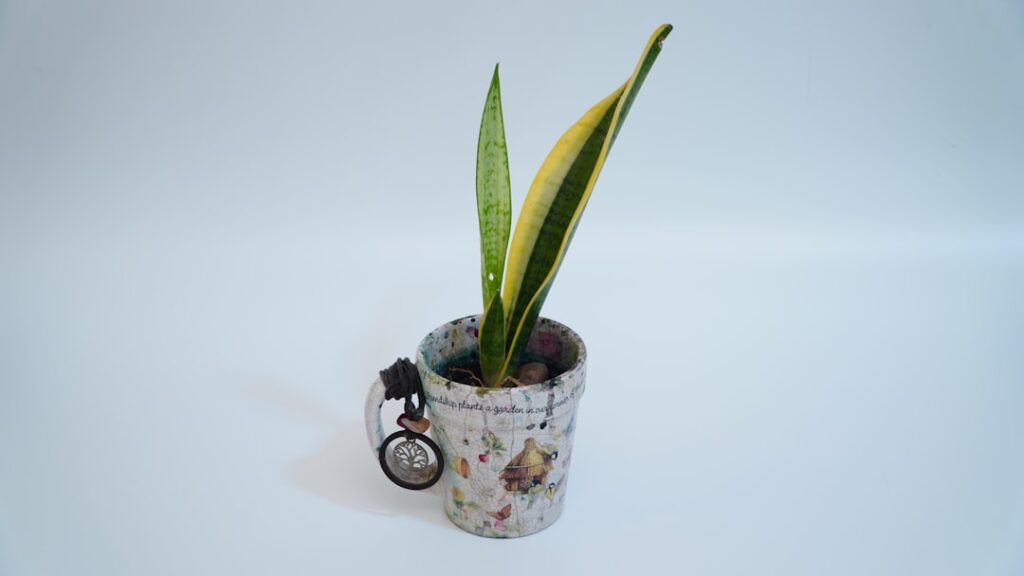
An indoor plant moisture meter answers one question the top of the pot cannot: is the root zone still wet, or is it time to water? For houseplants that question matters more than it does outdoors, because a pot has no drainage into the ground below and a soggy root ball can sit wet for days. Most indoor meters on the market are simple battery-free dial probes, with a few battery-powered digital testers that add pH, light or temperature readings. The right pick depends on pot depth, the potting mix you use and how many plants you check each week. Below are six picks for indoor collections, each matched to a specific job, then a buying guide written for Colorado’s dry indoor air.
Part of our Moisture Meters & Water Damage Detection guide — start there for the full picture →
As an Amazon Associate we earn from qualifying purchases.
How we compared: we compared 13 current Amazon listings for soil and plant moisture meters on what each listing actually states: power source, probe design and length, dial or display type, extra functions, and the usage limits the seller spells out. We did not lab-test any of these meters or use them hands-on. Two of the 13 listings are twin packs of models that also appear singly, so the shelf covers 11 distinct products. Prices and availability change often, so check the current listing before buying.
Quick picks: the best indoor plant moisture meters by use case
| Product | Best for | Key features | Price | Buy |
|---|---|---|---|---|
| XLUX T10 | Everyday indoor checks |
| $9.99as of Nov 6, 2026 6:20 pm GMT+0000 | Buy now →Check current price |
| XLUX T9178 | Deep floor pots and airy mixes |
| $14.98as of Nov 6, 2026 6:20 pm GMT+0000 | Buy now →Check current price |
| Dr.meter S10 | Beginners who want color cues |
| $9.99as of Nov 6, 2026 6:20 pm GMT+0000 | Buy now →Check current price |
| apine SMM-GR-A001 | Small and medium pots |
| $9.99as of Nov 6, 2026 6:20 pm GMT+0000 | Buy now →Check current price |
| SONKIR MS02 | Low-light rooms |
| $9.99as of Nov 5, 2026 11:01 pm GMT+0000 | Buy now →Check current price |
| YAMRON 4-in-1 | Numeric readings for collectors |
| $32.98as of Nov 6, 2026 6:20 pm GMT+0000 | Buy now →Check current price |
Prices are Amazon’s listed prices as of the time shown and change often; check Amazon for today’s price. As an Amazon Associate we earn from qualifying purchases.
The six picks, compared listing by listing
1. XLUX T10 — Best Indoor Plant Moisture Meter for Everyday Checks

Battery-free single-probe meter with a 10-scale dry-moist-wet dial and a 304 stainless steel probe.
Check price on Amazon$9.99 as of Nov 6, 2026 6:20 pm GMT+0000 — prices change; see Amazon for current price.| Specification | Details |
|---|---|
| Power | None; battery-free analog dial that reads as soon as the probe is in soil |
| Probe | Single slim needle; listing names 304 stainless steel |
| Display | Large color-coded dial, 10 scales across dry, moist and wet zones |
| Size / weight | About 26 cm (10.2 in) overall; 47 g |
| Use limits | Soil only; remove within 5 minutes; wipe and store in the included sleeve |
| Model | T10 |
XLUX T10 — battery-free, single 304 stainless probe, 10-scale color dial, 26 cm overall, 47 g, protective sleeve
The Only Listing That Names Its Probe Metal and Ships a Storage Sleeve
Eleven of the 13 listings are battery-free dial meters, so the absence of batteries is not what separates the T10. What does is the detail in the listing. It is the only one of the 13 that names the probe material (304 stainless steel), and the only one that says the meter arrives with a protective sleeve meant for storage between uses. For a meter that lives in a drawer and gets pushed into a dozen pots a week, a sleeve that keeps the probe clean and unscratched is a practical extra.
The dial uses the same 10-scale, three-zone layout found on four other listings on the shelf (the other XLUX models and the Dr.meter S10). The overall length of about 26 cm makes it a standard-size meter: long enough for typical 6- to 8-inch nursery pots, but not the one to reach the bottom of a large floor planter. The listing also tells buyers to pull the probe within 5 minutes, which is a usage rule the four XLUX listings all share.
What the listing does not say: it gives no absolute probe length separate from the overall size, no sensor principle, and no guidance on loose or chunky mixes. Its marketing leans on rating counts rather than specifications, which we disregard here.
Pros
- Only listing to name its probe metal
- Protective sleeve for storage included
- No batteries to replace
- Clear 10-scale dry-moist-wet dial
Cons
- Standard length; short for deep floor pots
- Must be removed within 5 minutes
- No guidance for airy or chunky mixes
Check XLUX T10 price on Amazon
2. XLUX T9178 Long Probe — Best for Deep Floor Pots and Airy Mixes

Long-probe dial meter, 5.5 in longer than standard, with specific advice for perlite, bark and orchid mixes.
Check price on Amazon$14.98 as of Nov 6, 2026 6:20 pm GMT+0000 — prices change; see Amazon for current price.| Specification | Details |
|---|---|
| Power | None; battery-free analog dial |
| Probe | Single probe described as 5.5 in (14 cm) longer than standard styles |
| Display | Large dial with three zones and 10 scales |
| Size / weight | Listed size 40 cm; about 0.29 lb |
| Media guidance | Built for standard potting soil; pack airy media around the probe for contact |
| Model | T9178 |
XLUX T9178 — battery-free, single long probe (+5.5 in), 3-zone 10-scale dial, 40 cm listed size, soil only, under 5 minutes
The Only Listing That Names Airy Mixes and Explains How to Read Them
Indoor collectors often grow aroids, orchids and succulents in chunky blends of bark, perlite or pumice. This is the only one of the 13 listings that names those media, describes the symptom (a needle stuck at zero, or jumping readings, even when the mix is damp) and gives a fix: press the mix firmly around the probe so it touches the moisture-holding particles. The apine listing simply says its meter is not suited to fluffy soil, and no other listing addresses the question at all.
The probe is the other draw. The listing says it is 5.5 inches longer than standard probes, and its listed size of 40 cm compares with 26 cm for the standard XLUX T10. That extra reach matters for fiddle-leaf figs, palms and other floor plants in deep containers, where the top half of the pot can dry out while the bottom stays wet.
The listing gives a relative length rather than an absolute probe length, so buyers have to infer the total. It also shares the XLUX 5-minute rule and warns against very hard soil, which is worth heeding in a long, thin probe.
Pros
- Extra reach for deep floor containers
- Only listing with a specific fix for chunky media
- Battery-free 10-scale dial
Cons
- Absolute probe length not stated in listing
- Long probe is easier to bend in compacted soil
- Overkill for small tabletop pots
Check XLUX T9178 price on Amazon
3. Dr.meter S10 — Best for Beginners Who Want Color Cues
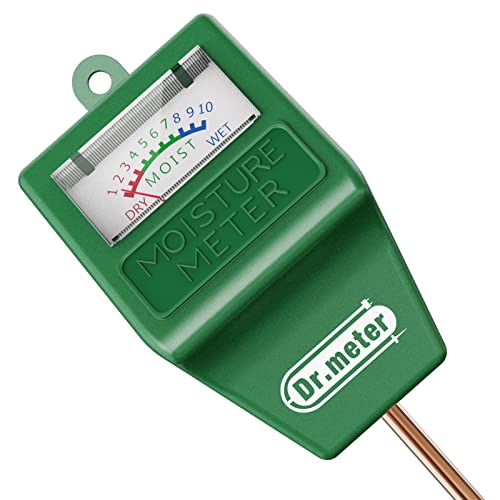
Battery-free single-probe meter with a 10-scale dial color-coded red, green and blue.
Check price on Amazon$9.99 as of Nov 6, 2026 6:20 pm GMT+0000 — prices change; see Amazon for current price.| Specification | Details |
|---|---|
| Power | None; battery-free |
| Probe | Single probe; listing stresses minimal root disturbance |
| Display | 10-scale dial colored red (dry), green and blue (wet) |
| Size / weight | About 13 x 4 x 1.6 in packaged; 0.17 lb |
| Use limits | Soil only; keep away from rocks and very hard soil; clean after each use |
| Model | S10 |
Dr.meter S10 — battery-free, single probe, 10-scale red-green-blue dial, 0.17 lb, soil only
The Only Non-XLUX Listing With a 10-Scale Dial, and the Only One That Names Its Color Sequence
Five of the 13 listings describe a 10-scale dial. Four of them are XLUX products; the Dr.meter S10 is the fifth. It is also the only listing that spells out its color sequence, running from red through green to blue. That matters for beginners, because the reading becomes a color decision (“red means water”) rather than a number to interpret against a chart.
The listing is written for first-time plant owners and says plainly that no experience is needed. Like most of the battery-free meters here, it gives no probe length, no sensor principle and no time limit for leaving the probe in soil, though it does warn against liquids, rocks and very hard ground.
For a single meter shared across a mixed shelf of pothos, snake plants and ferns, the S10 covers the basics. Collectors who need finer resolution or deep reach should look at picks 2 and 6.
Pros
- Explicit red-green-blue color scale
- Battery-free and light
- Clear care instructions in the listing
Cons
- Probe length not stated in listing
- No guidance on how long it can stay in soil
- Moisture only; no light or pH
Check Dr.meter S10 price on Amazon
4. apine SMM-GR-A001 — Best for Small and Medium Pots
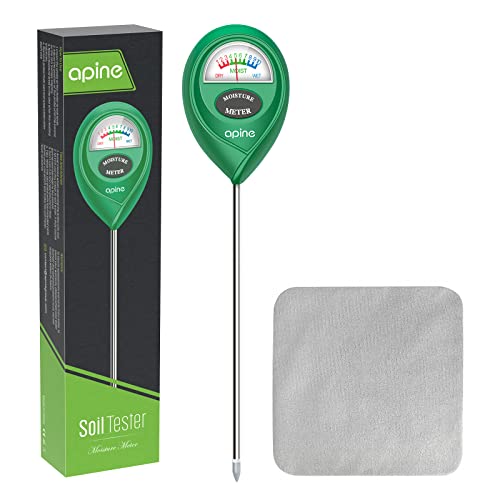
Battery-free single-needle meter with a stated 2 to 4 inch insertion depth and an included wiping cloth.
Check price on Amazon$9.99 as of Nov 6, 2026 6:20 pm GMT+0000 — prices change; see Amazon for current price.| Specification | Details |
|---|---|
| Power | None; battery-free |
| Probe | Single needle; insert about 2 to 4 inches and wait a few seconds |
| Display | Color-divided dial; the listing says older users can read it easily |
| Included | Wiping cloth for cleaning the probe before use |
| Size | About 10.2 x 2.3 x 1.5 in |
| Model | SMM-GR-A001 |
apine SMM-GR-A001 — battery-free, single needle, 2–4 in insertion, color dial, wiping cloth included, not for fluffy soil
The Only Listing That Includes a Wiping Cloth
Most of the listings tell buyers to wipe the probe after use, since soil residue left on the probe can affect later readings. The apine is the only listing of the 13 that puts a cloth in the box for exactly that job, and it suggests wiping before each use as well. It is a small inclusion, but one that encourages the habit the other listings only recommend.
Four listings state an insertion depth, and the apine gives the shallowest: about 2 to 4 inches. That suits 4- to 8-inch pots on windowsills and shelves, where a long probe would hit the bottom of the pot. The listing is also candid about one limit: it says the meter is not suitable for fluffy soil, which rules it out for chunky aroid or orchid mixes.
It does not give a model-specific probe length, a sensor description or a time limit in soil, and the dial is described only as color-divided, not by scale count.
Pros
- Only listing with a wiping cloth included
- Shallow stated depth suits small pots
- Candid about its limits with loose media
Cons
- Not suited to fluffy or chunky mixes
- Number of dial scales not stated in listing
- Too short for deep floor planters
Check apine Soil Moisture Meter price on Amazon
5. SONKIR MS02 — Best for Low-Light Rooms

Battery-free 3-in-1 tester that switches between soil moisture, pH and light level.
Check price on Amazon$9.99 as of Nov 5, 2026 11:01 pm GMT+0000 — prices change; see Amazon for current price.| Specification | Details |
|---|---|
| Power | None; battery-free |
| Functions | Soil moisture, soil pH and sunlight level, chosen with a switch |
| Reading time | Listing says to wait a few minutes for results |
| Dry-soil note | Needle will not move in very dry soil; water before testing |
| Size / weight | About 11.5 x 2 x 1.5 in; 0.18 lb |
| Model | MS02 |
SONKIR MS02 — battery-free, moisture + pH + light, function switch, few-minute reading, 0.18 lb
The Only Battery-Free Listing That Adds a Light Reading
Four of the 13 listings are multi-function testers. Two of them need batteries (the YAMRON and Buladeke digital units), and the other battery-free multi-tester, from Aenncci, pairs moisture with pH and fertility rather than light. That leaves the SONKIR MS02 as the only battery-free listing that can also give a rough light level. For houseplants, light is often the real limiting factor in a north-facing room or a basement apartment, and a quick light check helps explain why a plant stays wet for a week.
The trade-offs are stated in the listing. It asks for a wait of a few minutes rather than an instant reading, and it says the needle will not move if the soil is very dry, so the soil has to be watered first. That makes it awkward as a quick “water today or not” tool for already dry pots, and better as an occasional diagnostic.
The listing does not describe the light scale in lux or foot-candles, and it gives no pH range or resolution, so treat both readings as coarse indicators.
Pros
- Moisture, pH and light without batteries
- Light check helps diagnose slow-drying pots
- Light and compact
Cons
- Few-minute wait for readings
- Will not read very dry soil without pre-watering
- Light and pH scales not stated in listing
Check SONKIR MS02 price on Amazon
6. YAMRON 4-in-1 — Best Digital Readout for Collectors

Backlit LCD soil tester for moisture, pH, temperature and light, with a 45-degree tilting head.
Check price on Amazon$32.98 as of Nov 6, 2026 6:20 pm GMT+0000 — prices change; see Amazon for current price.| Specification | Details |
|---|---|
| Power | 4 x AAA batteries, not included; low-battery warning |
| Functions | Soil moisture, pH, temperature and light intensity |
| Display | Large backlit LCD on a head that tilts 0 to 45 degrees |
| Method | Insert about 4 in (10 cm), wait 10 seconds; average 5 spots |
| Size / weight | About 11.8 x 2 x 2 in; 0.26 lb |
| Model | CTY (part CYT-SM-US01) |
YAMRON 4-in-1 — 4xAAA, backlit LCD, moisture/pH/temp/light, 45° tilt head, 10 cm insertion, 10-second read
The Only Listing With a Tilting Display and a Multi-Spot Averaging Method
Two of the 13 listings are battery-powered digital testers with backlit screens: this YAMRON and the Buladeke 7-in-1. The YAMRON is the only listing of the 13 with a head that tilts up to 45 degrees, so the screen can be read without bending over a floor pot. It is also the only listing that tells buyers to take readings at several spots (at least five) and average them, which is sound practice in any pot where one side dries faster than the other.
The digital readout gives numbers rather than a needle position, which appeals to collectors who log watering. The listing is firm about care, though: do not push the probe into dry, hard soil, and if the soil is dry, water the test area and wait 10 minutes first. That rule is shared, in similar words, with the Buladeke and partly with the SONKIR.
The listing does not state the moisture scale’s units or resolution, and its claims of accuracy are not tied to any stated tolerance. Batteries are an added running cost the battery-free picks avoid.
Pros
- Only tilting display on the shelf
- Backlit numbers for dim rooms
- Four readings in one tool
- Recommends multi-spot averaging
Cons
- Needs 4 AAA batteries, not included
- Must pre-water dry soil before testing
- Moisture units and accuracy not stated in listing
Check YAMRON 4-in-1 price on Amazon
What the specs on a plant moisture meter actually mean
Plant meters are simpler than the pin and pinless moisture meters inspectors use on building materials, and their listings are thinner on specifications. Four details do most of the work.
Power source. Eleven of the 13 listings are battery-free. These give a relative dial reading on a dry-to-wet scale and never need charging. The two battery units add a backlit numeric display and extra functions, at the cost of AAA batteries and a slower, more careful test routine.
Probe length. Few listings give an absolute probe length. The ones that do range from a 6.7-inch probe to a 7.6-inch probe, and XLUX describes its long model only as 5.5 inches longer than standard. Match the probe to the pot: the reading that matters comes from the lower half of the root ball, where roots sit longest in wet mix.
Scale. A 10-point dial (five listings state one) gives enough resolution to tell “just dried” from “bone dry.” A plain three-zone dial is fine for forgiving plants. A dial reading is relative, so learn what each plant looks like at each number rather than chasing a universal target.
Stated limits. The most useful text in many listings is the warnings section: soil only, no liquids, no rocks or very hard soil, remove within minutes, wipe after use. Listings that state these limits are telling you how to keep the reading trustworthy. For a broader look at reading accuracy, see our guide to an accurate soil moisture meter.
How to get consistent readings indoors
A meter is only useful if the routine around it is consistent. The approach below works with any of the six picks.
- Insert at a consistent depth. Push the probe about two-thirds of the way down, roughly halfway between the stem and the pot wall, so the tip sits in the root zone rather than against the pot bottom.
- Take more than one reading. Check two or three spots in larger pots. Water often runs down one side of a root ball and leaves the other dry.
- Read, then remove. Several listings warn against leaving the probe in soil. Read it, pull it and wipe it dry.
- Log it. Note the reading and the date for a few weeks. Patterns in how fast each pot dries tell you more than any single number.
- Re-check after fertilizing. Fertilizer residue in potting mix may shift readings on simple probe meters, so compare against your usual baseline rather than treating a single high reading as a reason to hold off watering.
If a meter seems to drift, compare it against a pot you know is freshly watered and one you know is dry. Our guide to moisture meter calibration covers the same reference-check idea for building-material meters.
Colorado notes: semi-arid climate and dry indoor air
Front Range homes are dry for much of the year. Outdoor air is semi-arid, and in winter, heated indoor air can drop to low humidity, so potting mix near forced-air registers and sunny windows dries noticeably faster than care tags written for humid climates suggest. A meter helps avoid the opposite mistake many Colorado plant owners make: watering on a fixed schedule copied from a houseplant book, then overwatering once the furnace season ends and pots dry more slowly.
The EPA recommends keeping indoor relative humidity between 30 and 50 percent and notes that a humidifier or vaporizer can raise it when it is too low. A small humidity gauge next to a plant shelf is a sensible companion to a soil meter; the two together explain most fast-drying pots.
Outdoor water use is the other Colorado factor. Many Front Range water providers set outdoor watering schedules or seasonal restrictions, and EPA WaterSense notes that residential outdoor water use nationwide runs to nearly 8 billion gallons a day, mostly for landscape irrigation. WaterSense also advises checking how much water plants actually need before watering and warns that watering too often can drown plants or produce shallow roots. The same meters on this list work for patio containers and raised beds, so one tool can cover indoor pots and outdoor containers during restriction periods.
Overwatered houseplants and indoor moisture
A meter is a plant-care tool, not a building diagnostic, but there is an honest link to the home. The concern is usually not the plant itself but the water around it: saucers that overflow onto a hardwood floor, a planter that leaks into carpet, or a wall corner behind a large plant that stays damp for weeks. The EPA’s guidance is that the key to mold control is moisture control, and that wet materials dried within 24 to 48 hours usually will not grow mold.
Watering only when the meter says the root zone is dry means less runoff into saucers and fewer chronically wet spots. If you find a dark stain or cupping under a plant stand, a soil meter cannot tell you anything about the floor. That needs a material meter: see our guides to a moisture meter for hardwood floors and the drywall moisture meter readings chart for what normal and wet look like on those surfaces.
Limits of a plant meter vs a professional inspection
Plant moisture meters read relative moisture in soil, and only in soil. They are not calibrated for wood, drywall, subfloor or concrete, and their readings mean nothing on those materials. They also cannot measure air humidity or detect mold. If a musty smell, staining or warped flooring shows up near where plants have stood, the source is often a hidden leak, condensation or a long-running drip rather than the plants themselves.
A home inspector uses dedicated pin and pinless meters, thermal imaging and a visual check to trace moisture in building materials. For more on those instruments, see our home inspection tools guide. If you are buying or selling a Front Range home and want moisture concerns checked properly, contact us to connect with a vetted local inspector.
References
- A Brief Guide to Mold, Moisture and Your Home — U.S. Environmental Protection Agency
- Care for Your Air: A Guide to Indoor Air Quality — U.S. Environmental Protection Agency
- Watering Tips — EPA WaterSense
- Outdoors — EPA WaterSense
Frequently asked questions
Do indoor plant moisture meters actually work?
Yes, for the job they are designed for. A plant moisture meter gives a relative dry-to-wet reading in the root zone, which is more useful than judging the top inch of soil by touch. Readings are relative rather than lab-precise, so learn what each plant looks like at each dial position and keep the probe clean.
How deep should the probe go in a houseplant pot?
Aim for about two-thirds of the pot depth, roughly halfway between the stem and the pot wall. That puts the tip in the root zone without hitting the pot bottom. For deep floor planters, a long-probe model reaches lower than a standard meter.
Can a moisture meter be left in the pot?
Most listings say no. Several battery-free models tell buyers to remove the probe within about 5 minutes and wipe it, because the metal tip can corrode if it stays in damp soil. Read, remove and wipe after each check.
Why does my moisture meter read zero in damp soil?
Loose, chunky mixes such as bark, perlite, pumice or orchid media can leave gaps around the probe. One listing on our shelf says to press the mix firmly around the probe so it contacts the moisture-holding particles. Very dry, hard soil can also give no reading on some multi-function testers.
Can a plant moisture meter check walls or floors for moisture?
No. Plant meters are designed for soil only and are not calibrated for wood, drywall or concrete. Use a pin or pinless building-material moisture meter, or have an inspector check suspected water damage near plant stands or planters.
Seeing stains, cupped flooring or a musty smell near your plant corner? Reach out through our contact page to connect with a vetted Front Range inspector.
Moisture meters for home inspection
Pin meters read deep but leave marks; pinless meters scan surfaces non-destructively. Many inspectors carry both.
| Product | Why | Buy |
|---|---|---|
 Klein Tools ET140 Pinless | Non-destructive scanning; affordable. | Amazon — $49.97 |
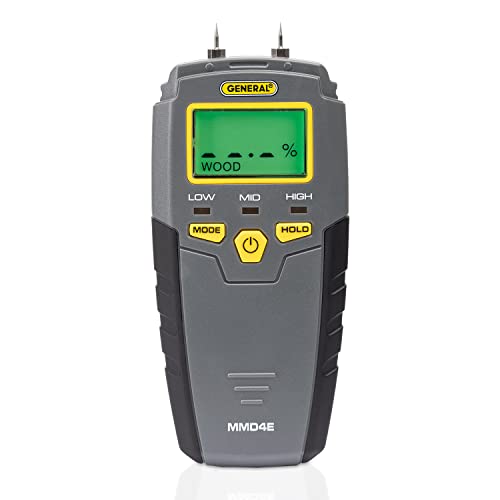 General Tools MMD4E | Best-selling pin meter for drywall/wood. | Amazon — $39.98 |
 Lignomat Mini-Ligno | Trusted by woodworkers; species-calibrated. | Amazon — $99.00 |