Best Concrete Crack Fillers (2026): 7 Picks Compared by Crack
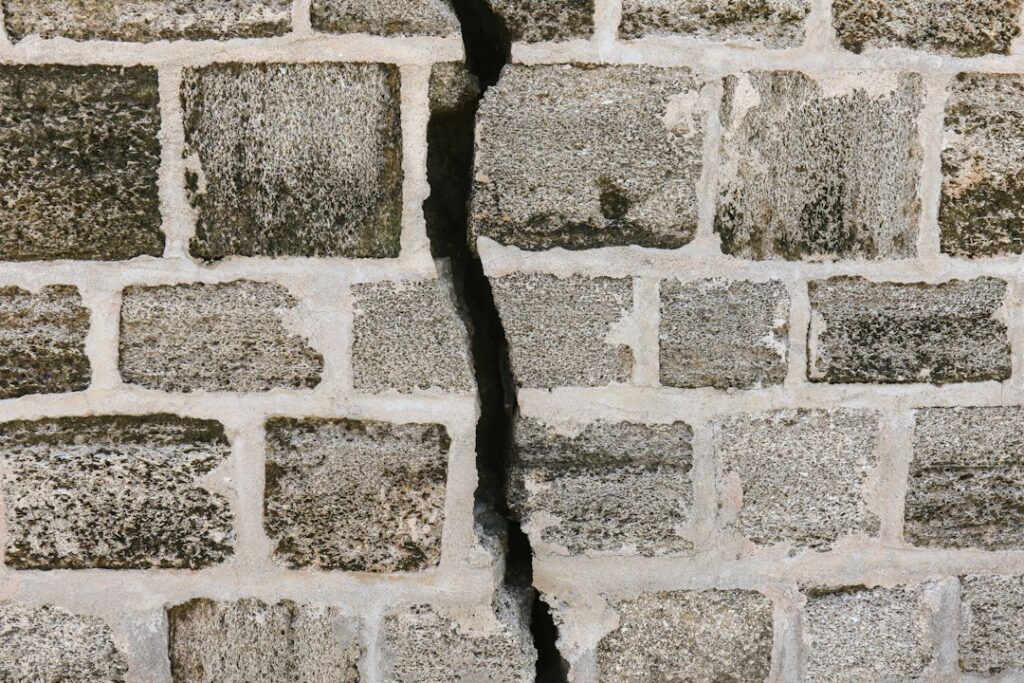
The best concrete crack filler is the one matched to the crack, not the one with the boldest label. A hairline crack across a patio, a quarter-inch gap that opens every winter between two driveway slabs and a crumbling mortar joint on the front steps are three different repairs, and a single product rarely does all three well. On the Front Range, freeze-thaw cycling and swelling clay soils keep cracks moving, which is why flexibility matters as much as adhesion. This guide sorts fillers by the type of crack they suit, how they go in and how quickly they can take traffic, then explains when a crack is a structural question rather than a cosmetic one.
Part of our Structure & Exterior guide — start there for the full picture →
As an Amazon Associate we earn from qualifying purchases.
How we compared: we compared 13 current Amazon concrete crack filler listings on what each listing states: product type, crack size it handles, flexibility, cure and traffic times, surfaces and whether it is paintable. We did not lab-test or apply any of these products. Two of the listings are the same granular filler in two colors, and two others are multi-packs of similar self-leveling tubes. Prices and availability change often, so check the current listing before buying.
Quick picks: the best concrete crack fillers by crack type
| Product | Best for | Key features | Price | Buy |
|---|---|---|---|---|
| DAP Concrete Crack Filler | Most horizontal cracks |
| $13.99as of Oct 21, 2026 7:58 am GMT+0000 | Buy now →Check current price |
| UINIHIDI Self-Leveling 4-Pack | Cracks that move with the seasons |
| $36.98as of Oct 21, 2026 7:58 am GMT+0000 | Buy now →Check current price |
| DAP Liquid Cement Crack Filler | Fastest return to traffic |
| $16.59as of Oct 20, 2026 7:17 pm GMT+0000 | Buy now →Check current price |
| Quikrete Concrete Crack Seal | Hairline sidewalk cracks |
| $13.97as of Oct 21, 2026 10:01 am GMT+0000 | Buy now →Check current price |
| DAP Concrete and Mortar Filler | Caulk-gun cracks near salt |
| $6.89as of Oct 20, 2026 7:17 pm GMT+0000 | Buy now →Check current price |
| DRYLOK Fast-Set Crack Filler | Walls, steps and mortar joints |
| $11.50as of Oct 20, 2026 7:17 pm GMT+0000 | Buy now →Check current price |
| ConSANDtrate Crack Filler | Patio and pool deck cracks |
| $29.99as of Oct 21, 2026 10:01 am GMT+0000 | Buy now →Check current price |
Prices are Amazon’s listed prices as of the time shown and change often; check Amazon for today’s price. As an Amazon Associate we earn from qualifying purchases.
The seven picks, compared listing by listing
1. DAP Concrete Crack Filler 1.62 Lb — Best for Most Horizontal Cracks

Water-activated dry powder that fills cracks up to 1/2 in wide and deep in one pass; vehicles in 48 hours.
Check price on Amazon$13.99 as of Oct 21, 2026 7:58 am GMT+0000 — prices change; see Amazon for current price.Why we like it
- Only listing that states a crack size per pass
- No mixing: fill, then mist with water
- Foot traffic in 4 hours, vehicles in 48
- Resists shrinkage, UV fading and cracking
| Specification | Details |
|---|---|
| Type | Water-activated dry powder |
| Crack size | Up to 1/2 in wide x 1/2 in deep in a single pass |
| Traffic | Light foot traffic in 4 hours; full service including vehicles in 48 hours |
| Surfaces | Horizontal concrete, stone and masonry |
| Color | Gray |
| Size | 1.62 lb bottle |
DAP 7079860500 — water-activated powder, 1/2 x 1/2 in per pass, foot 4 hr, vehicles 48 hr, gray, 1.62 lb
The Only Listing That Tells You How Big a Crack It Can Fill
Of the 13 listings, this is the only one that states a maximum crack size: half an inch wide and half an inch deep in one pass. Every other listing says “small cracks,” “large cracks” or “any crack” without a number. That single figure is what lets you decide whether a product fits the crack in front of you, and it is the reason this is our default pick.
Five listings on the shelf are water-activated granular or powder fillers that you pour in and mist. DAP’s is the only one of those five that states traffic times for both feet and vehicles. Pour-and-mist products are forgiving: no mixing, no gun, no tooling.
The limits: it is for horizontal surfaces only, and a rigid cementitious fill will not stretch if the crack keeps moving. For a joint that opens every January, an elastic sealant is the better pick.
Pros
- States maximum crack size
- No mixing or tools
- Clear foot and vehicle traffic times
Cons
- Horizontal surfaces only
- Not elastic for moving joints
- Small bottle for long cracks
Check DAP Concrete Crack Filler price on Amazon
2. UINIHIDI Self-Leveling Crack Filler 4-Pack — Best for Cracks That Move

High-elasticity self-leveling sealant in four tubes that names freeze-thaw, settling and expansion joints.
Check price on Amazon$36.98 as of Oct 21, 2026 7:58 am GMT+0000 — prices change; see Amazon for current price.Why we like it
- Elastic formula designed to move with the slab
- Names freeze-thaw cycles and settling directly
- Self-levels into horizontal cracks and joints
- Four tubes, about 70 oz total
| Specification | Details |
|---|---|
| Type | Self-leveling high-elasticity sealant |
| Movement | Described as moving with expansion, contraction, settling and freeze-thaw |
| Surfaces | Horizontal concrete, cement, masonry, stone; expansion joints |
| Cure | Quick-drying; specific times not stated |
| Size | Four tubes, 70 oz total |
| Crack size / warranty | Not stated in listing |
UINIHIDI FL02 — self-leveling elastic sealant, freeze-thaw rated per listing, horizontal joints, 4 x tube, 70 oz, gray
The Elastic Option That Names Freeze-Thaw Movement Directly
Five listings describe their filler as elastic or flexible, and three mention freezing. UINIHIDI is the one in both groups that ties its flexibility directly to freeze-thaw cycles, temperature shifts and ground settling. On the Front Range, where a driveway slab can rise and fall with the clay beneath it, that is the property that keeps a repair from cracking out by spring.
It is also one of four self-leveling products on the shelf. Self-leveling sealants flow flush into a horizontal crack without tooling, which gives a neat, slightly recessed line. The listing names expansion joints as a use, which is exactly where a rigid filler should never go.
What it does not give is numbers: no crack width, no cure time beyond “quick-drying,” no temperature range. For deep joints, use backer rod so the sealant bonds to the two sides only.
Pros
- Elastic for moving cracks and joints
- Names freeze-thaw explicitly
- Self-leveling, no tooling
- Four tubes per pack
Cons
- No stated crack width or cure time
- Horizontal only
- Less familiar brand
Check UINIHIDI Self-Leveling 4-Pack price on Amazon
3. DAP Liquid Cement Crack Filler 32 Oz — Best Fast Return to Traffic

Ready-to-use, self-leveling liquid cement filler that dries gray and takes traffic in 30 to 45 minutes; paintable.
Check price on Amazon$16.59 as of Oct 20, 2026 7:17 pm GMT+0000 — prices change; see Amazon for current price.Why we like it
- Ready for traffic in 30 to 45 minutes
- Shake and pour, no mixing
- Dries gray to blend with concrete
- Paintable with latex or oil paint
| Specification | Details |
|---|---|
| Type | Ready-to-use self-leveling liquid cement filler |
| Traffic | 30 to 45 minutes |
| Surfaces | Horizontal cracks, interior or exterior |
| Finish | Dries gray; paintable with latex or oil-based paint |
| Size | 32 oz bottle |
| Crack size | Not stated in listing |
DAP 7079837584 — self-leveling liquid cement, traffic 30-45 min, dries gray, paintable, 32 oz
The Fastest Stated Return to Traffic on the Shelf
Six listings give some kind of cure or traffic time. This DAP liquid filler’s 30 to 45 minutes is the shortest, well ahead of its powder sibling’s 4 hours for feet and 48 for vehicles. For a crack in a garage floor or a walk that cannot be blocked off overnight, that speed is the deciding feature.
It is also one of three paintable fillers, alongside DAP’s cartridge sealant and Drylok. Paintability matters on garage floors that will be coated or on painted porches and steps.
The listing does not state a crack width, flexibility or freeze-thaw behavior. A thin pourable cement works best in narrow, stable cracks. Wide or active cracks need a product built for them.
Pros
- Shortest stated traffic time
- Easy shake-and-pour bottle
- Paintable
Cons
- No crack size stated
- Not described as flexible
- Horizontal only
Check DAP Liquid Cement Crack Filler price on Amazon
4. Quikrete Concrete Crack Seal — Best for Hairline Sidewalk Cracks

Pour-from-the-bottle gray crack seal that flows into narrow cracks in sidewalks, patios and driveways.
Check price on Amazon$13.97 as of Oct 21, 2026 10:01 am GMT+0000 — prices change; see Amazon for current price.Why we like it
- Pours straight from the bottle
- Flows into narrow cracks
- Blends with natural concrete color
- Widely sold brand for sidewalk repair
| Specification | Details |
|---|---|
| Type | Pourable liquid crack seal |
| Surfaces | Concrete sidewalks, patios and driveways |
| Color | Gray, blends with concrete |
| Size | 946 mL (1 qt) bottle |
| Cure / traffic | Not stated in listing |
| Crack size / flexibility | Not stated in listing |
Quikrete 864000 — pourable gray crack seal, sidewalks/patios/driveways, 946 mL; cure times not stated
The Simplest Pour-In Product Here
This listing is the sparest on the shelf: five short bullets, no cure time, no crack size, no flexibility claim. What it does say is that it flows well into cracks and pours directly from the bottle. That narrow description fits the job it does best, sealing fine cracks in a sidewalk or patio so water and weed seeds stay out.
Hairline cracks are the most common kind on Front Range flatwork, and they are often too narrow for granular fillers to enter. A thin liquid that wicks in is the right tool.
Because the listing gives no cure or traffic time, follow the bottle’s directions and keep traffic off until it is firm. For anything wider than a hairline, or a crack that opens and closes seasonally, choose a product that states its width or elasticity.
Pros
- Flows into very narrow cracks
- No tools
- Concrete-gray color
Cons
- Very little stated detail
- No cure or traffic time listed
- Not for wide or moving cracks
Check Quikrete Concrete Crack Seal price on Amazon
5. DAP Concrete and Mortar Filler and Sealant — Best Caulk-Gun Filler Near Salt

Gray caulk-gun cartridge for concrete and masonry cracks that resists salt, gasoline, grease and oil once cured.
Check price on Amazon$6.89 as of Oct 20, 2026 7:17 pm GMT+0000 — prices change; see Amazon for current price.Why we like it
- Only listing that names salt resistance
- Also resists gasoline, grease and oil
- Flexible adhesive, low odor, water cleanup
- 24-hour return to service; paintable
| Specification | Details |
|---|---|
| Type | Ready-to-use flexible filler and sealant in a 10.1 oz cartridge |
| Resists | Gasoline, salt, grease and oil when cured |
| Surfaces | Interior or exterior concrete and masonry |
| Return to service | 24 hours |
| Finish | Gray; paintable with latex or oil-based paint |
| Guarantee | Product replacement or refund if not satisfied when used as directed |
DAP 18096 — flexible gray filler/sealant, 10.1 oz cartridge, resists salt/gas/oil, 24-hr service, paintable
The Only Filler on the Shelf That Claims Salt Resistance
De-icing salt is the main reason crack repairs fail at garage aprons and front walks. This DAP cartridge is the only one of the 13 listings that names salt resistance, along with gasoline, grease and oil, which also makes it a sensible choice for a garage floor where cars drip winter slush.
It is a caulk-gun product, so it handles cracks that pourables cannot: vertical faces, the edges of steps, and cracks along a foundation wall where it meets the slab. The listing describes the adhesive as flexible, putting it among the five listings that make a flexibility claim. It is also one of only two products here that name mortar.
A 10.1-ounce cartridge goes quickly in a long crack, and gunned sealant needs tooling to look neat. The listing does not state a maximum crack width.
Pros
- Only salt-resistance claim on the shelf
- Works on vertical surfaces
- Flexible and paintable
Cons
- Needs a caulk gun and tooling
- Small cartridge for long runs
- No crack width stated
Check DAP Concrete and Mortar Filler price on Amazon
6. DRYLOK Fast-Set Masonry Crack Filler — Best for Walls, Steps and Mortar Joints
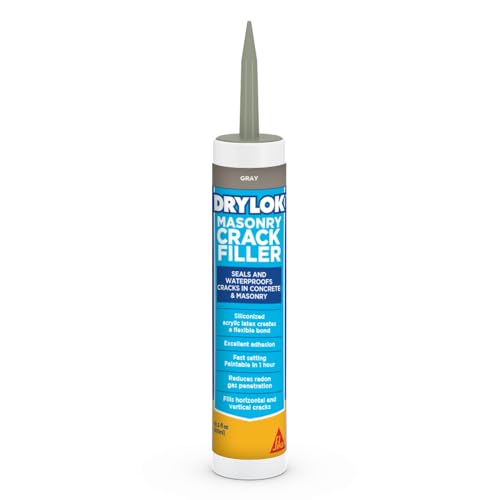
Fast-setting waterproof masonry crack filler for walls, steps and mortar joints; paintable in 1 hour, 12-hour cure.
Check price on Amazon$11.50 as of Oct 20, 2026 7:17 pm GMT+0000 — prices change; see Amazon for current price.Why we like it
- Rated for walls and foundations, not just flatwork
- Replaces cracked mortar joints
- Paintable in 1 hour, cures in 12
- Clear prep instructions in the listing
| Specification | Details |
|---|---|
| Type | Fast-set waterproof masonry crack filler |
| Surfaces | Masonry walls, steps, floors, brick, mortar; driveways and patios |
| Timing | Paintable in 1 hour; 12-hour cure |
| Prep | Opening free of frost, dust, dirt, oil and loose particles; hose and wire-brush |
| Application | Force tightly into crack; smooth with wet putty knife or trowel |
| Size | 10.5 fl oz |
DRYLOK 30507 — fast-set waterproof masonry filler, walls/steps/mortar, paintable 1 hr, 12-hr cure, 10.5 fl oz
One of Only Two Fillers Rated for Vertical Masonry
Only two listings on the shelf mention walls: Drylok and the CXYARY multi-pack. Drylok is the one that names foundations, steps and mortar joints and gives real application instructions: clean the opening of frost, dust and loose material, force the filler in tightly, then smooth it with a wet knife. That is how a vertical crack repair should be done.
It is the only one of the three paintable fillers that states a paint time, at one hour. For a basement wall that will be coated with waterproofing paint, or a set of brick steps with failing joints, that saves a day.
Drylok is a rigid masonry product, not an elastic sealant, so it is not the answer for an active crack that moves. A foundation crack that is wider at one end, offset or leaking under pressure needs evaluation before any filler goes in.
Pros
- Works on walls, steps and mortar joints
- Fast paint and cure times
- Good prep and application guidance
Cons
- Rigid, not for moving cracks
- Small size
- Needs hand tooling
Check DRYLOK Fast-Set Crack Filler price on Amazon
7. ConSANDtrate Concrete Crack Filler 3 Lb — Best for Patio and Pool Deck Cracks

Polymer-based granular filler that sets when misted with water; listing claims it re-forms as concrete moves.
Check price on Amazon$29.99 as of Oct 21, 2026 10:01 am GMT+0000 — prices change; see Amazon for current price.Why we like it
- Pour in, mist with water, done
- Polymer granules, not cement
- Claims to re-form as the slab moves
- Larger 3 lb bottle for long cracks
| Specification | Details |
|---|---|
| Type | Water-activated polymer-based granular filler |
| Movement | “Self-healing” claim: polymers re-form as concrete expands and contracts |
| Surfaces | Sidewalks, driveways, walkways, patios, pool decks |
| Color | Gray |
| Size | 3 lb bottle |
| Crack size / cure | Not stated in listing |
ConSANDtrate — water-activated polymer granules, self-healing claim, patios/pool decks, gray, 3 lb
The Only Granular Filler That Claims to Re-Form as the Concrete Moves
Five listings are pour-and-mist granular or powder fillers. ConSANDtrate is the one that describes its granules as polymer-based and makes a “self-healing” claim: that the polymers reinstate themselves in the crack as the slab expands and contracts. Treat that as the manufacturer’s description, not a tested result, but the mechanism is closer to polymeric joint sand than to cement, which suits patios with a lot of small, branching cracks.
At 3 pounds it is the largest single bottle among the granular fillers, useful when a patio has a network of cracks rather than one.
The listing does not state a crack width, cure time or traffic time, and its bullets are partly garbled. Use it on low-traffic patios and pool decks, and pick the DAP powder for driveway cracks where the stated size and vehicle time matter.
Pros
- Pour-and-mist simplicity
- Polymer granules that flex
- Largest granular bottle
Cons
- No crack size or cure time
- Self-healing claim unverified
- Listing text is unclear in places
Check ConSANDtrate Crack Filler price on Amazon
Matching the filler to the crack
Most failed crack repairs come from using the right product on the wrong crack. A simple sort:
- Hairline, stable cracks in flatwork: a thin pourable liquid that wicks in.
- Up to about 1/2 inch, stable, horizontal: a water-activated powder or a pourable cement filler.
- Cracks that open and close with the seasons: an elastic, self-leveling sealant, with backer rod in deep cracks.
- Vertical faces, steps and mortar joints: a gun-grade sealant or a masonry crack filler you tool by hand.
- Broken edges, spalls and holes: not a crack filler job. Use a concrete patch built for depth.
- Control and expansion joints: only flexible joint sealant. Our guide to concrete expansion joints explains why rigid fill in a joint causes new cracks.
For blacktop driveways, the chemistry is different again; see our asphalt crack filler guide.
Freeze-thaw, salt and Front Range soils
Water is what turns a small crack into a big one. The EPA’s building moisture guidance notes that concrete can be damaged by freeze-thaw cycles and by salt deposited below the surface. Water that enters a crack in November can freeze, expand and widen the crack a little each time, and on the Front Range that cycle can repeat many times a winter. Sealing cracks before the first freeze is one of the most cost-effective maintenance jobs a homeowner can do.
Salt adds to the damage. The EPA notes that road salt can damage private and public property, and the slush cars carry into a garage concentrates it right at the apron. Rinse salt off repaired areas during thaws.
Soil matters too. Expansive clays common across the Denver metro and Douglas County swell when wet and shrink when dry, so slabs on them move seasonally. The EPA’s homeowner moisture guide advises making sure the ground slopes away from the foundation so water does not collect around it. Keeping roof and surface water away from slabs reduces the movement that reopens cracks.
Prep and application that make a repair last
- Clean the crack. Remove loose concrete, dirt, weeds and old filler with a wire brush, screwdriver or crack chaser, then blow or vacuum it out.
- Control dust. Grinding or routing a crack wider creates fine dust. OSHA notes that cutting, grinding and drilling concrete produces respirable crystalline silica, so use a wet method or a vacuum shroud and wear a respirator rated for silica.
- Use backer rod in deep cracks. Foam rod sized slightly larger than the crack keeps elastic sealant at the right depth and saves material.
- Mind temperature and moisture. Follow the label’s range. Most fillers need a dry crack and temperatures above freezing for the cure period, which rules out many Front Range winter days.
- Tool and protect. Strike gun-grade sealant flush or slightly recessed, keep traffic off until the stated time, and seal the surrounding slab once the repair has cured. Our concrete sealer guide covers products for that step.
Color, appearance and how much to buy
No filler is invisible. Cement-based powders and pourables dry a gray that blends with most weathered concrete, while elastic sealants usually stay a slightly darker, smoother line. On decorative or stained concrete, test a short section first. Granular fillers like the ones on this shelf come in gray and tan; the tan option is meant for buff-colored or exposed-aggregate surfaces.
Estimate quantity by crack length and depth, not by the number of cracks. A 10-ounce cartridge or small bottle fills far less than most people expect once a crack is cleaned out to its full depth. Measure the longest cracks, use backer rod in anything deeper than about half an inch, and buy one extra unit so the job is not left half-finished when a cold front arrives.
When a crack is more than a crack
Most cracks in sidewalks, patios and garage floors are shrinkage cracks: narrow, random and harmless once sealed. Some are not. Warning signs include:
- Cracks wider at one end than the other, or wider than about 1/4 inch and growing
- One side of the crack higher than the other
- Stair-step cracks in block or brick foundation walls
- Cracks that leak water into a basement
- Steps or stoops pulling away from the house; our guide to concrete steps covers this
Those patterns suggest soil movement, settlement or drainage problems that a filler will only hide. If you are buying a home with cracked slabs or foundation walls, have them evaluated with the grading and drainage. Our structure and exterior hub explains what an exterior and foundation inspection covers, and you can contact us to connect with a vetted Front Range inspector.
Frequently asked questions
What is the best filler for cracks in a concrete driveway?
For stable cracks up to about half an inch, a water-activated powder filler or a pourable cement filler works well and can take traffic within a day or two. For cracks that open and close seasonally, an elastic self-leveling sealant is better because it stretches as the slab moves.
Can you fill concrete cracks in winter?
Usually not outdoors on the Front Range. Most fillers need a dry crack and temperatures above freezing through the cure period. Seal cracks in early fall before the first freeze, and check the product label for its minimum application temperature.
Should I use a flexible or rigid crack filler?
Use a flexible sealant for cracks that move with temperature or soil, and for any expansion or control joint. Rigid cementitious fillers suit stable cracks and look more like the surrounding concrete. Front Range slabs on expansive clay often need the flexible option.
How wide a crack can concrete crack filler handle?
It depends on the product. Of the 13 listings we compared, only one states a maximum, up to half an inch wide and deep in a single pass. Wider holes, broken edges and spalls need a concrete patch rather than a crack filler.
When is a concrete crack a structural concern?
Cracks that are wider at one end, offset so one side is higher, growing over time, leaking water or forming stair-steps in a foundation wall can signal settlement or soil movement. Those deserve evaluation by a qualified inspector or engineer before cosmetic repair.
References
- Moisture Control Guidance for Building Design, Construction and Maintenance — U.S. Environmental Protection Agency
- Winter Is Coming! And With It, Tons of Salt on Our Roads — U.S. Environmental Protection Agency
- A Brief Guide to Mold, Moisture and Your Home — U.S. Environmental Protection Agency
- Silica, Crystalline — Occupational Safety and Health Administration