Asbestos Testing Lab Near Me: A Clear Guide
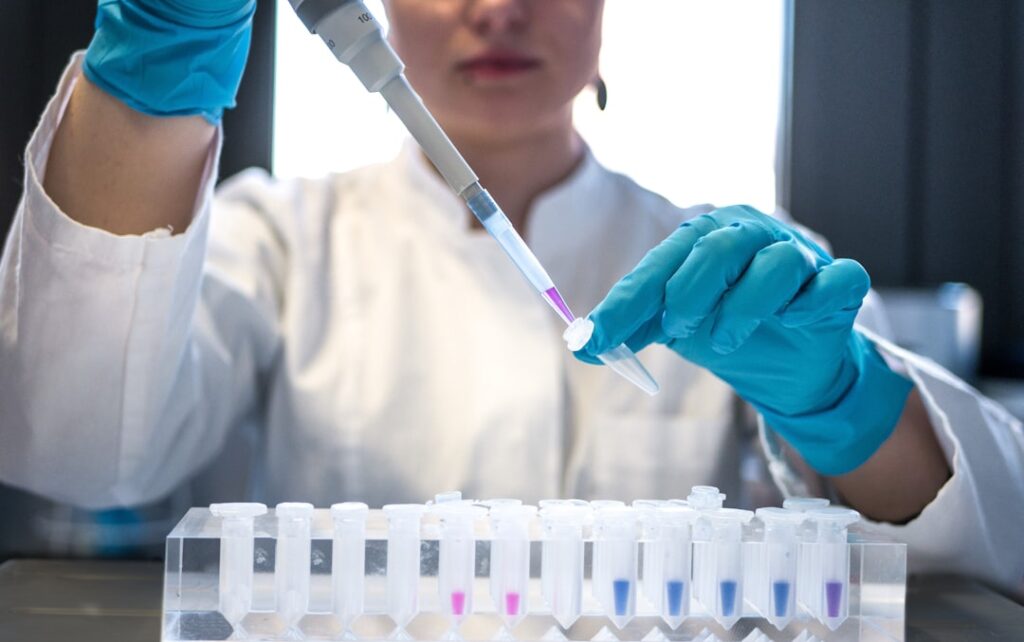
When a renovation stalls because of a suspect popcorn ceiling or crumbling pipe insulation, the next step is often a search for an asbestos testing lab near me. The lab is where the actual answer comes from. An inspector or homeowner collects a sample, but it is the laboratory’s microscopy that confirms whether asbestos fibers are present and in what concentration. Choosing the right lab matters more than most people expect, because accreditation, analytical method, and turnaround time all affect how reliable and how fast your result will be. This guide explains what an asbestos lab does, how to judge accreditation, the difference between bulk and air analysis, and how to get a sample analyzed safely. It summarizes EPA and OSHA guidance current as of 2026; consult a certified professional for decisions about your specific home.
Part of our Asbestos in the Home guide — start there for the full picture →
Is this mold, asbestos, or water damage? Get a free instant screen
Upload a clear photo of the suspect area. You'll get an instant AI screening opinion and what to do next. This is screening guidance, not a professional determination.
Screening guidance only. AI can be wrong. Confirm asbestos, mold type, or lead with lab testing or a licensed professional before acting.
What does an asbestos testing lab actually do?
An asbestos testing laboratory analyzes physical samples to determine whether they contain asbestos and, when relevant, how much. The lab does not visit your home. Its job begins when a sample arrives, properly bagged and labeled, with a chain-of-custody form. Trained analysts examine the material under a microscope, identify any asbestos fibers by their optical or structural characteristics, and report the result as a percentage by material type.
This is a different service from the on-site survey that identifies and collects suspect materials in the first place. The lab handles the analysis; an inspector or surveyor handles the field work. Many homeowners confuse the two, so it helps to separate them. Our companion guide to finding an asbestos inspection near me covers the on-site survey side, while this article focuses on the laboratory that processes the sample once it is collected. For the broader picture, the asbestos and lead hazard hub ties both together.
Why accreditation is the first thing to check
Not all laboratories are equal, and accreditation is the dividing line. For asbestos analysis, the gold standard in the United States is participation in the National Voluntary Laboratory Accreditation Program, run by the National Institute of Standards and Technology, alongside the American Industrial Hygiene Association’s accreditation programs. A lab carrying NVLAP or AIHA accreditation has demonstrated, through proficiency testing, that its analysts produce reliable results.
Why does this matter so much? Asbestos identification depends on the analyst correctly distinguishing asbestos fibers from harmless look-alikes under the microscope. An unaccredited lab may produce a number, but you have no independent assurance that the number is trustworthy. Before sending a sample, ask the lab directly whether it holds current NVLAP or AIHA accreditation for the specific method you need. A reputable lab answers without hesitation and can provide its accreditation number.
Bulk analysis versus air analysis
Asbestos labs perform two fundamentally different kinds of testing, and they answer different questions. Understanding the distinction helps you order the right service.
Bulk sample analysis
Bulk analysis examines a physical piece of suspect material: a chip of floor tile, a fragment of pipe wrap, a scraping of ceiling texture. The standard method is Polarized Light Microscopy, abbreviated PLM, which is the EPA-recognized method for identifying asbestos in bulk building materials. PLM tells you whether the material contains asbestos and roughly what percentage. This is what most homeowners need before a renovation, because the practical question is usually “does this floor tile contain asbestos before I rip it up?”
When PLM returns a result near the regulatory threshold or the material is difficult to read, a lab may recommend Transmission Electron Microscopy, abbreviated TEM, which offers higher resolution. TEM costs more and takes longer but resolves ambiguous bulk samples.
Air sample analysis
Air analysis answers a different question: how many asbestos fibers are floating in the air right now? This matters during and after abatement, to confirm that disturbed asbestos has not contaminated the breathing space and that a cleared area is safe to reoccupy. Air samples are collected by drawing a known volume of air through a filter, which the lab then analyzes by Phase Contrast Microscopy, abbreviated PCM, or by TEM for clearance after abatement.
Most homeowners ordering a single material test need bulk PLM analysis. Air analysis comes into play around abatement projects and is typically arranged by the abatement contractor or a clearance specialist rather than the homeowner directly.
Turnaround time and what it costs
Labs offer tiered turnaround, and the price scales with speed. Standard turnaround for bulk PLM is often two to five business days. Rush options can return results within 24 hours, or even same-day, for a premium. When a renovation crew is standing by, paying for rush analysis can be worth it; when there is no deadline, standard turnaround keeps costs down.
Per-sample pricing for bulk PLM is generally modest, which is why testing before disturbing suspect material is far cheaper than the consequences of disturbing it blind. TEM and air clearance analysis cost more per sample. Many homeowners find that the cost of testing a handful of materials is a small fraction of an abatement project. For a fuller breakdown of pricing across the process, our guide to asbestos testing cost lays out the ranges.
How to get a sample to the lab safely
This is the step where caution matters most. Disturbing asbestos-containing material releases fibers, and that is exactly what you are trying to avoid. EPA and OSHA guidance is clear that suspect materials should be handled carefully and, ideally, sampled by someone trained to do it without spreading contamination.
If a professional collects the sample, they follow procedures to wet the material, minimize dust, double-bag the sample, and seal the source area. If a homeowner is determined to collect a bulk sample themselves, the conservative approach is to shut down air movement in the room, lightly mist the material, take a small piece while wearing appropriate protection, seal it in two zip bags, and wet-wipe the area afterward. Many homeowners are better served letting a qualified inspector handle collection, both for safety and because the lab and inspector can coordinate the chain of custody.
Whatever the collection method, the sample needs accurate labeling: what it is, where it came from, and the date. Mail-in lab services are widely available and ship a result back electronically. A local lab may offer drop-off, which avoids transit time. Either way, the analysis itself is identical once the sample is in the lab’s hands.
Local lab versus mail-in service
The phrase “near me” suggests a local facility, but proximity is not the only consideration. A nearby accredited lab lets you drop off samples and sometimes get faster turnaround without shipping. A mail-in service expands your options to any accredited lab in the country and is often more economical for a single homeowner sending one or two samples.
The decisive factor is accreditation and method, not distance. A NVLAP-accredited mail-in lab three states away will give you a more reliable result than an unaccredited shop down the street. Use “near me” to find convenient options, then filter hard on accreditation. If you are unsure whether your material even warrants testing, our walkthrough on how to check for asbestos helps you decide before you spend on lab fees.
Reading and acting on the lab result
The lab report states, per sample, whether asbestos was detected and at what percentage by which microscopy method. A result below the detection threshold means the lab found no asbestos in that sample, though it speaks only to the material tested, not the whole house. A positive result means the material contains asbestos and should be managed accordingly.
A positive result is not automatically a crisis. Intact, undisturbed asbestos-containing material is often safer left in place and managed than ripped out improperly. What changes is your renovation plan: you now know to either work around the material, encapsulate it, or hire a licensed abatement contractor to remove it safely. The lab result is the information that lets you make that call with facts instead of guesswork. Pair the result with a professional’s judgment about condition and your renovation goals before deciding on removal.
Understanding the analytical methods labs use
The method a lab uses shapes both the reliability and the cost of your result, so it is worth knowing what the acronyms mean. Polarized Light Microscopy, or PLM, is the EPA-recognized standard for identifying asbestos in bulk building materials. It uses the optical properties of fibers under polarized light to identify asbestos type and estimate percentage. PLM is fast, affordable, and sufficient for most homeowner questions about a floor tile or ceiling texture.
Transmission Electron Microscopy, or TEM, offers far higher resolution and can detect very thin fibers that PLM may miss. Labs turn to TEM when a PLM result is ambiguous, when a material is known to be difficult to read, or when a result sits near the regulatory threshold and certainty matters. TEM costs more and takes longer. For air clearance after abatement, labs use Phase Contrast Microscopy, or PCM, for routine counts, or TEM for the definitive clearance that confirms a space is safe to reoccupy. Knowing which method your sample needs helps you order the right service and understand the price difference between a routine bulk test and a high-resolution one.
Chain of custody and why it matters
A lab result is only as trustworthy as the paper trail behind the sample. Chain of custody is the documented record of who collected the sample, where and when it was taken, and how it traveled to the lab. For a homeowner deciding whether to disturb a material, an informal sample may be adequate. For a real estate transaction, a dispute with a contractor, or any situation where the result could be challenged, a documented chain of custody turns the result from an opinion into evidence.
Reputable labs provide a chain-of-custody form and expect it returned with the sample, noting the sample location, material description, and collection date. When a professional collects the sample, they handle this documentation as a matter of routine, which is one of the underrated advantages of hiring an inspector over self-sampling. The form also prevents mix-ups: when several samples come from one home, accurate labeling ensures the positive result points to the right wall, floor, or pipe. Sloppy labeling can send a renovation crew tearing into the wrong material or, worse, ignoring the dangerous one.
Common questions before you send a sample
Before mailing or dropping off a sample, a few practical points save money and frustration. First, decide how many samples you actually need. Each distinct material is a separate sample, but you do not need to test materials you will not disturb. A focused list of the materials in your renovation path keeps per-sample fees in check. Second, confirm the lab’s required sample size; too small a piece can be unreadable, and too large wastes material and raises handling concerns.
Third, ask about turnaround in writing so a rush fee does not surprise you. Fourth, verify the lab reports results in a format you can act on, ideally stating the asbestos percentage and the method used per sample. Finally, keep your own copy of the result and the chain-of-custody form. If a renovation reveals additional suspect materials later, having organized prior results helps you and any professional build a complete picture of the home. A little planning before the sample leaves your hands makes the whole process cheaper and clearer, and pairs naturally with the on-site survey covered in our asbestos survey guide.
References
- Asbestos analysis methods and accredited laboratories — U.S. EPA
- Asbestos exposure standards and safe handling — Occupational Safety and Health Administration
- Health effects and exposure controls for asbestos — CDC / NIOSH
- How asbestos sampling and lab analysis work — The Mesothelioma Center
Frequently asked questions
What accreditation should an asbestos testing lab have?
Look for NVLAP accreditation through the National Institute of Standards and Technology, or AIHA laboratory accreditation. These programs confirm through proficiency testing that the lab's analysts produce reliable results. Ask for the accreditation number before sending a sample.
What is the difference between bulk and air asbestos analysis?
Bulk analysis tests a physical piece of material, like a floor tile or pipe wrap, to see if it contains asbestos. Air analysis measures asbestos fibers floating in the air, mainly during and after abatement to confirm an area is safe. Most homeowners need bulk PLM analysis.
How fast can an asbestos lab return results?
Standard turnaround for bulk PLM analysis is usually two to five business days. Many labs offer rush options that return results within 24 hours or even same day for a premium fee, which is useful when a renovation crew is waiting.
Can I collect an asbestos sample myself?
You can, but caution is essential because disturbing the material releases fibers. The conservative approach is to mist the material, take a small piece with protection, double-bag it, and wet-wipe the area. Many homeowners are safer letting a trained inspector collect the sample.
If you are along the Front Range and want a vetted local professional to collect samples correctly and coordinate accredited lab analysis, connect with an inspector through our contact page before you disturb any suspect material.