Window Cranks: Stripped Operators on Casement Windows
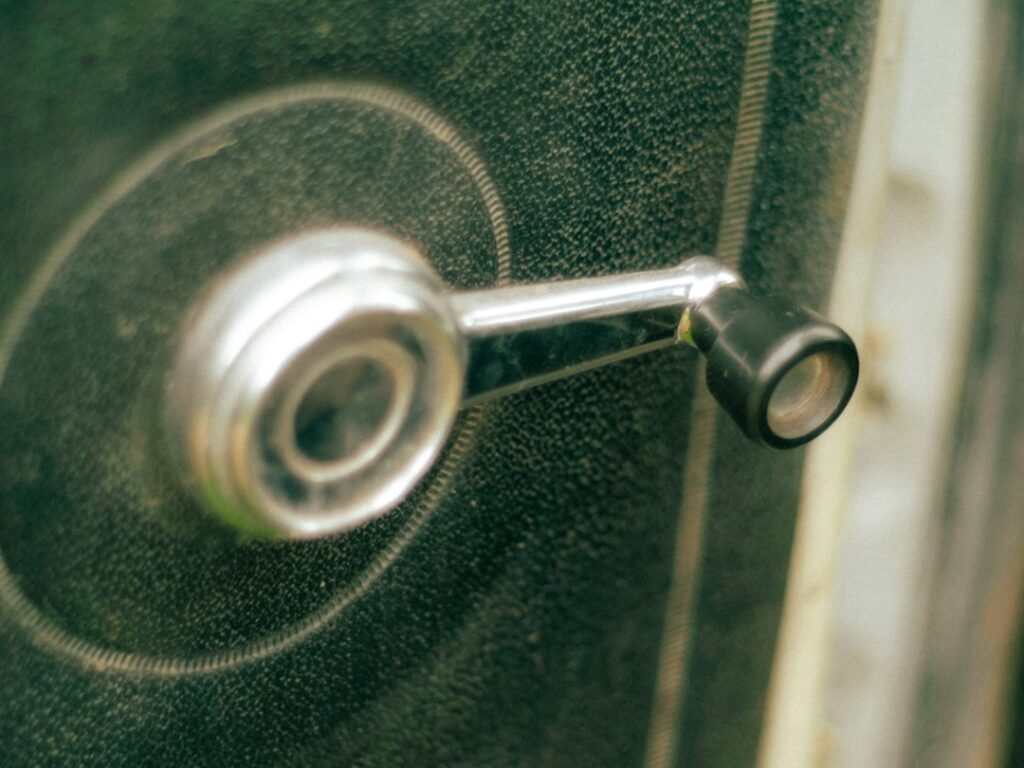
A casement window that will not open is one of the most common small defects in Front Range homes built from the 1980s onward. The homeowner turns the handle, and either it spins freely with nothing happening, or it grinds, clicks and moves the sash a fraction of an inch before stopping. In most cases the problem is the window crank assembly, which has two parts that wear in different ways: the handle and the gear-driven operator it turns. Telling them apart determines whether the fix costs a few dollars or involves pulling the operator out of the frame. This guide covers how casement and awning operators work, the difference between dyad and single-arm designs, how operators are removed and replaced, the lubrication that keeps them moving, and why a broken crank can matter for bedroom egress and child safety.
Part of our Structure & Exterior guide — start there for the full picture →
How a Window Crank Works
A window crank is the handle-and-gear mechanism that opens and closes a hinged window from inside. It is most common on casement windows, which swing outward like a door on hinges at one side, and on awning windows, which hinge at the top and swing out from the bottom. Our guides to casement windows and the awning window explain those styles in more detail.
The assembly has three main parts:
- The handle. Usually a folding or fixed crank handle that slips onto a splined stud and is held by a set screw.
- The operator. A gearbox, typically a worm gear driving a toothed sector or arm, mounted to the sill or the bottom of the frame and often hidden under a plastic cover.
- The arm or arms. One or two metal arms that extend from the operator to the sash, ending in a pin or shoe that rides in a track or is clipped to a bracket on the sash.
Turning the handle rotates the worm, the worm turns the gear, and the gear swings the arm outward to push the sash open. Reversing the handle pulls it closed. On most casements, the crank does not lock the window; a separate lever or multi-point lock pulls the sash tight against the weatherstripping after the crank closes it. Our window locks guide covers those mechanisms.
Stripped Handle or Stripped Operator?
The first diagnostic step is figuring out which part has failed. A few minutes of observation usually answers it.
Signs of a stripped handle
The handle turns, but the splined stud it fits onto does not. The set screw may be loose or missing, or the soft metal inside the handle’s socket has worn smooth. A quick test: remove the handle and turn the stud with pliers or a small wrench. If the window opens and closes normally, the operator is fine and only the handle needs replacing. Handles are inexpensive and usually match by brand, finish and spline size.
Signs of stripped operator gears
The handle and stud turn together, but the arm does not move, or it moves in jerks with grinding or clicking. Sometimes the window opens partway and then stops. Inside the gearbox, the teeth on the drive gear or the worm have worn down, cracked or sheared. This often happens after someone forces the crank against a window that is frozen shut, painted shut or still locked. Older operators with plastic or die-cast gears are more prone to it. A stripped operator cannot normally be repaired economically and is replaced as a unit.
Other causes that look like a bad crank
- A disconnected arm. The arm’s shoe or pin has popped out of the sash track, so the operator turns but cannot push the window.
- Worn or bent hinges. If the sash sags or binds, the operator strains to push it and eventually wears out. Fixing the operator without addressing the hinge often leads to a repeat failure.
- Swollen or distorted sash. Wood sashes that have absorbed water may rub on the frame.
- Ice or debris. In Colorado winters, a sash can freeze to its weatherstripping. Forcing the crank strips gears. Patience or gentle warming is the safer approach.
Dyad vs Single-Arm Operators
Casement operators come in several configurations, and the replacement has to match the original.
Single-arm operators
A single straight arm runs from the operator to a track on the bottom of the sash. As the arm swings, its shoe slides along the track. These are common on smaller casements and many awning windows. They are simple but put force on one point of the sash.
Dual-arm and dyad operators
A dyad operator uses two linked arms that fold together when the window closes and spread apart as it opens, somewhat like a scissor. One arm is attached to the sash and the other pivots to keep the motion controlled. Dyad and other dual-arm designs spread the load and are common on larger casements, where a single arm might flex. Some dyad operators have a removable link so the sash can be detached from the arms for cleaning.
Awning window operators
Awning windows use similar gearboxes, but the arm pushes the bottom of the sash outward rather than swinging a side-hinged sash. Many awning operators use a single arm, or a pair of scissor-style arms, and the sash also rides on friction hinges or stay arms along the sides. Because the sash weight hangs from the top hinge, a worn stay arm can let the sash drop or flutter in the wind, which loads the operator in ways it was not designed for. On wider awning windows, two operators may be ganged together or connected by a tie bar so both corners move evenly; if one side fails, the sash can rack and bind.
Colorado conditions that wear operators
Front Range weather is hard on window hardware in ways that differ from humid climates. Intense high-altitude sunlight can make plastic operator covers and handles brittle. Big daily temperature swings mean frames and sashes expand and contract, and vinyl frames in particular may shift enough to affect how smoothly a sash closes. Fine dust carried by Chinook and spring winds collects in tracks and hinges. Winter cold thickens many lubricants. None of these causes failure on its own, but together they explain why operators on south- and west-facing windows often wear out first.
Matching a replacement
When ordering a new operator, the details that matter usually include:
- Window brand and series, often printed on a label inside the sash, on the spacer between the glass panes or on the operator housing.
- Handing. Right-hand and left-hand operators are mirror images and are not interchangeable; the hinge side of the window determines which is needed.
- Arm type and length, including single-arm versus dyad and straight versus offset arms.
- Mounting hole pattern and base shape, which vary between manufacturers and model years.
- Stud spline count, so the existing handle or a matching new one fits.
Hardware suppliers and window manufacturers can often identify an operator from photos of the part, its markings and its measurements. Taking clear photos before removing anything saves time.
Removing and Replacing a Casement Operator
Replacing an operator is a manageable task for a homeowner comfortable with basic hand tools, though procedures vary by brand. The general sequence looks like this:
- Open the window partway. This puts the arm in a position where its connection to the sash can be reached. If the operator is completely stripped, the sash may need to be pushed open by hand from outside.
- Disconnect the arm from the sash. Depending on the design, the shoe slides out through a notch in the track, a clip is pried off, or a link is unhooked. Dyad operators often have a snap-off connector at the sash bracket.
- Remove the handle and the operator cover. Covers usually pop off or are held by a screw. Some sills require removing interior trim to reach the screws.
- Unscrew the operator from the frame. Note how it sits and the position of any shims.
- Install the replacement, reattach the arm to the sash, refit the cover and handle, and cycle the window through its full range several times.
On upper-floor windows, the sash can swing outward and expose a fall hazard, and working from inside leaning over an open window is risky. Having a second person available, or hiring a window technician for higher windows, is a sensible precaution. Older wood windows may have painted surfaces; in homes built before 1978, disturbing paint can release lead dust, and ENERGY STAR’s window and door trim guidance points homeowners to EPA’s lead-safe renovation resources before that kind of work.
Screen frames sit inside casement windows, and many must be removed to reach the operator arm or the sash track. Damaged screens are a frequent side discovery; our window screen replacement guide covers repair options.
Lubrication and Routine Care
Many operator failures start with friction. A dry track or stiff hinge makes the operator push harder on every cycle until the gear teeth give up. A short routine once or twice a year helps:
- Clean the tracks and hinges with a vacuum and a dry brush to remove grit, dust, insect debris and dried leaves. Front Range wind and dust settle into these channels quickly.
- Lubricate sparingly. Many window manufacturers recommend a silicone spray or a dry lubricant on hinges, tracks and the arm shoe. Heavy grease tends to attract dust and can gum up in cold weather. The window maker’s care instructions are the reference.
- Lubricate the gearbox if accessible, following the manufacturer’s guidance. Many operators are sealed and need no internal service.
- Tighten loose screws on the operator base, hinge plates and sash brackets. A loose operator flexes under load and wears faster.
- Check the weatherstripping. Compressed, torn or missing seals let air and water in, and a seal that sticks to the sash can stress the operator when opening. Our window weather stripping guide covers replacement.
ENERGY STAR suggests a simple paper test for air leaks: close the window on a sheet of paper, and if it slides easily, the window could seal more tightly, which may be addressed with thicker weatherstripping. On a casement, a loose seal can also mean the lock and operator are not pulling the sash fully closed.
Related problems found at the same time
While the window is open for operator work, it is a good moment to look for fogging between the panes, which signals a failed seal in an insulated glass unit; our double-pane window repair guide explains options. Soft, dark or crumbling wood at the bottom of the frame suggests water damage that may need a window sill replacement. Operators screwed into rotted wood rarely hold for long.
Egress and Child Safety
A broken window crank is more than an inconvenience when the window serves as a bedroom emergency exit.
Egress windows
Building codes generally require sleeping rooms, including many basement bedrooms, to have an emergency escape and rescue opening. Requirements typically address minimum net clear opening area, minimum opening width and height, and maximum sill height, and they call for the opening to be operable from inside without keys, tools or special knowledge. Specific figures depend on the code edition adopted locally. Casements are popular for egress because they swing nearly fully open, delivering more clear opening than a sliding or hung window of the same frame size.
That benefit depends on the operator working. A stripped operator that lets the sash open only a few inches, a missing handle, or an arm that has been disconnected and wired shut may leave the opening far smaller than intended. Some casements also use special hinges designed to move the sash to clear more of the opening; damage to those can reduce the clear opening as well. An inspector who finds a bedroom casement that will not open fully will typically flag it as a safety concern. Our egress window installation cost guide covers what is involved when a basement bedroom lacks a compliant opening.
Child window safety
The same window that must open easily in a fire also poses a fall risk for young children. CPSC data cited in its 2026 National Window Safety Week release estimates that about 5,600 children aged 12 and under were treated in emergency departments in 2024 after falling out of a window, and CPSC is aware of at least 25 deaths in that age group from window falls between 2021 and 2023. CPSC recommends installing window guards or window stops that limit openings to no more than four inches, and it warns families never to rely on screens to keep children from falling. For windows on the sixth floor and below, CPSC advises guards that adults and older children can open easily in case of fire.
Those two goals have to be balanced on egress windows. Our window guards guide explains release mechanisms that allow quick emergency opening. A crank handle that is removed to keep children from opening a casement solves one problem by creating another, since a missing handle can block escape in an emergency.
Costs and What Inspectors Check
Prices vary by brand, availability and access. Rough 2026 ranges:
- Replacement crank handle: often about $5 to $25 each.
- Replacement operator, parts only: commonly about $20 to $80, with some brand-specific or discontinued units costing more.
- Professional operator replacement: often in the range of $100 to $300 per window including parts and a service call, with multiple windows usually costing less per unit.
- Hinge replacement or sash adjustment: varies widely by window type.
Discontinued operators for older or defunct window brands can be hard to find. Universal-fit operators exist, but they may require new mounting holes or a different arm configuration.
The ASHI Standard of Practice directs inspectors to inspect a representative number of doors and windows, generally one per room for similar interior components. Inspectors operate windows with normal controls and note those that will not open, close or latch. The SoP lists the coatings on and hermetic seals between panes of window glass as outside the required scope, so fogged-glass findings are often noted as observations rather than measured defects. Our structure and exterior inspection section covers the rest of the envelope, and our main guide to hiring a home inspector explains how to choose one.
References
- ASHI Standard of Practice for Home Inspections — American Society of Home Inspectors
- CPSC Urges Families to Protect Children During National Window Safety Week — U.S. Consumer Product Safety Commission
- Preventing Window Falls — U.S. Consumer Product Safety Commission
- Sealing Behind Window and Door Trim — ENERGY STAR
Frequently asked questions
Why does my window crank spin without opening the window?
Either the handle has stripped on its splined stud or the gears inside the operator have worn out. Remove the handle and turn the stud with pliers; if the window moves, only the handle needs replacing.
Can I replace a casement window operator myself?
Often yes, with basic tools. Disconnect the arm from the sash, remove the cover and screws, and install a matching operator. Brand, handing, arm type and hole pattern must match.
What is a dyad window operator?
A dyad operator uses two linked arms that fold together when the window closes and spread as it opens. It spreads the load across the sash and is common on larger casements.
What lubricant should I use on a window crank?
Many manufacturers recommend silicone spray or a dry lubricant on hinges, tracks and arm shoes, applied sparingly after cleaning. Heavy grease can attract dust. Check the window maker's care instructions.
Does a broken crank matter for an egress window?
It can. Bedroom egress openings are expected to open easily from inside to their full clear size. An operator that limits the opening may leave the window short of its intended egress size.
Want every bedroom casement checked before closing? Contact our team to be connected with a Front Range inspector who operates windows, locks and egress openings.