What Kills Black Mold Instantly: An Honest Guide
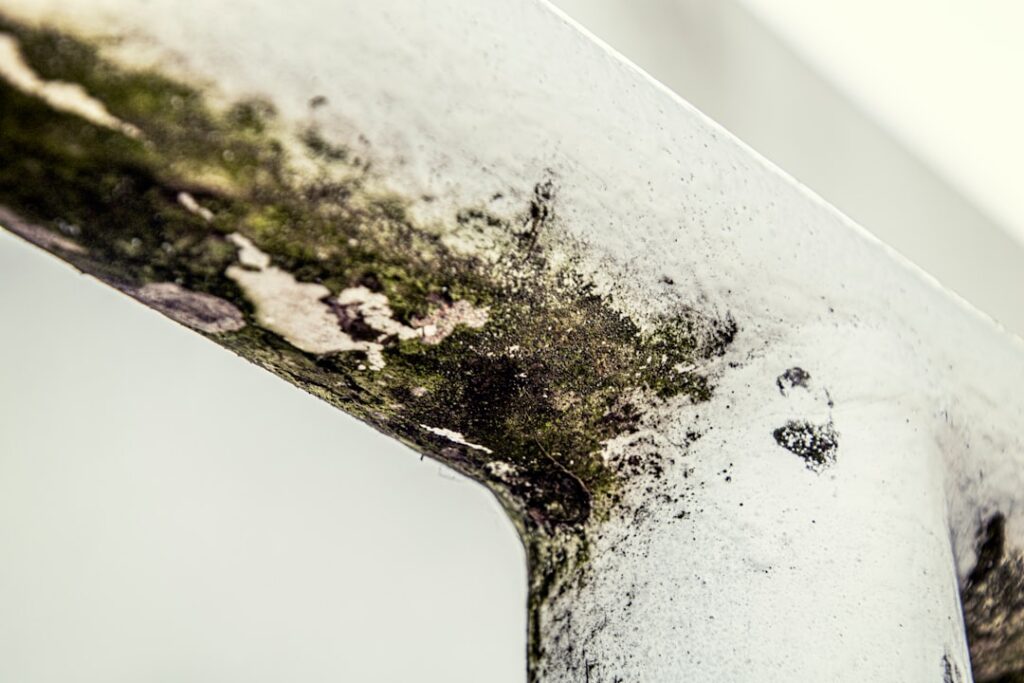
Searches for what kills black mold instantly usually come from a moment of alarm: a dark patch appears, and the instinct is to make it vanish right now. Plenty of products promise to do exactly that, but the word instantly hides a lot. Some chemicals do kill surface spores quickly, others only bleach the color so the mold looks gone while living roots remain, and a few fast methods are genuinely hazardous indoors. This guide separates what works fast from what merely looks fast, based on EPA and CDC guidance current as of 2026; consult a professional for testing decisions and your physician for symptoms.
Part of our Black Mold & Your Health guide — start there for the full picture →
Is this mold, asbestos, or water damage? Get a free instant screen
Upload a clear photo of the suspect area. You'll get an instant AI screening opinion and what to do next. This is screening guidance, not a professional determination.
Screening guidance only. AI can be wrong. Confirm asbestos, mold type, or lead with lab testing or a licensed professional before acting.
What actually kills black mold fast?
Several agents do kill mold on contact in a matter of minutes on hard, non-porous surfaces. EPA-registered antimicrobial cleaners, hydrogen peroxide at household strength, and undiluted white vinegar left to sit all disrupt mold cells. On sealed tile, glass, and metal, these can wipe out visible growth quickly because there is nowhere for the mold to hide.
The catch is the surface. Black mold on grout, drywall, or wood sends thread-like hyphae below the surface, and a fast surface kill leaves those roots alive. So while the colony you see may die in minutes, the material can re-bloom within days if moisture remains. Speed is real on hard surfaces and largely an illusion on porous ones.
Why instantly is mostly a marketing word
Product labels lean on instantly because it sells urgency. In practice, most disinfectants need a dwell time, the minutes the chemical must stay wet on the surface to actually kill organisms. A spray that beads up and is wiped after ten seconds has not had time to work, even if the stain disappears.
Bleach is the classic example of false speed. It strips the dark pigment so a wall looks clean almost immediately, yet the EPA does not recommend bleach as a routine mold remediation tool on porous materials. Our deeper look at using bleach on mold explains why the visual result and the biological result are not the same thing.
When speed is actually dangerous
The fastest-acting chemicals are often the riskiest indoors. Mixing bleach with ammonia or with certain acidic cleaners produces toxic gases that can send people to the emergency room. Reaching for the strongest product to get an instant result is exactly how these accidental mixtures happen.
There is also a spore-release hazard. Aggressively spraying and scrubbing a large black-mold colony to clear it quickly launches spores into the air you breathe. The CDC notes that disturbing mold can worsen exposure, so a slower, contained approach protects your lungs better than a fast, messy one. For early-stage growth, recognizing the early signs of toxic black mold lets you act before the patch is large enough to be hazardous to remove.
Hard surfaces versus porous materials
The single most useful distinction is the surface type. On non-porous materials, fast cleaning genuinely works and instant results are achievable with proper dwell time. On porous materials, the honest answer is that no spray kills the mold instantly in a lasting way, because the chemical cannot reach the roots inside the material.
Non-porous: tile, glass, metal, sealed counters
Apply an EPA-registered cleaner or hydrogen peroxide, let it dwell for the labeled time, then wipe and dry. Because spores cannot embed, a single thorough cleaning often resolves the visible growth. This is where instant claims come closest to true.
Porous: drywall, wood, grout, fabric
Surface treatment buys time but rarely solves the problem. Heavily affected drywall and soaked carpet padding usually need removal rather than spraying. Killing black mold on framing is its own challenge, which we cover in detail in what kills black mold on wood, where sanding and encapsulation matter more than any quick spray.
A safe fast-response routine
If you need to act quickly on a small patch, do it methodically. Ventilate the room, put on gloves and an N95 respirator, and avoid mixing products. Choose one EPA-registered cleaner or plain hydrogen peroxide, apply it, and let it dwell rather than scrubbing immediately.
After the dwell time, wipe with a damp cloth, then dry the surface completely, because residual moisture is what allows regrowth. Bag your cleaning materials. The fastest durable result comes not from a stronger chemical but from removing the water source so the mold cannot return.
What no instant product can fix
No spray addresses the reason mold appeared. Condensation on a cold wall, a slow plumbing drip, or chronic basement humidity will regrow mold regardless of how fast you killed the last batch. The instant kill treats the symptom; the moisture fix treats the cause.
This is why remediation professionals spend as much time on the leak as on the mold. If a patch keeps returning within weeks, the moisture problem is unsolved. The mold inspection and testing hub walks through how to track down hidden moisture so a cleaning actually sticks.
When to stop and call a professional
Stop the DIY approach when growth covers more than roughly 10 square feet, when it follows flooding or sewage, or when it sits inside an HVAC system. Also stop if anyone in the home has asthma or a compromised immune system, where the exposure risk during cleanup outweighs the convenience of doing it yourself.
A professional brings containment and negative-air equipment that prevent the spore spread a fast home cleaning can cause. The honest takeaway is that instant kills exist for small hard-surface patches, but large or porous black mold rewards patience and proper handling over speed.
What dwell time really means
Dwell time is the most overlooked factor in fast mold cleaning, and understanding it explains why so many instant products disappoint. Dwell time is the number of minutes a disinfectant must remain visibly wet on a surface to actually kill the organisms it contacts. Most EPA-registered cleaners list a required dwell time on the label, often several minutes.
The common mistake is spraying and wiping within seconds, which removes the visible stain without giving the chemical time to work. The surface looks clean because the pigment came off, not because the mold died. Respecting dwell time, keeping the surface wet for the full labeled period, is what turns a cosmetic wipe into an actual kill on hard surfaces.
Why dead mold still matters
Even a genuinely instant kill does not make mold harmless. Dead mold and its spore fragments can still trigger allergic reactions and irritate airways, which is why the EPA emphasizes physically removing mold rather than simply killing it in place. A surface that has been disinfected but not wiped down still carries allergenic material.
This is the deeper reason that fast chemical action is only part of the job. After killing the mold, the surface must be cleaned to remove the residue, and porous material that cannot be fully cleaned is removed. Thinking of mold removal as a two-step process, kill and then physically clear, sets more realistic expectations than any instant claim.
Comparing common fast-acting options
Several household options act quickly on hard surfaces, each with trade-offs. Hydrogen peroxide at household strength is low-odor and breaks down into water and oxygen, leaving no harsh residue. Undiluted white vinegar is mildly penetrating and effective against many species when given time to dwell, though its smell is strong.
EPA-registered antimicrobial cleaners are purpose-built and carry clear dwell-time guidance, making them the most predictable choice. Bleach acts fast on color but, as covered earlier, fails on porous materials and carries mixing hazards. The fastest safe result usually comes from matching one of these to the surface rather than reaching for the harshest option available.
Setting realistic expectations
The search for an instant mold killer reflects a reasonable wish to make an unsettling problem disappear immediately. The realistic version of that wish is achievable on small hard-surface patches with the right product and proper dwell time. On porous materials and large areas, the honest expectation is a careful process rather than a single spray.
Speed and durability are different goals. A fast surface kill that ignores the moisture source produces a clean look today and a returning colony next month. Aiming for a lasting result, even if it takes longer, serves homeowners better than chasing the marketing promise of instant disappearance.
The role of drying after any treatment
Drying is the step that decides whether a fast kill holds. Mold needs moisture to grow, so a surface that is killed and cleaned but left damp simply re-colonizes from airborne spores. After any treatment, drying the surface and the surrounding area completely is what denies the next generation of mold a foothold.
Improving airflow accelerates this. A fan directed to exhaust outward, an open window, or a dehumidifier brings the surface to dryness faster than ambient air alone. The combination of a proper kill, physical removal, and thorough drying is the closest thing to a permanent fast result, and it depends far more on technique than on the strength of the product in the bottle.
When a musty smell lingers after cleaning
A persistent musty odor after a seemingly successful cleaning is a useful warning. The smell of mold comes from compounds released by active growth, so an odor that remains suggests living mold the cleaning did not reach, often inside a wall, under flooring, or behind a fixture. The instant kill cleared what you could see, not what you could not.
Treat a lingering odor as a prompt to investigate rather than to re-spray the same visible spot. Hidden moisture and hidden growth call for moisture meters and, sometimes, opening up the affected area. Chasing the smell to its source is what separates a real solution from a cosmetic one that masks an ongoing problem.
The danger of natural and homemade mixes
Searches for fast mold kills often turn up homemade recipes combining several ingredients, and some of these are risky. Mixing hydrogen peroxide with vinegar, for example, creates peracetic acid, which is irritating and not a safe household combination. The instinct to blend products for extra strength is exactly the impulse that produces hazardous mixtures.
The safer path is to use single ingredients as directed. Plain hydrogen peroxide, plain undiluted vinegar, or a registered cleaner each works on its own without the risks of combination. Faster is not better when the speed comes from a reactive mix, and no mold result justifies an accidental chemical exposure in an enclosed room.
Why professionals do not chase instant results
Remediation professionals work methodically precisely because instant results are unreliable on the materials that matter. Rather than racing to make a stain vanish, they diagnose the moisture source, contain the area, remove what cannot be cleaned, and verify the outcome. The deliberate pace is what produces a result that holds.
This contrast is instructive for homeowners. The marketing promise of an instant kill targets the desire to be done quickly, while the professional approach targets the desire to be done permanently. On a small hard-surface patch the two can align, but on anything larger or porous, the patient method wins, which is why no reputable remediator sells speed as the main feature.
References
- Mold Cleanup in Your Home — U.S. Environmental Protection Agency
- Basic Facts About Mold and Dampness — Centers for Disease Control and Prevention
- A Brief Guide to Mold, Moisture and Your Home — U.S. Environmental Protection Agency
- Indoor Environmental Quality: Mold — National Institute for Occupational Safety and Health
Frequently asked questions
What actually kills black mold the fastest?
On hard, non-porous surfaces, EPA-registered antimicrobial cleaners, hydrogen peroxide, and undiluted vinegar with proper dwell time kill surface mold within minutes. On porous materials like drywall and wood, no product kills it instantly in a lasting way because the roots sit below the surface.
Does bleach kill black mold instantly?
Bleach quickly removes the dark color so a surface looks clean, but the EPA does not recommend it for porous materials. The visual result is not the same as killing the mold, and living roots can re-bloom once moisture returns.
Is it dangerous to kill black mold quickly?
It can be. Mixing strong cleaners like bleach and ammonia creates toxic gas, and aggressively scrubbing a large colony releases spores into the air. A slower, ventilated, contained approach is safer than rushing with the strongest chemical.
Why does black mold keep coming back after I kill it?
Because no product fixes the moisture source. Condensation, leaks, or high humidity will regrow mold no matter how fast the last batch died. The durable fix is removing the water source, not finding a stronger spray.
Front Range homeowners dealing with recurring black mold can get in touch through our contact page for a connection to a qualified local inspector who can trace the moisture source behind it.