What Is Radon Gas in a House: A Plain-Language Guide

What is radon gas in a house comes down to a few basic facts of physics and geology. Radon is a colorless, odorless, radioactive noble gas (Rn-222) produced by the natural decay of uranium-238 in soil and rock. It seeps into houses through foundation cracks, sump pits, plumbing penetrations, and in some cases from well water. The EPA recommends mitigation at indoor concentrations of 4 picocuries per liter (pCi/L) or higher, and the entire state of Colorado sits in EPA Radon Zone 1, the highest-risk zone designation. This guide summarizes EPA and CDC guidance current as of 2026 and is not medical advice; consult a certified radon professional for testing and mitigation decisions.
Part of our Radon Levels guide — start there for the full picture →
What Radon Gas Actually Is
Radon is element 86 on the periodic table, a noble gas in the same chemical family as helium and neon. Its most common isotope in residential exposure contexts is Rn-222, with a half-life of 3.8 days. Rn-222 is part of the uranium-238 decay chain. Naturally occurring uranium-238 in soil and bedrock decays through several intermediate elements (uranium-234, thorium-230, radium-226) before becoming Rn-222. Because radon is a gas at ordinary temperatures, it can escape from soil and migrate through air-permeable materials.
The decay process continues after radon forms. Rn-222 decays into a series of short-lived radioactive isotopes (polonium-218, lead-214, bismuth-214, polonium-214) collectively called radon progeny or radon daughters. These progeny are solid particles, not gases. When inhaled, they attach to lung tissue and emit alpha radiation, which damages DNA in lung cells and creates the cancer risk that drives federal radon-mitigation policy.
How Radon Enters a House
Radon enters houses through three main pathways. The primary pathway is soil-gas advection: pressure differences between indoor air and the soil under the foundation pull radon-containing soil gas up through any opening in the foundation envelope. Foundation cracks, sump pits, perimeter drains, plumbing penetrations, and the seam where a foundation slab meets the foundation wall are all common entry points. EPA’s home radon overview describes the soil-gas pathway as the dominant entry route in nearly all residential exposure cases.
The second pathway is well-water release. Radon dissolved in groundwater at depth (typical of granite-bedrock well-water systems) is released into indoor air during showering, dishwashing, and laundry. Roughly 10,000 pCi/L of radon in water translates to about 1 pCi/L in indoor air under typical residential water-use patterns. Municipal water systems off-gas radon at treatment plants and rarely contribute meaningful indoor concentrations.
The third pathway is direct release from certain building materials, mostly granite and concrete containing radium. This pathway contributes a small fraction of typical residential exposure and is rarely the dominant driver of elevated indoor levels.
The EPA 4 pCi/L Action Level
EPA recommends mitigation at indoor radon concentrations of 4 pCi/L or higher. The 4 pCi/L threshold is not a safe-level designation; it is an action-level threshold based on the technical feasibility of achieving lower levels in residential housing and the lung-cancer risk modeling that informed federal policy. EPA notes that concentrations below 4 pCi/L still carry lung-cancer risk, and explicitly recommends considering mitigation at levels between 2 and 4 pCi/L when feasible.
For comparison, average outdoor radon concentration is approximately 0.4 pCi/L. Average indoor concentration across all U.S. homes is approximately 1.3 pCi/L. A test result of 4 pCi/L is roughly 10 times the outdoor background. Test results above 20 pCi/L are uncommon but seen in Front Range Colorado basements where geology, foundation design, and house pressurization combine adversely.
Why Colorado Is Zone 1
EPA classifies counties into three radon zones based on predicted average indoor radon levels. Zone 1 counties have predicted average indoor levels above 4 pCi/L; Zone 2 counties range from 2 to 4 pCi/L; Zone 3 counties have predicted averages below 2 pCi/L. The entire state of Colorado is classified Zone 1. Every county in the Front Range — Denver, Boulder, Douglas, Jefferson, Adams, Arapahoe, El Paso — sits in the highest-risk zone.
The geological driver is uranium-bearing rock under Front Range soils. The Pikes Peak granite batholith, Idaho Springs Formation, and various Front Range igneous and metamorphic units contain elevated uranium concentrations relative to national averages. Radon production rates in soils derived from these formations are correspondingly elevated, and the Front Range climate plus typical house designs amplify indoor accumulation. The Colorado Department of Public Health and Environment radon program publishes county-level testing data that confirms the Zone 1 designation in real measurements.
What the Radioactive Decay Means for Health Risk
The radon gas itself is largely inhaled and exhaled without depositing in lung tissue (gases pass through the respiratory system relatively freely). The radon progeny — the short-lived radioactive daughters — are the actual exposure agents. Progeny attach to dust and water droplets in indoor air, then deposit on bronchial tissue when inhaled. The alpha radiation emitted during progeny decay travels only a few cell-widths but is densely ionizing, causing DNA damage in the lung cells where it stops.
Long-term cumulative exposure increases lung-cancer risk. The EPA estimates radon causes approximately 21,000 lung-cancer deaths per year in the United States, second only to smoking as a cause. The risk is multiplicative with smoking: smokers exposed to elevated radon carry substantially higher lung-cancer risk than either smokers or radon-exposed non-smokers alone. The broader Colorado radon testing guide covers cumulative-dose modeling and Front Range-specific risk context in more depth.
How to Test for Radon in a House
Two test approaches are common. Short-term tests (48 hours to seven days) use charcoal canisters, alpha-track detectors, or continuous radon monitors placed in the lowest-occupied level of the home. Long-term tests (90 days to one year) provide better seasonal-average exposure data because radon levels vary substantially with weather, soil-moisture conditions, and house pressurization patterns.
For real-estate transaction purposes, a 48-hour short-term test under closed-house conditions is standard. For homeowner-baseline testing, a 90-day or one-year long-term test gives a more representative picture. The CDPHE radon program above offers low-cost test kits for Colorado residents. A sibling article on what causes radon in homes covers entry pathways and contributing factors in more detail.
If a Test Comes Back High
Radon mitigation in residential housing is well-understood and reliable. The standard mitigation approach is sub-slab depressurization: a fan and piping system installed below the foundation slab that draws soil gas out before it can enter the house, venting it above the roofline. Sub-slab depressurization typically achieves indoor radon reductions of 80 to 99 percent and brings most elevated homes well below the 4 pCi/L action level.
Front Range mitigation costs typically run $1,000 to $2,500 depending on home design, foundation type, and the contractor. CDPHE maintains a list of certified Colorado radon-mitigation professionals. American Lung Association resources on radon cover the mitigation framework and homeowner action steps. The broader sibling article on what causes high radon levels in a home covers the homeowner-actionable amplifiers.
Putting It Together: What a Radon-Aware Homeowner Knows
A homeowner who has a clear picture of radon understands four things. Radon is a naturally-occurring radioactive gas from soil and bedrock, not a contaminant produced by anything in the house. It enters through soil-gas pathways and, in some regions, through well water. The EPA recommends mitigation at 4 pCi/L and Colorado is statewide Zone 1, which makes testing a baseline action for any Front Range homeowner. Sub-slab depressurization is a proven, reliable mitigation approach that brings the vast majority of elevated homes below the action level.
Front Range homeowners who want to talk to a vetted radon professional before testing or mitigation can reach out through our contact page.
Real-Estate Transaction Testing Standards
For Colorado real-estate transactions involving residential property, a radon test under closed-house conditions during the inspection contingency window is standard practice. The buyer’s inspector or a separate radon-measurement professional places a continuous radon monitor or short-term test device in the lowest occupied level of the home, runs the test for 48 hours, and reports the average concentration. Test results above the EPA 4 pCi/L action level typically trigger negotiation: a seller-paid mitigation system installed before closing, a closing-cost credit toward post-closing mitigation, or a price reduction reflecting the mitigation expense.
Some Front Range sellers proactively test and mitigate before listing, attaching the mitigation-system installation receipt and post-mitigation test result to the disclosure packet. The proactive approach removes radon as a transaction-disruption risk and often supports a higher list price. For buyers, a mitigated home with documented post-mitigation results below 2 pCi/L is operationally identical to a low-test-result home; the mitigation system is part of the house and continues to operate after closing.
How Radon Gas Behaves in the House Throughout the Year
Indoor radon concentrations vary seasonally. Winter typically produces the highest readings because closed-house conditions and forced-air heating amplify soil-gas draw through the foundation envelope. Summer concentrations are typically lower because windows open more often and natural ventilation dilutes indoor air. Spring and fall fall between, with weather and operational pattern driving day-to-day variation.
For homeowners using long-term test devices, the seasonal variation averages out across 90 or more days. For homeowners using short-term tests, the test season matters. Winter short-term tests typically produce the most conservative (highest) readings. Summer short-term tests sometimes underrepresent annual-average exposure. The CDPHE radon program recommends winter testing when seasonal flexibility exists, or alternatively running multiple tests across seasons for the most representative picture.
What Houses Without Basements Look Like for Radon
Slab-on-grade homes and homes with crawlspaces have different radon-entry patterns than basement-equipped homes. Slab-on-grade homes have a smaller foundation surface area through which soil gas enters, which often produces lower indoor concentrations on average. Crawlspace homes have a vented or sealed below-floor space that can either dilute soil gas (vented crawlspace) or accumulate it (sealed crawlspace) depending on construction details.
Front Range housing stock includes substantial slab-on-grade construction in newer suburban developments, conventional basement construction in older neighborhoods, and walk-out basement construction in foothill-area homes. Each construction type warrants its own testing protocol. The standard recommendation across all foundation types is to place the test device in the lowest occupied level and to run the test under closed-house conditions for at least 48 hours.
How Radon Differs From Other Indoor Air Concerns
Homeowners encountering radon for the first time often want to understand how it compares to other indoor air-quality issues. Carbon monoxide produces acute symptoms (headache, nausea, confusion) within hours of elevated exposure and is detected by alarms required in most jurisdictions for homes with combustion appliances. Mold typically produces visible growth, musty smells, and respiratory symptoms in sensitized individuals. Volatile organic compounds (VOCs) from new construction materials and household products often produce eye and respiratory irritation that resolves as off-gassing concludes.
Radon does not produce acute symptoms, does not produce visible signs, and does not have a household-alarm system. The exposure is detected only by measurement. The risk plays out over years to decades, not hours or days. The combination makes routine testing the only reliable detection method and makes the homeowner action threshold (the EPA 4 pCi/L recommendation) something that has to be applied based on measurement rather than observation.
Public-Health Context for Front Range Households
Front Range households operate in a public-health environment where local agencies have been working on radon awareness for decades. CDPHE has run radon-awareness campaigns since the 1990s. Front Range county health departments support testing through subsidized test-kit programs in many cases. The Colorado building code includes radon-resistant new construction (RRNC) requirements in some jurisdictions for new residential construction; the specifics vary by county and municipality. The combined effort has raised testing rates in Colorado above the national average, though many Front Range homes remain untested.
Households that test for the first time often find the process simpler than expected: order a test kit from CDPHE or a private vendor, place the device in the lowest occupied level, maintain closed-house conditions for 48 hours, mail the device back to the laboratory, and receive results within one to two weeks. The cost is typically $15 to $30 for the kit. The information gained is operationally useful regardless of the result: low results allow the household to plan for periodic re-testing; elevated results trigger the well-understood mitigation process.
References
- EPA Radon Information for Homeowners — EPA
- CDPHE Colorado Radon Program — Colorado Department of Public Health and Environment
- American Lung Association Radon Resources — Lung.org
- NIEHS Radon Health Topic — NIEHS
Frequently asked questions
What is radon gas in simple terms?
Radon is a colorless, odorless, radioactive noble gas produced by the natural decay of uranium in soil and rock. It seeps into houses through foundation cracks, sump pits, and plumbing penetrations. The EPA recommends mitigation at indoor concentrations of 4 picocuries per liter or higher.
Why is Colorado a Zone 1 radon state?
Colorado sits over uranium-bearing rock formations including the Pikes Peak granite batholith and several Front Range igneous and metamorphic units. Radon production rates in soils derived from these formations are elevated, which combined with typical house designs makes the entire state Zone 1 in EPA's risk classification.
Does radon cause immediate symptoms?
No. Radon does not produce immediate symptoms in most people. Persistent cough, shortness of breath, chest pain, or unexplained weight loss can be late-stage indicators of radon-caused lung cancer, but these appear only after years of exposure. The only reliable way to know radon levels is to test.
How is radon removed from a house?
The standard mitigation approach is sub-slab depressurization: a fan and piping system that draws soil gas out from below the foundation slab before it enters the house, venting it above the roofline. Front Range mitigation costs typically run $1,000 to $2,500.
Front Range homeowners considering radon testing or mitigation can get in touch through our contact page for a referral to a qualified Colorado-certified radon professional.
Test your home for radon
Radon is invisible and odorless, so a test is the only way to know your level. A short-term kit gives a first reading in days; a digital monitor tracks it over time.
| Product | Why | Buy |
|---|---|---|
 AirChek Charcoal Radon Test Kit | Lab fee usually included; EPA short-term protocol. | Amazon |
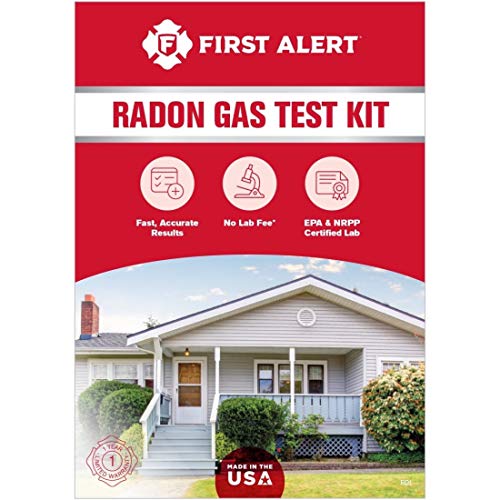 First Alert RD1 Radon Test Kit | Widely stocked; 48-hour charcoal test. | Amazon — $17.95 |
 Airthings Corentium Home | Digital monitor with a long-term average. | Amazon — $142.99 |