What Causes Radon Gas: A Plain-Language Guide

Radon is unusual among home hazards because nothing in your house creates it. It comes from the earth beneath the foundation, the product of a slow natural chemical process that has been running for billions of years. Understanding what causes radon gas helps homeowners see why even a brand-new, well-sealed house can test high, and why the Colorado Front Range sees more of it than most regions. This guide summarizes EPA and CDC science current as of 2026; it is informational only, not a diagnosis, and a certified radon professional should handle any testing or mitigation decisions.
Part of our Radon Levels guide — start there for the full picture →
What causes radon gas to form?
Radon gas is caused by the radioactive decay of uranium, a naturally occurring element present in soil and rock almost everywhere on earth. As uranium breaks down over geologic time, it passes through a chain of decay products, and one of those products is radium. When radium decays, it releases radon, a radioactive gas. That decay is the direct cause; there is no manufacturing step and no human source involved.
Because radon is itself radioactive, it continues to decay after it forms, breaking into tiny particles called radon progeny. Those particles can lodge in lung tissue when inhaled, which is the mechanism behind radon’s health risk. The EPA sets the indoor action level at 4 pCi/L, and the danger comes from breathing elevated concentrations over many years. The full health picture is covered in our guide to radon exposure and what it does over time.
How radon moves from soil into a home
Once radon forms underground, it migrates upward through the tiny spaces between soil particles and through cracks in bedrock. Outdoors it dilutes harmlessly into open air. The problem begins when that upward migration meets a building sitting on the soil.
Homes are usually slightly warmer and at lower air pressure than the ground beneath them, especially in winter when heating systems and rising warm air create a gentle vacuum effect. That pressure difference actively pulls soil gas, radon included, in through any opening below grade. The house essentially breathes the gas up out of the ground.
Common entry points are foundation cracks, construction joints between the floor and walls, gaps around plumbing and utility penetrations, unsealed sump pits, drains, and dirt-floor crawl spaces. Because the gas follows the path of least resistance, sealing every opening by hand rarely solves the problem on its own, which is why mitigation relies on a fan and vent system rather than caulk alone.
Why some homes have more radon than others
Two houses on the same street can test very differently. The amount of radon entering a home depends on three things: how much uranium is in the local soil, how permeable that soil is, and how the house draws air from the ground.
Soil and geology
Areas with uranium-rich soils and rock, including much of Colorado, produce more radon at the source. Granite, shale, and certain sedimentary deposits tend to carry higher uranium content. Permeable, gravelly soils let the gas travel more freely than dense clay, which is one reason readings vary block to block.
House construction and ventilation
A home’s foundation type, the number of openings to the soil, and its heating and ventilation patterns all influence how much gas it pulls in. Tightly sealed, energy-efficient homes can actually concentrate radon because less outside air dilutes it. The interplay of these factors is why our overview of key radon facts stresses testing every individual home rather than relying on a neighbor’s result.
The uranium decay chain in plain terms
The cause of radon is worth understanding one step deeper, because it explains why the gas is impossible to eliminate at the source. Uranium-238, the most common isotope in soil, is radioactive and decays extremely slowly, with a half-life measured in billions of years. As it decays, it transforms through a series of intermediate elements, each radioactive in turn. One of those intermediates is radium-226, and when radium atoms decay, they release radon-222, the gas that enters homes.
Because uranium decays so slowly and is so widespread, the supply of radon-generating material in the ground is effectively permanent on any human timescale. There is no way to “use up” the uranium or stop the decay. The gas will keep forming under a home for as long as the home stands, which is why mitigation focuses on managing entry rather than eliminating the source.
Radon itself is short-lived, with a half-life of under four days. That sounds reassuring, but its decay is precisely the problem. When radon decays it produces solid radioactive particles, called radon progeny or decay products, that can attach to dust and be inhaled. Those particles continue emitting radiation inside the lungs, which is the mechanism behind radon’s health risk. The gas does not have to linger for years; it does its damage through this rapid chain of decay.
Factors that raise radon entry into a home
Beyond the underlying geology, several house-level factors influence how much radon actually gets inside. Understanding them helps explain why readings vary so much between similar homes.
The stack effect
Warm air rises and escapes through the upper parts of a house, creating a slight negative pressure at the lower levels that draws replacement air, some of it from the soil, in through the foundation. This stack effect strengthens in winter when the temperature difference between inside and outside is greatest, which is one reason indoor radon often peaks during the heating season.
Foundation type and openings
A home with a full basement, many penetrations, and a sump pit offers more pathways than a tight slab-on-grade home. Cracks that develop as a foundation settles open new routes over time, so a home that tested low when new can rise years later. The number and size of openings to the soil directly affect how much gas enters.
Ventilation and air sealing
Tightly sealed, energy-efficient homes exchange less air with the outside, so radon that enters is diluted less and can accumulate to higher concentrations. Mechanical ventilation systems, exhaust fans, and combustion appliances that draw air can also shift indoor pressure in ways that increase soil-gas entry. The same airtightness that saves energy can concentrate radon, which is why even modern homes need testing.
Why the Front Range sees elevated levels
Colorado’s geology is a textbook radon producer. Uranium-bearing soils are widespread across the Front Range, and the EPA places counties such as Denver, Jefferson, Boulder, Douglas, El Paso, and Adams in its highest-risk Zone 1. The state health department reports that a substantial share of tested homes exceed the 4 pCi/L action level.
Elevation and Colorado’s cold winters add to the effect. Long heating seasons keep homes sealed and pressurized for months, maximizing the time the house spends drawing soil gas inward. None of this means a Front Range home is automatically dangerous, but it does mean local homeowners have a higher prior probability of a high reading and should test accordingly.
What this means for testing and mitigation
Because the cause is geological, you cannot prevent radon from forming, only manage how much enters the home. Testing is the starting point. Short-term kits give a quick reading; long-term kits average exposure across seasons. The EPA recommends testing every home and retesting every two years.
When levels are confirmed at or above the action level, the proven fix is active soil depressurization. A fan draws gas from beneath the slab and a sealed pipe vents it above the roof, reversing the pressure that pulled the gas inside. The system addresses the cause at the point of entry rather than trying to stop decay underground, which is impossible. Confirming the result with a follow-up test is essential, as our radon testing resources explain.
Other sources people ask about
Soil gas is the dominant cause of indoor radon, but homeowners often ask about two secondary sources. The first is water. Radon can dissolve in groundwater, and homes on private wells can release some radon into the air when water is agitated, during showers, dishwashing, or laundry. For most homes on municipal water this is negligible, because surface-water treatment allows radon to escape before delivery. Well-water radon is a real but lesser pathway, and it can be tested separately and treated at the point of entry if the level is high.
The second is building materials. Certain stone and concrete contain trace uranium, and a few natural materials such as some granite countertops emit very small amounts of radon. Studies have found that the contribution from typical building materials is minor compared with soil gas, and it is rarely the reason a home tests high. The overwhelming cause remains the ground beneath the foundation, which is where testing and mitigation focus their attention.
Understanding these distinctions keeps homeowners from chasing the wrong fix. Replacing a countertop or worrying about household materials will not solve a soil-driven radon problem. A confirmed high reading almost always traces back to the foundation-soil interface, and that is where a mitigation system does its work. Our overview of radon exposure reinforces that the air pathway from soil is the one that drives health risk.
What you can and cannot control
Homeowners sometimes feel powerless once they learn radon comes from the earth, but the cause being natural does not mean the outcome is fixed. You cannot control the uranium in the soil, the decay process, or the basic geology of your lot. You can control how much gas enters and accumulates in the home, and that is the entire point of mitigation.
Sealing foundation cracks, covering sump pits, and maintaining balanced ventilation all reduce entry at the margins. For homes above the action level, an active soil depressurization system controls the problem decisively by reversing the pressure that pulls gas inside. The cause is geological and permanent, but the exposure is manageable and measurable, which is the encouraging part of the radon story.
This is why testing is so central. Because the cause cannot be eliminated and varies invisibly from house to house, the only way to know whether a home has a problem is to measure it. Once measured, a high level has a reliable, well-understood fix. The natural origin of radon is a reason to test, not a reason to despair, and the prevalence of elevated levels across the Front Range makes that first test especially worthwhile for Colorado homeowners who have never measured.
When to call a professional
A homeowner can run an initial test, but diagnosing entry points, understanding local soil behavior, and designing a system that reverses the pressure differential require a certified radon professional. They use diagnostics to find where the gas enters and size a system to the home’s specific conditions.
Call a professional after any confirmed reading at or above 4 pCi/L, before buying in a high-radon zone, or when an existing system may have failed. Because the risk is long-term lung cancer from chronic exposure, the modest cost of professional testing and mitigation is well justified.
The encouraging part of understanding the cause is that knowledge leads to control. Radon’s origin in the soil is fixed and permanent, but its entry into a home is a solvable engineering problem. A certified mitigator translates the science of how the gas forms and migrates into a practical system that reverses the pressure pulling it inside, and a follow-up test confirms the result. What begins as an invisible, naturally occurring hazard ends as a measured, managed condition once a homeowner tests and, where needed, mitigates.
A certified mitigator can also perform sub-slab communication testing, which reveals how freely air moves under the foundation and where the gas is most readily drawn. That diagnostic determines where to place the suction point and how powerful a fan the home needs, matching the system to the specific way radon enters that house. Because the cause is rooted in the unique soil and construction beneath each home, this tailored approach is what separates a system that reliably holds levels low from one that looks installed but underperforms.
References
- Basic Radon Facts — U.S. Environmental Protection Agency
- About Radon — Centers for Disease Control and Prevention
- Colorado Radon Program — Colorado Department of Public Health and Environment
Frequently asked questions
What actually causes radon gas?
Radon is caused by the radioactive decay of uranium in soil and rock. Uranium breaks down into radium, and radium decays into radon gas. The process is entirely natural and occurs underground; nothing in the house produces it.
Why does radon get into homes?
Homes are usually warmer and at slightly lower pressure than the soil below, creating a vacuum effect that pulls soil gas inward through foundation cracks, joints, pipe gaps, sump pits, and crawl spaces, especially during the heating season.
Why do Colorado homes have high radon?
Colorado's uranium-rich soils place much of the Front Range in the EPA's highest-risk Zone 1. Long, cold winters keep homes sealed and pressurized, increasing the time they draw soil gas in. A large share of tested homes exceed 4 pCi/L.
Can you stop radon from forming?
No. The decay process underground cannot be stopped. You can only manage how much enters the home, primarily through a mitigation system that uses a fan and vent pipe to draw the gas out below the foundation and discharge it above the roof.
Front Range homeowners who want to understand their home’s radon risk can get in touch through our contact page for a connection to a vetted local radon professional.
Test your home for radon
Radon is invisible and odorless, so a test is the only way to know your level. A short-term kit gives a first reading in days; a digital monitor tracks it over time.
| Product | Why | Buy |
|---|---|---|
 AirChek Charcoal Radon Test Kit AirChek Charcoal Radon Test Kit | Lab fee usually included; EPA short-term protocol. | Amazon — $21.95 |
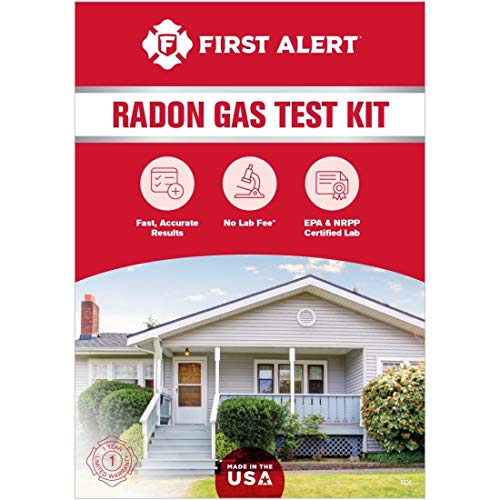 First Alert RD1 Radon Test Kit First Alert RD1 Radon Test Kit | Widely stocked; 48-hour charcoal test. | Amazon — $16.98 |
 Airthings Corentium Home Airthings Corentium Home | Digital monitor with a long-term average. | Amazon — $142.99 |