Reading Your Water Meter: Leak Checks and Shutoffs
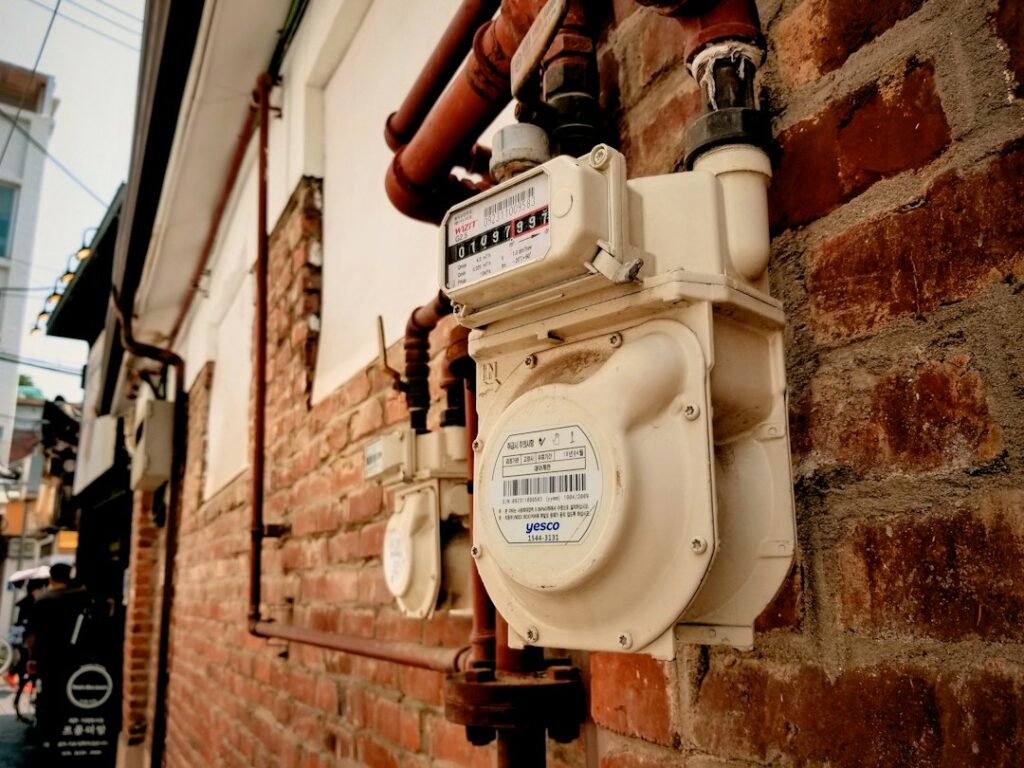
Most homeowners never look at their water meter until something goes wrong: a bill that suddenly doubles, a damp patch on a basement floor, or a burst pipe that needs to be shut off right now. Yet the meter is one of the simplest diagnostic tools in the house. It records every gallon that passes into the home, it can reveal hidden leaks within a couple of hours, and it usually sits close to the valves that stop the water entirely. This guide explains where meters are typically found in Front Range homes, how to read dials and digital displays, how to run a basic leak test, and how the curb stop and main shutoff fit together, including which side of the meter the utility generally owns and which side belongs to the homeowner.
Part of our Plumbing & Water guide — start there for the full picture →
Where to Find the Water Meter
There is no single standard location. EPA WaterSense notes that the meter is usually located underground near the curb in front of the home, but it could also be inside, for example in the basement. Both arrangements are common along the Front Range, and the layout often depends on the age of the neighborhood and the practices of the local water provider.
- Basement or crawl space meters. Many older Denver-area homes and a good number of newer ones have the meter inside, near where the service line enters through the foundation wall. Look along the front foundation wall, in a utility room, near the water heater or behind an access panel in a finished basement.
- Outdoor meter pits. In other neighborhoods the meter sits in a buried pit or vault near the sidewalk or property line, covered by a round or rectangular lid. Pits are sometimes buried under grass, snow or landscaping rock.
- Remote readers. Some homes have a small register or radio transmitter mounted on an outside wall, wired to an indoor meter. The reader shows the usage but is not where the water actually flows.
If the meter cannot be found, the water bill or the utility’s customer service line can usually confirm its location. Outdoor pit lids can be heavy, may require a special tool and may hide sharp edges or insects, so many utilities prefer that owners call before opening them.
How to Read a Water Meter
Residential meters come in a few common styles. All of them measure volume, usually in gallons or cubic feet. One hundred cubic feet, often abbreviated CCF, equals roughly 748 gallons, and many utilities bill in one of these units.
Dial and Odometer Meters
Many mechanical meters show a row of numbers similar to a car odometer, along with a large sweep hand that circles the face. The odometer shows cumulative usage. The sweep hand measures smaller increments, and each full revolution typically represents a set volume such as one, five or ten gallons, printed on the meter face. Some older meters use a series of small round dials instead of an odometer; those are read from left to right, noting the number each hand has most recently passed.
Digital Meters
Newer meters may display usage on an LCD screen. Some screens sleep until exposed to light, so shining a flashlight on the face can wake them. Many digital displays alternate between total usage and the current flow rate. A flow rate above zero while nothing in the house is running is an immediate sign that water is moving somewhere.
The Leak Indicator
Many meters include a small leak indicator, often a red or black triangle, star or tiny gear on the face. It spins with even very small amounts of flow, far below what the main sweep hand would show quickly. If every faucet, appliance and irrigation zone is off and the indicator is still turning, water is passing through the meter and going somewhere it should not.
| Meter feature | What it shows | How to use it |
|---|---|---|
| Odometer register | Total cumulative volume | Write down the full number before and after a test period |
| Sweep hand | Small increments, often one to ten gallons per revolution | Note its position to catch moderate leaks quickly |
| Leak indicator (triangle, star, gear) | Very low flow | Watch for movement with all fixtures off |
| Digital flow rate | Current flow, if displayed | Any reading above zero with no water in use suggests a leak |
| Unit label | Gallons or cubic feet | Confirm units before comparing with a bill |
Using Readings to Spot Unusual Usage
A single reading only tells you a total. Two readings taken a set time apart tell you how much water the household actually used, which makes it easier to compare against a bill or catch a slow change. Some owners take a reading on the first of each month and keep a simple log.
Winter is the most revealing season. Outdoor watering is off across most of the Front Range from late fall to spring, so winter usage reflects indoor demand alone. EPA WaterSense notes that a family of four is likely to have a serious leak if its water use exceeds 12,000 gallons per month during a colder month such as January or February. A household well below that figure can still have a leak, but a winter bill at or above it is a strong signal to run a leak test.
Cold-Weather Care for Meters
Meters and the pipes around them can freeze. Indoor meters near an uninsulated foundation wall, in an unheated crawl space or behind a garage wall are most exposed during a hard cold snap. Outdoor pits are buried below the frost line in most installations, but a lid that is cracked, missing or left ajar can let cold air reach the meter. Keeping the pit lid closed and intact, avoiding piling snow-melt chemicals on it and insulating exposed indoor piping are simple precautions. A frozen meter may stop registering or crack, and many utilities ask customers to report damage rather than attempt repairs themselves, since the meter is commonly utility property.
How to Run a Water Meter Leak Test
EPA WaterSense describes a simple test: read the meter during a period when no water is being used, then read it again two hours later. If the reading has changed, there is probably a leak. The steps below expand on that approach.
- Turn off all water use. Shut off faucets, showers, washing machines, dishwashers, ice makers and irrigation. Ask household members not to flush toilets or run water during the test.
- Check that nothing automatic is running. Water softeners can regenerate on a timer, and humidifiers, evaporative coolers and some refrigerators draw water intermittently. Pause them if possible.
- Watch the leak indicator. If it is turning steadily, there is flow somewhere. That observation alone is a strong clue.
- Record the full reading. Write down every digit, plus the position of the sweep hand, or take a photo.
- Wait two hours without using water. Overnight tests while the house sleeps can work, as long as automatic devices are paused.
- Read the meter again. Any change suggests a leak. A larger change suggests a larger one.
The test does not say where the leak is. It only confirms that water is passing through the meter. Narrowing down the source is the next step.
Isolating Indoor Versus Outdoor Leaks
If the house has a main shutoff valve inside, closing it and watching the meter again can help separate the two halves of the system. If the indicator stops when the house valve is closed, the leak is likely inside the home. If it keeps moving, the leak may be on the service line between the meter and the house, which is often buried and can show up as a soggy patch of lawn or an unexplained sinkhole. This trick depends on the house valve sealing fully, and older valves sometimes do not.
Common Sources of Hidden Leaks
EPA WaterSense reports that household leaks can waste nearly 1 trillion gallons of water annually nationwide, and that the average household’s leaks can account for more than 9,300 gallons of water wasted every year. EPA also states that nine percent of homes have leaks that waste 50 gallons or more per day. Common culprits named by EPA include worn toilet flappers, dripping faucets and other leaking valves.
Toilets
Toilets are among the most common silent leaks. A worn flapper lets water seep from the tank into the bowl, and the fill valve tops it up periodically. EPA suggests putting a few drops of food coloring in the tank; if color shows up in the bowl after 10 minutes, the toilet is leaking. Leaks at the base of the toilet are different. They involve the wax ring or the flange, and water may pool on the floor or soak into the subfloor. Our guide to a toilet leaking at the base walks through that problem.
Faucets, Fixtures and Irrigation
Dripping faucets, worn shower valves and leaking hose bibbs add up. Irrigation systems are a frequent outdoor source, especially after a hard Front Range freeze cracks a fitting or a valve that was not fully drained. EPA recommends checking irrigation systems each spring for frost damage.
Slab and Service-Line Leaks
The more serious cases involve pipes buried in concrete or soil. A slab leak may show up as warm spots on the floor, cracked tile, the sound of running water or a meter that never stops moving. Breaks in the service line outside, or in the public main, may produce soggy ground, low pressure or water bubbling up in the street. Our guide on a water main break covers how those situations are typically handled. When a meter test confirms a leak that cannot be found visually, professional plumbing leak detection using acoustic, thermal or pressure methods is often the next step.
Shutoffs: Curb Stop and Main Valve
Knowing how to stop the water is just as important as knowing how to measure it. Most homes have two key shutoffs on the service line.
- The curb stop is a valve on the service line, usually near the property line or the meter pit, accessed through a narrow buried pipe called a curb box. It often requires a long key to operate, and many utilities restrict its use to their own crews. See our guide on the curb stop for more.
- The main shutoff valve is inside the house, typically where the service line enters near the meter. It is the valve homeowners should be able to reach and close in an emergency. Our main water shut-off valve guide explains the common valve types and how to test them.
Older gate valves with round handles can seize after years without use, or fail to close completely. Many plumbers recommend replacing a stubborn gate valve with a quarter-turn ball valve. Exercising the main valve occasionally, and tagging it so everyone in the household can find it, are inexpensive habits that pay off during a burst pipe.
Who Owns Which Side?
Ownership of the service line varies by water provider, and the rules are set locally. A common arrangement is that the utility owns the main in the street and the line up to the curb stop or meter, while the homeowner owns the line from that point into the house. Some providers own the meter itself regardless of location; others assign responsibility differently. Because repairs on a buried service line can be expensive, it is worth checking the provider’s rules or service agreement to see where the dividing line falls and whether any portion is covered by the utility.
What Home Inspectors Check
The ASHI Standard of Practice requires inspectors to describe the location of the main water and fuel shut-off valves and to inspect interior water supply and distribution systems, including fixtures and faucets. In practice, an inspector will try to locate the main shutoff, note its type and condition and run fixtures looking for leaks and functional flow.
The same standard says inspectors are not required to measure water supply flow and pressure. Some inspectors do check static pressure at a hose bibb as an added service, and buyers who want that information can ask ahead or run a water pressure test themselves. EPA WaterSense notes that fixtures operate best when incoming pressure is between 45 and 60 psi.
Inspectors are not typically required to operate the main valve, because an old valve can fail open or start leaking when turned. Many will note whether it appears serviceable and recommend that a plumber evaluate a corroded or seized valve. A meter leak test is not part of the standard scope either, though some inspectors glance at the leak indicator while fixtures are off. For more on how inspectors approach plumbing systems, see the plumbing and water section of our hiring guide, along with the main guide to hiring a home inspector.
Smart Meters and Leak Detectors
Many utilities are installing meters that report readings electronically, and some offer online portals that show daily or hourly usage. A portal that shows continuous overnight flow can flag a leak long before a monthly bill arrives. EPA WaterSense also suggests considering a leak detection or flow monitoring system that alerts owners to irregular water use.
Homeowner options range from simple battery-powered water leak detectors placed near water heaters and washing machines to whole-house flow monitors and automatic shutoff valves installed on the main line. A smart water leak detector can send a phone alert and, in some systems, close the main valve automatically. Costs vary widely, from inexpensive single-point sensors to whole-house systems that may run several hundred dollars or more plus plumber installation.
When to Call a Plumber
Call a licensed plumber when a two-hour meter test shows movement that cannot be traced to a toilet or faucet, when floors are warm or wet without explanation, when the main valve will not close fully, or when the yard is soggy above the service line. Costs depend heavily on what is found: a flapper or faucet repair may be minor, while locating and repairing a slab or buried service-line leak can run into the thousands. Getting the leak located first, then comparing repair options, usually gives the clearest picture.
References
- Fix a Leak Week — U.S. EPA WaterSense
- Maintaining a Water-Efficient Home — U.S. EPA WaterSense
- ASHI Standard of Practice for Home Inspections — American Society of Home Inspectors
Frequently asked questions
How do I check my water meter for a leak?
Turn off all water use, record the meter reading, wait two hours without using water and read it again. EPA WaterSense says any change likely means a leak. Watching the small leak indicator with everything off can also reveal very slow leaks.
What does the triangle or star on a water meter mean?
It is a low-flow or leak indicator. It spins with very small amounts of water passing through the meter. If it moves when every fixture and appliance is off, water is flowing somewhere in the system.
Where is the water meter in a Colorado home?
It varies. Many Front Range homes have the meter in the basement or crawl space near the front foundation wall, while others have an outdoor pit near the curb. The water bill or utility can confirm the location.
Who is responsible for the water line between the meter and the house?
It depends on the water provider. A common arrangement makes the homeowner responsible from the curb stop or meter into the house, but rules vary locally, so check the provider's service policy.
Does a home inspector test the water meter?
Not usually. The ASHI standard requires inspectors to describe where the main water shut-off is and to inspect supply plumbing and fixtures, but a meter leak test and pressure measurement are not required.
Want an inspector who will track down the main shutoff and look closely at supply plumbing before you buy? Get in touch here and we can help you find one along the Front Range.