Test Air Quality for Mold: Methods and When Each Helps

Testing air quality for mold is the right move when the homeowner’s question is about current indoor spore concentrations rather than surface contamination on a specific spot. Air testing answers different questions than visual inspection or surface sampling — it tells the homeowner whether the air being breathed in the house carries elevated mold compared to outdoor reference levels, and which species are amplified indoors. The catch is that air testing produces meaningful numbers only when done with calibrated equipment, paired outdoor samples, and credentialed interpretation. This guide walks through the air-testing methods available, when each one fits, and the structural reasons why DIY air sampling rarely produces useful answers. This guide summarizes EPA and CDC guidance current as of 2026 — consult a certified mold inspector for testing decisions and your physician for symptom evaluation.
Part of our Mold Testing & Inspection guide — start there for the full picture →
Is this mold, asbestos, or water damage? Get a free instant screen
Upload a clear photo of the suspect area. You'll get an instant AI screening opinion and what to do next. This is screening guidance, not a professional determination.
Screening guidance only. AI can be wrong. Confirm asbestos, mold type, or lead with lab testing or a licensed professional before acting.
What air quality testing actually measures
Air quality testing for mold measures airborne spore concentrations — typically expressed as spores per cubic meter of air — by species or species group. The test does not measure how much mold is growing in the house; it measures how much spore material is currently aerosolized and breathable in the sampled rooms. The distinction matters because surface contamination and air concentration are different metrics. A heavily contaminated wall behind a closed cabinet may show very low air counts in the room outside the cabinet; a moderate contamination disturbed by HVAC airflow may show high air counts even with limited visible footprint.
The metric the homeowner cares about depends on the question. Health-related concerns generally track air concentration because exposure is what matters for symptoms. Source identification tracks surface contamination because the source has to be found and remediated. Most thorough inspections measure both.
Spore-trap air sampling
Spore-trap sampling is the workhorse method for residential mold air testing. A calibrated pump pulls air through a cassette at a specified flow rate (typically 15 liters per minute) for a specified duration (typically 5 to 10 minutes). Spores in the air stream impact onto a sticky collection surface inside the cassette. The cassette is sealed and sent to an accredited microbiology lab, which examines the collection surface under microscopy, counts spores by species or species group, and reports concentrations per cubic meter.
Spore-trap sampling captures total spore counts — both viable (capable of growing) and non-viable spores — which is the metric most relevant for allergen and health considerations. The method works for most common indoor mold genera. Spore-trap samples typically cost $50 to $150 per sample at the lab, plus the inspector’s time for collection. A standard residential inspection includes two to four indoor samples plus one outdoor sample for comparison. The mold inspection and testing hub covers how spore-trap data integrates with the broader inspection.
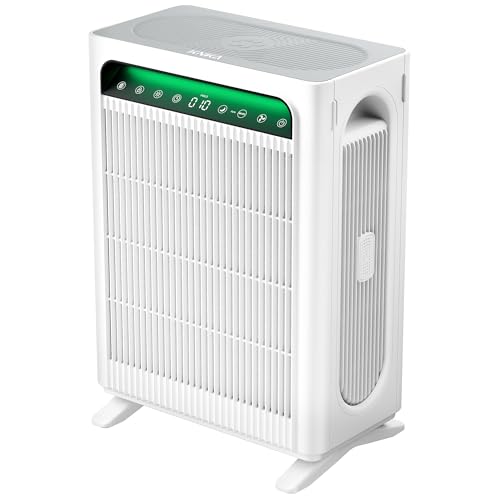
Best Air Purifiers for Mold: our top 3 picks
| Product | Best for | Key features | Price | Buy |
|---|---|---|---|---|
| Clorox Medium Room 11030 | Best overall for mold-prone rooms |
| $139.95as of Nov 5, 2026 11:10 am GMT+0000 | Buy now →Check current price |
| KNKA APH4000 | Best for basements |
| $99.99as of Nov 5, 2026 11:10 am GMT+0000 | Buy now →Check current price |
| Coway Mighty AP-1512HH | Best for open living areas |
| $229.99as of Nov 5, 2026 11:10 am GMT+0000 | Buy now →Check current price |


Prices are Amazon’s listed prices as of the time shown and change often; check Amazon for today’s price. As an Amazon Associate we earn from qualifying purchases.
Andersen impactor sampling
Andersen impactor sampling is a higher-rigor variant that pulls air over an agar Petri-dish at a controlled flow rate. The dish is incubated, colonies are counted as they grow, and species are identified from colony morphology. The result is a viable spore count per cubic meter — only the spores that actually grew on the agar are counted.
Andersen impactor sampling is less common in residential inspection because the equipment is more expensive, the incubation adds three to seven days to the result timeline, and viable counts answer a more specialized question than residential remediation typically requires. Research studies, clinical environments, and some commercial assessments use Andersen sampling specifically for viable count data. Most residential mold inspections rely on spore-trap sampling instead.
ERMI dust sampling as an air-quality proxy
The Environmental Relative Moldiness Index (ERMI) measures mold species in settled dust rather than in air. Dust is collected with a household vacuum and a special collection cassette, then analyzed via quantitative PCR for 36 target species. The result is an ERMI score plus individual species counts.
ERMI is sometimes positioned as an alternative to air sampling because it reflects spores that have settled out of the air over the period of dust accumulation. The advantage is that the dust integrates exposure over weeks to months rather than the few minutes that a spore-trap sample captures. The disadvantage is that the dust represents past conditions rather than current conditions, and ERMI does not localize the source within the home. Pairing ERMI with spot air sampling produces both the time-integrated view and the current snapshot.
Why paired outdoor sampling is non-negotiable
Indoor spore counts are interpretable only in comparison to outdoor counts taken on the same day. Outdoor air carries baseline mold concentrations that vary by season, weather, geography, and immediate site conditions. A 500 spores per cubic meter indoor count means very different things on a day when outdoor is 200 versus a day when outdoor is 2,000. The indoor-to-outdoor ratio, the species composition, and the presence of indicator species (Stachybotrys, Chaetomium) drive the interpretation more than the raw indoor number alone.
DIY air sampling without a paired outdoor sample produces numbers the homeowner cannot interpret. Professional sampling always includes the outdoor reference, taken on the same day, at the same general location. Lab reports include both samples and frequently include interpretation notes that contextualize the indoor counts. Pairing this with the practical framework in safe home mold remediation shows how air-quality data drives downstream remediation decisions.
Where to sample and how many samples
The sampling locations follow the assessment question. Whole-house air-quality assessment typically samples in the living room (representative living space), the master bedroom (representative sleeping space), the basement (highest-risk area in most homes), and one outdoor location. Suspected hidden contamination assessment adds samples in the rooms suspected of harboring growth. Post-remediation clearance samples in each remediated area plus an outdoor reference.
Sample count drives cost. Each sample adds lab fees plus inspector collection time. Two to four indoor samples plus one outdoor is the standard residential scope. Larger homes or specific assessment scenarios may justify more samples. Fewer samples produce less robust conclusions because individual room concentrations may not represent the broader home.
Conditions during sampling
Sampling conditions affect the result. HVAC systems are typically left in their normal operating state during sampling to capture realistic conditions. Doors and windows in sampled rooms are closed for several hours before sampling to allow indoor air to stabilize. Recent disturbance (vacuuming, sweeping, demolition) elevates spore counts temporarily and biases the result high. Long undisturbed periods may produce lower counts than typical occupied conditions.
The inspector’s report should note the sampling conditions: HVAC state, recent disturbance history, weather conditions affecting outdoor sample, and any unusual activity in sampled rooms within the prior 24 hours. The conditions notes support interpretation if the counts come back unexpectedly high or low.
Interpreting the lab report
Lab reports for spore-trap samples list each species or species group identified, the spore count per cubic meter, and frequently a comparison column with the outdoor reference. Reading the report focuses on three patterns. First, indoor counts substantially elevated above outdoor counts indicate indoor amplification — mold growing somewhere in the home that is releasing spores into the air. Second, the presence of indicator species (Stachybotrys, Chaetomium, Aspergillus penicillium-like species at meaningful counts) suggests specific source conditions even when total counts are not dramatically elevated. Third, species composition differences between indoor and outdoor samples suggest specific indoor sources that produce species not present outdoors.
The numeric thresholds for “elevated” are not universally standardized. Different consultants and labs use different working thresholds — typically 2x to 3x outdoor counts as a working signal of indoor amplification. The interpretation conventions in the lab report and the inspector’s narrative are more useful than any single threshold number.
Limitations of air sampling
Air sampling has real limitations that the inspector’s report should acknowledge. Sampling captures a brief window in time and may not represent steady-state conditions. Some species under-represent in air samples because they release spores only under disturbance (Stachybotrys is the classic example). Sampling in a closed room concentrates conditions in ways that an occupied open-door room would not. Background outdoor spore counts vary substantially by season and weather, affecting the indoor-outdoor ratio.
The implication is that air sampling supports decisions but does not produce certainty. A homeowner who treats a single air sample result as definitive may either over-react to elevated counts produced by temporary conditions or under-react to normal counts that mask hidden sources. The full inspection — visual, moisture meter, surface samples, air samples — supports better decisions than any single data source.
When air-quality testing is informative
Air testing is informative when the question is about exposure (whole-house assessment, occupant health concerns), when the source is suspected to be hidden (visible contamination is limited but symptoms or smell suggest more), and when post-remediation clearance documentation is needed. Air testing is the standard method for these scenarios.
Air testing is less informative when the question is about a specific visible spot (surface sampling answers this better and cheaper), when the contamination is known and the cleanup scope is the actual question (inspection-based scoping matters more than air data), or when the goal is to confirm a single room is clean after a small cleanup (a visual check often suffices).
When air-quality testing is not informative
Three scenarios produce air testing data that does not help. Sampling immediately after demolition or aggressive cleaning produces counts elevated by disturbance rather than steady-state conditions. Sampling without paired outdoor reference produces numbers that cannot be interpreted. Sampling without inspection context produces lab reports that the homeowner cannot translate into action. Pairing this with the framework in proper mold remediation shows where air data belongs in the larger workflow.
Cost and timeline for air-quality assessment
Air quality testing for mold in Front Range Colorado in 2026 typically runs $400 to $1,200 for a residential assessment including two to four indoor samples plus an outdoor reference, inspector time, and lab fees. Larger homes or expanded sample counts push toward the upper end of that range. Results return within three to seven business days from the lab; some labs offer expedited turnaround for additional cost. Inspector follow-up walk-through to discuss results adds value when the report is complex.
Compared to remediation costs (often $5,000 to $25,000 for moderate-to-large jobs), the assessment cost is modest and produces the documentation that supports either scoping the remediation properly or confirming that no remediation is needed. Skipping assessment to save the few hundred dollars frequently produces oversized remediation scopes built on guesses rather than data.
When to call a professional
Air-quality testing for mold is professional work. The calibrated equipment, the paired outdoor reference, the conditions documentation, and the credentialed interpretation all sit outside DIY capability. Homeowners considering air testing should engage a credentialed mold inspector who can scope the sampling, perform the collection, coordinate the lab analysis, and provide the interpretation that converts numbers into decisions.
References
- EPA Mold Testing or Sampling — U.S. Environmental Protection Agency
- CDC Mold FAQs — Centers for Disease Control and Prevention
- InterNACHI Mold Inspection — International Association of Certified Home Inspectors
- NIEHS Mold Topic — National Institute of Environmental Health Sciences
Frequently asked questions
What does an air quality test for mold actually tell me?
Airborne spore concentrations by species, measured in spores per cubic meter, in the sampled rooms at the time of sampling. The result is meaningful when compared to a paired outdoor sample taken on the same day.
Can I do air sampling myself?
In practice, no. Calibrated pumps cost $400 to $1,500, paired outdoor samples and credentialed interpretation are required, and the result without context is not interpretable. Professional inspection is more cost-effective for the same data.
How many samples should a professional inspection include?
Two to four indoor samples plus one outdoor reference is the standard residential scope. Larger homes or specific assessment scenarios may justify additional samples.
Is ERMI dust testing a substitute for air sampling?
ERMI captures historical exposure via accumulated dust. Air sampling captures current conditions. The two methods answer different questions; pairing them produces both views.
Front Range homeowners considering air quality testing can connect with a vetted local inspector through our contact page for scoping and quote review.