Septic Tank Size: Gallons by Bedroom and How to Find Yours
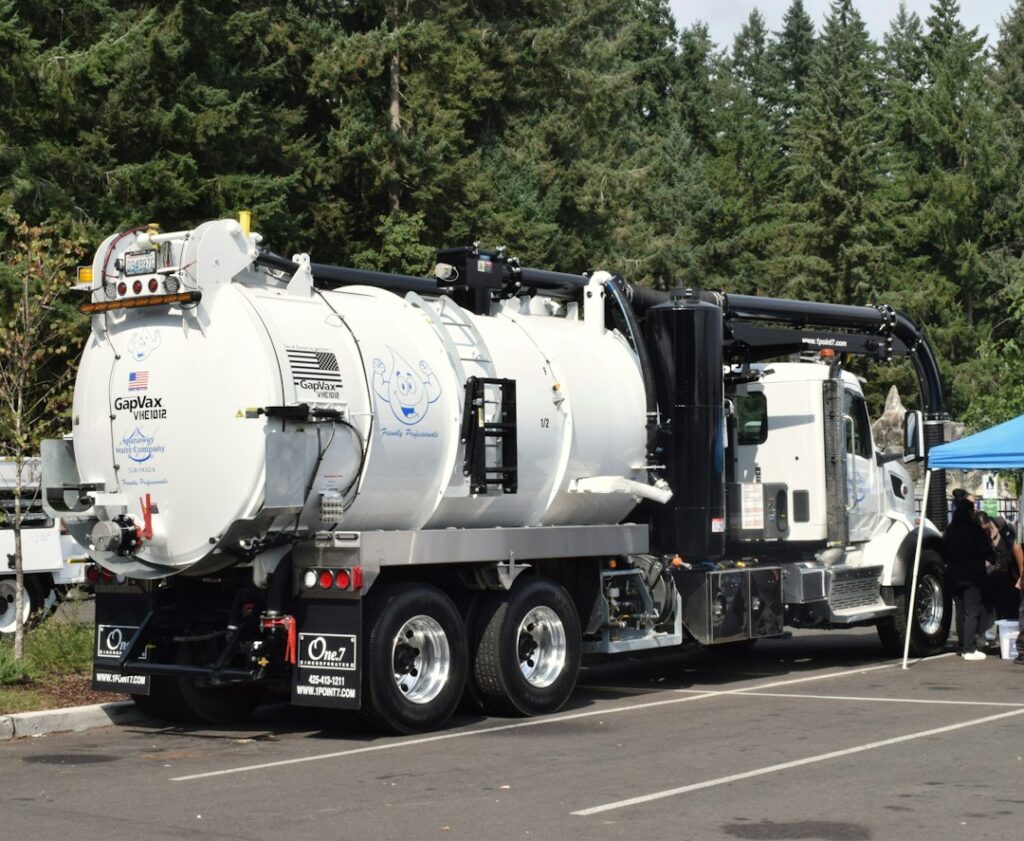
Septic tank size for a typical single-family home usually falls between about 1,000 and 1,500 gallons, with the required minimum set by local code and driven mainly by the number of bedrooms rather than the number of people living there. A modest two- or three-bedroom house is commonly served by a tank around 1,000 gallons, while larger homes step up from there. Those figures are typical patterns, not rules: in Colorado, county and district public health agencies permit septic systems under state minimums set by CDPHE Regulation 43, and local requirements can add to them. This guide explains how tanks are sized, what common capacities look like in real dimensions, how to find out what is buried in your own yard, why an undersized tank causes problems, and how tank size affects pumping and inspections. It summarizes general guidance as of 2026; your county’s onsite wastewater program has the final word on any specific property.
Part of our Plumbing & Water guide — start there for the full picture →
How Septic Tank Size Is Determined
A septic tank has one main job: hold household wastewater long enough for solids to separate. The EPA describes the tank as “a buried, water-tight container usually made of concrete, fiberglass, or polyethylene” whose job “is to hold the wastewater long enough to allow solids to settle down to the bottom forming sludge, while the oil and grease floats to the top as scum.” The liquid in the middle, called effluent, then flows on to the drainfield.
That settling needs time. If too much water passes through too small a tank, wastewater leaves before solids have settled, and those solids get carried into the drainfield, where they clog the soil. Tank sizing rules exist to protect that retention time and to leave room for sludge and scum to build up between pumpings.
Most codes size residential tanks using a few inputs:
- Bedrooms. Regulators use bedroom count as a stand-in for potential occupancy, because the number of residents can change over the life of the house while the bedrooms usually do not. A finished basement bedroom added later can trigger a review of the system.
- Design flow. Codes assign an assumed gallons-per-day figure per bedroom or per person. Real use varies; the EPA notes that “average indoor water use in a typical single-family home can be as much as 70 gallons per individual, per day.”
- Minimum tank volume. Most jurisdictions set a floor no matter how small the house is, which is why a one-bedroom cabin may still have a fairly large tank.
- Special loads. Garbage disposals, large soaking tubs, home businesses and water softener discharge can push the required size up, depending on local rules.
The EPA’s overview of system types puts it plainly: “The design and size of a septic system can vary widely, from within your neighborhood to across the country,” due to factors including “household size, soil type, site slope, lot size, proximity to sensitive water bodies, weather conditions, or even local regulations.”
Typical Septic Tank Size by Number of Bedrooms
The table below shows the kind of minimums commonly seen in U.S. residential codes. Treat it as a starting point for conversation with your county, not as a design standard. Actual Colorado minimums come from Regulation 43 as applied by your local public health agency, and newer or replacement systems may need more capacity than an older home’s original tank.
| Bedrooms | Typical minimum tank size | Notes |
|---|---|---|
| 1–2 | About 750–1,000 gallons | Many codes set a floor near 1,000 gallons regardless of house size |
| 3 | About 1,000 gallons | The most common residential size in many areas |
| 4 | About 1,000–1,250 gallons | Some jurisdictions step up at four bedrooms |
| 5 | About 1,250–1,500 gallons | Often designed with two compartments or two tanks in series |
| 6 or more | About 1,500 gallons and up | Usually requires an engineered design and site-specific sizing |
All values are typical and code-dependent. Check with your county before relying on any of them for a purchase, remodel or replacement.
Two points often surprise buyers. First, the tank and the drainfield are sized separately. A large tank does not make up for a drainfield that is too small for the house or the soil, and soil percolation tests, not bedroom count alone, drive drainfield size. Our guide to what a drain field is covers that half of the system. Second, an older home may have a tank that met the code of its day but would be undersized today. That is usually allowed to remain until the system is modified, replaced or the house is expanded, but it affects how often the tank should be pumped.
Best Septic Tank Treatment: our top 3 picks
| Product | Best for | Key features | Price | Buy |
|---|---|---|---|---|
| Rid-X Pods 12 ct | Mainstream monthly pod |
| $38.82as of Oct 20, 2026 5:48 pm GMT+0000 | Buy now →Check current price |
| Green Gobbler Septic Saver | Homes heavy on cleaners and bleach |
| $19.98as of Oct 20, 2026 5:48 pm GMT+0000 | Buy now →Check current price |
| Roebic K-37 | One bottle per year |
| $7.97as of Oct 20, 2026 5:48 pm GMT+0000 | Buy now →Check current price |


Prices are Amazon’s listed prices as of the time shown and change often; check Amazon for today’s price. As an Amazon Associate we earn from qualifying purchases.
Septic Tank Size in Gallons Versus Dimensions
Capacity is listed in gallons, but what a homeowner or excavator sees is a buried box or cylinder with one or more lids. Dimensions vary by manufacturer and material, so the figures below are rough, typical outside dimensions for common precast concrete tanks. Plastic and fiberglass tanks are usually lighter and may be longer and lower for the same capacity.
| Capacity (typical) | Approximate outside size | Common material options |
|---|---|---|
| 750 gallons | Roughly 7 ft long x 4–5 ft wide x 5 ft tall | Concrete, polyethylene |
| 1,000 gallons | Roughly 8–9 ft long x 5 ft wide x 5 ft tall | Concrete, polyethylene, fiberglass |
| 1,250 gallons | Roughly 9–10 ft long x 5–6 ft wide x 5 ft tall | Concrete, polyethylene, fiberglass |
| 1,500 gallons | Roughly 10–11 ft long x 6 ft wide x 5–6 ft tall | Concrete, fiberglass; sometimes two tanks |
Estimating capacity from measurements
If a pumper or inspector can measure the inside of a rectangular tank, capacity can be estimated with simple math. Multiply the inside length by the inside width by the liquid depth (the distance from the floor of the tank to the bottom of the outlet pipe), all in feet, to get cubic feet. Then multiply by about 7.48, the number of gallons in a cubic foot.
- Measure inside length and width in feet.
- Measure liquid depth from the tank floor to the outlet invert.
- Multiply length x width x liquid depth to get cubic feet.
- Multiply cubic feet by 7.48 to estimate gallons.
For example, a tank measuring 7.5 feet by 4.5 feet inside with a 4-foot liquid depth works out to 135 cubic feet, or roughly 1,010 gallons. Cylindrical and odd-shaped plastic tanks do not follow that formula, which is another reason the permit record or the manufacturer’s label is a better source.
How to Find the Size of Your Septic Tank
Most homeowners have never seen their tank and have no idea what size it is. There are several reliable ways to find out, roughly in order of how easy they are:
- Check permit records. The EPA notes that septic systems are typically “permitted and inspected by your local permitting authority (i.e., local health or environmental department),” and that homeowners can contact them “to obtain a copy of your property’s septic record drawing (the ‘as-built’ design) and copies of the permit(s).” Along the Front Range, that usually means the county or district public health agency’s onsite wastewater program. Many permits list tank size, material, number of compartments and drainfield layout.
- Look at past pumping receipts. Pumpers often record how many gallons they removed, which approximates the tank’s working capacity when it was full.
- Ask the seller or previous owner. Original builders’ paperwork, closing packages and maintenance folders sometimes include the as-built drawing.
- Read the tank itself. Some precast and plastic tanks have capacity stamped near the lid or on the inlet end, visible once the lid is exposed.
- Have it measured. A septic professional opening the tank for pumping or inspection can measure inside dimensions and estimate capacity.
If you cannot find the tank at all, the EPA suggests following the plumbing outlet leaving the house, noting that the tank “is usually about 10 feet away from the building,” and looking for an access riser, often a green or black lid. A riser that brings the lid to grade makes future pumping and inspection easier, and it is a common upgrade on older tanks whose lids sit a foot or more below the lawn.
Why an Undersized Tank Matters
A tank that is too small for the household’s actual water use tends to show its weakness slowly, then suddenly. The usual chain of events looks like this:
- Short retention time. Wastewater moves through before solids settle, so more suspended material reaches the drainfield.
- Faster sludge buildup. Less space means the sludge and scum layers reach the outlet sooner, requiring more frequent pumping.
- Drainfield clogging. Solids that escape the tank seal the soil surface in the trenches. Once that biological mat thickens, the field accepts water more slowly.
- Backups and surfacing. The EPA warns that if the drainfield “is overloaded with too much liquid, it can flood, causing sewage to flow to the ground surface or create backups in toilets and sinks.”
Drainfield repair or replacement is typically far more expensive than a tank, which is why sizing, pumping and water efficiency matter so much. Our guide to septic system replacement cost covers what happens when that damage has already occurred.
Undersizing often happens without anyone noticing. A two-bedroom house gets a basement bedroom and a second bathroom. A family of three becomes a family of six. A rental or home business adds heavy laundry. If any of those changes describe your home, compare the original permit with how the house is used now, and talk to the county before adding bedrooms, since many jurisdictions require a review of the septic system for that kind of remodel.
Compartments, Effluent Filters and Other Tank Features
Size is only one part of how well a tank performs. A few other features affect how clean the effluent is when it leaves:
| Feature | What it does | What to ask |
|---|---|---|
| Two compartments | A divider wall gives solids a second chance to settle before effluent exits | Is the tank single- or dual-compartment? Are both sides pumped? |
| Inlet and outlet baffles or tees | Direct flow and keep scum and sludge in the tank; the EPA notes a “T-shaped outlet” prevents them from leaving | Are baffles present, intact and not corroded? |
| Effluent filter | A screened cartridge at the outlet that catches fine solids before they reach the drainfield | Is one installed, and when was it last cleaned? |
| Risers and lids | Bring access openings to the surface for pumping and inspection | Are lids secure and childproof? |
| Pump tank or dosing chamber | Holds effluent and pumps it to a distant or uphill field | Are the pump, floats and alarm working? |
The EPA’s septic FAQ notes that “A septic tank effluent filter may also require frequent maintenance and should be included in the inspection and maintenance activities.” A clogged filter can cause slow drains and backups even when the tank itself is not full, so filter cleaning belongs on the pumping checklist.
Septic Tank Size and Pumping Frequency
Tank size is one of the main factors in how often the tank needs pumping. The EPA lists the major factors as “Household size, Total wastewater generated, Volume of solids in wastewater” and “Septic tank size,” and states that “Household septic tanks are typically pumped every three to five years,” with an inspection “at least every three years by a septic service professional.” Alternative systems with pumps and float switches generally need inspection more often.
The EPA also gives a measurement-based trigger: the tank should be pumped “if the bottom of the scum layer is within six inches of the bottom of the outlet, if the top of the sludge layer is within 12 inches of the outlet, or if more than 25 percent of the liquid depth is sludge and scum.” A larger tank reaches those thresholds more slowly for the same household; a small tank in a busy home reaches them faster.
Pumping prices are often quoted by tank size, with larger tanks costing more because they take longer to empty and the pumper hauls more volume. Typical drivers include tank size, how hard the lids are to reach, whether lids must be dug up, travel distance in rural areas and disposal fees. Our guide to septic tank pumping cost explains what a fair quote usually includes.
Front Range and Colorado Considerations
Septic systems are common on the edges of the Front Range metro and throughout rural Douglas, Elbert, El Paso, Jefferson, Boulder and Adams counties. A few regional factors are worth keeping in mind:
- State minimums, local administration. Colorado’s onsite wastewater rules are set at the state level under CDPHE Regulation 43 and administered by county or district public health agencies. Those local programs issue permits, keep records and may have additional rules. Always confirm sizing questions with the agency that covers your address.
- Transfer and use-permit rules. Some Colorado jurisdictions require a septic inspection or system acceptance when a property changes hands. Ask your agent and the county early in the purchase.
- Freeze-thaw and frost depth. Tanks and lines need enough cover to avoid freezing, and long periods of very low use, such as a vacant second home in winter, can increase freezing risk.
- Soils and slopes. Rocky foothill lots, shallow bedrock and tight clay soils can push a site toward alternative systems, such as mound or engineered systems, where tank sizing may be part of a larger design.
- Private wells. Many septic properties also rely on a private well, so setbacks between the tank, drainfield and well matter for water quality.
Our overview of what a septic system is covers how these parts fit together, and the plumbing and water hub collects related guides on wells, water testing and plumbing inspections.
What a Home Inspector Checks and When to Call a Septic Pro
A general home inspection usually does not evaluate the septic system in depth. The ASHI Standard of Practice lists “Septic and other sewage disposal systems” among the plumbing items an inspector is not required to inspect, and it also does not require the inspector to determine “Whether water supply and sewage disposal are public or private.” Many inspectors still note what they observe, and the home inspector may note slow drains, odors, wet areas in the yard or a visible riser, but confirming tank size and condition is a separate job.
A dedicated septic inspection, typically performed by a septic professional, goes much further. The EPA describes a typical inspection as including review of permit and pumping records, “Opening and inspecting all tanks,” evaluating sludge and scum levels, “Assessing the condition of the septic tank effluent filter (if installed)” and checking the drainfield for surfacing or uneven drainage. Our guide to septic tank inspection explains what to expect and how to schedule it within a purchase timeline.
Call a septic professional when:
- You are buying a home on septic and do not have recent records
- The permit or as-built drawing cannot be found
- You are adding a bedroom, bathroom or accessory unit
- Drains are slow throughout the house, or toilets gurgle after laundry
- The yard over the tank or drainfield is soggy, unusually green or smells of sewage
- The tank has not been pumped in more than five years, or ever
If you are buying a Front Range home on septic and want an inspection plan that covers the house and points you toward the right septic follow-up, contact our team before your inspection deadline.
References
- How Septic Systems Work — U.S. Environmental Protection Agency
- How to Care for Your Septic System — U.S. Environmental Protection Agency
- Types of Septic Systems — U.S. Environmental Protection Agency
- Frequent Questions on Septic Systems — U.S. Environmental Protection Agency
- ASHI Standard of Practice for Home Inspection — American Society of Home Inspectors
Frequently asked questions
What size septic tank does a 3-bedroom house need?
A 3-bedroom home is commonly served by a tank of about 1,000 gallons, but the actual minimum depends on local code. In Colorado, county or district public health agencies apply state minimums under Regulation 43, so confirm with the agency for your address.
How can you find out what size your septic tank is?
Start with the septic permit and as-built drawing from your county or district public health agency. Past pumping receipts, the seller's records, a capacity stamp on the tank or measurements taken by a septic professional can also answer the question.
Is a bigger septic tank always better?
A larger tank gives more settling time and stretches the interval between pumpings, but it does not fix an undersized or failing drainfield. Tank and drainfield are sized separately, and both must suit the house and the soil.
How often should a 1,000-gallon septic tank be pumped?
The EPA says household tanks are typically pumped every three to five years, with inspections at least every three years. A busy household on a 1,000-gallon tank may need pumping sooner, based on measured sludge and scum levels.
Does a home inspection check septic tank size?
Usually not. Standard home inspection standards exclude septic systems, though inspectors may flag visible symptoms such as slow drains or wet areas, but tank size and condition are evaluated during a separate septic inspection by a septic professional.
Front Range buyers looking at a home on septic can get in touch here to connect with a qualified local inspector.