Rapitest Digital Moisture Meter: What to Know
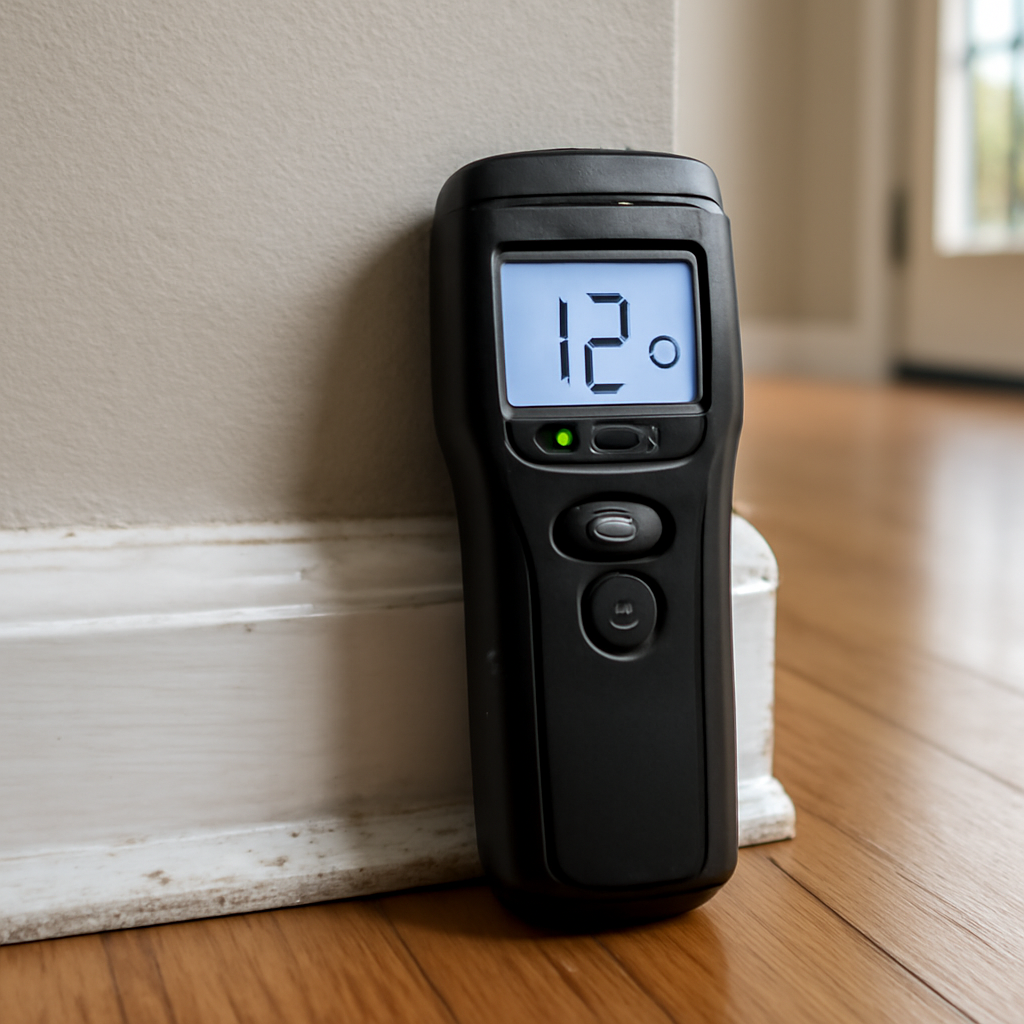
Budget moisture meters fill a real niche: a homeowner who wants to spot-check a damp wall, a plant lover monitoring soil, or a DIYer confirming firewood is dry rarely needs a professional-grade instrument. The rapitest digital moisture meter sits squarely in that affordable, consumer-oriented category. Understanding what a budget meter like this measures, how far to trust its numbers, and where its limits lie helps set realistic expectations before you buy. This guide describes the meter’s general class and function using home-inspection trade context rather than promotional claims, so you can judge whether it suits your needs.
Part of our Moisture Meters & Water Damage Detection guide — start there for the full picture →
What the Rapitest Digital Moisture Meter Is
The rapitest digital moisture meter is a low-cost, handheld consumer meter aimed at homeowners and hobbyists rather than professional inspectors. It belongs to the broad family of pin-type digital meters that display a moisture reading on a small screen, as opposed to professional instruments that may cost many times more and offer wider material calibration, data logging, and pinless scanning.
Its appeal is price and simplicity. For someone who wants an occasional answer to “is this damp?” without investing in a Protimeter or similar instrument, a budget meter provides a quick, directional reading at modest cost. The trade-off, common across this entire price tier, is narrower accuracy and fewer material settings, which matters more for some uses than others. Knowing where it sits in the market keeps expectations realistic.
It is worth separating the brand from the category. The strengths and weaknesses described here apply broadly to inexpensive consumer pin meters, of which this is one example. Judging any budget meter on the same terms, what it can screen for versus what it can prove, is more useful than comparing brand names.
How a Digital Pin Meter Like This Works
Pin-type meters work on electrical resistance. Two metal pins press into or pierce the material, and the meter passes a small current between them. Water conducts electricity, so wetter material has lower resistance, and the meter converts that resistance into a moisture reading on its display. The principle is simple and reliable for comparing relative dampness.
Because the technique reads the path between the pins, it measures moisture near the surface where the pins make contact, not deep inside a wall or beam. Different materials conduct differently, so a reading calibrated for wood will not be literally accurate on drywall or concrete. Many budget meters present results as a relative scale or a single wood-referenced percentage, which is why they are best read as comparative rather than laboratory-precise. The contrast between pin and pinless sensing is covered in our guide to pinless versus pin moisture meters.
Understanding the resistance principle also explains the meter’s quirks. Surface salts, a wet film, or conductive contaminants all lower resistance and can read as high moisture even when the bulk of the material is dry, which is one reason a single number from a budget meter is best confirmed with a second reading elsewhere.
Accuracy and Realistic Expectations
The most useful way to think about a budget meter is relative, not absolute. It is reliable for comparing one spot to another, finding the wettest point along a wall, or confirming that a previously damp area has dried out over time. It is less reliable as a source of an exact, defensible moisture percentage you could put in a report.
Several factors limit accuracy in this price class: a single or limited material calibration, sensitivity to surface salts and temperature, and the shallow depth that pins reach. Those are not defects so much as the boundaries of the tool. For a homeowner deciding whether a basement wall is drying after a leak, that relative information is genuinely useful and entirely adequate.
For an inspector writing a report a buyer will rely on, professional meters with documented calibration are the appropriate standard, as discussed in our moisture meter calibration guide. The line is not budget versus expensive so much as screening versus documenting; a cheap meter screens well and documents poorly.
Where a Budget Meter Genuinely Helps
A meter at this price earns its place in several everyday tasks around a home.
Spot-checking damp walls and floors
After a small leak or a humid spell, a quick reading tells you whether an area is wet relative to dry baseline spots nearby, helping you track drying progress day to day rather than guessing.
Firewood and lumber
Confirming firewood has seasoned below the rough threshold where it burns cleanly is a classic budget-meter use, and one where relative readings are perfectly sufficient.
Houseplants and soil
Some consumer meters double as soil moisture testers, helping avoid over- or under-watering, though dedicated soil probes differ from building meters in how they read.
Pre-project checks
Before painting, flooring, or finishing work, a quick check that the substrate is not obviously damp can prevent trapping moisture under a new surface, a common and avoidable mistake.
Limits to Keep in Mind
Knowing what the meter cannot do is as important as knowing what it can. It will not reliably find moisture deep inside a wall cavity, because the pins only read at their tips. It will not give a trustworthy absolute percentage across varied materials. Surface salts, condensation, and conductive contaminants can produce misleadingly high readings, and very dry conditions can read inconsistently from one spot to the next.
A budget meter also lacks the deep-wall probes, extension leads, and logging that professional kits use; those add-ons are described in our overview of moisture meter probes. None of this makes the meter useless. It makes it a screening tool that tells you where to look more carefully, not a final word on a hidden moisture problem.
Treating its readings as a starting point rather than a verdict keeps you out of trouble. A high reading is a reason to investigate, not proof of a leak, and a low reading near the surface does not rule out moisture deeper in the structure that the short pins never reach.
Getting Reliable Readings From a Budget Meter
You can get more out of an inexpensive meter with a little technique. Always take a baseline reading on a spot you know is dry, then compare suspect areas to it; the difference between readings tells you far more than any single number. Take several readings across an area rather than trusting one, since contact and surface conditions vary point to point.
Make sure the pins seat fully and that the surface is free of obvious contaminants or a wet film that would skew the result. Set the meter to the closest available material mode if it offers one, and remember that a wood-calibrated reading on drywall or masonry is directional rather than exact. Replacing the small battery when readings drift or the display weakens keeps the instrument behaving consistently.
Used this way, as a comparative screening tool with a known-dry reference and multiple readings, a budget meter delivers genuinely useful information. The errors that frustrate owners usually come from treating a single absolute number as gospel rather than reading the meter the way its design actually supports.
Budget Meters Versus Professional Instruments
Placing a budget meter next to a professional instrument clarifies what you are and are not paying for. Professional meters typically offer multiple material calibration settings, so a reading on drywall, framing, and flooring each reflects that material rather than a single wood reference. They often add pinless scanning, deep-wall probe compatibility, and sometimes data logging for documentation, none of which a basic consumer meter provides.
The accuracy gap follows from those features. A professional instrument calibrated to the material gives readings an inspector can defend in a report, while a budget meter gives a directional reading suited to a homeowner’s own decision-making. Neither is wrong; they are built for different users and different stakes.
Durability and support differ too. Professional meters are built for daily field use and often come with calibration references and service options, whereas budget meters are disposable-grade and rarely calibrated. Understanding this division helps a homeowner avoid two mistakes: overpaying for professional features they will never use, and over-trusting a budget meter in a situation that calls for documented precision.
Common Mistakes With Budget Meters
Most disappointment with an inexpensive meter comes from a handful of avoidable errors. The first is trusting a single absolute number. These meters are calibrated narrowly, so a reading of a specific percentage on the wrong material means little; the comparison between a dry baseline and a suspect spot is what carries the information.
The second mistake is assuming a low surface reading means the wall is dry throughout. The short pins read only near the surface, so moisture deeper in the structure can hide behind a reassuring number. A budget meter cannot rule out hidden moisture, only screen the surface, and treating it as a clearance for the whole wall leads to missed problems.
A third error is ignoring contamination and contact. Surface salts, a damp film, or a poorly seated pin all skew the reading, sometimes dramatically. Taking several readings, using a known-dry reference, and making sure the pins seat cleanly turns an erratic budget meter into a consistent screening tool, and prevents the frustration that leads owners to dismiss these meters as useless when the technique, not the tool, was the problem.
Where It Fits in a Front Range Homeowner’s Kit
For Colorado homeowners, the most common moisture worries are finished-basement dampness after snowmelt, condensation around windows in winter, and the occasional plumbing leak. A budget digital meter handles the screening role for all three: confirm whether a spot is wet, watch it dry, and decide whether the situation warrants a closer look from a professional.
When a reading is high and persistent, or when moisture appears tied to a hidden source, that is the cue to step up to professional diagnostics rather than rely on the consumer meter alone. The broader home inspection tools buyer’s guide explains how moisture metering fits alongside thermal imaging and other tools, and where the jump from a budget screener to a professional instrument makes sense.
Colorado’s seasonal pattern makes the screening role especially handy. A homeowner can check a basement wall through the weeks after spring snowmelt, watch a window sill across a cold snap, or confirm that a spot dried after a plumbing repair, all without calling anyone, and then escalate only when the readings say something is genuinely off. That ability to monitor cheaply over time, rather than to deliver one precise verdict, is where a budget meter quietly earns its keep in a Front Range home, turning vague worry about dampness into a concrete, watchable number.
Treated as an inexpensive first check, a meter in this class is a reasonable addition to a homeowner toolbox; treated as a precise diagnostic, it will disappoint. Matching your expectations to the tool’s category is the difference between a useful purchase and a frustrating one.
A practical way to think about it is as a smoke alarm for moisture rather than a diagnosis. It tells you something may be wrong and where to look harder, prompting either a closer DIY investigation or a call to a professional. Used in that spirit, a budget meter pays for itself by catching dampness early, when drying out a spot is simple, before a small moisture problem becomes mold or rot. The mistake is asking it to replace the professional assessment that a persistent or hidden moisture problem deserves; the right move is letting it tell you when that assessment is worth arranging.
References
- Inspection Education and Standards of Practice — International Association of Certified Home Inspectors (InterNACHI)
- Standards of Practice and Inspection Resources — American Society of Home Inspectors
- A Brief Guide to Mold, Moisture and Your Home — U.S. Environmental Protection Agency
Frequently asked questions
Is the Rapitest digital moisture meter accurate?
It is best treated as a relative screening tool rather than a source of exact percentages. Budget pin meters reliably compare one spot to another and track whether an area is drying, but limited material calibration and shallow pin depth make their absolute readings less precise than professional instruments.
What can a budget digital moisture meter be used for?
Spot-checking damp walls and floors, tracking whether an area is drying after a leak, confirming firewood is seasoned, checking houseplant soil on dual-purpose models, and a quick substrate check before painting or flooring. It screens for moisture rather than diagnosing hidden problems.
Can a moisture meter find moisture inside a wall?
A pin meter only reads at the depth its pins reach, which is near the surface. It cannot reliably detect moisture deep in a wall cavity. Finding hidden moisture requires deep-wall probes, pinless scanning, or professional tools such as thermal imaging.
When should I upgrade from a budget meter to a professional one?
When you need defensible, documented readings, such as for an inspection report, or when moisture is persistent and tied to a hidden source. Professional meters offer wider material calibration, deep-wall probes, and a documented calibration process that budget meters lack.
Moisture meters for home inspection
Pin meters read deep but leave marks; pinless meters scan surfaces non-destructively. Many inspectors carry both.
| Product | Why | Buy |
|---|---|---|
 Klein Tools ET140 Pinless Klein Tools ET140 Pinless | Non-destructive scanning; affordable. | Amazon — $49.14 |
 General Tools MMD4E General Tools MMD4E | Best-selling pin meter for drywall/wood. | Amazon — $39.98 |
 Lignomat Mini-Ligno Lignomat Mini-Ligno | Trusted by woodworkers; species-calibrated. | Amazon — $99.00 |