Radon Gas Acceptable Levels: What to Know

“Acceptable” is a slippery word for radon, because the gas carries risk at any concentration, yet homeowners still need practical thresholds to act on. The framework for radon gas acceptable levels rests on the EPA’s 4 picocuries per liter action level and a 2 to 4 pCi/L range where action is worth considering. This guide summarizes EPA and Colorado Department of Public Health and Environment guidance current as of 2026 and is informational only; rely on a certified professional for testing and mitigation decisions, and consult your physician about health concerns. Below is how the thresholds work and how to apply them to your home.
Part of our Radon Levels guide — start there for the full picture →
What Are Radon Gas Acceptable Levels?
The EPA’s central guidance is the 4 pCi/L action level. At or above that concentration, the EPA recommends taking action to reduce radon, usually with a mitigation system. Below the action level, the EPA suggests considering action when readings fall between 2 and 4 pCi/L, recognizing that risk continues in that band. Readings below 2 pCi/L are generally treated as acceptable, while acknowledging that no level is officially declared free of risk.
So “acceptable” is best understood in tiers rather than as a single cutoff. At or above 4 pCi/L, action is recommended. Between 2 and 4 pCi/L, action is worth considering. Below 2 pCi/L, the result is generally acceptable, with periodic retesting advised. The action level is a decision threshold, not a guarantee of safety.
The 4 pCi/L Action Level Explained
The 4 pCi/L action level is the most widely cited radon figure, and it functions as the trigger for mitigation. The EPA set it as the concentration at which the benefits of reducing radon clearly justify acting. It reflects a balance between health risk and what is practically achievable in homes, rather than a point below which radon becomes harmless.
Because the action level is a recommendation rather than a regulatory limit for existing homes, homeowners ultimately decide how to respond. Still, the 4 pCi/L figure gives a clear, evidence-based line: a confirmed reading at or above it is a strong signal to mitigate. Our detailed explainer on the 4 pCi/L radon action level covers the reasoning behind the threshold in depth.
The 2 to 4 pCi/L Consider-Action Range
The band between 2 and 4 pCi/L often confuses homeowners, because it sits below the action level yet above the ideal. The EPA suggests that homeowners consider taking steps to reduce radon in this range. The logic is straightforward: risk rises with concentration, and there is no safe floor, so reducing radon even below the action level lowers long-term exposure.
Homeowners in this range have a genuine choice. Some install mitigation to push the level down, especially if children or long-term occupants live in the home. Others retest with a long-term device to confirm the reading and monitor over time. Neither choice is wrong; the EPA’s framing simply makes clear that 2 to 4 pCi/L is not a level to ignore. For broader context, our Colorado radon testing guide walks through interpreting results and deciding on next steps.
Why Acceptable Is Not the Same as Safe
The distinction between acceptable and safe matters. Radon is a leading cause of lung cancer, and the EPA and CDC describe the risk as continuous, rising with concentration and exposure time without a zero-risk threshold. The action level is a practical line for deciding when to act, not a declaration that anything below it is harmless.
This is why the EPA pairs the action level with the message that lower is always better. A reading of 3 pCi/L is acceptable in the sense that it is below the action level, but reducing it further still lowers risk. Treating acceptable as a direction toward lower exposure, rather than a finish line, reflects the health guidance accurately.
Measuring Against the Thresholds
You can only compare your home to these thresholds by testing, since radon is invisible and odorless. The EPA recommends testing all homes below the third floor. Colorado falls largely in EPA Radon Zone 1, the highest radon-potential category, which gives Front Range homeowners particular reason to test against the action level.
Short-term tests, lasting a few days, give a quick reading but are sensitive to weather and how the home is operated. Long-term tests, spanning more than 90 days, average out those fluctuations and better represent year-round exposure. Because the thresholds describe long-term exposure, a long-term test or a confirmed short-term result gives the most reliable comparison. The EPA advises confirming an elevated short-term result before committing to mitigation.
What to Do at Each Level
Translating the thresholds into action is straightforward once you have a reliable reading.
At or Above 4 pCi/L
Follow the EPA recommendation to take action. If the reading came from a short-term test, confirm it first, then arrange mitigation through a certified radon contractor. A properly installed system can often bring the level well below 2 pCi/L.
Between 2 and 4 pCi/L
Consider action. Confirm the reading with a long-term test, then decide whether to mitigate now or monitor. Lean toward reduction if young children or long-term occupants live in the home.
Below 2 pCi/L
Treat the result as acceptable and retest periodically, such as every few years or after significant changes to the home. Even here, the lower-is-better principle applies, though most homeowners are comfortable at this level.
How the Action Level Compares to Other Benchmarks
The EPA’s 4 pCi/L action level is the dominant benchmark in the United States, but it is not the only reference point homeowners encounter. The World Health Organization has suggested a lower reference level, reflecting the principle that reducing radon further continues to reduce risk. Some new-construction standards in radon-prone areas build in radon-resistant features regardless of any measured level.
These varying benchmarks can seem contradictory, but they share a common thread: lower is better, and the action level is a practical floor for action rather than a ceiling of safety. The EPA chose 4 pCi/L as a balance between health protection and what is realistically achievable in homes, while acknowledging that risk persists below it. A homeowner aiming only to clear 4 pCi/L is meeting the recommendation, but one aiming for the lowest practical level is following the underlying health principle more fully.
For practical decision-making, the EPA action level is the right anchor for most American homeowners. Knowing that lower benchmarks exist simply reinforces that there is value in reducing radon below 4 pCi/L when feasible, especially in homes with children or long-term occupants.
Why Acceptable Levels Are Recommendations, Not Limits
An important nuance is that the acceptable-level framework for existing homes consists of recommendations rather than enforceable limits. The EPA does not impose a legal radon cap on existing private homes. The 4 pCi/L action level is guidance, and homeowners apply it voluntarily. This is partly because radon arises naturally from soil, so the regulatory model used for manufactured pollutants does not translate directly.
The voluntary nature does not diminish the guidance. A confirmed reading at or above the action level is a strong, evidence-based reason to mitigate, and most homeowners who learn their home exceeds it choose to act. The recommendation framework simply means the decision rests with the homeowner rather than being legally compelled in an existing home.
Real estate transactions sometimes add practical pressure even without a legal mandate. A buyer may request mitigation before closing if testing reveals elevated radon, making the action level a de facto standard in many deals. Some lending and housing programs reference radon testing as well. So while acceptable levels are recommendations, they carry real weight in transactions and in protecting long-term health.
Testing Correctly to Judge Acceptability
An acceptable-level judgment is only as good as the test behind it, so proper testing technique matters. For short-term tests, the EPA recommends closed-house conditions, meaning windows and exterior doors stay closed except for normal entry and exit, beginning before and continuing through the test. Open windows can dilute radon and produce an artificially low, falsely acceptable reading.
Test placement also affects whether the result reflects reality. The device should sit in the lowest occupied level of the home, away from drafts, exterior walls, and high-humidity areas, at a height representative of the breathing zone. Placing a test in an unused crawlspace or directly next to an open window distorts the reading and undermines any acceptability judgment based on it.
The duration and type of test shape confidence in the result. A short-term test gives a quick screen but is sensitive to conditions, while a long-term test over 90 days averages out fluctuations and better represents the exposure that the acceptable-level framework is meant to address. Because acceptability is about long-term exposure, a long-term test or a confirmed short-term result provides the most defensible basis for deciding whether a home’s level is acceptable.
Acceptable Levels in Colorado Homes
Local context sharpens the acceptable-level question for Front Range residents. Colorado falls largely within EPA Radon Zone 1, the highest radon-potential category, meaning homes in the region are more likely to test above the action level than homes in lower-potential areas. The Colorado Department of Public Health and Environment encourages testing and provides resources for homeowners across the state.
For homeowners in counties like Denver, Douglas, Arapahoe, Jefferson, Boulder, and El Paso, this elevated potential means an acceptable reading should not be assumed without testing. A home that a buyer hopes is fine may well test above 4 pCi/L given the regional geology, so measuring rather than assuming is the prudent course. The acceptable-level thresholds apply the same way they do nationally, but the likelihood of exceeding them is higher.
This regional reality also means radon testing is common in Front Range real estate transactions, and buyers frequently raise the acceptable-level framework during inspection periods. A seller who tests and, if needed, mitigates before listing can present an acceptable level supported by a current reading, which smooths the transaction. Understanding the acceptable-level framework is especially practical for Colorado homeowners given the state’s high-potential designation.
Mitigation and Confirmation
When a reading calls for action, mitigation usually takes the form of sub-slab depressurization, where a vent pipe and fan draw radon from beneath the foundation and release it outdoors above the roofline. A certified contractor designs and installs the system, and a post-mitigation test confirms the level has dropped. The aim is not merely to clear the 4 pCi/L threshold but to reach the lowest practical level, consistent with the EPA guidance that lower is always better. Understanding the acceptable-level framework is the first step; testing reliably and acting through certified professionals is what brings your home into the range you want.
More Questions About Acceptable Radon Levels
What radon level does the World Health Organization recommend?
The World Health Organization recommends a national reference level of 100 becquerels per cubic meter (Bq/m3), about 2.7 pCi/L, and suggests that no country set its level higher than 300 Bq/m3, about 8.1 pCi/L.
That makes the WHO guidance stricter than the U.S. EPA action level of 4 pCi/L, which is about 148 Bq/m3. Many countries follow the WHO approach. For U.S. homes, results between 2.7 and 4 pCi/L are a reasonable trigger to consider mitigation, especially for smokers or households with children.
What is an acceptable radon level in a basement?
An acceptable radon level in a basement follows the same EPA guidance as the rest of the home: below 4 pCi/L, with mitigation worth considering between 2 and 4 pCi/L.
Testing should happen on the lowest level that is used or could be used as living space, which usually means the basement. An unfinished basement that nobody uses still matters, because basement air mixes upward. If there are plans to finish the basement later, a result above 2 pCi/L is a good reason to install a system before the walls go up.
What is an acceptable level of radon in well water?
There is no final federal limit for radon in drinking water. The EPA proposed a standard in 1999 of 300 pCi/L, with an alternative 4,000 pCi/L level for states running indoor-air programs, but it was never finalized.
Some states set their own guidelines, and many water treatment professionals use a few thousand pCi/L as a trigger for treatment. A rough rule is that about 10,000 pCi/L in water adds around 1 pCi/L to indoor air. Testing both air and water gives the full picture.
Do acceptable radon levels differ by state?
No. The EPA action level of 4 pCi/L applies nationally, and most state radon programs use the same benchmark for homes. What differs by state is how strongly radon is regulated.
Some states require radon disclosure in home sales, licensing for testers and mitigators, radon-resistant construction in new homes, or testing in schools and child care facilities. Average levels also vary widely by geology, so homes in high-radon states exceed the action level far more often. The state radon office explains local rules.
What radon level should a mitigation system achieve?
A radon mitigation system should bring the home below 4 pCi/L at minimum, and well-designed systems commonly reach below 2 pCi/L. Many mitigators aim for the lowest level practical, since lung cancer risk falls with every reduction.
Results should come from a post-installation test run at least 24 hours after the fan starts, on the same level as the original test. Some contractors include a performance guarantee, offering adjustments or a stronger fan if the follow-up test misses the target. Get that promise in writing.
References
- EPA on radon health risk and the action level — U.S. Environmental Protection Agency
- Colorado radon guidance and Zone 1 status — Colorado Department of Public Health and Environment
- CDC overview of radon exposure risk — Centers for Disease Control and Prevention
Frequently asked questions
What are acceptable radon gas levels?
The EPA action level is 4 pCi/L, at or above which it recommends taking action. Between 2 and 4 pCi/L the EPA suggests considering action, and below 2 pCi/L is generally treated as acceptable. No level is officially declared free of risk.
Is 3 pCi/L an acceptable radon level?
At 3 pCi/L you are below the 4 pCi/L action level but within the 2 to 4 range where the EPA suggests considering action. Many homeowners confirm the reading and then decide whether to mitigate or monitor, leaning toward reduction if children live in the home.
Is the 4 pCi/L action level a legal limit?
No. For existing homes the 4 pCi/L figure is an EPA recommendation, not a regulatory limit. It is a decision threshold signaling when mitigation is advised, and homeowners ultimately choose how to respond.
How do I measure my home against these levels?
Test the home, since radon is invisible and odorless. A long-term test over 90 days or a confirmed short-term result gives the most reliable comparison. The EPA advises confirming elevated short-term results before committing to mitigation.
How do you convert pCi/L to Bq/m3?
One picocurie per liter equals 37 becquerels per cubic meter. To convert, multiply pCi/L by 37; to go the other way, divide Bq/m3 by 37. The EPA action level of 4 pCi/L is about 148 Bq/m3.
Is 1 pCi/L of radon acceptable?
Yes. A radon level of 1 pCi/L is below the average indoor level in U.S. homes and well under the EPA action level, so no mitigation is recommended. Retesting every few years, or after major renovation, is still sensible because levels can change.
What radon level is acceptable when selling a house?
Most buyers and lenders treat a result below 4 pCi/L as acceptable when a house is sold. Results at or above 4 pCi/L usually lead to a mitigation request or a price credit, and some buyers negotiate for readings between 2 and 4.
Front Range homeowners wanting to test their home against these thresholds can get in touch via our contact page for a connection to a vetted radon professional.
Test your home for radon
Radon is invisible and odorless, so a test is the only way to know your level. A short-term kit gives a first reading in days; a digital monitor tracks it over time.
| Product | Why | Buy |
|---|---|---|
 AirChek Charcoal Radon Test Kit | Lab fee usually included; EPA short-term protocol. | Amazon — $21.95 |
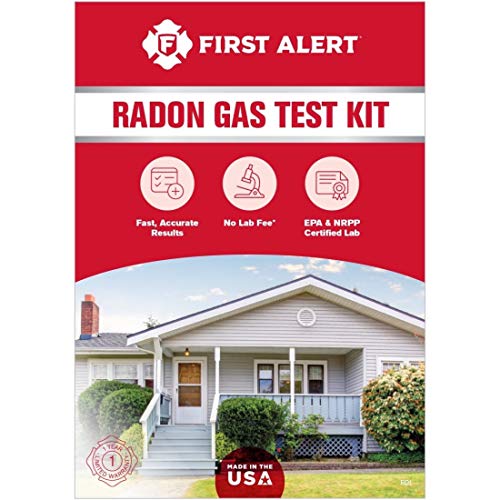 First Alert RD1 Radon Test Kit | Widely stocked; 48-hour charcoal test. | Amazon — $17.95 |
 Airthings Corentium Home | Digital monitor with a long-term average. | Amazon — $99.99 |