Radon in an Apartment: Risk by Floor, Testing and Next Steps
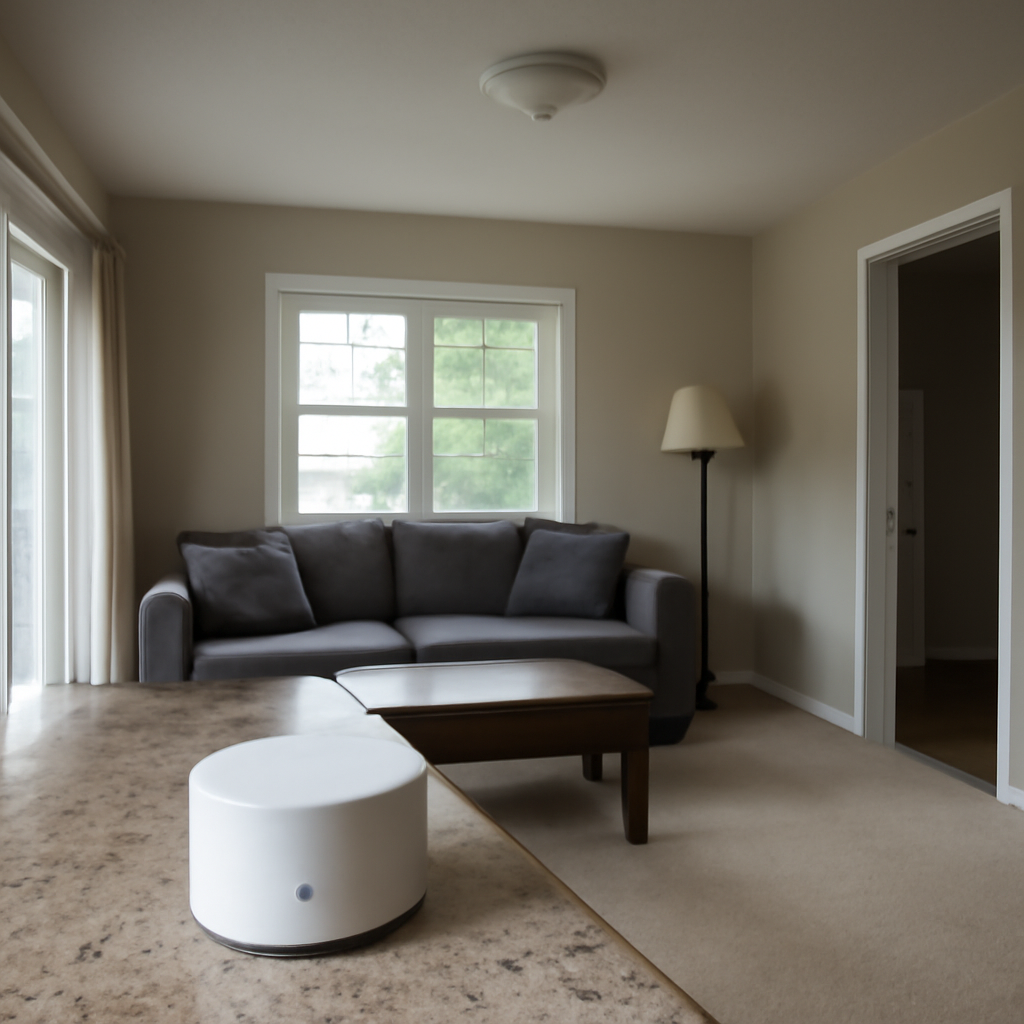
Radon is usually discussed as a homeowner problem, tied to basements and single-family houses. Renters and condo owners breathe the same air, though, and an apartment can have elevated radon just as a house can. The difference is in what a resident can control. A renter cannot install a mitigation system without permission, and a condo owner may share a foundation with dozens of neighbors. This guide explains which apartment units carry the most radon risk, how renters can test, what Colorado’s lease disclosure requirement means in broad terms, how multifamily buildings are mitigated, and how to raise a high result with a landlord or association. It summarizes EPA and CDC guidance current as of 2026; it is not legal advice, and a certified radon professional should guide testing and mitigation decisions.
Part of our Radon Levels guide — start there for the full picture →
Can an Apartment Have High Radon?
Yes. The CDC’s radon overview says radon can build up in the air in any home or building, whether it has a basement, is sealed or drafty, or is new or old. Radon is a radioactive gas released from rocks, soil and water, and it enters buildings through small cracks or holes. Apartment buildings sit on soil like any other structure, so the units closest to the ground are exposed to the same entry routes as a house.
The health stakes are the same as well. The CDC describes radon as the second leading cause of lung cancer deaths in the United States after cigarette smoke and notes that there is no known safe level. EPA recommends fixing a home when radon is 4 picocuries per liter of air (pCi/L) or higher, and the CDC’s testing page adds that EPA also recommends taking action in the 2 to 4 pCi/L range. Those thresholds apply to the air a person breathes at home, regardless of who owns the building.
What changes in an apartment is mostly floor level and building design, covered next. For a refresher on what each number means, see the radon levels chart.
How Radon Gets Into Apartment Buildings
The CDC’s overview says radon gets into homes and buildings through small cracks or holes, and EPA’s Citizen’s Guide lists common entry points such as cracks in solid floors, construction joints, gaps in suspended floors, gaps around service pipes, cavities inside walls and the water supply. Multifamily buildings have all of these, often in greater numbers because the footprint is larger.
Several features are common in apartment construction and worth knowing about:
- Large slabs with many penetrations. Plumbing stacks, electrical conduits and floor drains pass through the ground-floor slab in every unit. Each gap is a possible pathway.
- Shared mechanical rooms and garages. Boiler rooms, storage areas and parking levels are often in contact with soil and may connect to stairwells or corridors.
- Crawl spaces under ground-floor units. Some older low-rise buildings sit over vented or unvented crawl spaces, which behave like those under houses.
- Stack effect in winter. Warm indoor air rising through a building can lower pressure near the base, drawing soil gas in through openings at the lowest level.
None of these features means a particular building has high radon. They explain why two units in the same complex can return very different results, and why testing each lower unit is more informative than relying on one measurement for the whole property.
Radon Risk by Floor and Unit Location
Federal guidance focuses testing on the lower part of a building. EPA’s Citizen’s Guide to Radon says EPA and the Surgeon General recommend testing all homes below the third floor for radon. The CDC’s overview notes that radon levels are often higher in basements and lower levels. Put together, that means garden-level, ground-floor and second-floor units are the main concern, while units on the third floor and above are generally lower priority for testing.
The table below turns that into a practical guide. Risk descriptions are hedged generalizations; building design, ventilation and shared shafts can produce exceptions, and only a test shows the level in a specific unit.
| Unit location | Typical risk (hedged) | What to do |
|---|---|---|
| Basement or garden-level unit | Highest; in direct contact with soil-gas entry points | Test promptly; follow up on any result at or above 4 pCi/L |
| Ground-floor unit over slab or crawl space | Elevated potential; similar to a slab-on-grade house | Test; share results with the landlord or association |
| Second-floor unit | Usually lower than ground level but still within EPA’s “below the third floor” testing range | Testing recommended, especially over an occupied lower unit or open stairwell |
| Third floor and above | Generally lowest; EPA’s home testing recommendation targets lower floors | Optional test; consider one if shafts, chases or elevators connect to lower levels |
| Townhouse or condo with its own foundation | Similar to a single-family house | Test the lowest lived-in level as a homeowner would |
Why upper floors are not automatically zero
Radon is diluted as air moves upward, which is why higher floors usually read lower. Buildings are not sealed boxes, though. Elevator shafts, utility chases, trash chutes and stairwells can carry air between floors. Warm air rising through a tall building in winter can pull soil gas into the lowest level and move some of it upward. These pathways do not make upper floors high-risk, but they explain why an upper-floor test occasionally returns a surprising number. Some building materials also release low levels of radon, a point the CDC overview mentions, although that source is usually minor compared with soil gas.
What lower units have in common with basements
A garden-level apartment behaves much like a finished basement. Its floor and walls touch the soil, and any crack, floor drain, sump or pipe penetration is a possible entry route. The guide on radon levels in a basement explains why lower levels tend to concentrate radon, and the same reasoning applies to apartments built partly below grade.
How Renters Can Test for Radon
Testing an apartment uses the same tools as testing a house. The CDC’s testing page says radon testing can be done by a radon tester or with a do-it-yourself kit from a hardware store, and it adds a point written for apartment dwellers: if a home is in a multi-unit building, place the device in the lowest level within the unit. For a single-level apartment, that simply means the main living area.
EPA’s Citizen’s Guide gives the placement details. The test should go in a room that is used regularly, such as a living room or bedroom, but not a kitchen or bathroom. It should sit at least 20 inches above the floor, away from drafts, high heat, high humidity and exterior walls. For short-term tests, windows and outside doors should be kept closed as much as possible, and for a 2 or 3 day test they should be closed at least 12 hours before starting.
Short-term versus long-term kits for renters
EPA’s guide says short-term tests remain in place for two days to 90 days, depending on the device, and long-term tests remain for more than 90 days. A short-term charcoal kit is a fast, low-cost first check and fits a renter who wants an answer within a few weeks. A long-term alpha-track detector gives a better sense of the year-round average and suits a resident planning to stay for a year or more. Details on exposure windows and lab turnaround are in the guide to radon test time, and kit selection is covered in choosing a radon test kit.
Following EPA’s testing steps, a short-term result of 4 pCi/L or higher calls for a follow-up: a long-term test for a better picture of the annual average, or a second short-term test if results are needed quickly. If the first short-term result is more than twice the action level, EPA says to take a second short-term test immediately.
Reading a renter’s result
A lab report gives a single number in pCi/L for the test period. EPA’s Citizen’s Guide notes that short-term results close to 4 pCi/L are less definitive: if two short-term tests average 4.1 pCi/L, there is about a 50 percent chance the year-round average is somewhat below 4. That uncertainty is a reason to follow up rather than a reason to dismiss the result. A long-term test that runs through a winter usually gives a renter the clearest picture to share with a landlord.
Landlord rules about testing
Placing a small passive test kit on a shelf inside a rented unit generally does not alter the property, and many renters do so without asking. Lease terms vary, however, and some leases restrict devices, alterations or entry by outside contractors. Hiring a professional tester who brings equipment into the unit may require notice to the landlord. Reading the lease and, when in doubt, telling the landlord about the test in writing is a low-risk approach that can also make the eventual result harder to dispute. Readers comparing options by price can see radon test cost.
Digital monitors in rentals
Plug-in digital monitors are popular with renters because they move easily from one apartment to the next. They are useful for ongoing awareness and for spotting changes over time. For a result that will be shown to a landlord, a lab-analyzed kit or a professional measurement carries more weight, because it follows a documented protocol. The guide on what a radon detector looks like describes the common device types.
Colorado Radon Disclosure for Residential Leases
Colorado has a radon disclosure requirement for residential leases — confirm current rules. In general terms, Colorado lease requirements adopted in recent years ask landlords to provide radon information to tenants and to disclose known radon test results or mitigation, and they may give tenants certain rights if a landlord fails to act on high radon. The specific obligations, deadlines, exemptions and remedies are set by state law and can change, so renters and landlords should check the current statute or consult a Colorado attorney or tenant resource before relying on any particular provision.
A few practical points hold regardless of the exact wording:
- Ask for any radon disclosure, test results or mitigation records before signing a lease, especially for ground-floor and garden-level units.
- Keep copies of anything provided, along with the lease itself.
- If a test shows a high level, put the result and the request in writing, with a date.
- Do not assume a building is free of radon because no disclosure was offered; testing is the only way to know.
This is especially relevant along the Colorado Front Range, where elevated radon is common in many communities. More background is in the radon testing guide.
Mitigating Radon in Multifamily Buildings
EPA’s Consumer’s Guide to Radon Reduction explains that the kind of radon reduction system that works best depends on the foundation design, whether basement, slab-on-grade or crawl space. It describes active subslab suction, also called subslab depressurization, as the most common and usually the most reliable method: suction pipes are inserted through the slab into the soil or crushed rock below, and a vent fan draws radon from beneath the building and releases it outdoors. In homes with a crawl space, EPA describes submembrane suction under a sealed plastic sheet.
In apartment buildings, these same principles are usually applied at a building or section level rather than unit by unit. A ground-floor tenant cannot effectively depressurize the soil under the whole slab from inside one apartment. Large buildings may need multiple suction points, separate systems for different foundation sections, or work in shared mechanical spaces. That makes multifamily mitigation more of a design project, and it typically requires a contractor experienced with larger buildings. Costs and timelines vary widely by building size and design (hedged). For the general mechanics, see sub-slab radon mitigation systems, and for typical fan types used in these systems, radon fans.
What EPA says about sealing alone
Renters sometimes ask whether caulking cracks in their unit will solve the problem. EPA’s Consumer’s Guide says sealing cracks is a basic part of most radon reduction approaches and makes other techniques more effective, but that EPA does not recommend sealing alone because it has not been shown to lower radon significantly or consistently. Sealing a visible floor crack is reasonable with permission; it is not a substitute for a real system.
After a system is installed
EPA’s Consumer’s Guide says a post-mitigation test should be done within 30 days of installation, but no sooner than 24 hours after the system is running with the fan on, and that an independent follow-up measurement is recommended. Active systems must include a warning device, and the fan should never be turned off. Tenants can reasonably ask for a copy of the post-mitigation result and repeat their own test in the unit to confirm.
How to Talk to a Landlord or HOA About Radon
A calm, documented approach tends to work best. Many landlords have never thought about radon and respond well to clear information.
- Share the result in writing. Include the test type, dates, placement, and lab report. Note the EPA action level of 4 pCi/L.
- Point to federal guidance. The EPA and CDC materials in the references below are short, neutral and easy to forward.
- Ask a specific question. For example, whether the owner will arrange a professional test of the lower units or request a mitigation assessment.
- Request a timeline. Ask when a decision or assessment can be expected.
- Keep copies. Save emails, letters and any replies, along with lease disclosures.
Condo owners face a slightly different situation. A unit owner may own the interior but not the slab or common areas, so a building-wide fix usually goes through the homeowners association and its reserve or assessment process. Sharing results among lower-unit owners can help the association see a pattern rather than a single complaint. Cost background for a board discussion is in radon mitigation systems cost.
A sample message
A short written note keeps the conversation factual. Something along these lines usually works: “A radon test in our unit from [dates], placed in the living room per the kit instructions, measured [result] pCi/L. EPA recommends fixing homes at 4 pCi/L or higher. Could you let us know whether the building can arrange a professional test of the ground-floor units or a mitigation assessment, and a rough timeline?” Attaching the lab report and a link to EPA’s Citizen’s Guide gives the owner everything needed to act.
If the landlord does not respond, a follow-up after a reasonable interval, again in writing, is sensible. Colorado tenants who believe their rights under the lease disclosure rules are not being met can contact a local tenant resource or attorney for guidance on current options.
Lowering Exposure While Waiting
Mitigation in a rental may take time to arrange. In the meantime, a few steps may help reduce exposure, though none replaces a proper system:
- Ventilation. EPA’s Consumer’s Guide says natural ventilation, such as opening windows, doors and vents on lower floors, mixes outdoor air with indoor air and can reduce radon, but the effect is temporary and levels return once windows close. It also brings energy, comfort and security trade-offs.
- Room use. The CDC’s overview lists high radon in the part of a building where a person spends the most time as a risk factor. Sleeping in a room farther from soil contact, where possible, is a common-sense step.
- No smoking. The CDC notes smoking, currently or in the past, increases lung cancer risk from radon. Keeping the apartment smoke-free reduces that combined risk.
- Retest after changes. If the landlord makes repairs or installs a system, a new test confirms whether levels dropped.
A result just under the action level is still worth attention; the explainer on a 2.5 radon level discusses what that range means.
Before Signing a Lease: Questions to Ask
For anyone apartment-hunting along the Front Range, a few questions can save trouble later:
- Has this unit, or the building’s lower level, been tested for radon? When, and what were the results?
- Is there a radon mitigation system? If so, where is the fan and warning gauge, and when was it last tested?
- What radon information or disclosure does the landlord provide under Colorado lease rules?
- Is the unit at garden level, over a crawl space, or over a slab?
- Would the landlord object to a tenant placing a passive radon test kit in the unit?
Answers to these questions say a lot about how a building is maintained. For more on interpreting the numbers involved, visit the radon levels hub.
References
- A Citizen’s Guide to Radon (2016) — U.S. Environmental Protection Agency
- A Consumer’s Guide to Radon Reduction (2016) — U.S. Environmental Protection Agency
- Radon and Your Health — Centers for Disease Control and Prevention
- Radon Testing — Centers for Disease Control and Prevention
Frequently asked questions
Can an apartment have high radon?
Yes. The CDC says radon can build up in any home or building. Units in contact with the ground, such as garden-level and ground-floor apartments, carry the most potential, and testing is the only way to know the level.
Do upper-floor apartments need a radon test?
EPA and the Surgeon General recommend testing all homes below the third floor. Units on the third floor and above are generally lower priority, though shafts and stairwells can occasionally carry soil gas upward.
Can a renter test for radon without the landlord?
A small passive kit placed inside the unit is usually unobtrusive, but lease terms vary. Reading the lease and notifying the landlord in writing can avoid disputes and make the result easier to act on.
Do Colorado landlords have to disclose radon?
Colorado has a radon disclosure requirement for residential leases. The details, including what must be provided and any tenant remedies, should be confirmed against the current state rules or with a Colorado attorney.
Who pays for radon mitigation in an apartment building?
Mitigation usually involves the building's foundation, so it is typically arranged by the owner or the condo association rather than an individual tenant. Lease terms and state rules can affect responsibility.
Got a radon result for a rental and not sure how to raise it? Reach out here and we can point you toward sensible next steps.
Test your home for radon
Radon is invisible and odorless, so a test is the only way to know your level. A short-term kit gives a first reading in days; a digital monitor tracks it over time.
| Product | Why | Buy |
|---|---|---|
 AirChek Charcoal Radon Test Kit AirChek Charcoal Radon Test Kit | Lab fee usually included; EPA short-term protocol. | Amazon — $21.95 |
 First Alert RD1 Radon Test Kit First Alert RD1 Radon Test Kit | Widely stocked; 48-hour charcoal test. | Amazon — $16.98 |
 Airthings Corentium Home Airthings Corentium Home | Digital monitor with a long-term average. | Amazon — $147.14 |