Mold Testing Westchester: What Homeowners Need to Know
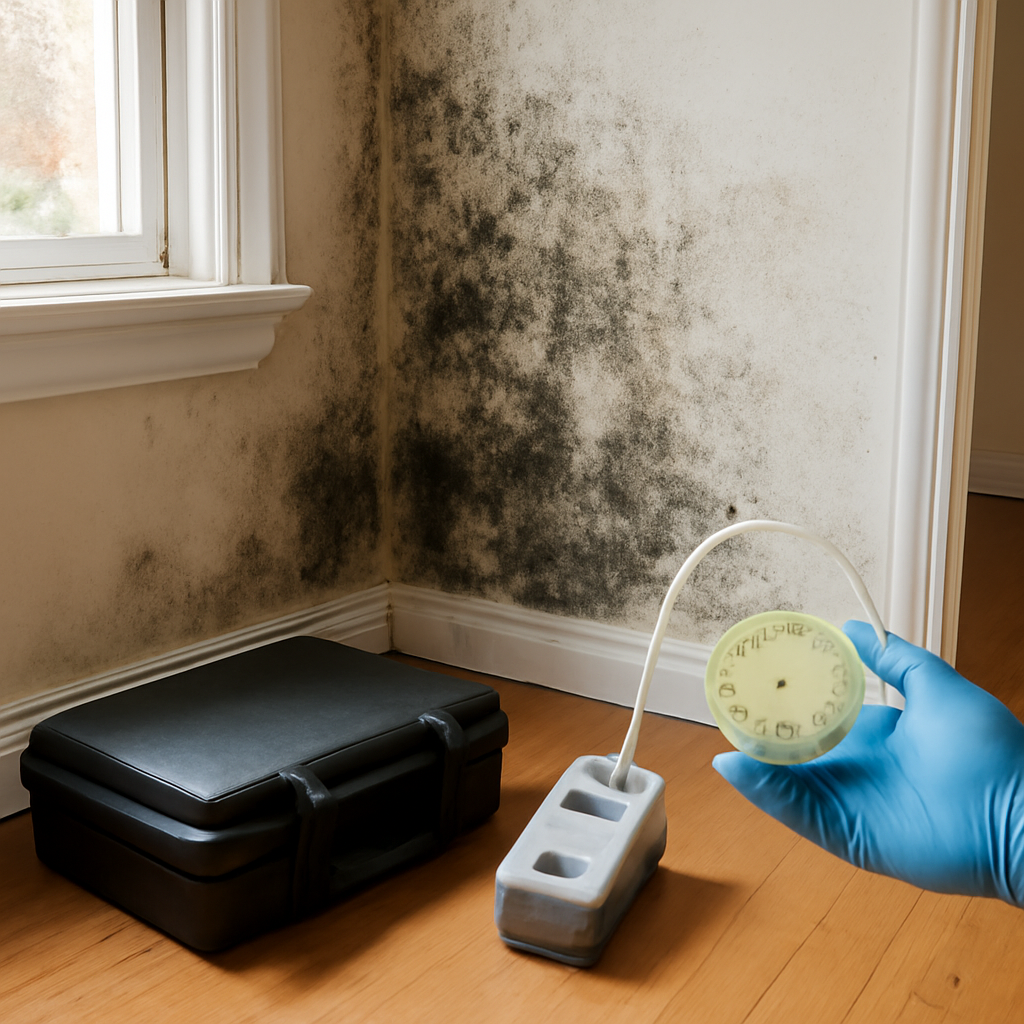
Homeowners searching for mold testing Westchester are usually reacting to one of three things: a musty smell, a recent leak, or a real-estate transaction in a county full of older houses. Westchester County, New York sits in a humid continental climate with hot, sticky summers and a housing stock that skews old — many homes predate 1960, with stone foundations, finished basements, and the kinds of moisture quirks that mold loves. This guide summarizes EPA, CDC, and NIH guidance current as of 2026 and is informational only; consult your physician about symptoms and a certified professional before making testing or remediation decisions.
Part of our Mold Testing & Inspection guide — start there for the full picture →
Is this mold, asbestos, or water damage? Get a free instant screen
Upload a clear photo of the suspect area. You'll get an instant AI screening opinion and what to do next. This is screening guidance, not a professional determination.
Screening guidance only. AI can be wrong. Confirm asbestos, mold type, or lead with lab testing or a licensed professional before acting.
What mold testing in Westchester involves
Mold testing combines a visual inspection, moisture readings, and — when warranted — laboratory sampling of air or surfaces. A qualified assessor walks the property looking for staining, warping, and the conditions that allow growth: poor basement drainage, condensation on cold-water lines, bathroom exhaust fans that vent into an attic, and roof or window leaks. Moisture meters and sometimes infrared cameras help find dampness hidden behind finishes.
Sampling is the optional step. Air samples captured indoors are compared against an outdoor control to see whether indoor spore types and counts are abnormal. Surface or tape-lift samples confirm whether a specific stain is mold and identify the genus. The EPA stresses that sampling is not always necessary — visible growth or a musty odor is reason enough to address moisture — but in Westchester’s competitive housing market, documentation often matters for negotiations and disclosures.
Because Westchester’s older homes frequently have finished basements and additions built over decades, hidden moisture is common. A thorough assessment treats the building as a system, tracing where water enters and where it lingers. The broader framework for that approach lives in the mold inspection and testing hub.
Why Westchester’s climate and housing feed mold
The county’s summers are warm and humid, with dew points that regularly push indoor relative humidity above the 60 percent threshold where mold thrives. Spring snowmelt and heavy rain saturate soil around foundations. Many homes have stone or brick foundations that wick groundwater, and finished basements that trap that moisture against drywall and carpet.
Add an aging housing stock — original windows, older roofs, and bathrooms without proper ventilation — and you have a recipe for recurring growth. Coastal-influenced storms can dump significant rain in short bursts, overwhelming gutters and grading. The CDC notes that mold needs only moisture and an organic surface, both of which an older Westchester home supplies readily during the humid season.
Recognizing these regional drivers helps prioritize where to look. An assessor who knows the area checks basements, crawl spaces, the base of chimney chases, and around aging window casings first, because that is where Westchester moisture problems concentrate.
How much mold testing costs in the area
Pricing in the New York City suburbs runs higher than the national average. A visual mold inspection of a typical single-family home often falls in the few-hundred-dollar range. Adding laboratory air samples — usually one outdoor control plus two or more indoor samples — raises the total, since each sample carries a lab fee. A whole-house assessment with multiple samples can reach several hundred to over a thousand dollars depending on size and complexity.
Treat any flat, suspiciously low quote with caution, especially if the same company also offers remediation. The EPA and consumer advocates recommend keeping assessment and remediation separate where possible, so the party telling you that you have a problem is not the same party profiting from the cleanup. For a sense of how independent testing is structured, the overview at local mold testing explains the trade-offs between DIY kits and professional sampling.
When Westchester homeowners should test
Testing is justified in several concrete situations. After any water event — a burst pipe, a backed-up sewer line, a flooded basement during a coastal storm — sampling can verify whether spore levels returned to normal once the area dried. Before buying, an inspection with sampling documents the home’s condition and supports negotiation. When occupants have unexplained allergic or respiratory symptoms that ease away from home, testing can help rule the building in or out.
You generally do not need a test to justify cleaning small, visible growth. The EPA’s guidance is that areas under roughly ten square feet can usually be cleaned by a homeowner, while larger contamination warrants a professional. If you can already see and smell mold, your money is better spent finding the moisture source than confirming what you already know.
Real-estate transactions and disclosure
New York requires sellers to disclose known material defects or provide a credit in lieu of the disclosure form, and a documented mold problem can affect a deal. Buyers in Westchester often add a mold contingency to inspections, particularly for homes with finished basements. A clean, dated assessment report gives both sides something objective to work from.
What the lab results mean
Air-sample results list spore types and counts per cubic meter for both indoor and outdoor samples. The key comparison is indoor versus outdoor: if indoor counts and species mirror the outdoor baseline, the indoor air is likely normal. If a water-damage indicator such as Stachybotrys or elevated Penicillium/Aspergillus shows up indoors but not outside, that points to an indoor source needing attention.
There is no federal numeric “safe” threshold for indoor mold, which surprises many homeowners. Interpretation is comparative and contextual, which is why a written narrative from the assessor matters more than the raw numbers. A good report names the likely moisture source and the specific repair, not just spore counts.
Cleanup and preventing repeat growth
Once a problem is confirmed, the durable fix is moisture control. That can mean regrading soil away from the foundation, extending downspouts, sealing or improving basement drainage, adding a dehumidifier to hold humidity below 50 percent, and venting bathroom and kitchen fans to the exterior rather than the attic. Affected porous materials — soaked drywall, carpet, insulation — usually need removal, while hard surfaces can be cleaned and dried.
For larger jobs, hire a contractor who follows recognized remediation standards, contains the work area, and verifies the cleanup with a post-remediation assessment. Skipping the moisture fix guarantees the mold returns, no matter how thorough the cleaning. In a humid county like Westchester, ongoing humidity management is not optional; it is the maintenance that keeps the problem from coming back each summer.
When to call a professional
Bring in a certified inspector when growth covers a large area, when there is a persistent musty smell with no obvious source, after significant water intrusion, or when a transaction depends on documented air quality. Choose someone with mold-specific credentials, references, and a clear, itemized scope. Ask whether they perform remediation themselves and how that might shape their findings.
Mold testing Westchester homeowners can trust starts with an independent assessment that ties any sampling back to a moisture source and a specific repair. That report — not a single spore number — is what protects your health, your home, and your negotiating position.
Types of mold sampling and when each fits
Not all mold testing looks the same, and the method should match the question. Air sampling draws a measured volume of air through a spore-trap cassette, then a lab counts and identifies what was captured. It answers whether airborne spore levels indoors differ from the outdoor baseline, which is the right question after a leak or before a purchase.
Surface sampling takes a different form. A tape lift presses clear tape against a stain to confirm whether it is mold and which genus it is; a bulk sample sends a piece of the material itself to the lab. These confirm a suspected patch but say nothing about the air. A third method, an ERMI-style dust analysis, measures mold DNA in settled dust and is used mostly in research and some disputes; it is not a substitute for a visual inspection. A Westchester assessor typically leads with the visual walk-through and moisture mapping, then chooses sampling only where it will actually inform a decision.
DIY kits versus a professional assessment
Hardware-store settle-plate kits are inexpensive and tempting, but they have real limits. A petri dish left open on a counter will always grow something, because spores are present in all indoor air, and the result rarely carries an outdoor control for comparison. The EPA does not recommend relying on such kits to decide whether a home is safe. A professional pairs calibrated equipment, an outdoor reference sample, and a written interpretation — the context that turns a number into a decision.
Where mold hides in older Westchester houses
The county’s housing stock rewards knowing where to look. Stone-and-mortar foundations common in pre-war homes wick groundwater, so the base of basement walls and the back of any finished basement framing are prime suspects. Additions built across different decades often meet at flashing details that leak, and the seams between an old roof and a newer dormer are frequent intrusion points.
Bathrooms deserve scrutiny because many older homes vent fans into the attic or have no fan at all, letting shower moisture condense on cold sheathing. Window casings on north-facing walls, the chases around masonry chimneys, and crawl spaces under additions round out the usual list. An assessor who checks these first, rather than sampling at random, spends your money where Westchester problems actually concentrate.
Health considerations for sensitive residents
The reason testing matters at all is health, and the picture is nuanced. The CDC and American Lung Association link indoor dampness and mold to nasal congestion, throat irritation, coughing, and worsened asthma in sensitive people, and infants, older adults, and those with respiratory conditions tend to react more strongly. Damp homes are associated with more respiratory symptoms even when no single culprit species is identified.
That association is the practical argument for controlling moisture promptly rather than waiting for symptoms to become severe. It also frames testing correctly: a sample documents a building condition, while a doctor evaluates a person. Residents with persistent symptoms should discuss them with a physician, who can weigh allergy testing alongside other triggers common to the humid Northeast.
Preventing mold between tests in a humid county
Testing documents a moment in time; prevention keeps the next test from being necessary. In Westchester’s humid season the single most effective control is holding indoor relative humidity below 50 percent, which usually means running a dehumidifier in the basement from late spring through early fall and emptying or draining it reliably. The CDC and EPA both point to moisture control as the foundation of mold prevention.
The building envelope matters too. Clean gutters and downspout extensions that discharge several feet from the foundation reduce the groundwater that stone basements wick. Regrading soil to slope away from the house addresses the same problem at the source. Inside, vent every bathroom and the kitchen to the exterior rather than the attic, run exhaust fans during and after showers, and insulate cold-water lines that sweat in summer. For finished basements, avoid wall-to-wall carpet on slab and keep stored belongings off the floor. These steps will not undo an existing leak, but they keep ordinary humidity from becoming an annual mold cycle in an older home.
Choosing an independent assessor in the area
Vetting matters more in a market where remediation companies often offer “free” inspections. Ask whether the assessor performs remediation; if so, a separate firm verifying the cleanup protects you. Confirm mold-specific credentials, request a sample report so you can see how findings are explained, and make sure each proposed sample ties to a question rather than padding the invoice.
A trustworthy report reads as a narrative: here is the moisture source, here is the affected area, here is the specific repair, and here is how a follow-up sample would confirm success. Westchester buyers and sellers both benefit from that clarity, because a dated, defensible report carries far more weight in a negotiation than a contractor’s verbal alarm.
References
- Mold Cleanup in Your Home — U.S. Environmental Protection Agency
- About Mold and Your Health — Centers for Disease Control and Prevention
- Mold and Indoor Air Quality — National Institute of Environmental Health Sciences
- Mold and Dampness — American Lung Association
Frequently asked questions
How much does mold testing cost in Westchester County?
A visual inspection typically runs in the few-hundred-dollar range, with each laboratory air sample adding a fee. A whole-house assessment with several samples can reach from several hundred to over a thousand dollars depending on size and complexity.
Do I always need a lab test for mold?
No. The EPA says visible mold or a musty odor is enough reason to fix the moisture and clean. Sampling is most useful for comparing indoor to outdoor levels, verifying a cleanup, or documenting a real-estate dispute.
Why is mold common in Westchester homes?
Humid summers push indoor humidity above the level mold needs, and the county's older housing stock has stone foundations, finished basements, and aging windows that trap moisture. These conditions feed recurring growth during the warm season.
Should the same company test and remediate?
Keeping the two separate is the safer choice. An independent assessor has no financial incentive to overstate the problem, and a post-remediation test by a third party verifies that cleanup actually worked.
If you own or are buying a home in the New York suburbs or the Colorado Front Range and want an unbiased read on a possible mold problem, contact us to connect with a vetted independent inspector.