Mold Testing in House: 2026 In-House Testing Scope Guide
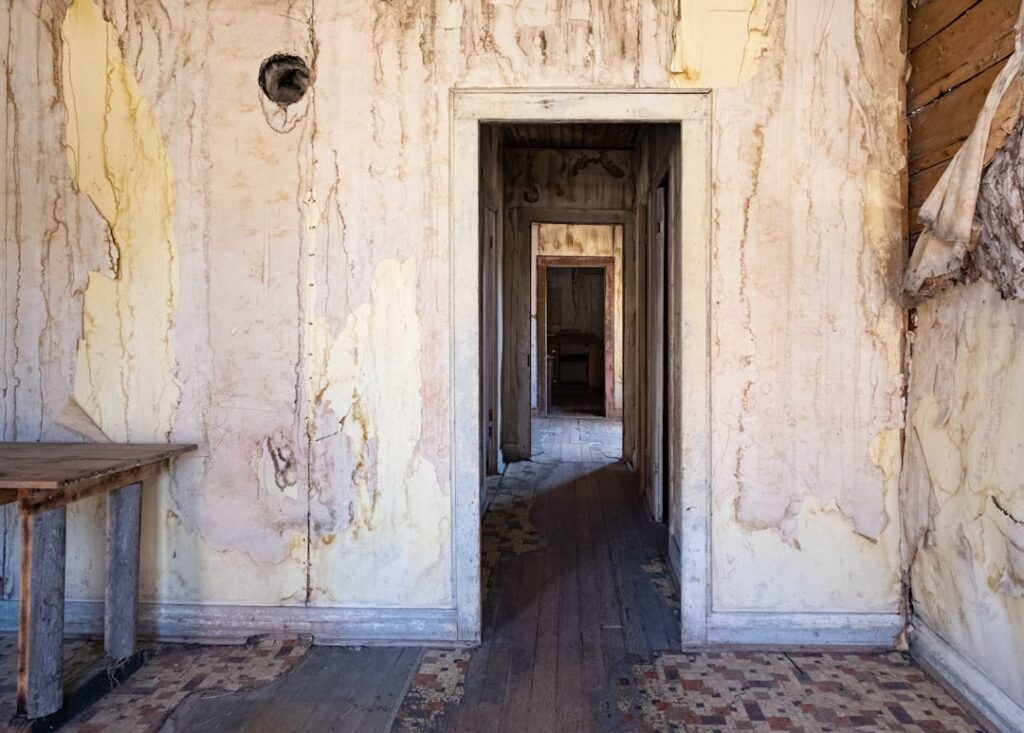
“Mold testing in house” reads as scope-defined — the homeowner wants testing conducted inside the residence, room by room, rather than perimeter or exterior-only checks. The preposition “in” implies coverage of interior spaces including bathrooms, basements, kitchens, bedrooms, and conditioned attics. This guide summarizes EPA and CDC guidance current as of 2026 — consult a certified mold inspector for testing decisions and your physician for symptom evaluation. Effective in-house testing follows a room-by-room logic that prioritizes the spaces where growth is most likely and the spaces where occupants spend the most time.
Part of our Mold Testing & Inspection guide — start there for the full picture →
Is this mold, asbestos, or water damage? Get a free instant screen
Upload a clear photo of the suspect area. You'll get an instant AI screening opinion and what to do next. This is screening guidance, not a professional determination.
Screening guidance only. AI can be wrong. Confirm asbestos, mold type, or lead with lab testing or a licensed professional before acting.
Why in-house testing benefits from a room-by-room plan
Random sampling across a house generates background data that wastes money and confuses interpretation. Targeted sampling that follows visible evidence, olfactory cues, and moisture-meter readings produces actionable results. The two priorities — likelihood of growth and occupant exposure time — usually overlap, but not always.
A bedroom where children sleep is a high-priority sampling location even when no visible growth has been found, because exposure time is high and occupant vulnerability may be elevated. A storage closet with visible growth is a high-priority sampling location even when nobody spends time there, because spores migrate from storage spaces to occupied spaces through HVAC circulation and door openings.
Prioritizing rooms for in-house testing
Bathrooms are the most common growth sites in Front Range homes because relative humidity spikes above 70 percent during showers and stays elevated for hours when exhaust fans don’t run long enough or vent improperly. Sample bathroom ceilings, walls behind toilets, and the area around bathtub or shower surrounds.
Basements rank second because foundation walls, perimeter floor edges, and stored-material zones all sustain growth when humidity exceeds 60 percent or when seasonal groundwater intrusion occurs. Sample basement perimeter walls, behind built-in furniture or shelving, around sump-pump pits, and near any exterior penetrations like dryer vents or utility entries.
Kitchens rank third because dishwasher leaks, sink-base cabinets with slow supply-line leaks, and refrigerator drip pans all generate localized moisture. Sample inside sink-base cabinets, behind dishwashers if accessible, and inside refrigerator drip-pan areas.
Bedrooms and living rooms rank lower for likelihood but higher for exposure time. Sample these spaces with air cassettes rather than surface swabs unless visible growth has emerged. Conditioned attics and finished basement living spaces deserve sampling proportional to occupant time and visible evidence.
Sample count and budget planning
A minimal in-house testing round covers one outdoor reference cassette, one indoor cassette in the room of greatest concern, and one indoor cassette in a comparison “control” room with no known problems. Three cassettes total. Cost runs $120 to $200 including lab analysis. This scope suffices for screening when no visible growth and no severe symptoms point to specific locations.
A targeted in-house round adds two to four cassettes in suspected problem rooms plus swabs on any visible growth. Five to six cassettes total plus two swabs. Cost runs $260 to $420 including lab work. This scope suffices when known problem areas can be identified by sensory inspection or moisture mapping.
A comprehensive in-house round adds HVAC duct sampling, multiple basement and crawlspace cassettes, and bulk samples of suspect porous materials. Eight to twelve samples total. Cost runs $450 to $800 for DIY or $500 to $900 for professional with infrared and moisture mapping included. For a deeper view of professional scope, see our in-home mold inspection scope guide.
Sampling procedure for in-house testing
Environmental prep happens once for the whole house. Close all windows and exterior doors at least 12 hours before sampling. Turn off whole-house fans, kitchen and bathroom exhaust fans, and any portable air purifiers. Leave HVAC running on its normal schedule. Avoid vacuuming, dusting, or cleaning in the 24 hours before sampling.
Move sample by sample through the house, deploying cassettes at breathing height (four to six feet off the floor) in each target room. Run each cassette for the manufacturer-specified time, usually five to ten minutes. Label each cassette with the room and time. Keep all cassettes together for shipping rather than mailing separately, which simplifies the lab’s chain-of-custody handling.
For visible growth, collect swab samples after air sampling completes. Wear nitrile gloves. Press the swab firmly against the colony and rotate. Seal in the vial and label with room and location. Ship all samples together same-day to the accredited lab.
Interpreting in-house test results across multiple rooms
Lab reports list each sample’s spore counts and species. The room-by-room comparison is what makes in-house testing valuable. A bathroom cassette showing elevated Cladosporium while the matched outdoor cassette shows only modest Cladosporium identifies the bathroom as an active source. The control-room cassette showing similar counts to outdoor confirms the contamination is localized rather than house-wide.
A house-wide pattern — every indoor cassette elevated regardless of room — usually indicates HVAC-driven distribution from a single source or systemic moisture conditions like a humidifier set too high. The diagnostic move is duct sampling and a humidity audit before any cleanup.
A pattern where elevated counts cluster in one zone — basement and first floor while upper floors stay near outdoor levels — usually indicates a basement or crawlspace source with vertical migration through HVAC and stack effect. The diagnostic move is targeted basement and crawlspace sampling plus moisture mapping in those zones.
HVAC duct sampling as part of in-house testing
HVAC ducts can host mold growth on supply-side surfaces when condensation occurs on cold metal during humid summer operation or when the evaporator coil and drain pan support biological growth. Duct sampling uses a swab on accessible supply-grille interiors or a cassette placed in a supply-air stream. Cost runs $50 to $100 per sample DIY, $150 to $300 as part of a professional inspection.
Sample duct interiors when room-by-room air samples show similar elevations across rooms (suggesting central distribution) or when visible growth has emerged on a supply grille. Skip duct sampling when room-by-room samples show clean results — the ducts are unlikely to be a problem if delivered air reads clean.
Front Range home types and in-house testing priorities
Ranch-style homes with full basements concentrate moisture concerns in the basement perimeter and crawl-style mechanical rooms. Sample priorities are basement perimeter walls, the laundry-room area, and any HVAC mechanical-room sites.
Two-story homes with conditioned basements add bedroom-level sampling for occupant exposure assessment and bathroom-level sampling for the highest-humidity rooms. Sample priorities are the basement plus all bathrooms plus one bedroom per floor.
Homes cooled by evaporative coolers in summer require specific attention to ductwork and supply-grille areas because humid cooled air supports growth on supply-side surfaces. Sample priorities include at least one supply-grille swab and one cassette in the room with the largest supply register.
Crawlspace homes face additional risk from exposed-soil moisture migrating into floor framing. Sample priorities include a crawlspace cassette if humidity permits sampling and a first-floor cassette near suspected migration zones. The mold inspection pillar hub walks through home-type-specific sampling strategies.
When to escalate from DIY in-house testing to professional
Persistent musty odor in a room without visible growth warrants professional infrared and moisture-mapping to find hidden contamination. Real-estate transactions, insurance claims, and litigation require chain-of-custody samples from a credentialed inspector. Occupants reporting symptoms that worsen indoors warrant a pro inspection to identify the source location.
Visible growth over 10 square feet on porous materials warrants professional involvement regardless of square footage because containment during cleanup matters more than testing methodology at that scale. Front Range pro inspection runs $300 to $700, which is reasonable for the diagnostic depth it adds.
Sample timing and seasonal considerations for in-house testing
In-house testing benefits from seasonal awareness. Front Range basement sampling produces the most informative data during spring snowmelt when groundwater pressure peaks and any waterproofing gaps show. Bathroom and kitchen sampling produces the most informative data during normal-use periods rather than after a deep cleaning round. Bedroom sampling produces the most informative data during overnight occupancy hours when occupants are actually present.
Time-of-day matters for some sampling targets. HVAC duct sampling produces the most informative data when the system is running at typical cooling or heating load, not at the extremes. Bathroom sampling produces the most informative data several hours after the last shower so humidity has stabilized at typical residual levels rather than peak shower levels.
Avoid sampling on days with unusual weather. High-wind days drive outdoor spores indoors through air-sealing gaps and bias the indoor-outdoor comparison. Days immediately after rain or snow events show elevated outdoor counts that may not match typical reference conditions. Pick stable weather days for the most interpretable results.
Documentation and record-keeping for in-house testing
Multi-sample in-house testing produces multiple data points that benefit from organized record-keeping. Maintain a sampling log that lists each cassette’s location, deployment time, retrieval time, ambient humidity if a hygrometer is available, ambient temperature, and any unusual conditions. The log helps the lab interpret results and helps the homeowner track patterns across multiple sampling rounds.
Photograph each sampling location with the cassette in place before retrieval. The photograph creates a permanent record of the sampling spot and supports any later disputes about where the sample was actually taken. Save the chain-of-custody form, the lab report PDF, and the kit manufacturer documentation in a single project folder for future reference.
Post-test action planning across multiple rooms
Multi-sample results often produce mixed findings — some rooms clean, others elevated. The action plan prioritizes by severity and exposure. Rooms with elevated Stachybotrys or other high-priority species get addressed first regardless of square footage. Rooms with elevated Aspergillus or Penicillium at moderate levels get addressed next, prioritized by occupant time-in-room.
Clean rooms get retested only if new symptoms emerge or new moisture events occur. The post-remediation verification cycle uses the same methodology that confirmed the original problem — air samples for air-detected contamination, swabs for surface-detected contamination, with matched outdoor reference in both cases.
Cost-benefit analysis of room-by-room testing scope
A homeowner choosing between minimal three-cassette and comprehensive twelve-sample scope faces a real cost-benefit decision. The minimal scope costs $120 to $200 DIY and answers the basic question: is there a problem in the room of greatest concern. The comprehensive scope costs $450 to $800 DIY or $500 to $900 professional and produces a whole-house picture suitable for understanding distribution patterns.
For most homeowners the right answer is the targeted middle scope — five to six samples covering basement, main floor, suspect rooms, and matched outdoor reference. That scope costs $260 to $420 DIY and produces enough data to drive remediation planning. Reserve the comprehensive scope for cases where initial sampling identifies house-wide patterns or where occupant symptoms suggest distributed contamination.
The professional approach at $300 to $700 includes infrared scanning and moisture mapping that DIY can’t match. For high-stakes situations — real-estate transactions, insurance claims, occupant symptoms — the professional approach adds diagnostic depth that justifies the additional cost.
References
- EPA — Mold Testing and Sampling Guidance — U.S. Environmental Protection Agency
- CDC — Basic Facts About Mold — U.S. Centers for Disease Control and Prevention
- InterNACHI — Mold Inspection Standards — International Association of Certified Home Inspectors
- CDPHE — Mold and Moisture in Colorado Homes — Colorado Department of Public Health and Environment
Frequently asked questions
How many rooms in a house should I test for mold?
A minimum credible scope tests one outdoor reference plus one room of greatest concern plus one control room — three cassettes total. Targeted testing of known problem rooms adds two to four cassettes. Comprehensive whole-house testing adds HVAC duct sampling and crawlspace cassettes for eight to twelve total samples.
Which rooms in a house most often have mold?
Bathrooms rank first because humidity spikes during showers. Basements rank second because of foundation moisture and stored materials. Kitchens rank third due to plumbing-fixture leaks. Bedrooms and living rooms rank lower for likelihood but higher for occupant exposure time.
Can in-house mold testing find hidden growth?
Air sampling captures airborne spores from hidden colonies. Professional infrared and moisture-mapping tools locate the hidden growth itself. DIY testing identifies that hidden contamination exists but doesn't always pinpoint the location, which is why room-by-room sampling combined with moisture mapping outperforms either alone.
How much does in-house mold testing cost?
A minimum three-cassette DIY round costs $120 to $200. A targeted five-to-six-sample round costs $260 to $420. Professional inspection with infrared scanning and four to six samples runs $300 to $700 on the Front Range. Add-ons like HVAC duct sampling and rush lab turnaround push the total higher.
Front Range homeowners planning a room-by-room mold testing strategy and unsure whether to start with DIY cassettes or jump to professional scope can get in touch through our contact page for a referral to a vetted local mold inspector.