Mold Removal Walnut Creek: A Homeowner’s Guide
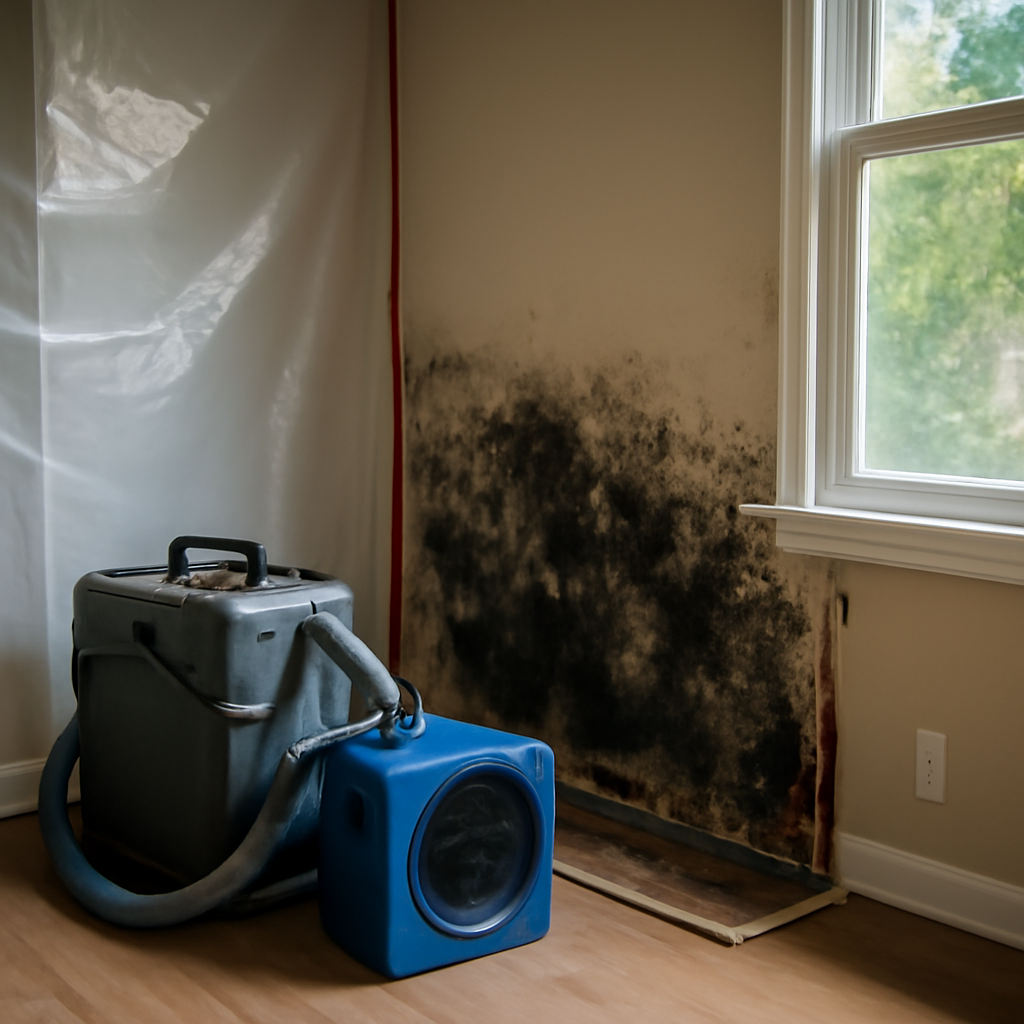
Walnut Creek’s wet winters and warm, dry summers create a seasonal mold pattern many East Bay homeowners do not expect. Rainy-season leaks, crawlspace dampness in homes built into the Diablo foothills, and condensation in tightly sealed houses all give mold the moisture it needs. If you have found growth on a closet wall, in a crawlspace, or around a window, you are weighing what mold removal Walnut Creek services involve and what they should cost. This guide summarizes EPA and CDC guidance current as of 2026; consult your physician for symptoms and a qualified mold professional for testing and removal decisions specific to your home.
Part of our Mold Removal & Remediation guide — start there for the full picture →
Is this mold, asbestos, or water damage? Get a free instant screen
Upload a clear photo of the suspect area. You'll get an instant AI screening opinion and what to do next. This is screening guidance, not a professional determination.
Screening guidance only. AI can be wrong. Confirm asbestos, mold type, or lead with lab testing or a licensed professional before acting.
Mold Removal in Walnut Creek: The Process
Removal, properly called remediation, is the controlled cleanup of mold combined with correcting the moisture that caused it. The EPA is consistent on this point: mold returns unless the underlying water problem is solved. A credible Walnut Creek job finds the source — a roof or plumbing leak, a damp crawlspace, or condensation — isolates the area, removes unsalvageable porous materials, cleans and dries what remains, and verifies the result before finishing.
The standard sequence: inspect and locate moisture, contain the area with sheeting and negative air pressure, remove soaked drywall, carpet, and insulation that cannot be saved, HEPA-vacuum and damp-wipe hard surfaces, dry the structure with commercial equipment, and confirm the area is clean. Because much East Bay mold traces to winter rain intrusion and crawlspace humidity, the moisture-source and drying steps deserve close attention here.
A crew that arrives, sprays a biocide, and departs has skipped the steps that matter. The visible mold on a closet wall is often the surface expression of a slow leak or chronic dampness, and treating only the surface leaves the cause to regrow the colony with the next storm.
Why Walnut Creek Homes Get Mold
Walnut Creek’s Mediterranean climate concentrates rainfall in winter, and the CDC notes mold grows wherever surfaces stay damp long enough. Heavy seasonal storms expose roof, window, and foundation weaknesses, letting water into wall cavities and crawlspaces. Homes built on the hillsides toward Lafayette and the Diablo foothills often have vented crawlspaces that collect ground moisture during the rainy months, and that dampness rises into floor framing and lower walls.
Summer brings a different driver. As homes close up and run air conditioning, chilled ducts can sweat and condensation can form on cool surfaces in humid microclimates near creeks and shaded lots. Bathrooms and laundry rooms without adequate exhaust trap moisture year-round, producing ceiling and grout mold regardless of season. The seasonal swing — wet winters followed by dry summers — gives mold repeated openings to colonize and then lie dormant until conditions return.
The result is that East Bay mold often hides in crawlspaces and behind walls, discovered during a remodel, a sale, or when a musty smell finally surfaces in the living space above.
What Mold Removal Costs in Walnut Creek
Cost depends on the size of the affected area, the materials removed, and how difficult the moisture source is to reach. Small contained jobs typically run several hundred dollars, while whole-room or crawlspace projects with structural drying can reach the thousands. Walnut Creek and the broader Bay Area generally run above national averages because Northern California labor and disposal costs are high, and crawlspace work adds access difficulty to the bill.
For a clearer sense of what pushes the bill up — square footage, material type, hidden moisture, and reconstruction — see our breakdown of the average cost of mold remediation. Insist on an on-site inspection before any quote and gather at least two written estimates. A sight-unseen price, or one that skips the moisture source, is a recipe for repeat growth and a second invoice.
Licensing and Vetting a Contractor
California issues no dedicated mold license, but removal involving construction generally requires a contractor licensed by the California Contractors State License Board. Verify that license, confirm general liability insurance, and favor technicians certified through the IICRC. As always, keep testing independent of removal so the firm grading the work is not the one that performed it and stands to gain from a larger scope.
Questions worth asking: Will you contain the area and run negative air pressure? How will you correct the moisture source, including crawlspace drainage? Will you document the work and offer an independent clearance test? Our checklist on choosing a mold removal company details credentials and warning signs, and the mold inspection and testing hub explains why assessment and cleanup should stay separate.
DIY Versus Professional Removal
The EPA’s general guidance lets homeowners clean mold under about 10 square feet on hard, non-porous surfaces while wearing an N95 respirator, gloves, and eye protection, and correcting the moisture afterward. That covers many small bathroom or window-sill spots. Larger areas, mold inside HVAC or behind walls, crawlspace contamination, and any growth following flooding warrant a professional.
Crawlspace mold is the common Walnut Creek case where DIY falls short. Working in a tight, damp crawlspace requires protective gear, containment, and a plan to control ground moisture afterward with a vapor barrier and improved ventilation or dehumidification. A surface clean without that moisture fix simply postpones the next outbreak. Never mix bleach with ammonia or acids, and avoid the work entirely if you have asthma or compromised immunity — crawlspaces concentrate spores in a confined, hard-to-ventilate space.
Preventing Mold After Removal
Moisture control is the durable answer. Keep indoor relative humidity below 60 percent, ideally 30 to 50 percent, using dehumidifiers where needed. Run bathroom and kitchen exhaust fans, insulate cold pipes and ducts, and address roof and window leaks promptly given the heavy winter rain. For crawlspaces, a sealed vapor barrier and improved drainage cut mold risk sharply compared with the old vented approach.
Outside, maintain gutters, clear downspouts before the rainy season, and grade soil away from the foundation so storm water drains away rather than pooling against it. A follow-up inspection a few weeks after removal confirms the repair held. Mold that returns in the same spot almost always means the water source was never truly resolved, not that the cleanup failed — and in Walnut Creek, that water source is often a crawlspace or roof issue that reappears with the next wet season.
The Crawlspace Problem in Detail
Because so much East Bay mold originates below the floor, crawlspaces deserve a closer look. The traditional vented crawlspace, designed to let outside air carry moisture away, often does the opposite in a Mediterranean climate: during humid spells, warm outside air enters the cool crawlspace and condenses on framing and ducts, raising rather than lowering moisture. Bare soil compounds the problem by releasing ground moisture directly into the space, where it rises into subfloors and lower walls.
The modern fix is encapsulation: sealing the crawlspace with a heavy vapor barrier over the soil and walls, closing or controlling the vents, and adding a dehumidifier or conditioned air to keep the space dry. This approach has become standard guidance for problem crawlspaces because it addresses the moisture source rather than relying on ventilation that backfires. After a crawlspace mold removal, encapsulation is frequently the prevention step that finally breaks the cycle, turning a recurring problem into a one-time repair. Skipping it usually means the mold returns with the next wet season.
What the Removal Timeline Looks Like
Homeowners often want to know how long a job will take and how much disruption to expect. A small, contained bathroom or closet job may take a single day, while a whole-room or crawlspace project with structural drying can run several days as air movers and dehumidifiers bring materials back to a dry standard. Crawlspace work adds access time, since technicians must move through a tight, low space in protective gear and often install a vapor barrier as part of the moisture fix.
During the work, the affected area is sealed under negative pressure, so you may lose access to part of the home and hear equipment running continuously. Reconstruction — new drywall, paint, flooring — happens after the area passes a dry-and-clean check and is often a separate phase from the removal itself. Building that two-stage reality into your expectations prevents the frustration of assuming one visit will leave the room ready to use. Ask the contractor for a realistic timeline in writing, including the drying period.
Common Walnut Creek Trouble Spots
Knowing where mold concentrates in East Bay homes helps catch it early. Crawlspaces top the list: bare soil, torn vapor barriers, and poor ventilation let ground moisture rise into floor framing and the rooms above, often announced only by a musty smell. Bathrooms without working exhaust fans trap shower moisture, and ceilings near showers are a frequent first site. Under sinks and behind appliances, slow leaks feed hidden growth in cabinet bases.
Windows and below-grade frames collect condensation and wind-driven rain during the wet winter, and finished basements or daylight basements common on hillside lots stay cool and damp. Attics suffer when bathroom or dryer vents discharge into them or when ventilation is blocked, condensing moisture on the roof sheathing. Checking these spots before and after the rainy season turns a potential removal job into a quick cleaning while the problem is still small.
The Health Side, Kept in Perspective
Worry about mold often outpaces the evidence, so it helps to ground the discussion in what agencies actually say. The CDC reports that exposure to damp, moldy environments can cause nasal congestion, throat irritation, coughing, and wheezing, with stronger effects in people who have asthma, allergies, or weakened immune systems. The agency notes that a firm causal link between ordinary indoor mold and serious illness in otherwise healthy people has not been established, which is why the practical response focuses on moisture and cleanup rather than alarm.
For Walnut Creek households, that framing supports a measured plan: address the dampness, clean or remove affected materials safely, and watch anyone whose symptoms ease when they leave the house. Children, older adults, and immunocompromised family members deserve extra caution, and persistent symptoms should go to a physician rather than a testing lab. Spending on a species identification rarely changes what you do next, because the cleanup is the same regardless of which mold is growing.
How Professionals Confirm the Job Is Done
A removal job is finished not when the visible mold is gone but when an independent check confirms the area is clean and dry. Reputable firms document moisture readings before and after, and many recommend a clearance test by a separate assessor rather than the crew that did the work. That separation matters: a company verifying its own cleanup has an obvious incentive to declare success. Air sampling compares spore counts inside the area against an outdoor baseline, while surface sampling confirms cleaned materials no longer harbor active growth.
Ask up front how completion will be verified. A scope that ends with “visually clean” leaves too much to interpretation, whereas one specifying moisture targets and an independent clearance step gives you something to hold the contractor to. If a dispute arises later with a seller, landlord, or insurer, that documentation becomes the record that protects you.
Insurance, Disclosure, and Buying a Home With Mold History
Mold and homeowners insurance is a frequent source of confusion. Many policies cover mold only when it results from a sudden, covered event such as a burst pipe, and exclude mold caused by long-term humidity or a damp crawlspace. Review your policy language before assuming a claim will be paid, and document any sudden water event promptly with dated photos.
For buyers, a home with a disclosed mold history is not automatically a dealbreaker, but it warrants scrutiny — especially on hillside lots with crawlspaces. Ask for documentation of the prior removal, including what was taken out, how the moisture source was corrected, and whether an independent clearance test followed. A home that had a one-time leak, was dried promptly, and shows a documented repair sits in a very different position than one with recurring growth and no paper trail. When the history is unclear, an independent assessment before closing is far cheaper than discovering hidden growth after you own the house.
References
- Mold Cleanup in Your Home — U.S. Environmental Protection Agency
- About Mold and Health — Centers for Disease Control and Prevention
- A Brief Guide to Mold, Moisture and Your Home — U.S. Environmental Protection Agency
Frequently asked questions
How much does mold removal cost in Walnut Creek?
Small contained jobs often run several hundred dollars, while whole-room or crawlspace projects with structural drying can reach the thousands. Walnut Creek and the Bay Area generally run above national averages due to high Northern California labor and disposal costs. Get an on-site inspection and multiple estimates.
Does California require a mold license for removal?
California has no dedicated mold license, but removal involving construction generally requires a contractor licensed by the Contractors State License Board. Verify the license, confirm liability insurance, and look for IICRC-certified technicians who keep testing independent of the cleanup.
Why does my Walnut Creek home develop mold?
Winter rain exposes roof, window, and foundation leaks, and hillside crawlspaces collect ground moisture. Summer condensation on chilled ducts adds to it. The CDC notes mold grows wherever surfaces stay damp long enough, so seasonal moisture is the driver.
Can I remove crawlspace mold myself?
The EPA allows cleaning under about 10 square feet on hard surfaces with proper protection. Crawlspace work, though, needs gear, containment, and a moisture-control plan such as a vapor barrier and ventilation. Without that fix the mold returns, so larger or crawlspace jobs warrant a professional.
Colorado Front Range homeowners with the same concerns before buying or after a leak can reach out through our contact page to connect with a vetted local inspector.
Mold removal & cleanup picks
For a small, contained patch (under ~10 sq ft) these EPA-friendly removers handle surface mold. Larger or recurring growth warrants a professional assessment first.
| Product | Why | Buy |
|---|---|---|
 RMR-86 Instant Mold Stain Remover RMR-86 Instant Mold Stain Remover | Fast-acting on stains; ventilate and wear PPE. | Amazon — $29.99 |
 Concrobium Mold Control Concrobium Mold Control | No-bleach formula that also helps prevent regrowth. | Amazon — $11.26 |
 Mold Armor Mold & Mildew Remover Mold Armor Mold & Mildew Remover | Widely stocked bathroom/surface remover. | Amazon — $22.98 |