Basement Mold Symptoms: Signs to Watch and When to Worry
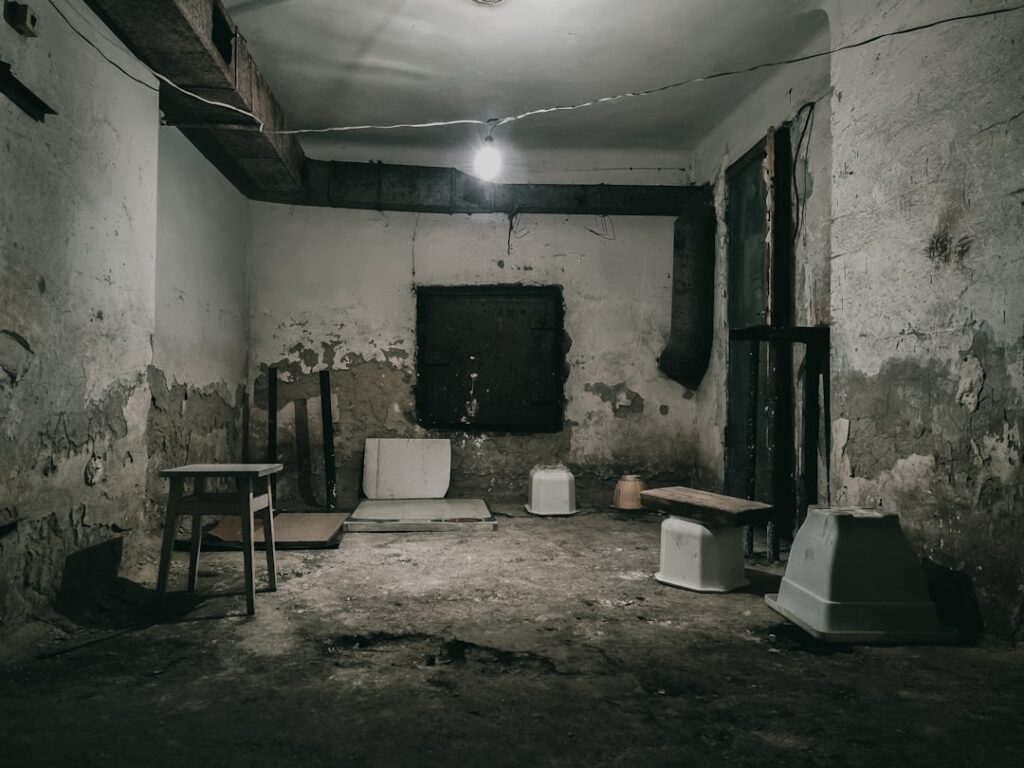
Search “mold in basement symptoms” and you are really asking two questions at once: what does a basement with mold look and smell like, and what does mold do to the people who breathe the air down there. This page answers both, keeps the two straight, and tells you which signs mean “watch it” versus “call someone.” Basements grow mold more than any other room because they are cool enough to condense moisture, sit below grade against damp soil, and usually house the laundry, water heater, and furnace, so a leak or a humid stretch has plenty to feed on.
Part of our Black Mold & Your Health guide — start there for the full picture →
Is this mold, asbestos, or water damage? Get a free instant screen
Upload a clear photo of the suspect area. You'll get an instant AI screening opinion and what to do next. This is screening guidance, not a professional determination.
Screening guidance only. AI can be wrong. Confirm asbestos, mold type, or lead with lab testing or a licensed professional before acting.
What a basement with mold shows you
These are the signs the room itself gives off, and they usually appear before anyone feels sick. Any one of them is worth investigating; two or three together mean you almost certainly have a moisture problem feeding growth.
- A musty, earthy, cellar-like smell — often the first and most reliable clue, and it can be present with no visible mold at all. The odor comes from microbial volatile organic compounds molds release as they digest damp material.
- Visible discoloration — black, green, gray, white, or orange patches on drywall, framing, insulation paper, stored cardboard, or the underside of subflooring.
- Efflorescence — a white, powdery mineral crust on concrete walls or floor. It is not mold itself, but it proves water is moving through the concrete and carrying dissolved salts to the surface.
- Water history — staining or tide lines low on the walls, peeling paint along the bottom courses, warped or swollen baseboards, cupped flooring, or rust on fasteners and the furnace base.
- Active moisture — condensation beading on cold-water pipes or the rim joist, a damp feel to stored items, or a hygrometer reading above 60 percent relative humidity.
The connection to act on is speed: the EPA notes that mold can begin growing on wet material within 24 to 48 hours of it getting wet. So a fresh water event plus a few warm days is all it takes. If you can smell it but not see it, the growth is likely behind drywall, under carpet, or inside the wall cavity — where a musty smell often precedes any visible patch.
What mold does to the people down there
The health side is where careful language matters. The CDC and NIEHS are clear that mold can trigger symptoms in some people, but that none of these symptoms are specific to mold. Commonly reported complaints include:
- Nasal congestion, runny nose, and postnasal drip
- Sneezing, itchy or watery eyes, and throat irritation
- Coughing and wheezing
- Asthma flare-ups in people who already have asthma
The CDC’s position is that these effects show up mainly in people who are sensitive to molds, and that the same congestion or cough could just as easily come from dust mites, pet dander, pollen, or a common cold. There is no reliable blood or urine test that confirms residential mold exposure in someone who feels fine, so the useful question is never “is mold in my body” — it is “do I have symptoms that a doctor should evaluate.” For a fuller look at how mold and allergy symptoms overlap, see our guide on whether mold can give you allergies.
The single most useful thing to notice
If symptoms ease when a person is away from the house for a day or two and return within hours of coming home, tell the physician exactly that. This “better when away” pattern is the most valuable piece of information you can bring to an appointment, because it points at the building rather than the season or a virus.
Who should treat symptoms as a reason to call a doctor
The EPA and CDC name specific groups as higher risk for mold-related health effects: infants and children, older adults, people who are immunocompromised, and anyone with asthma, allergies, or another chronic lung condition. The NIEHS adds that people with weakened immune systems can develop more serious lung infections from certain molds. If anyone in those categories spends regular time in a basement showing the signs above and is also having symptoms, a physician visit is the right next step — bring a short timeline of when the basement problem started, how often that person is down there, and when their symptoms began.
For a healthy adult with no symptoms, no medical workup is generally needed. Fix the moisture, remove the mold, and the exposure question resolves itself.
A 30-minute self-check this week
Before you spend money, spend half an hour confirming what you actually have.
- Walk it in good light. Photograph every stained, warped, or discolored surface, and check the low corners, behind stored boxes, and under any carpet edge you can lift.
- Log the humidity. A $15 hygrometer left in the basement for a week tells you more than a single reading. The EPA recommends keeping indoor humidity between 30 and 50 percent, and below 60 percent at all times. Readings that sit above 60 percent explain a lot of “why does it smell down here.”
- Follow the water. Step outside and look at the first six feet of soil around the foundation — it should slope away, not toward the wall. Confirm downspouts carry water four to six feet out. Check for irrigation heads spraying within five feet of the house. Most basement moisture starts here, and it is the step homeowners skip.
If a musty smell has you convinced but you cannot find the source, our guide on what mold smells like and how to trace an odor to hidden growth walks through the next steps.
When you can handle it and when to stop
The EPA’s guidance lets a homeowner clean a small mold area — generally under 10 square feet, roughly a 3-by-3-foot patch — using detergent and water while wearing an N95 respirator, gloves, and eye protection. Beyond that threshold, or any time the wetting involved sewage, the mold is inside HVAC ducts or equipment, or a higher-risk person lives in the home, the job belongs to a professional. Drywall or insulation that stayed wet for more than a couple of days is removed, not painted over. For the step-by-step on eligible cleanups, see how to get rid of mold in a basement, and if you suspect black mold specifically, how dangerous basement black mold actually is. When the scope is unclear or a sale is involved, an independent mold inspection confirms the source before anyone tears out drywall.
A Front Range note
Colorado’s dry air fools people. Whole-house humidity often runs 20 to 40 percent, low enough that homeowners assume mold cannot take hold. Basements behave differently: their surfaces stay cool year-round, so humid air drifting down from summer cooking, showers, and laundry condenses on cold walls and pipes even when the upstairs feels bone-dry. Spring snowmelt then drives a predictable seepage season across much of the Denver metro and Boulder County. If your basement only smells musty from April through August, that seasonal pattern — not a plumbing leak — is usually the cause, and a properly set dehumidifier targeting 40 to 50 percent is the fix.
Frequently asked questions
What does mold in a basement smell like?
Musty, earthy, or cellar-like. The smell comes from microbial volatile organic compounds released as mold digests damp material, and it is often present before any visible growth. A musty odor that gets stronger after rain or snowmelt is one of the most reliable early signs of hidden basement moisture.
Can basement mold make people upstairs sick?
It can. Basement air mixes into the rest of the house through stairwells, mechanical chases, and HVAC return ducts, so spores can travel upstairs. Symptoms that improve when occupants leave the home for a day or two, then return within hours of coming back, are worth raising with a physician.
Is a musty smell with no visible mold a real problem?
Yes, treat it as one. A persistent musty smell usually means growth behind drywall, under flooring, or inside a wall cavity where you cannot see it. Log the basement's humidity for a week and inspect low corners and hidden surfaces before assuming the smell is harmless.
Do I need a mold test before cleanup?
Usually not for visible mold with an obvious water source. Testing is most useful when growth is suspected but not visible, when a real-estate dispute needs baseline data, or when you want post-cleanup verification that the work was effective.
This guide summarizes EPA, CDC, and NIEHS guidance on residential mold and is not medical advice. If you think mold exposure is affecting someone’s health, consult a physician. Front Range homeowners can reach us through our contact page to connect with a vetted local inspector who handles basement moisture investigations.