Hose Reels: Wall-Mount Placement, Spigot Strain, and Winter

A hose reel seems like the simplest piece of equipment on the outside of a house. It holds a hose, it keeps the yard tidy and it saves a tangle every time someone waters the garden. Yet the reel, the short hose that connects it to the house and the way it is mounted all affect the outdoor faucet, the siding and the soil along the foundation. A reel screwed into vinyl siding can tear loose. A heavy hose left hanging from the spigot can stress the pipe inside the wall. A hose left connected through a Front Range cold snap can defeat a frost-free faucet and split the pipe behind it. This guide covers the main types of reels, how and where to mount them, leader hoses, winter care, backflow protection, drinking-water concerns and typical costs. Cost figures are general ranges, not quotes.
Part of our Structure & Exterior guide — start there for the full picture →
Choosing a Hose Reel: Wall-Mount, Cart or Retractable
Most residential reels fall into three groups, and each places different demands on the house.
Wall-mounted reels and hangers
A wall-mounted reel bolts to the house, a fence or a post near the spigot. Simple hangers are a bracket or hook that the hose is looped over by hand; crank reels add a drum and handle that wind the hose in. Wall mounts keep the hose off the ground and out of the way of mowers, and they are usually the least expensive option. Their weakness is the mounting itself: a full reel with a long rubber hose can weigh a surprising amount, and every pull on the hose levers against the fasteners.
Cart and freestanding reels
Cart reels sit on wheels or a base and can be rolled around the yard. Because they are not attached to the house, they put no load on the siding. They connect to the spigot with a short leader hose. The tradeoff is that carts are bulky, they tend to get parked in the same spot against the wall, and the leader hose can kink or pull on the faucet when the cart is moved without unhooking it.
Retractable and enclosed reels
Retractable reels use an internal spring or a water-powered or electric motor to rewind the hose automatically. Many are enclosed in a plastic or metal case and mount to the wall on a swivel bracket. They are convenient and neat, but the retraction force adds to the load on the mount, and a hose that snaps back quickly can whip. Guide mechanisms and springs wear out, and replacement parts vary by brand. Manufacturer instructions usually specify the kind of surface and fasteners required, and they are worth reading before choosing a location.
Mounting: Studs, Masonry and Siding
The single most common problem with wall-mounted reels is that they are fastened only to siding. Vinyl, aluminum, fiber cement and thin wood lap siding are not designed to carry a cantilevered load that gets yanked several times a week.
Fastening into framing or masonry
On a wood-framed wall, a heavy reel should be fastened through the siding and sheathing into studs or other framing, using the fasteners the manufacturer specifies or lag screws sized for the load. On brick, block or stone, masonry anchors appropriate for the material and the load are typical. Some installers mount the reel to a treated backer board fastened to framing so the load is spread out. On stucco, which is common across Colorado subdivisions, the anchor needs to reach solid backing, and every penetration needs to be sealed to keep water out of the wall.
Why sealing penetrations matters
Each screw driven through the siding is a potential water entry point. Sealant around fasteners, or a mounting block that sheds water, reduces that risk. Vinyl siding needs special care: it is designed to move with temperature changes, and screwing a reel tight through it can buckle panels. Mounting blocks made for vinyl siding are one way to create a flat, fastened surface without pinning the panels.
Avoiding the spigot and other hazards
Placement relative to the faucet matters. A reel mounted directly above or beside the spigot can put the leader hose in tension or at a sharp angle. Keep the reel close enough for a short leader hose but positioned so the hose drops straight to the faucet without pulling on it. Avoid mounting over dryer vents, gas meters, electrical service equipment and air-conditioning lines.
Best Hose Reels: our top 3 picks
| Product | Best for | Key features | Price | Buy |
|---|---|---|---|---|
| Giraffe Tools 130 ft retractable | Best retractable wall reel |
| $179.99as of Nov 11, 2026 8:22 am GMT+0000 | Buy now →Check current price |
| VEVOR 5/8 in x 100 ft retractable | Retractable with full-size hose |
| $125.90as of Nov 11, 2026 8:22 am GMT+0000 | Buy now →Check current price |
| AQUAZILLA metal deck box | Hidden storage that doubles as a table |
| $169.99as of Nov 11, 2026 8:22 am GMT+0000 | Buy now →Check current price |
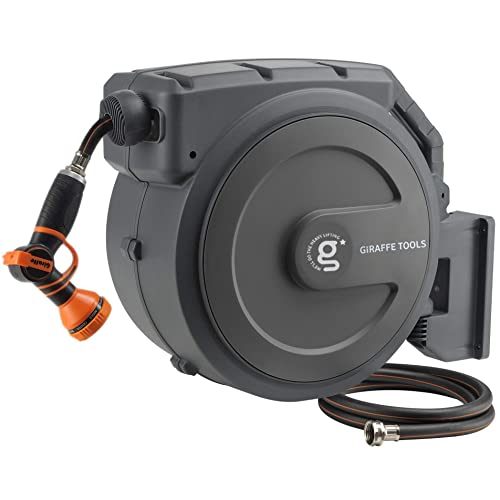
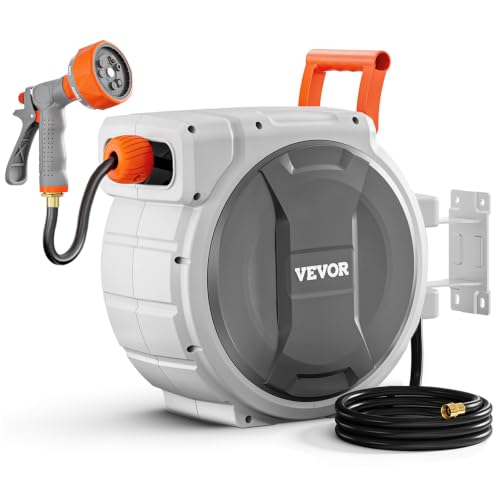

Prices are Amazon’s listed prices as of the time shown and change often; check Amazon for today’s price. As an Amazon Associate we earn from qualifying purchases.
Spigot Strain and Leader Hoses
An outdoor faucet is a fixture at the end of a pipe that runs through the wall. On many homes, especially frost-free designs, that pipe extends well into the house before reaching the valve. Repeatedly pulling a hose sideways, or letting a heavy hose and reel hang off the faucet, can loosen the faucet’s mounting, crack fittings or, over time, cause a leak inside the wall where nobody sees it.
What a leader hose does
A leader hose is a short hose, often a few feet long, that runs from the spigot to the reel’s inlet. It isolates the faucet from the reel’s movement and from pulls on the main hose. A good leader hose is long enough to avoid tension and kinks but short enough that it does not drape on the ground. Swivel fittings at the reel inlet and a quarter-turn shutoff valve at the spigot can reduce twisting.
Signs of a strained or failing spigot
- A faucet body that moves or wobbles when touched.
- Gaps or cracked caulk where the faucet passes through the wall.
- Dripping from the handle stem or spout after the valve is shut.
- Water stains, mold or soft drywall on the interior wall behind the faucet.
- A hose connection that leaks when the water is running.
The EPA’s WaterSense Fix a Leak Week guidance reminds homeowners not to forget garden hoses: if a hose leaks at its connection to the spigot while running, it suggests replacing the nylon or rubber hose washer and making sure the connection is tight. A faucet that itself leaks or moves in the wall is a bigger repair. Our outdoor spigot replacement guide explains what that job involves.
Winter: Disconnect the Hose So Frost-Free Bibs Can Drain
Colorado winters bring frequent freeze-thaw cycles, and a hose left on the faucet is one of the classic causes of a burst outdoor pipe.
How a frost-free hose bib works
A frost-free faucet places its shutoff valve inside the heated part of the house, at the end of a long stem. When the handle is closed, the water in the section of pipe that extends through the wall is supposed to drain out of the spout. That only works if the faucet is installed with a slight downward pitch toward the outside and nothing is attached to the spout. A connected hose, a hose splitter or a reel’s leader hose can hold water in the barrel, where it can freeze and split the pipe inside the wall. The damage often stays hidden until the faucet is turned on in spring and water sprays into the wall cavity or basement. Our frost-free hose bib guide covers installation pitch and the warning signs of a burst barrel.
A practical fall routine
- Disconnect the leader hose from the spigot before the first hard freeze, and drain it.
- Drain the main hose and store it, along with any retractable reel, according to the manufacturer’s guidance. Water left in a reel’s drum or swivel can freeze and crack plastic parts.
- On older non-frost-free faucets, close the interior shutoff valve if one exists and open the outdoor faucet to drain it.
- Consider an insulated outdoor faucet cover as an added layer, not a substitute for disconnecting the hose.
Our frozen pipes guide covers what to do if a line does freeze.
Sprinkler systems are a separate job
A hose reel is not part of an in-ground irrigation system, but the two are often winterized at the same time. Irrigation lines usually need to be drained or blown out, which is covered in our sprinkler winterization guide. The EPA’s Fix a Leak Week guidance suggests checking an in-ground irrigation system each spring before use to make sure it was not damaged by frost or freezing, which is a good habit for hose connections too.
Backflow Protection and Vacuum Breakers
A hose connected to the house plumbing creates a possible path for contaminated water to flow backward into the drinking water supply. This can happen if a hose end is left in a bucket of soapy water, a pool, a pet’s water bowl or a sprayer filled with fertilizer or pesticide, and the household water pressure drops.
A hose bib vacuum breaker is a small device that screws onto the spigot and is designed to prevent that backflow. Many newer outdoor faucets have one built in. Plumbing codes in many jurisdictions require backflow protection at hose connections. Because a vacuum breaker sits between the faucet and the leader hose, it also affects winter drainage on some designs, so check the manufacturer’s instructions for draining. Our vacuum breaker guide covers the types and how they fail.
Hose Placement and Water Near the Foundation
Where a hose reel lives also determines where hose water ends up. A reel parked against the foundation tends to collect drips, leaks from the connection and the last of the water drained from the hose. Over a season, that can keep the soil at that corner of the house wetter than the rest.
The EPA’s mold and moisture guidance advises making sure the ground slopes away from the foundation so water does not enter or collect around it. A small low spot under a leaking spigot can work against that. Practical steps include:
- Fixing drips at the spigot and the hose connection promptly.
- Setting a cart reel on a paver pad or gravel rather than bare soil against the wall.
- Keeping the area beneath the faucet graded away from the house.
- Not leaving a hose trickling into a bed next to the foundation to “deep water” shrubs.
Our yard drainage guide covers grading and surface flow in more detail.
Outdoor water use and waste
Hose watering is part of a much bigger picture. The EPA’s WaterSense program notes that residential outdoor water use across the United States accounts for nearly 8 billion gallons of water each day, mainly for landscape irrigation, and that the average household uses more water outdoors than for showering and washing clothes combined. WaterSense encourages homeowners to learn when and how much to water so they avoid wasteful runoff. For hose users, that translates into a few habits: water in the cooler parts of the day, use a shutoff nozzle so the hose is not running between plants, move the sprinkler before water starts running onto pavement or toward the house, and fix leaks at the reel swivel and the leader hose. Many Front Range water providers publish seasonal watering schedules and limits, and those rules apply to hose-end sprinklers as well as in-ground systems. Less runoff means less water collecting along the foundation, which helps the house as well as the water bill.
Drinking From Garden Hoses
Many garden hoses are not made for drinking water. Some hoses and brass fittings have been reported to contain lead or other compounds that can leach into water sitting in the hose, especially when it warms in the sun. Testing results vary by product and are not something homeowners can judge by appearance.
A cautious approach is to avoid drinking from, or filling pet bowls and children’s pools with, hoses that are not labeled as safe for drinking water. Hoses marketed for potable use, often described as drinking-water safe or lead-free, are designed for that purpose, and letting water run for a short time before use can clear standing water from any hose. These are general precautions rather than findings about any specific brand. For questions about lead in household drinking water more broadly, the local water utility is a good starting point.
What a Home Inspector Checks Outside
Exterior faucets sit at the border between plumbing and exterior items in a home inspection. The ASHI Standard of Practice lists interior water supply and distribution systems, including fixtures and faucets, under plumbing, and it states that inspectors are not required to inspect landscape irrigation systems. In practice, many inspectors operate accessible hose bibs during the exterior walk, and they commonly note:
- Faucets that leak, wobble or will not shut off.
- Missing backflow protection at the spigot.
- Hoses left connected during freezing weather.
- Reels or brackets fastened only to siding, or loose and pulling away.
- Water damage on interior walls behind exterior faucets where visible.
An inspector usually cannot confirm the condition of a frost-free barrel inside the wall in winter without turning the water on, and some may not operate exterior faucets when temperatures are below freezing. If the home is inspected in winter, it is reasonable to ask whether the hose bibs were tested and to recheck them in spring. Our structure and exterior inspections section explains how the exterior portion of an inspection works, and the main guide to hiring a home inspector covers choosing an inspector.
Hose Reel Costs
Prices vary by brand, materials and capacity. The ranges below are general 2026 estimates and should be confirmed with current listings or written quotes.
- Simple wall hanger or bracket: often in the range of tens of dollars.
- Wall-mounted crank reel: commonly tens of dollars to around a hundred or more, depending on material and capacity.
- Cart reel: similar to crank reels, with heavy-duty steel models costing more.
- Retractable reel with hose included: often from around a hundred dollars to several hundred.
- Leader hose, vacuum breaker or hose washers: usually inexpensive parts.
- Professional reel mounting into framing or masonry: often a modest handyman charge, more if a backer board or siding repair is needed.
- Replacing a damaged frost-free spigot: typically a plumber’s service call plus parts, and more if interior drywall must be opened and repaired.
Spending a little more for a solid mount and a proper leader hose is usually cheaper than repairing a spigot or a section of siding later.
References
- Fix a Leak Week — U.S. Environmental Protection Agency, WaterSense
- WaterSense: Outdoors — U.S. Environmental Protection Agency
- A Brief Guide to Mold, Moisture and Your Home — U.S. Environmental Protection Agency
- ASHI Standard of Practice for Home Inspection — American Society of Home Inspectors
Frequently asked questions
Can a hose reel be mounted directly to vinyl siding?
It is not recommended. Siding is not designed to carry a cantilevered load that gets pulled repeatedly. Fasten the reel into studs or masonry, or use a mounting block fastened to framing, and seal every penetration.
Why use a leader hose with a hose reel?
A short leader hose connects the spigot to the reel and keeps the reel's movement and hose pulls from levering on the faucet. That reduces the chance of loosening or cracking the faucet and the pipe inside the wall.
Should a hose be disconnected from a frost-free spigot in winter?
Yes. A frost-free faucet drains only when nothing is attached to the spout. A connected hose or leader hose can trap water that freezes and splits the pipe inside the wall.
Is it safe to drink from a garden hose?
Many hoses are not made for drinking water, and some have been reported to leach lead or other compounds. Avoid drinking from hoses not labeled drinking-water safe, and let water run before use.
Will a home inspector test outdoor faucets?
Many inspectors operate accessible hose bibs and note leaks, loose faucets and missing backflow protection, though some will not run them in freezing weather. Ask whether they were tested and recheck in spring.
Want someone to check the hose bibs, siding and grading before you close? Get in touch and we will connect you with a Front Range inspector who covers the full exterior.