General MM7 Moisture Meter: What to Know
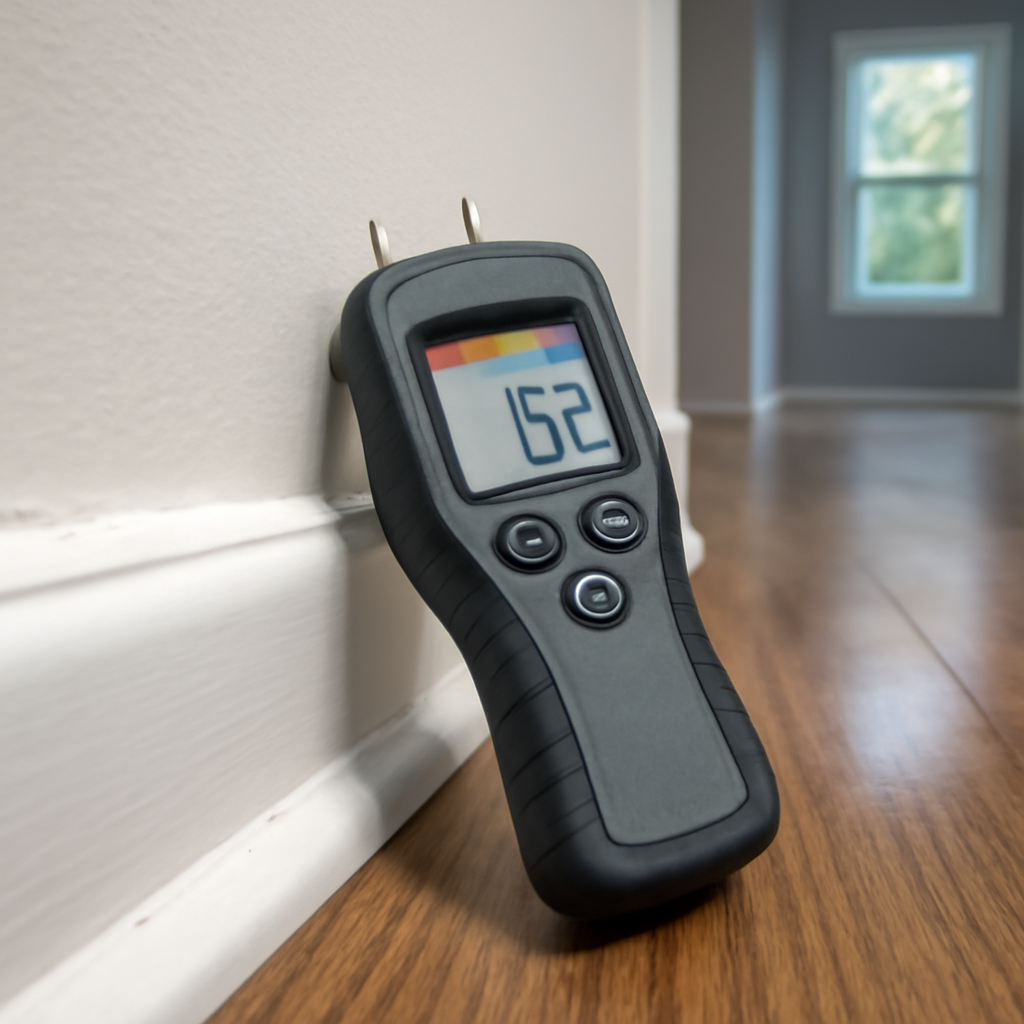
For homeowners and tradespeople who want a simple, affordable way to check whether wood or drywall is wet, a pin-type pocket meter is often the first purchase, and the General Tools MM7 is one of the widely available options in that category. Understanding what the general mm7 moisture meter measures, how pin meters work, and where this kind of tool helps and where it falls short prevents both wasted money and misread results. This guide relies on published specifications and trade-body guidance rather than hands-on testing.
Part of our Moisture Meters & Water Damage Detection guide — start there for the full picture →
What is the General MM7 moisture meter?
The General Tools MM7 is a compact, pin-type moisture meter aimed at homeowners, hobbyists, and tradespeople. It uses two metal pins that press into a material; the meter passes a small current between them and infers moisture content from the electrical resistance. Wetter material conducts more readily, so lower resistance translates to a higher moisture reading.
As a pocket meter, the MM7 is built for quick spot checks rather than precision lab work. It typically reports moisture as a percentage for wood and on a relative scale for other building materials, often with a simple indicator that flags whether a reading is dry, marginal, or wet. The appeal is affordability and ease of use, which makes it a common entry point for anyone wanting to put a number on a damp spot.
How pin-type meters work
Pin meters measure electrical resistance between two probes driven into the surface. Because water conducts electricity far better than dry wood or gypsum, the meter translates the measured resistance into a moisture estimate. The reading reflects conditions along the path between the pins, which means depth is limited to how far the pins penetrate.
This contact method has real strengths. It gives a localized, repeatable reading at a specific point, and because the pins penetrate, it can sense moisture slightly below the surface rather than only at the face. It is also inexpensive and intuitive. The trade-off is that pins leave small holes, which matters on finished surfaces, and readings can be affected by the material itself. To weigh pin against pinless designs, our comparison of pinless versus pin moisture meters lays out the differences.
Who the MM7 is built for
The MM7 targets a clear audience: homeowners, hobbyist woodworkers, and tradespeople who want a dependable, inexpensive way to check moisture without investing in professional-grade equipment. A weekend woodworker can confirm that lumber has dried enough to glue or finish. A homeowner can check firewood, verify that a wall has dried after a leak, or test flooring before installation. A handyman or contractor can spot-check framing and subfloors on the job.
What unites these users is a need for quick, practical answers rather than certified measurements. The MM7 is not aimed at laboratories or commercial grading, where traceable accuracy is required, but at everyday decisions where knowing whether a material is meaningfully wet is enough. Matching the tool to that audience is the key to satisfaction; buyers expecting laboratory precision from a pocket meter will be disappointed, while those wanting reliable screening will find it well suited.
Specifications that define the MM7
While exact figures should be confirmed against current product documentation, the MM7 shares the traits common to its class. It offers a wood moisture range expressed as a percentage and a separate reference scale for non-wood building materials. It runs on a small battery, fits in a pocket, and uses replaceable pins that can be swapped when they wear or bend.
Accuracy in this category is suitable for screening, not for commercial grading. The meter tells you whether a material is meaningfully wetter than it should be, which is what most homeowners need. Reference scales for materials like drywall are relative indicators rather than precise percentages, a point worth remembering when interpreting a reading. The U.S. Department of Energy’s guidance on moisture control frames this kind of measurement as part of finding and fixing moisture sources, which is exactly the MM7’s strength.
What the MM7 is good for
A pocket pin meter like the MM7 fits a long list of practical household and trade tasks. It can check firewood before burning, confirm that lumber is dry enough to work or finish, spot-check a wall after a plumbing scare, and verify that flooring has acclimated before installation. For these jobs, a quick localized reading is all that is required.
Tradespeople use pin meters to confirm subfloor dryness, check framing for elevated moisture, and document that a surface has dried after a leak. The tool is a screening instrument: it flags problems and confirms dryness, guiding the next step. For wall-focused work specifically, our guide to the best moisture meter for walls helps match the tool to the surface.
The limits of a pocket pin meter
The MM7’s affordability comes with constraints. The pins leave small holes, which is a drawback on visible finished surfaces where a pinless meter would be preferable. Readings are localized to the pin contact area, so finding the full extent of a moisture problem requires many readings across a surface. And because the meter senses electrical resistance, conductive contaminants, salts, or metal behind a surface can skew a reading.
Depth is also limited to pin penetration, so moisture deeper in a wall cavity may go undetected. These are not flaws unique to the MM7 but inherent to inexpensive pin meters. Knowing them keeps expectations realistic: the tool screens reliably for surface and near-surface moisture but is not a substitute for a thorough professional moisture investigation. For the larger toolkit that complements a pin meter, the home inspection tools buyer’s guide covers the options.
The MM7 alongside other tools
A pin meter works best as one instrument in a small kit rather than a standalone solution. Paired with a thermal camera, the workflow becomes efficient: the camera scans a wall quickly and flags cool areas that might be wet, and the pin meter then confirms whether those spots actually contain elevated moisture. The camera locates; the meter verifies. Neither alone closes the case, but together they turn guesswork into a finding.
For homeowners, this mirrors how inspectors operate, screening broadly and confirming locally. A pin meter like the MM7 also complements a pinless meter, which scans finished surfaces without marks; the pinless tool surveys an area and the pins confirm a suspect point. Building a modest toolkit around a single inexpensive meter is a sensible progression, and the broader options are laid out in the home inspection tools buyer’s guide. The point is that the MM7 contributes a reliable confirmation reading rather than carrying the entire diagnosis.
Common mistakes when using a pin meter
Even a simple meter can mislead when used carelessly. Taking a single reading and treating it as the whole picture is the most frequent error; moisture problems have boundaries, and only a grid of readings reveals their extent. Pressing the pins against a surface without driving them in for solid contact yields an unreliable resistance reading, as does using corroded or bent pins that no longer make clean contact.
Misreading the scales is another pitfall. The wood-percentage scale and the relative reference scale for other materials are not interchangeable, and comparing a drywall reading against wood values produces nonsense. Conductive salts, metal behind a surface, or surface contaminants can also inflate readings, so an unexpectedly high number deserves a second look rather than immediate alarm. Used with attention to contact, scale, and pattern, the MM7 gives dependable screening results; used carelessly, it can point a homeowner in the wrong direction.
Reading results correctly
Interpreting a moisture reading takes a little context. For wood, percentages are meaningful and can be compared against acceptable ranges for the intended use, such as the equilibrium moisture content for flooring in a given climate. For drywall and masonry, the meter’s reference scale is best used comparatively: take a reading in a known-dry area and compare it to the suspect area, looking for a clear difference rather than an absolute number.
A single high reading is a prompt to investigate, not a final diagnosis. Mapping a surface with multiple readings reveals the boundary of a wet area, which helps locate the source. Trade bodies that train inspectors, including InterNACHI and ASHI, treat moisture meters as screening tools whose readings guide further investigation rather than serving as standalone verdicts.
Pin meters versus pinless meters
The MM7’s pin design is one of two main approaches, and understanding the alternative clarifies when each fits. Pinless meters use a sensor pad pressed flat against a surface and read the material’s dielectric properties to a shallow depth, leaving no holes. They scan an area quickly without marking it, which makes them attractive for finished walls and floors a homeowner does not want to puncture.
Pin meters like the MM7 trade that non-destructiveness for a localized, repeatable point reading and the ability to sense slightly deeper where the pins penetrate. They also tend to cost less. Many professionals carry both, scanning broadly with a pinless meter and then confirming a suspect spot with pins. For a homeowner on a budget who mainly checks wood, firewood, and unfinished materials, the pin approach is practical and economical, while someone scanning visible finished surfaces may prefer pinless. Our comparison of pinless versus pin moisture meters weighs the trade-offs in depth.
Using the MM7 to track down a problem
A single reading rarely tells the whole story; the real value comes from mapping. To find the extent of a damp area, take a baseline reading in a spot known to be dry, then work outward in a grid across the suspect surface, noting where readings climb. The boundary between elevated and normal readings outlines the wet zone and often points back toward the moisture source.
This technique turns a simple meter into a diagnostic aid. A wall that reads high near the floor and dry higher up suggests moisture wicking from below, while a high reading directly under a window points to a flashing or seal failure. The U.S. Department of Energy frames moisture control as finding and fixing sources, and a methodical sweep with a pin meter supports exactly that, helping a homeowner direct repairs rather than guess. The meter confirms when the area has dried after the fix, too.
Caring for and calibrating a pin meter
Pocket pin meters need modest upkeep to stay reliable. The pins are the wear item; they bend, corrode, or dull with use and can be replaced, which restores good electrical contact. Keeping the contacts clean matters because residue can skew a resistance reading. Storing the meter dry and replacing the battery before it weakens prevents erratic results.
Calibration on inexpensive meters is limited compared with laboratory instruments, but many include a built-in check feature or a reference shorting block to confirm the electronics respond correctly. Since the MM7 is a screening tool rather than a certified measuring device, the goal is consistency, knowing the meter reads the same way each time, rather than laboratory-grade absolute accuracy. For homeowners who want to understand verification across instruments, the broader principles carry over to other meters as well.
Is the General MM7 worth it?
For a homeowner or tradesperson who wants an affordable, easy way to check wood and screen building materials for dampness, a pocket pin meter like the MM7 delivers clear value. It puts a number on a problem that the eye and hand can only guess at, and it does so at a low price with a minimal learning curve.
The realistic caveats are the pin holes on finished surfaces, the localized nature of each reading, and the screening-grade accuracy. Buyers who need to scan finished walls without marks, or who require precise measurements, may prefer a pinless or higher-end meter. Matched to its intended tasks, checking lumber, firewood, subfloors, and confirming dryness after a leak, the MM7 is a sensible, budget-friendly tool that earns its place in a homeowner’s kit.
More Questions About the General MM7 Moisture Meter
Can the General MM7 tell if firewood is dry enough to burn?
Yes, a pin meter like the General MM7 can tell whether firewood is dry enough to burn, which generally means a reading below about 20% moisture content. Split a piece and push the pins into the freshly exposed face across the grain, because the outside of a log dries faster than the center. Test several pieces from different parts of the stack. Readings of 25% or higher mean the wood needs more seasoning, since wet firewood burns poorly, smokes heavily and builds creosote in the chimney.
How deep do the MM7 pins read?
A pocket pin meter like the MM7 reads moisture only between and around the pin tips, which is typically a shallow depth equal to how far the pins are pushed in. That makes it accurate for the surface layer but blind to moisture deeper in a thick board or behind a wall finish. To check deeper, take readings at the surface and again in a fresh cut or drilled spot. For wall cavities, a pinless meter or a professional with longer insulated pins can show whether moisture sits deeper.
What MM7 reading on a subfloor suggests a leak?
A wood subfloor reading above roughly 19% to 20% moisture content on a pin meter like the MM7 is a common warning sign of a leak, especially when nearby areas read in the normal 8% to 15% range. Compare suspect spots near toilets, tubs, dishwashers and sinks with dry areas of the same floor. A higher reading that shrinks with distance from a fixture points toward that fixture. Persistently wet subfloor can rot and support mold, so tracking the source with a plumber is the next step.
Does cold weather affect General MM7 readings?
Yes, temperature affects pin meter readings, and a General MM7-style meter used on cold wood typically reads lower than the true moisture content. Resistance-based meters are calibrated around room temperature, so firewood or lumber stored outside in winter can look drier than it is. Bring a sample indoors for a few hours to warm up before testing, or apply the manufacturer’s temperature correction if the manual provides one. Frozen wood can give especially unreliable readings and should not be tested until it thaws.
References
- Moisture Meters and Their Use — International Association of Certified Home Inspectors (InterNACHI)
- A Brief Guide to Mold, Moisture and Your Home — U.S. Environmental Protection Agency
- Home Inspection Standards and Resources — American Society of Home Inspectors (ASHI)
Frequently asked questions
What does the General MM7 moisture meter measure?
It is a pin-type meter that measures electrical resistance between two pins to estimate moisture. It reports wood moisture as a percentage and uses a relative reference scale for other building materials, suitable for screening rather than lab-grade precision.
How does a pin moisture meter work?
Two metal pins press into the material, and the meter passes a small current between them. Because water conducts electricity well, lower resistance means higher moisture. The reading reflects conditions along the path between the pins.
What are the downsides of the MM7?
The pins leave small holes on finished surfaces, readings are localized to the contact point, depth is limited to pin penetration, and salts or metal can skew results. It screens for surface moisture but is not a full moisture investigation.
Is the General MM7 good for checking walls?
It can screen walls, but because the pins leave marks, a pinless meter is often preferable for visible finished surfaces. The MM7 excels at checking wood, firewood, subfloors, and confirming dryness after a leak.
What battery does the General MM7 use?
Pocket pin meters in this class usually run on small button-cell or coin-cell batteries, and the exact type is listed in the MM7 manual and on the battery cover. A weak battery can cause erratic or low readings, so replace it when the display dims or numbers drift.
Can the MM7 measure moisture in plaster or drywall?
A pin meter like the MM7 can give relative readings in drywall or plaster, but its wood scale does not translate directly to moisture content in those materials. Compare suspect spots with known dry areas of the same wall, and treat a clearly higher reading as a reason to investigate further.
Do the MM7 pins leave visible holes?
Yes, the MM7 pins leave two small holes wherever they are pushed in. On firewood, framing and rough lumber the holes do not matter. On finished trim, flooring or furniture, test in an inconspicuous spot or choose a pinless meter that reads without marking the surface.
Moisture meters for home inspection
Pin meters read deep but leave marks; pinless meters scan surfaces non-destructively. Many inspectors carry both.
| Product | Why | Buy |
|---|---|---|
 Klein Tools ET140 Pinless | Non-destructive scanning; affordable. | Amazon — $49.22 |
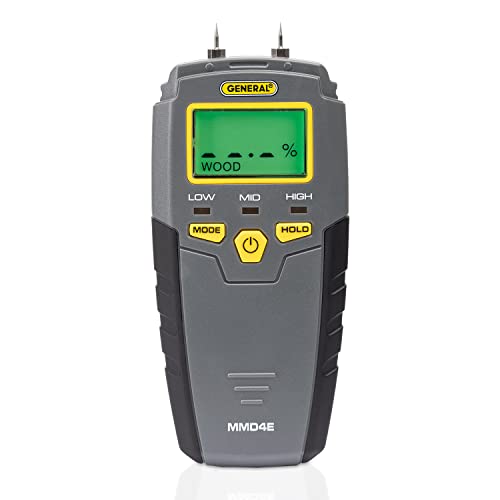 General Tools MMD4E | Best-selling pin meter for drywall/wood. | Amazon — $39.98 |
 Lignomat Mini-Ligno | Trusted by woodworkers; species-calibrated. | Amazon — $83.20 |