FLIR Thermal Camera for Sale: 2026 Buying Channel Guide
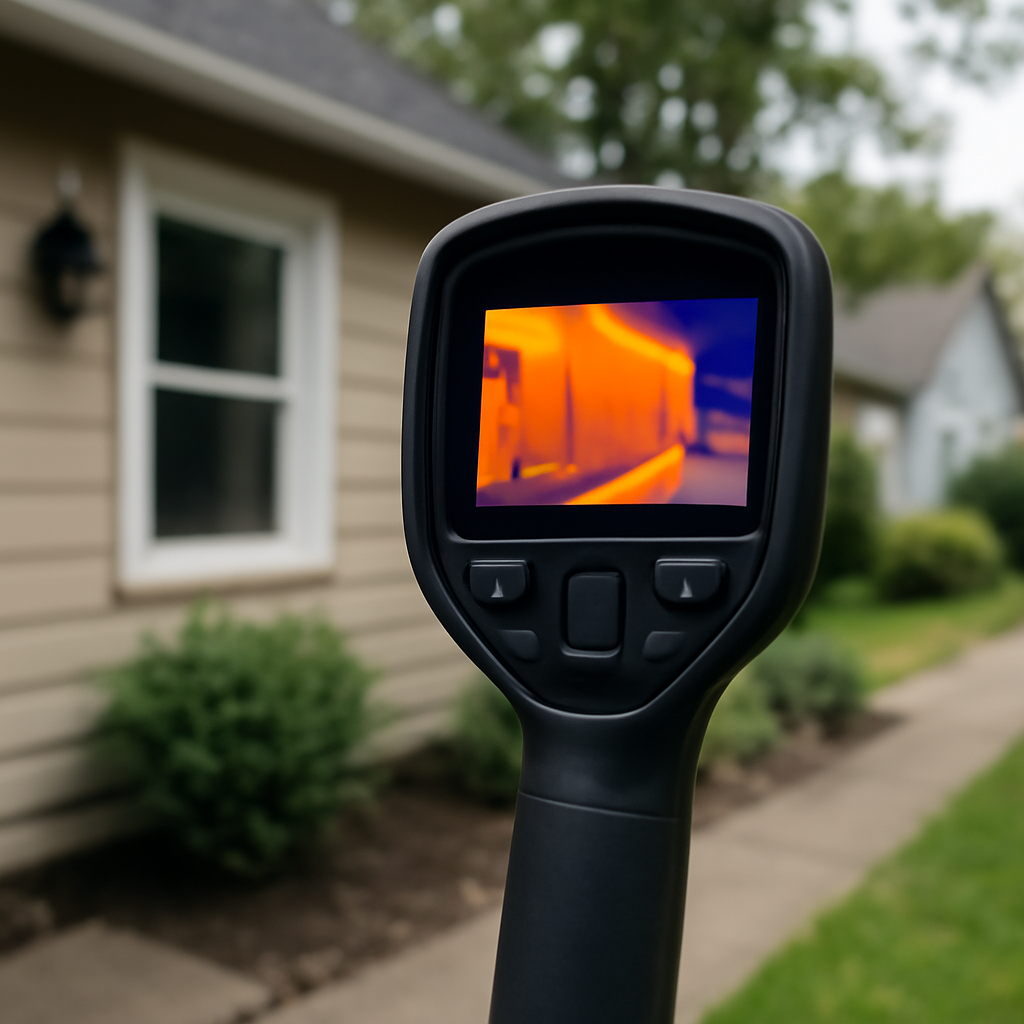
Searching for a FLIR thermal camera for sale opens up a wide pricing spectrum, from sub-$200 smartphone attachments to $7,000 professional handhelds. The right buying channel depends on whether the camera is for occasional homeowner troubleshooting, ongoing inspection work, or commercial energy auditing. New units carry warranty and predictable performance, refurbished stock cuts cost by 20-40 percent, and the used market can yield bargains or expensive lemons. This guide walks through where to shop, how to vet a listing, and which decision framework matches each buyer profile so the eventual purchase does not become a regret six months later.
Part of our Thermal Imaging for Homes guide — start there for the full picture →
Where FLIR Thermal Cameras Are Sold in 2026
FLIR cameras circulate through a small number of legitimate channels. Authorized distributors such as instrumentation retailers, electrical-supply houses, and HVAC tool dealers carry the consumer and prosumer lineup. Large online marketplaces list both authorized and gray-market stock alongside private resellers. Industrial liquidators handle returns, demo units, and lease-return inventory. Each channel implies a different warranty posture, return window, and condition guarantee.
The consumer entry tier, including the FLIR One Gen 3 smartphone attachment, appears on mainstream retail sites at $199-$249. The prosumer pocket category, anchored by the FLIR C5, holds at around $699 through authorized dealers. The handheld professional class, covering Ex, E-series, and T-series cameras, runs $1,500-$7,500 new. Industry coverage from the 2026 home inspection tools buying guide tracks how these tiers shift seasonally.
New Versus Refurbished Versus Used: The Core Decision
The three condition categories trade price against risk. New units arrive sealed, carry the full FLIR warranty, and ship with documented calibration. Refurbished units have been returned, repaired, or recalibrated by FLIR or an authorized service center and typically carry a 90-day to one-year limited warranty. Used units come from private sellers or end-user disposals and carry no warranty, no calibration certificate, and often no documentation of how the camera was treated.
New: The Predictable Choice
Buying new makes sense when the camera will be used in fee-for-service work, when downtime would be expensive, or when the buyer cannot evaluate technical condition. The premium over refurbished is typically $150-$600 depending on tier. A new FLIR E54, for instance, lists around $4,295 against a refurbished version at $3,200-$3,500. The new unit ships with FLIR’s two-year warranty on parts and labor plus a ten-year detector warranty, which alone is worth several hundred dollars in protection. Buyers shopping the broader FLIR price-tier landscape can compare with the FLIR camera prices fluctuation and refurb guide for more pricing context.
Refurbished: The Sweet Spot for Most Buyers
FLIR-refurbished and authorized-refurbished stock undergoes detector recalibration, firmware update, and cosmetic restoration. The unit ships in non-retail packaging but with the same accessory kit. Warranty is typically 90 days to one year. Refurbished pricing trims 20-40 percent off retail. For homeowners running occasional moisture or insulation surveys, refurbished delivers the same imaging performance as new at meaningful savings.
Used: Bargain Hunting With Caveats
Private-party used cameras can be excellent values or expensive mistakes. A working FLIR E5 with documented calibration date might list at $1,400 versus $2,495 new. The risks include impact damage to the detector, drift in temperature accuracy, dead pixels, battery degradation, and lost accessories. Used purchases work best when the seller provides recent inspection imagery, a return option, and proof of the original purchase date.
Authorized Versus Gray Market Sources
Gray-market sellers list FLIR cameras at notable discounts to authorized pricing. The stock is often genuine but imported through unofficial channels, missing the U.S. warranty, and ineligible for FLIR support. A unit priced 15 percent below authorized dealers should trigger questions about origin. For energy-audit work, calibration drift over time is a real concern, so warranty and calibration access matter across multi-year ownership.
Price Ranges by Tier in 2026
The FLIR One Gen 3 smartphone attachment sells new for $199-$249. Authorized refurbished hovers at $149-$179. The FLIR C2 and C3-X pocket cameras, when found refurbished, run $300-$500. The current C5, with WiFi cloud upload, lists at $699 new and $499-$599 refurbished. The Ex series (E4, E6, E8 legacy units) appears used at $900-$2,200 depending on resolution. The current E-series Pro (E54, E76, E86, E96) ranges $4,000-$11,000 new with refurbished discounts of 20-30 percent.
Specialized models for building science, including the optical-gas-imaging GFx series, carry industrial pricing of $20,000 and up and almost never appear on consumer marketplaces. Buyers shopping the consumer pocket and prosumer handheld tier face the most decisions because that price range covers the most overlapping models.
Vetting an Online Listing
Photos should show the actual unit, not a stock image. Watch for the serial number plate (located near the battery compartment), the calibration sticker (if present), and the screen power-on state. A seller unwilling to power the camera on and photograph the result is a red flag. Listings should disclose included accessories, the original purchase date or estimated age, and any cosmetic or functional defects.
Battery condition is often misrepresented. FLIR handhelds use proprietary lithium packs that cost $150-$300 to replace. A camera that holds charge for 90 minutes instead of the rated four hours signals an aging battery. Asking the seller for runtime data, ideally as a screenshot of the battery indicator after an hour of continuous use, separates honest listings from hopeful ones.
Seasonal Pricing Patterns
FLIR pricing follows a seasonal rhythm tied to energy-audit demand. Heating-season inspection workload runs October through March, pushing camera demand up and discounting opportunities down. Mid-spring and late summer typically deliver the deepest discounts, particularly on prior-generation refurbished stock as new models ship. Black Friday and end-of-fiscal-quarter promotions (March 31, June 30, September 30, December 31) at authorized dealers tend to bring genuine 10-15 percent discounts on prosumer tier.
Tax-Deduction Angle for Working Inspectors
Inspectors purchasing a thermal camera for business use can deduct the cost under Section 179 for the tax year of purchase, subject to standard small-business deduction limits. This effectively reduces the after-tax cost by the marginal tax rate, often 22-30 percent. The deduction applies equally to new, refurbished, and used purchases. Documenting business use is the key compliance element; pairing the purchase with a paid inspection invoice generated using the camera helps establish business intent.
Rental as a Buying Alternative
For one-off projects, renting through industrial-instrument rental services costs $150-$450 per day for prosumer handhelds and $300-$700 per day for higher-resolution units. A two-day rental of a $5,000 camera at $400 per day is $800, compared to the depreciation and capital cost of ownership for similar use. The rental option is most attractive for homeowners with a single property to survey or contractors evaluating whether to add thermography to their service line.
Bundled Accessories That Affect Value
Cameras often ship with carrying case, charger, USB cable, and SD card; some include a tripod adapter or telephoto lens. Replacing a lost FLIR-branded case runs $80-$150. A missing telephoto lens on an E-series can mean $1,500 in replacement cost. Listings that itemize included accessories are more trustworthy than those describing the package as “everything included.” When comparing two listings, normalize for accessories before judging price.
Imaging Specifications to Confirm Before Buying
Thermal resolution is the headline specification. The FLIR One Gen 3 has a 80×60 thermal detector, sufficient for spot leak detection. The C5 ships with 160×120 resolution, suitable for moisture and insulation surveys. Professional E-series cameras start at 320×240 (E54) and scale to 640×480 (E96). Each step up in resolution roughly doubles the image data and dramatically improves the ability to resolve small temperature differentials at distance.
Thermal sensitivity, expressed as NETD (noise-equivalent temperature difference), matters as much as resolution. A camera with 50 mK NETD will see subtle moisture or air-leak signatures that a 100 mK unit misses. ASHRAE building diagnostic standards reference thermal imaging as a tool for envelope and HVAC commissioning, and the cameras typically used for that work fall in the 40-50 mK NETD range.
Common Buyer Mistakes
The first mistake is over-buying. A homeowner who needs to check for a single moisture intrusion does not need a $5,000 handheld. A FLIR One smartphone attachment or a rented C5 accomplishes the diagnostic in one afternoon. The second mistake is under-buying for commercial use. A working inspector charging $200 for a thermal scan with a smartphone-tier camera produces images that look amateur and limit the value of the report.
The third mistake is ignoring software. FLIR’s reporting software, FLIR Thermal Studio, transforms raw images into client-ready PDFs with overlay annotation. The free tier handles basic reports; the paid Pro tier ($199 annually) supports batch processing and custom branding. Buyers focused on hardware alone miss that the reporting workflow consumes more time than image capture for working inspectors.
When to Buy and When to Wait
Buy now if the camera will be used within 60 days, if the current generation matches the intended use case, and if seasonal pricing is favorable. Wait if a new model is rumored within the quarter, if the use case is exploratory rather than committed, or if a rental can fill the gap. Watching the FLIR product roadmap and tracking when authorized refurbished inventory rebuilds helps time the purchase.
Warranty Coverage Differences by Channel
New FLIR cameras purchased through authorized dealers carry FLIR’s standard two-year warranty on the camera body and electronics plus a separate ten-year warranty on the microbolometer detector. The detector warranty is unusual in the industry and reflects the relatively high failure cost if the detector drifts. Refurbished cameras typically carry a 90-day to one-year limited warranty depending on the refurbishment program. FLIR-direct refurbished stock retains the full ten-year detector warranty in many cases; check the specific listing for confirmation.
Used purchases from private sellers carry no warranty. Used purchases through dealers may carry a 30-90 day limited warranty as a goodwill gesture but not the manufacturer warranty. Gray-market new cameras typically lack U.S. warranty entirely because the unit was imported through unofficial channels. The warranty differential between channels can represent thousands of dollars in protection over the ownership period.
Geographic Variance in FLIR Pricing
FLIR pricing is generally consistent within U.S. authorized dealer channels because of MAP policies, but regional variance shows up in shipping, sales tax, and used-market liquidity. Coastal markets (California, New York, Massachusetts) have denser used FLIR inventory due to higher concentrations of energy auditors and home inspectors. Inland and rural markets show thinner used inventory but sometimes better buyer-side negotiating leverage as sellers face fewer alternative buyers. Colorado Front Range buyers benefit from a moderate market — Denver metro has enough inspection-industry presence to support a healthy used FLIR market without coastal-level competition.
Tax and Customs for Imported Cameras
Buyers tempted by gray-market imports from European or Asian dealers should factor in U.S. import duty (typically 0-3 percent for electronic instruments), shipping costs ($75-$200 for international), and the warranty exclusion. The total landed cost often erases the apparent discount. State sales tax also applies to internet purchases following the 2018 Wayfair Supreme Court decision, which closed the previous mail-order tax-avoidance pathway. A $4,000 FLIR purchase incurs $200-$350 in sales tax depending on state and jurisdiction.
References
- ENERGY STAR: Seal and Insulate — U.S. Environmental Protection Agency (ENERGY STAR)
- ASHRAE Standards and Guidelines — ASHRAE
- InterNACHI infrared certification overview — InterNACHI
Frequently asked questions
Is a refurbished FLIR thermal camera worth buying?
For most homeowners and working inspectors, yes. FLIR-authorized refurbished units carry a 90-day to one-year warranty, deliver new-equivalent imaging performance, and trim 20-40 percent off retail pricing. Verify the seller is an authorized FLIR refurbisher rather than a third-party repackager.
What is the cheapest legitimate FLIR thermal camera for sale?
The FLIR One Gen 3 smartphone attachment at $199-$249 new is the entry point. Authorized refurbished pricing can drop below $180. Used C2 pocket cameras sometimes appear under $300 but lack warranty and come with battery uncertainty.
How do I check if a used FLIR camera is genuine?
Locate the serial number near the battery compartment and contact FLIR support to verify registration and original sale date. Genuine units have FLIR-branded firmware menus, calibration metadata in image EXIF data, and proprietary battery shapes. Counterfeits typically have generic menu fonts and lower-resolution sensors than advertised.
Thermal imaging cameras
Infrared cameras reveal hidden moisture, missing insulation, and air leaks. Phone-attachment models are the budget entry point; standalone units have higher resolution.
| Product | Why | Buy |
|---|---|---|
 FLIR ONE Pro (phone) FLIR ONE Pro (phone) | Plugs into iPhone/Android; inspector favorite. | Amazon — $349.00 |
 Topdon TC001 Topdon TC001 | High-res phone module at a low price. | Amazon — $199.99 |
 FLIR C5 Compact FLIR C5 Compact | Standalone pocket camera with Wi-Fi. | Amazon — $611.50 |