Drip Irrigation: Water-Wise Watering Near Foundations
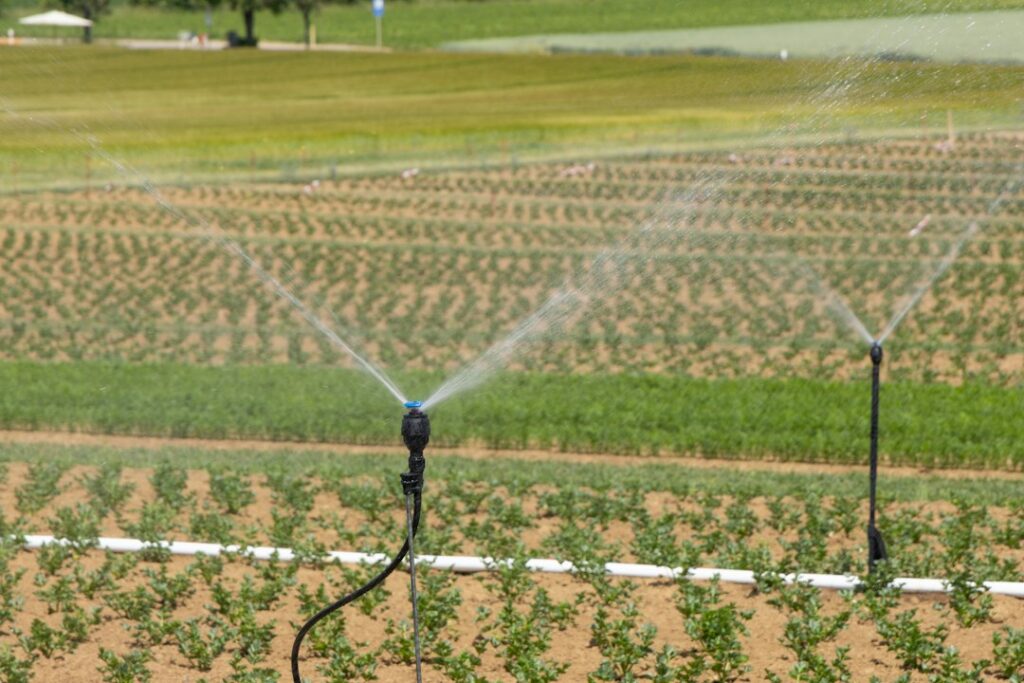
Spray sprinklers are designed for lawns. Shrub beds, perennial borders, vegetable gardens and trees planted near the house are a different story, and that is where drip irrigation earns its keep. Instead of throwing water through the air, drip lines and emitters deliver small, steady amounts of water directly to the soil at each plant’s roots. Less water lands on siding, windows, sidewalks and the foundation, and less is lost to wind and evaporation. Along Colorado’s Front Range, where summer watering restrictions are common, expansive clay soils are widespread and water bills climb quickly in July, drip is often the most sensible way to water the beds that wrap around a house. This guide explains how drip systems are put together, why pressure regulators and filters matter, how to keep water away from foundations, where backflow protection fits in, how to winterize, and what costs look like.
Part of our Plumbing & Water guide — start there for the full picture →
What Drip Irrigation Is and How It Works
Drip irrigation is a form of microirrigation: a low-pressure, low-flow way of watering that applies water slowly and close to the plant. The U.S. Environmental Protection Agency’s WaterSense program describes microirrigation as delivering water directly to the root zone, slowly and over a longer period, which helps prevent runoff and reduce evaporation. WaterSense states that microirrigation systems use 20 to 50 percent less water than conventional sprinkler systems.
A typical residential drip zone includes a handful of parts working together:
- Zone valve. An electric valve, often in the same valve box as the lawn zones, turns the drip zone on and off from the controller.
- Filter. A screen or disc filter catches sand, scale and debris that would clog tiny emitter openings.
- Pressure regulator. Reduces household or irrigation main pressure to the lower pressure drip components are designed for.
- Mainline tubing. Usually half-inch polyethylene tubing that carries water through the beds.
- Emitters or emitter tubing. Individual emitters punched into the mainline or connected by quarter-inch tubing, or inline emitter tubing with emitters built in at regular spacing.
- End caps and flush valves. Close the ends of each line and allow periodic flushing.
Many lawn systems are converted rather than built new. A conversion kit can replace a spray head in a shrub bed with a fitting that feeds drip tubing, often with a built-in filter and regulator. That works, but it puts drip on the same zone as remaining spray heads only if the whole zone is converted. Mixing spray and drip on one valve generally leads to one or the other being watered poorly, because they need very different run times.
Emitters, Tubing and Layout
Emitters are rated by flow, commonly in gallons per hour. Pressure-compensating emitters deliver a fairly steady flow across a range of pressures, which helps on long runs or sloped lots. Non-compensating emitters are simpler and cheaper but can deliver uneven amounts along a line.
Point-Source Emitters
Point-source emitters are placed at individual plants: one or more at each shrub, several around a young tree. They work well for widely spaced plantings and make it easy to give larger plants more water by adding emitters. As plants grow, emitters need to move outward toward the drip line of the canopy, where feeder roots spread.
Inline Emitter Tubing
Inline tubing has emitters built in at fixed spacing, such as every 12 or 18 inches. It is laid in rows or loops across densely planted beds, vegetable gardens and ground covers. It wets a more continuous band of soil and is less likely to be knocked loose than individual emitters.
Micro-Sprays and Bubblers
Some drip zones include micro-sprays or bubblers for annual beds or tree wells. They put out more water than emitters and can spray onto walls if placed carelessly, so they need the same attention to direction as regular sprinkler heads.
Grouping Plants by Water Need
EPA’s WaterSense watering tips recommend playing “zone defense”: grouping similar plants in the same irrigation zone and accounting for the type of sprinkler, sun or shade exposure and plant types in each hydrozone. In practice, that means not putting thirsty annuals on the same drip zone as established xeric shrubs, and keeping trees on separate circuits or with enough emitters to support deep watering.
Pressure Regulators and Filters
Drip components are designed for low pressure. Household and irrigation supply pressure is often far higher than drip tubing, fittings and emitters are meant to handle. Without a regulator, emitters can blow off, fittings can separate and tubing can split, often in the middle of a bed where the leak goes unnoticed until plants die or the ground stays soggy.
A pressure regulator for the drip zone is typically installed right after the zone valve and filter. Regulators are made in different outlet pressures to match different emitters, so follow the emitter manufacturer’s recommendations. If the whole house has high pressure, a whole-house regulator may also be worth investigating; our guide to the pressure-reducing valve explains how those work and how they fail.
Filters are equally important. Even treated municipal water carries fine particles, and older pipes shed scale. Emitter openings are small, and a clogged emitter is the most common drip failure. WaterSense’s watering tips include cleaning microirrigation filters as needed and inspecting the irrigation system monthly for leaks, broken or clogged heads and other problems. A screen that is clogged also reduces flow to the whole zone, which can look like a regulator or valve problem.
Keeping Water Away from Foundations on Colorado Clay
Much of the Front Range is built on soils with significant clay content, and some of those soils swell when wet and shrink when dry. Repeated wetting and drying near a foundation can contribute to movement, cracking and water entering basements and crawl spaces. Landscape watering is one of the few sources of that moisture homeowners can control directly.
The U.S. Environmental Protection Agency’s brief guide to mold and moisture advises making sure the ground slopes away from the building foundation so that water does not enter or collect around the foundation. Irrigation that soaks the soil right against the wall works against that goal, even when grading is correct. Drip helps because it puts water where it is needed instead of spraying a wide arc that includes the foundation, siding and window wells.
Practical layout guidelines for beds against a house:
- Keep emitters away from the foundation. Place emitters on the outer side of plants, away from the wall, and avoid running drip lines directly along the base of the foundation.
- Choose plants that tolerate drier soil near the house. Many Front Range homeowners keep a strip of rock or mulch with minimal watering right next to the foundation and put thirstier plants farther out.
- Avoid overwatering. Long run times on clay soils can saturate a bed and send water toward the house below grade. Shorter cycles with breaks between them, which WaterSense calls cycle-and-soak, allow water to soak in rather than run off on clay-rich soils and slopes.
- Watch window wells and downspouts. Drip lines should not be draining into window wells, and beds should not block downspout extensions.
- Fix grading first. If the soil near the house slopes toward it, adjusting irrigation alone will not solve the problem.
Our guides to yard drainage and drainage swales explain how to read and correct grading around a house. If there are signs of moisture-related movement, such as new cracks in basement walls or sticking doors, the guide to foundation cracks outlines what to watch for and when to get a structural evaluation.
Backflow Protection for Drip Zones
Any irrigation system connected to drinking water needs protection against backflow, where water from the irrigation side is pulled back into household plumbing. Drip zones raise a specific concern because emitters sit on or under mulch and soil, and some homeowners add fertilizer injectors to drip lines. If pressure in the supply drops, contaminated water could be drawn back toward the potable supply without proper protection.
Most in-ground systems along the Front Range have a single backflow preventer serving the whole irrigation system, often a pressure vacuum breaker mounted above ground near the house. Drip zones fed from that system are protected by that device. A standalone drip system connected directly to an outdoor faucet, by contrast, typically needs its own backflow device at the hose bib, such as a hose-bib vacuum breaker or an anti-siphon device built into the drip kit. Our guide to the irrigation backflow preventer explains the main device types and testing requirements.
Scheduling and Maintaining a Drip System
Drip run times are longer than spray zone run times, because emitters apply water slowly. A shrub zone that runs for 30 to 60 minutes is not unusual, but the right number depends on emitter flow, the number of emitters per plant, soil type and weather. WaterSense recommends contacting the local water utility to find out how much and when to water, avoiding midday watering when the sun evaporates much of the water, and adjusting schedules with the seasons.
Routine maintenance is simple but easy to forget:
- Walk the zone while it runs. Look for geysers from blown fittings, dry plants and persistently soggy areas.
- Check emitters. Clogged or missing emitters leave dry spots. Replace them rather than poking them open with a pin, which can change flow.
- Flush lines. Open end caps or flush valves periodically, especially in spring, to clear sediment.
- Clean filters. Pull and rinse the filter screen at least at startup and more often if the water carries sediment.
- Repair critter damage. Rodents and rabbits chew tubing, particularly in dry weather.
- Move emitters as plants grow. A tree that was planted with two emitters at the trunk will need emitters spread out toward its canopy edge years later.
A smart controller can help keep drip schedules matched to weather. Our guide to the sprinkler timer covers controller options, including WaterSense labeled models.
Troubleshooting Common Drip Problems
Drip failures are quieter than sprinkler failures. There is no broken head shooting water into the street, so problems tend to show up as stressed plants or a patch of ground that never dries. A short troubleshooting guide helps narrow down the cause.
| Symptom | Likely causes | First checks |
|---|---|---|
| Whole zone weak or dry | Clogged filter, failed regulator, valve not opening, kinked mainline | Clean filter screen; confirm valve opens from controller; walk the mainline |
| Single plants dying | Clogged, missing or misplaced emitter | Watch emitter while zone runs; replace or add emitters |
| Constantly soggy spot | Blown fitting, split tubing, emitter popped off, valve weeping | Pull back mulch along the line; check valve for seepage after cycle ends |
| Water pooling or running off | Run time too long for clay soil, too many emitters, slope | Shorten cycles and add soak breaks; reduce emitters |
| Fittings separating repeatedly | Pressure too high, regulator missing or failed | Confirm regulator is installed and rated correctly |
A soggy spot near the house deserves quick attention. Before assuming it is irrigation, rule out a leaking hose bib, a downspout discharging too close, or a plumbing leak. Shutting off the irrigation supply for a few days and watching whether the area dries out is a simple way to separate irrigation leaks from other sources. If the wet area persists with irrigation off, the cause is somewhere else and may warrant a plumber’s attention.
It also helps to keep a simple map of each drip zone, showing where the mainline runs and where end caps sit. Tubing buried under mulch and soil is easy to lose track of, and a map saves digging when a leak needs to be found or a bed is replanted.
Winterizing Drip Irrigation in Colorado
Drip tubing is somewhat more tolerant of freezing than rigid PVC pipe, but the valves, filters, regulators and backflow device are not. Water trapped in a filter housing or regulator can crack it, and a cracked backflow preventer is one of the more common spring surprises for Front Range homeowners.
On systems that are blown out with compressed air each fall, drip zones are usually included, though the air pressure used on drip zones should be kept low enough not to damage fittings and emitters. Many installers also open end caps and remove filter screens. Standalone drip systems attached to a hose bib can be disconnected, drained and stored, and the faucet protected for winter. Our guide to sprinkler winterization covers the blowout process, timing and what can go wrong.
Drip Irrigation Costs
Costs vary with the size of the beds, the number of zones, whether an existing sprinkler zone is being converted, the quality of components, and local labor rates. The ranges below are broad and hedged, intended for rough planning.
| Item | Rough range | Notes |
|---|---|---|
| DIY drip kit for a bed or garden | Often under $100 | Hose-bib kits; add a backflow device if not included |
| Converting a spray zone to drip (professional) | Often a few hundred dollars and up | Depends on zone size and access |
| New drip zone with valve (professional) | Often several hundred to over $1,000 | Includes valve, filter, regulator, tubing |
| Emitter and tubing repairs | Generally low for parts | Labor is the main cost if hired out |
| Fall blowout including drip zones | Often under $150 for a typical home | Varies by provider and system size |
Many Front Range water utilities have offered rebates or incentives for converting spray zones to drip or for water-efficient equipment, though programs come and go. Check with the local water provider before buying parts. WaterSense also notes that installing a microirrigation system instead of a traditional system can save a typical home more than 25,000 gallons of water per year, though actual savings depend heavily on what the system replaces and how it is scheduled.
For buyers, most home inspections do not include a detailed evaluation of irrigation, but an inspector may note overwatering near the foundation, poor grading or a damaged backflow device. For more on what a general inspection covers and how to choose an inspector, see our guide to hiring a home inspector and the plumbing and water inspection hub.
References
- Microirrigation — U.S. Environmental Protection Agency, WaterSense
- Watering Tips — U.S. Environmental Protection Agency, WaterSense
- Sprinkler Spruce-Up — U.S. Environmental Protection Agency, WaterSense
- A Brief Guide to Mold, Moisture and Your Home — U.S. Environmental Protection Agency
Frequently asked questions
Is drip irrigation better than sprinklers?
For shrubs, trees, gardens and beds, drip usually waters more efficiently because it delivers water slowly at the roots. WaterSense states microirrigation uses 20 to 50 percent less water than conventional sprinklers. Lawns are still typically watered with spray or rotor heads.
Does a drip system need a pressure regulator?
Almost always. Household and irrigation pressure is usually higher than drip tubing and emitters are designed for. Without a regulator, emitters can pop off and fittings can separate, causing hidden leaks in beds.
Can drip irrigation damage my foundation?
Drip is usually gentler than spray because it targets plants, but emitters placed against the foundation or long run times on clay soil can still saturate the ground near the house. Keep emitters on the outer side of plants and keep grading sloped away.
Do I need to winterize drip irrigation in Colorado?
Yes. Tubing tolerates freezing better than rigid pipe, but filters, regulators, valves and backflow devices can crack. Drip zones are usually included in a fall blowout at low pressure, and hose-bib systems are typically disconnected and drained.
How long should drip irrigation run?
It depends on emitter flow, the number of emitters per plant, soil and weather. Drip zones often run much longer than spray zones. Local water utilities can provide watering guidance, and WaterSense recommends adjusting schedules seasonally.
Planning landscape changes around a home you just bought, or worried that irrigation is soaking the foundation? Get in touch through our contact page and we can help you find an inspector who checks grading, overspray and backflow before small issues turn into basement water.