Does Black Mold Wipe Off? Surface vs. Rooted Growth
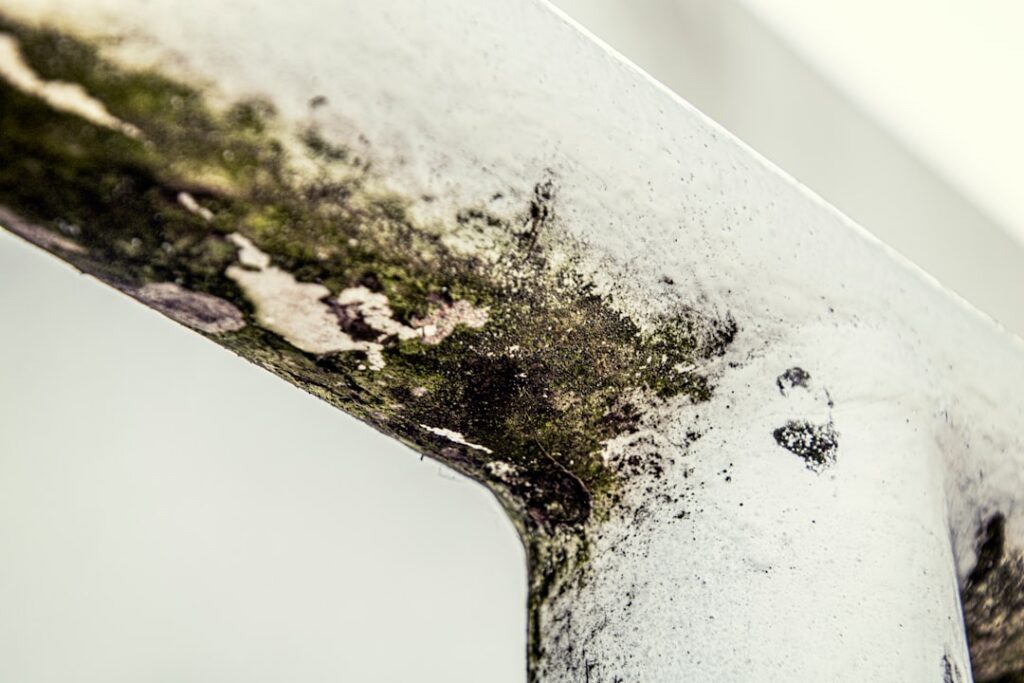
You spot a dark patch on the wall, hit it with a rag and spray, and it disappears. Whether that counts as cleanup or just a delay comes down to one thing: what the mold is growing on. On some surfaces the colony sits entirely on top and wipes away for good. On others, the part you can see is a fraction of what is actually there, and it grows back on schedule.
Part of our Black Mold & Your Health guide — start there for the full picture →
Is this mold, asbestos, or water damage? Get a free instant screen
Upload a clear photo of the suspect area. You'll get an instant AI screening opinion and what to do next. This is screening guidance, not a professional determination.
Screening guidance only. AI can be wrong. Confirm asbestos, mold type, or lead with lab testing or a licensed professional before acting.
The one question that decides it: porous or not?
Mold behaves completely differently depending on the material underneath it.
Non-porous surfaces — ceramic tile, glass shower doors, sealed metal, vinyl flooring, fiberglass tub surrounds, and intact sealed paint — do not absorb water or biological material. The colony has nothing to grow into, so it stays at the surface. Wiping with a detergent solution physically removes the whole thing. Once the surface dries and the moisture source is fixed, there is nothing left to regrow.
Porous surfaces — drywall paper, ceiling tile, paper-faced insulation, bare wood, particleboard, carpet pad, and wallpaper — absorb moisture, and mold grows into them. The threadlike hyphae penetrate the material, sometimes several millimeters deep. Wiping takes off the visible fuzz on top but leaves the embedded network intact. When moisture returns, the colony regrows from below and the patch reappears within weeks. This is exactly why scrubbing moldy drywall never sticks.
Why the patch is smaller than the problem
Think of mold on a porous surface like a weed: the visible patch is the leaf, and the hyphae reaching into the material are the roots. Wiping cuts the leaf and leaves the roots. On Stachybotrys (the greenish-black mold people mean by “black mold”) growing on drywall paper, the slimy visible layer is the actively spore-producing part, while hyphae have already grown into the cellulose fibers of the paper itself. Remove the slime completely and viable growth still sits in the paper, waiting for the next humid stretch or leak to reactivate.
That is also why a room-side patch usually understates the damage. The same sheet of drywall often has heavier growth on the cavity side, feeding off the same moisture, that you cannot see at all without opening the wall or scoping it. Detecting mold inside walls before you decide how much to remove prevents the classic mistake of cutting out too little.
When wiping actually finishes the job
Wiping is legitimate, durable cleanup when all of these are true:
- The surface is genuinely non-porous — it beads water rather than soaking it in.
- The affected area is under about 10 square feet. The EPA treats roughly 10 sq ft as the ceiling for routine homeowner cleanup; beyond that, get a professional.
- The moisture source is identified and corrected — a running shower with poor ventilation, a fixed leak, condensation you have since controlled.
- The growth is not buried in grout lines or caulk seams, which act porous.
Do it with an N95 respirator, nitrile gloves, and a detergent-and-water solution — no fancy chemistry needed on a non-porous surface. Bag your waste, dry the area fully, then keep indoor humidity in the 30–50% range the EPA recommends so it does not come back. If the spot stays clean through a full humid season, the cleanup held.
When wiping is cosmetic only
Treat the surface as porous — meaning wiping will not fix it — if any of these apply:
- The material is drywall, ceiling tile, bare wood, insulation, carpet pad, or wallpaper.
- The patch is over 10 square feet.
- There is a chronic or repeated moisture history, which means a mature colony with deep penetration.
- The material feels soft, stained, or crumbles — the substrate itself is compromised.
- You have wiped this exact spot before and it came back.
In these cases the surface may look clean for days or weeks, then the patch returns from the embedded hyphae. Homeowners often cycle through three or four rounds of wiping over several months before accepting that the material has to come out, not just get cleaned. Recognizing the pattern on the first recurrence saves the rest.
Why bleach is not the shortcut it seems
Bleach earns its reputation by removing color, not colonies. It reacts with surface biomass and lightens the dark stain, so the mold “disappears” visually — but on porous material the chlorine is largely surface-active and does not reliably reach hyphae in the substrate. Water in the solution dilutes it, and it burns off reacting with organic residue on top before it penetrates. That is why the EPA states outright that using a biocide such as chlorine bleach is not recommended as a routine practice in home mold cleanup.
The result is decolorized growth that still carries viable and allergenic material — the stain is gone but the colony below is not. Hydrogen peroxide cleaners, quaternary ammonium products, and concentrated detergents share the same limit: fine on non-porous surfaces, unreliable at reaching hyphae in cellulose.
What to do when wiping won’t cut it
For porous material, physical removal is the standard fix. Cut back to clean, dry, intact material rather than trying to clean in place:
- Drywall: cut along the studs at least 12 inches past the visible edge in every direction to capture hyphae that spread into seemingly clean areas.
- Ceiling tile and insulation: remove the affected pieces plus any neighbors showing water staining.
- Framing you keep: confirm the wood reads under about 20% moisture content, HEPA-vacuum and damp-wipe it, and let the cavity dry completely before closing it up.
Bag debris on the spot and dispose of it per local rules. Small drywall cutouts of a few square feet are within reach for most homeowners; multiple wall sections, ceiling involvement, structural framing, or HVAC penetration call for professional remediation under containment and negative-pressure HEPA filtration. The mold inspection and testing process is what sizes that scope honestly, and cleaning mold on porous surfaces covers the removal sequence in detail. Above all, do not install new material until the leak or humidity problem is genuinely fixed — new drywall over an uncorrected source grows a fresh colony within months.
The in-between surfaces: caulk, grout, and old paint
A few materials sit between porous and non-porous:
- Caulk: aged silicone or acrylic that has lost its mold-resistant additive can host growth inside the bead. Wiping buys weeks. The real fix is cutting it out, cleaning and drying the joint, and applying fresh mold-resistant caulk.
- Grout: old grout absorbs water and biological residue and grows mold in the matrix. Persistent recurrence in grout lines usually means regrouting or sealing, not more scrubbing.
- Painted walls: intact mold-resistant paint wipes like a non-porous surface. But chalking, peeling, or paint that lifts off with your rag means the drywall paper underneath is exposed — treat it as porous and plan to cut it out.
Document even the easy cleanups
Take dated before-and-after photos of any mold you clean, even a simple tile wipe-down, and note the method, the moisture source, and conditions at the time. If it recurs, the record confirms the pattern and location for a contractor or an insurance claim. For Colorado Front Range homeowners who may sell within a few years, a clear paper trail — what was found, how it was cleaned, how the moisture was corrected — reads as responsible ownership during inspection negotiations, while a vaguely remembered history reads as a red flag.
Frequently asked questions
Frequently asked questions
Can I just wipe black mold off the wall?
Only if the wall is non-porous. Tile, sealed paint, vinyl, and metal wipe clean with detergent solution. Drywall, ceiling tile, and paper-faced insulation are porous — the embedded hyphae survive wiping and the patch returns within weeks, so the material has to be removed instead.
Why does my mold keep coming back after I clean it?
Either the moisture source is still active, or the surface is porous and the hyphae inside it survived surface cleaning, or both. Wiping porous material is cosmetic; durable removal takes cutting out the material plus fixing the water problem.
Does bleach kill mold or just make it disappear?
On a porous surface, bleach mostly removes the dark color while leaving viable growth in the material below — the stain vanishes but the colony does not. The EPA does not recommend bleach or other biocides as the routine cleanup method for home mold.
How can I tell if my surface is porous?
Touch and water tell you fast. Non-porous materials (tile, glass, sealed paint, vinyl, sealed metal, fiberglass) bead water and repel it. Porous materials (drywall paper, ceiling tile, insulation, bare wood, particleboard, carpet pad, wallpaper) soak it up. If water absorbs, wiping is not enough.
If you have wiped the same spot more than once and it keeps returning, that is your signal the growth is rooted in the material. Front Range homeowners can reach a vetted local inspector through our contact page to size the actual scope. This page reflects current EPA and CDC guidance; consult a certified mold professional for testing decisions and your physician for any health concerns.
Sources: EPA — Mold Cleanup in Your Home; EPA — A Brief Guide to Mold, Moisture and Your Home; CDC — About Mold; American Lung Association — Mold and Dampness.