Dead Black Mold: Still Allergenic, Still Needs Removal
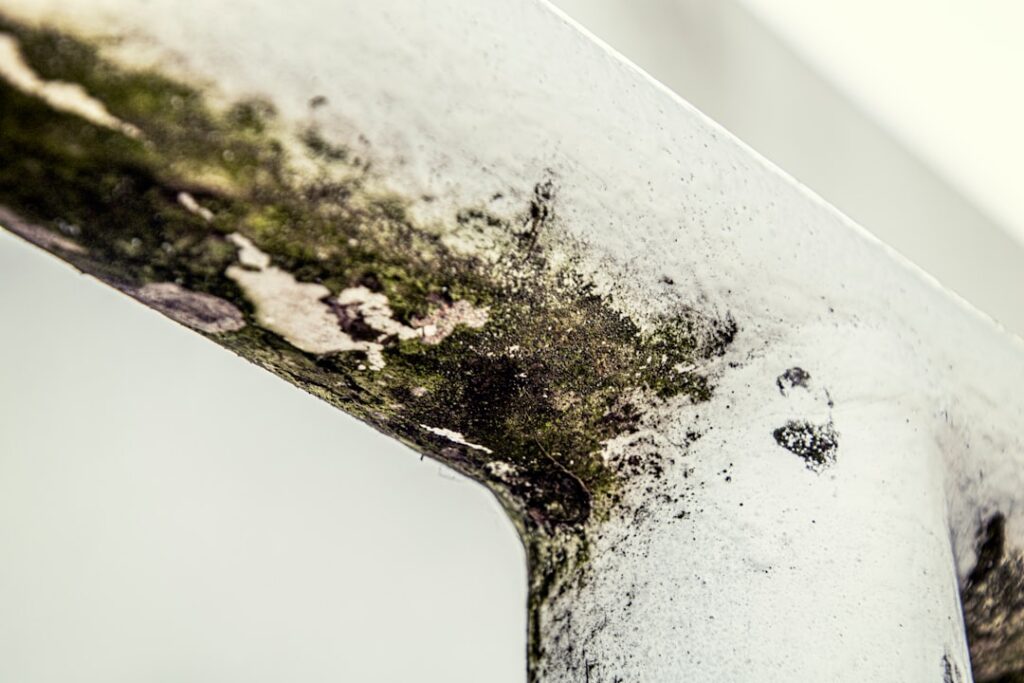
You found a black patch that has gone dry, brittle, and slightly powdery. The moisture that fed it seems to be gone, so the natural conclusion is that the colony is finished and can be left alone or painted over. That conclusion is wrong on the part that matters to your health: a dead or dormant mold colony is still allergenic, and the cleanup it needs is the same as for a colony that is actively growing.
Here is why, and exactly what to do about a dried-out black patch.
Is this mold, asbestos, or water damage? Get a free instant screen
Upload a clear photo of the suspect area. You'll get an instant AI screening opinion and what to do next. This is screening guidance, not a professional determination.
Screening guidance only. AI can be wrong. Confirm asbestos, mold type, or lead with lab testing or a licensed professional before acting.
Does drying out make the mold safe?
No. Health agencies are explicit that killing mold does not remove the exposure. The EPA’s Brief Guide to Mold, Moisture and Your Home states plainly that “dead mold may still cause allergic reactions in some people, so it is not enough to simply kill the mold, it must also be removed.” The allergenic material is the spore and the hyphae fragment, not the metabolism. Those fragments carry the same proteins your immune system reacts to whether the organism is alive or dead.
The CDC frames indoor mold the same way: the goal is to remove it and fix the moisture, not to disinfect a surface and leave the residue in place. And a dried colony is often more of an airborne problem during cleanup, because dried biomass is friable and crumbles into fine dust when disturbed.
“Dead” and “dormant” are not the same thing
Worth being precise here, because it changes how carefully you have to work. When moisture drops below what a mold needs, the colony stops making new spores and can look completely dried out while the mycelium and existing spores stay viable. Add water and it grows again. That is dormancy, not death. True death requires sustained conditions well outside the survival range for a long stretch, and even then ungerminated spores persist in the substrate.
From your standpoint the distinction is academic: dormant and dead colonies get the same treatment, so there is no reason to test which one you have. What you do need to confirm is whether the water is really gone, because a “dormant” patch on the surface can be an actively wet colony behind the drywall paper.
First, prove the moisture source is actually fixed
A colony only goes quiet because its water dried up: a repaired plumbing leak, a patched roof, a basement that dried after regrading. If the source is seasonal or still leaking, the colony revives after you clean it, and you repeat the whole job.
Confirm dryness with a moisture meter rather than by eye. A pinless meter scans walls and floors without puncturing them; consistent readings in the dry range across the affected area and the material around it suggest the pathway is resolved. Our home inspection tools guide covers meter types for homeowners. Along the Front Range the usual culprits are spring snowmelt against foundations, swamp-cooler condensation, and winter window condensation in tight newer builds — all of which come back on a schedule, so verify across several dry days, not one reading.
How to clean a dried black patch
The method follows the EPA residential guidance, with the size rule as your first decision point: the EPA guide says a homeowner can generally handle mold covering less than about 10 square feet. Beyond that, or with HVAC involvement, bring in a professional.
Wear the PPE anyway
Dried mold is dustier than wet mold, so PPE matters more, not less. The EPA recommends at minimum an N95 respirator, gloves, and eye protection (goggles without ventilation holes) for any mold cleanup. For a larger or crumbly colony, an N100 or P100 half-mask respirator costs little more and seals better. Add a long-sleeve layer you can wash or discard.
Remove porous materials — do not clean them
Drywall, ceiling tile, carpet, carpet padding, and wet fibrous insulation that hosted the colony cannot be reliably cleaned and get cut out and replaced, standard practice is cutting back roughly a foot past visible growth. Only hard, non-porous surfaces — glass, metal, glazed tile, sealed concrete — can be scrubbed with detergent and water and dried. This is the single point most “just spray it” advice gets wrong; the mechanics are covered in our guide to cleaning mold on porous surfaces.
Contain, HEPA-vacuum, and wipe
For anything beyond a small patch, hang plastic sheeting and run a HEPA air scrubber to keep dislodged spores from riding through the house. After removal, HEPA-vacuum horizontal surfaces in the room. A standard vacuum without true HEPA filtration blows fine spores back into the air. Finish with a damp detergent wipe of sills, trim tops, and baseboards, repeated over a couple of days to catch material that resettles.
Bag the debris sealed
Wrap removed drywall and insulation in heavy plastic and seal the bags before carrying them out, so they do not shed through the hallway. Ordinary mold-contaminated construction debris is accepted as regular residential waste by most Colorado municipalities; the special hazardous-waste stream is for asbestos and lead, not mold. Confirm local rules before you start.
What bleach and paint actually do
Two shortcuts keep failing people. The EPA does not recommend routine use of bleach to clean up mold, and bleach is mostly water — on a porous surface it can re-wet the substrate while leaving the allergenic residue behind. Painting or spraying an encapsulant over a patch hides it but leaves the biomass and spores under the film; if that film is ever nicked, the material is exposed again. Encapsulating coatings have a legitimate role only after the colonized material is physically removed and the substrate is verified dry.
Why old patches can be worse, not safer
The intuition that an old dried colony is “past its prime” runs backwards. Older colonies are drier and more friable, so they release fragments more easily when bumped during normal living. Some species — Stachybotrys and Chaetomium in particular, the ones common on paper-faced drywall — also produce mycotoxins that stay bound to the dead biomass long after growth stops. That persistence is a core reason agencies favor physically removing porous material over sealing it: remove the biomass and you remove the toxin source. For how repeated low-level exposure is thought to affect sensitized people, see our overview of black mold exposure. General health information comes from the NIEHS mold page; it is not medical advice, so see a physician about symptoms.
When to bring in an inspector
Call a credentialed inspector or IICRC-certified remediator when the patch exceeds about 10 square feet, when you cannot pin down where the water came from, when spores may have traveled into ductwork or the air handler, or when anyone in the home is immunocompromised or has significant respiratory disease. Get documentation-grade inspection first if the finding will feed a real-estate transaction, insurance claim, or landlord dispute. Our mold inspection page explains what that visit covers along the Front Range.
Frequently asked questions
This page summarizes EPA, CDC, and NIEHS residential-mold guidance and is not medical advice. Front Range homeowners who want an inspector to scope the moisture history behind a dormant patch before remediation can get in touch here.