D Lead Paint Test Kit: How DIY Swabs Work
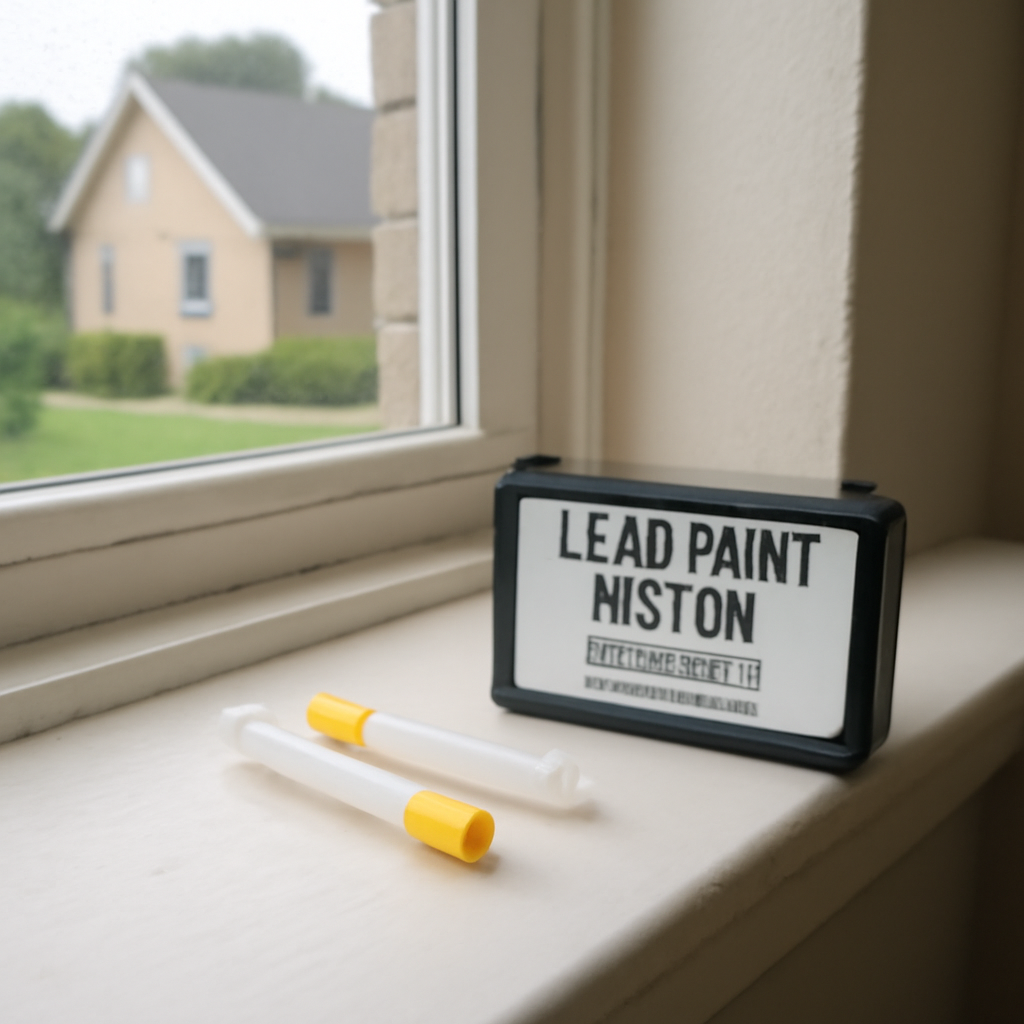
Homeowners researching a d lead paint test kit are usually trying to answer a fast, practical question: does the paint in this old room contain lead? Do-it-yourself swab kits exist for exactly that purpose, and understanding how their chemistry works helps set realistic expectations about what they can and cannot tell you. This guide explains the swab category as a whole, focusing on the science rather than any single product. It summarizes EPA and CDC guidance current as of 2026 and is informational, not medical advice. For health concerns, consult your physician; for decisions that drive action, use a certified professional.
Part of our Lead Paint & Lead Testing guide — start there for the full picture →
Is this mold, asbestos, or water damage? Get a free instant screen
Upload a clear photo of the suspect area. You'll get an instant AI screening opinion and what to do next. This is screening guidance, not a professional determination.
Screening guidance only. AI can be wrong. Confirm asbestos, mold type, or lead with lab testing or a licensed professional before acting.
What a DIY Lead Paint Test Kit Is
A DIY lead paint test kit is a consumer-grade swab that changes color in the presence of lead. The homeowner prepares a small spot on a painted surface, rubs the swab across it, and reads the result by color. A reaction indicates lead may be present; no reaction suggests lead was not detected at the surface tested. The appeal is obvious: results in seconds, no lab, no appointment, low cost.
These kits occupy a specific niche. They are screening tools for a quick first look, not definitive instruments. Knowing that distinction is the key to using them sensibly, because their chemistry has real limits that affect how much weight a result deserves.
The Two Common Chemistries
Most consumer swab kits rely on one of two color-changing reactions. Understanding both clarifies why kits behave the way they do.
Rhodizonate-Based Swabs
One common chemistry uses sodium rhodizonate, which reacts with lead to produce a pink-to-red color change. Rhodizonate-based swabs are widely used and generally produce a quick visual signal. Because the reaction can also respond to certain other metals under some conditions, and because surface chemistry varies, the result is best read as a screening indication rather than a precise measurement.
Sulfide-Based Swabs
Another approach uses a sulfide chemistry that reacts with lead to produce a dark gray-to-black color change. Sulfide-based swabs can be harder to read on dark surfaces, since the dark reaction color may blend with the paint. As with rhodizonate, the result is a qualitative indication of lead at the tested surface, not a quantitative lead level.
How to Use a Swab Kit Correctly
Getting a meaningful result depends on following the kit’s instructions precisely. The general process involves preparing the test spot, sometimes by making a small cut through the paint layers, activating the swab according to the directions, applying it to the prepared area, and reading the color change within the specified time window. Many kits also include a confirmation card to verify the swab is working.
Surface preparation is where many homeowners go wrong. Testing only the top layer can miss lead in deeper layers, which matters because newer non-lead paint often covers older lead paint in homes built before the 1978 ban. The broader context of why old layers matter is covered in the site’s guide to lead and asbestos in older homes.
The Limits of DIY Kits
Swab kits have genuine constraints that every user should understand before trusting a result.
First, they are qualitative. A kit suggests presence or absence; it does not measure how much lead is there. Second, they can produce false negatives, especially when lead lies beneath newer paint layers that the swab never contacts. Third, they can produce false positives in some conditions. Fourth, they test only the small spot sampled, so a clean result on one area says nothing about the rest of a surface or room.
Because of these limits, a negative swab on a pre-1978 home should never be treated as proof that lead is absent. The cautious interpretation is that a positive result is a strong signal to take precautions, while a negative result is reassuring only to a limited degree and does not replace professional testing when stakes are high.
When a Swab Kit Is Good Enough
Swab kits earn their place for low-stakes, preliminary checks. A homeowner curious about a single piece of old trim, a thrift-store furniture find, or a quick screen before a minor touch-up can reasonably start with a swab. If the swab reads positive, that is useful early warning. If it reads negative on a newer home with little reason to suspect lead, that may be sufficient reassurance for a small project.
The kit is also a helpful triage tool. A positive result can prompt a homeowner to pause and arrange professional testing before proceeding, which is exactly the kind of caution the chemistry is suited to encourage.
When to Move to Professional Testing
The moment a decision affects health or compliance, the swab is no longer enough. Before renovating a pre-1978 home, when a child may have been exposed, when buying or selling older property, or when confirming a space is safe after lead work, certified professional testing is the standard. Professionals use XRF analysis, which reads lead through paint layers without removing a sample, and laboratory paint-chip analysis, which quantifies lead precisely.
These methods overcome the swab’s core weaknesses: they detect lead under newer layers, they measure rather than merely indicate, and they follow protocols that regulators and health authorities recognize. The pillar’s overview of professional lead testing explains what to expect from that service.
Safety While Testing
Even a simple swab test can disturb paint, so a few precautions help. Make the smallest cut necessary if the kit requires breaking the surface, work in a small area, and clean up any debris carefully afterward. Avoid sanding or scraping to prepare a spot, since that can create the very lead dust that poses the greatest risk.
If a surface is already deteriorating, flaking, or peeling, that condition itself is a warning sign in an older home and a reason to favor professional assessment over a DIY swab. Damaged paint is both a likely lead source and a hazard to disturb.
The Separate Issue of Personal Exposure
A swab kit tests paint, not people. It cannot tell anyone whether lead has entered their body. That question is medical and belongs with a doctor, who can order a blood-lead test when appropriate. A family worried about a child’s health should pursue that medical path regardless of what a paint swab shows, because the two answer entirely different questions.
Keeping the home test and the health test distinct prevents false reassurance. A clean swab does not mean no one was exposed, and a health concern is not resolved by testing the walls.
Reading Ambiguous Results
Not every swab test produces a clear color change, and ambiguous results are a common source of confusion. A faint or partial color shift, a result that develops slowly, or a reading that is hard to interpret against the kit’s reference all leave a homeowner uncertain. The cautious interpretation is to treat an ambiguous result as a possible positive rather than a clean negative, especially in an older home.
Surface conditions contribute to ambiguity. A dirty, glossy, or sealed surface can interfere with the reaction, and testing only the topcoat can mask lead in deeper layers. When a result is unclear, repeating the test on a freshly prepared spot, following the kit’s confirmation-card step, or simply moving to professional testing resolves the doubt. Guessing at an ambiguous swab in a pre-1978 home risks exactly the false reassurance that makes professional confirmation worthwhile.
What Swab Kits Cost and Where They Fit
Part of the appeal of swab kits is their low cost, typically a small fraction of professional testing. That affordability is what makes them sensible for casual, preliminary checks, where the goal is a quick first look rather than a definitive answer. A homeowner can keep a few swabs on hand and test a piece of old trim or furniture in minutes without scheduling anything.
The trade-off is that this low cost buys a qualitative, limited result. The right way to think about the kit’s place is as the first, cheapest rung on a ladder. It can confirm a concern worth acting on, but it cannot rule lead out reliably in a home likely to contain it. When the stakes rise, the modest savings of a swab no longer justify relying on it, and the more capable professional methods become the sensible spend. The broader landscape of testing methods is mapped in the related overview of lead testing within the pillar.
How Kits Compare to Professional Methods
Placing swab kits alongside professional methods clarifies exactly what the homeowner trades for convenience. A swab gives an instant, qualitative answer at one spot and one accessible layer. XRF analysis, by contrast, reads quantitative lead content through multiple paint layers without removing a sample, letting a professional scan many surfaces quickly and reliably. Laboratory paint-chip analysis goes further still, measuring lead precisely from a physical sample.
The practical difference is reliability and coverage. A professional can confidently say whether a home contains lead-based paint and where, while a swab can only suggest presence at the tested spot. This is why regulatory and health-driven decisions rely on professional methods. The swab’s value is speed and cost for casual checks; the professional’s value is a definitive, documented answer. Knowing the difference helps a homeowner choose the right tool for the stakes at hand rather than over-trusting an inexpensive screen.
Using Kits on Furniture and Found Objects
One place swab kits genuinely shine is testing painted items rather than the home’s structure. Vintage furniture, painted toys, older window frames removed during a project, and thrift-store finds are exactly the kind of discrete objects a swab can screen quickly. A positive result on a painted antique is a clear signal to handle the item with care or avoid using it where children are present.
For these objects, the kit’s limitations matter less, because the goal is often a simple yes-or-no caution about a single item rather than a comprehensive assessment of a whole home. A homeowner refinishing old furniture, in particular, benefits from a quick swab before sanding, since sanding lead paint releases hazardous dust. The kit’s speed and low cost make it well suited to this kind of targeted, item-level screening.
What an EPA-Recognized Kit Means
Not all swab kits are treated equally, and homeowners sometimes encounter the idea of a recognized or evaluated kit. The EPA has evaluated certain lead test kits for specific performance characteristics, and a kit that meets defined criteria offers more dependable screening than an unevaluated one. Even so, recognition addresses how the kit performs as a screen; it does not transform a qualitative swab into a quantitative, protocol-driven test that satisfies regulatory requirements for inspection or clearance.
The practical takeaway is to favor a kit with documented performance for the chemistry involved, while keeping expectations grounded. A recognized kit reading positive is a reliable prompt to take precautions, and a recognized kit still shares the fundamental limits of all swabs, including the inability to see lead buried under newer layers. Treating recognition as a reason to trust a negative result more than the chemistry warrants reintroduces exactly the false-reassurance risk that makes professional confirmation worthwhile in older homes. The recognition tells a homeowner the screen is sound; it does not change the screen into a definitive answer.
Storing and Handling Swab Kits
The reliability of a swab depends partly on the condition of the kit itself, a detail many users overlook. Like other chemistry-based products, swab reagents can degrade over time, so checking any expiration date before relying on a result is worthwhile. A kit that has been stored in a hot garage or a freezing shed for years may not react as intended, and an unreliable swab can produce a misleading reading in either direction. Keeping kits in a stable indoor environment preserves the chemistry.
Handling also affects accuracy. Following the activation steps exactly, using the swab within its specified time window, and reading the color change in good lighting all reduce the chance of misreading. The confirmation card included with many kits is there precisely to verify the swab is working before trusting a negative result; skipping that step removes an important check. Treating the kit as a small chemistry experiment, with attention to freshness and procedure, gets the most out of an inherently limited tool.
What a Swab Cannot Tell You About Other Hazards
It helps to be clear about the narrow scope of a lead swab. The kit reacts to lead, and only lead, at the tested spot. It says nothing about other hazards that often coexist in older homes. Asbestos, for instance, is common in the same pre-1978 housing where lead paint appears, hiding in popcorn ceilings, floor tiles, and pipe insulation, and no lead swab detects it. A homeowner planning to disturb old materials should consider the full range of older-home hazards rather than assuming a lead screen covers everything.
This is why a swab is best understood as one narrow instrument within a broader approach to older homes. A negative lead result on a surface does not mean the material is safe to cut, sand, or demolish, because asbestos or other concerns may still be present. The wider context of hazards in older housing, including how lead and asbestos overlap, is laid out in the related overview of lead testing methods for the home. Keeping the swab’s narrow scope in mind prevents a single tool from creating a false sense of overall safety.
Why Newer Paint Layers Defeat Swabs
The single most important limitation to internalize is how layering undermines a swab. Homes built before the 1978 ban frequently had their original lead paint covered by one or more coats of newer, lead-free paint over the decades. A swab only contacts the layer it touches, so testing an intact modern topcoat can yield a clean result even when lead paint sits directly beneath it. The chemistry is not wrong; it simply never reaches the lead.
Some kits instruct the user to make a small cut through the layers to expose them, which improves the chance of contacting older paint, but doing so by hand is imprecise and can still miss a buried layer. This is exactly the gap that XRF analysis closes, since it reads lead content through the full thickness of the paint without depending on physical contact with a specific layer. For a homeowner in an older home, the layering problem is the strongest reason to treat a negative swab cautiously and to move to professional testing when a clean result would otherwise green-light disturbing the paint. The deeper history of which years carry the highest lead risk is covered in the related guidance within the pillar.
The Practical Takeaway
A DIY lead paint test kit is a fast, inexpensive screening tool built on rhodizonate or sulfide color chemistry. It is well suited to preliminary checks and to flagging surfaces that warrant caution, but it is qualitative and prone to false negatives when lead hides under newer paint. Treat a positive result seriously and a negative result cautiously, and move to certified XRF or laboratory testing whenever the outcome will drive a real decision.
Used within those limits, a swab kit is a sensible starting point. Pushed beyond them, it can give a false sense of safety in exactly the older homes where lead is most likely to be present.
References
- EPA information on lead test kits and their limits — U.S. Environmental Protection Agency
- CDC guidance on lead exposure prevention — Centers for Disease Control and Prevention
- Lead testing methods and prevention resource — LeadInfo
- HUD lead-based paint testing requirements — U.S. Department of Housing and Urban Development
Frequently asked questions
How does a DIY lead paint test kit work?
It uses a color-changing chemistry, typically sodium rhodizonate, which turns pink-to-red with lead, or a sulfide chemistry, which turns dark. The swab is applied to a prepared painted surface and read by color. A reaction indicates lead may be present at the tested spot.
Can a swab kit miss lead?
Yes. Swabs can give false negatives, especially when lead lies beneath newer paint layers the swab never contacts. They are qualitative and test only the small spot sampled, so a negative result on a pre-1978 home should not be treated as proof lead is absent.
When should I use professional testing instead?
Whenever the result drives a real decision: before renovating a pre-1978 home, when a child may be exposed, when buying or selling older property, or for clearance after lead work. Professionals use XRF and lab paint-chip analysis, which detect lead under layers and measure it precisely.
Does a swab kit test my exposure?
No. A swab tests paint, not people. It cannot tell you whether lead has entered your body. That is a medical question for a doctor, who can order a blood-lead test when appropriate. Pursue the health path separately from any paint testing.
Front Range homeowners who want certified confirmation beyond a DIY swab can reach a vetted local inspector through our contact page before starting any work on older paint.
Lead paint test kits
Instant swab kits flag lead on painted surfaces in minutes — useful before a renovation in any pre-1978 home.
| Product | Why | Buy |
|---|---|---|
 3M LeadCheck Swabs 3M LeadCheck Swabs | EPA-recognized instant swabs. | Amazon — $15.00 |
 Lead Test Kit (lab-based) Lead Test Kit (lab-based) | Mail-in for a documented result. | Amazon — $35.00 |