Borescope Accessories: What Homeowners Need to Know
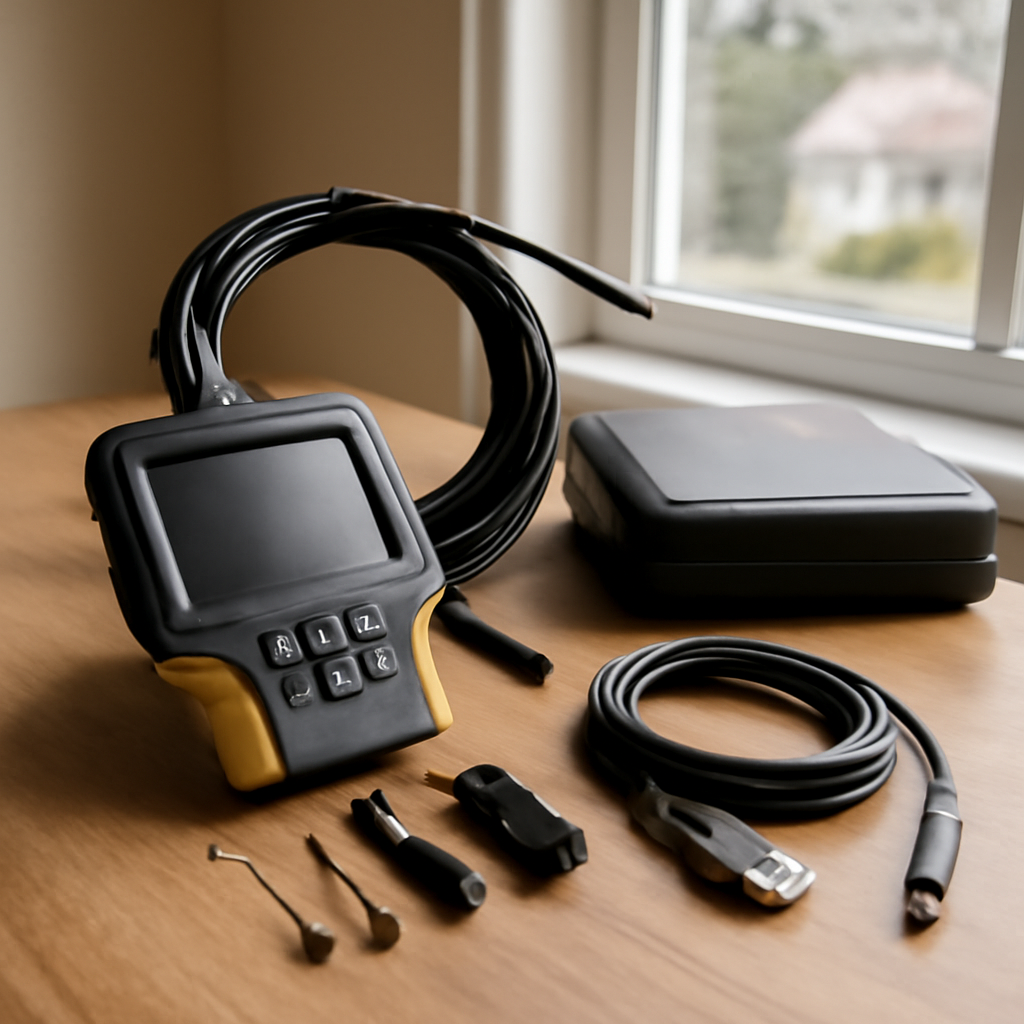
A borescope is only as useful as the parts you attach to it. The right borescope accessories turn a basic inspection camera into a tool that can peer around corners inside a wall cavity, retrieve a dropped screw, or document a hidden HVAC defect. For homeowners and working inspectors building out a kit, knowing which add-ons matter, and which are gimmicks, saves money and frustration.
Part of our Home Inspection Tools guide — start there for the full picture →
Borescopes, also called inspection cameras or videoscopes, feed a small camera on a flexible or semi-rigid cable into spaces the eye cannot reach. Accessories extend that reach, improve image quality, and add retrieval and measurement capability. The categories below cover what most inspection-grade kits rely on.
What borescope accessories matter most for home inspection?
The highest-value accessories are the camera-tip attachments and the cable extensions. Tip attachments include a 45- or 90-degree mirror that lets you see sideways or backward from the camera head, which is essential for examining the back of a pipe or the underside of framing. Magnetic pickups and small hooks let you retrieve dropped metal hardware from wall cavities and drains. Side-view adapters redirect the field of view for plumbing and duct work.
Cable extensions matter for reach. A standard borescope cable runs roughly 1 to 3 meters; extension cables push that to 5, 10, or more meters for long duct runs or deep cavities, though longer cables can be harder to steer. For home inspection specifically, attachments that help examine concealed plumbing, wiring chases, and HVAC interiors deliver the most practical value, supporting the documentation a thorough inspector provides. Our home inspection tools buyer’s guide places the borescope within the wider toolkit.
What types of borescope tips and probes exist?
Probe diameter is a defining spec. Common inspection borescopes use a camera head between about 5.5 mm and 8 mm. Smaller heads near 3.9 mm to 5.5 mm fit tight access holes and small conduit; larger heads around 8 mm to 10 mm carry better optics and brighter lighting but need a bigger opening. Many kits ship with interchangeable heads or adapters so one handset serves multiple jobs.
Mirror and side-view tips
A clip-on mirror tip reflects the view 90 degrees, letting you inspect surfaces parallel to the cable, such as the far side of a stud or the inside wall of a duct. Side-view adapters are similar but built into the optics. Both are inexpensive and dramatically expand what a straight-ahead camera can see.
Magnetic and hook retrieval tips
Magnetic pickups screw or clip onto the camera head to grab dropped screws, washers, or small steel parts from drains and wall cavities. Hook and gripper attachments handle non-magnetic items. These turn the borescope from a viewing tool into a retrieval tool, useful during inspections when hardware disappears into an inaccessible space.
Protective and guide accessories
Beyond optics and retrieval, several accessories protect the equipment and improve access. Centering guides and skid tips keep the camera head off the wall of a pipe so the lens does not drag through debris or scratch. Protective sleeves shield a flexible cable from sharp conduit edges. Insertion tubes and rigid guide rods help feed a floppy cable into a difficult opening without the head folding back on itself. For repeated use in a working inspection kit, these unglamorous parts often determine how long the borescope lasts and how easily it reaches awkward spots.
What probe diameter and length should you choose?
Selecting the right combination of head size and cable length is the most consequential buying decision. A smaller head, near 3.9 mm to 5.5 mm, slips into tight conduit, small access holes, and engine ports, but it carries fewer LEDs and a smaller sensor, so image quality and brightness suffer. A larger head around 8 mm to 10 mm delivers brighter lighting and a sharper image but needs a bigger opening, ruling out the tightest spaces. Many inspectors keep two heads or a kit with interchangeable tips to cover both extremes.
Cable length follows the job. A 1-meter cable suffices for checking behind a wall before drilling or peering into a near cavity. Duct runs, deep drains, and long chases call for 3-, 5-, or 10-meter cables, but every added meter makes the cable harder to steer and slightly dims onboard lighting at the far end. The sweet spot for general home inspection is usually a 5.5 mm to 8 mm head on a 1-to-3-meter cable, with an extension available for the occasional long run. Matching the tool to realistic tasks prevents overspending on industrial reach you rarely use.
How do articulating and dual-camera tips work?
Higher-end videoscopes add capabilities that basic inspection cameras lack. An articulating tip lets the operator steer the camera head with a joystick, turning it to look directly at a surface instead of glancing past it, which transforms inspections of complex interiors like engine cylinders or branching ducts. Dual-camera tips combine a forward and a side view, letting the user switch perspective without removing the cable and swapping a mirror attachment. These features carry a steep price premium and matter most for industrial and specialized work; for routine home inspection, a fixed-view camera with a clip-on mirror covers the majority of needs at a fraction of the cost.
How do lighting and cable accessories improve results?
Lighting separates a usable image from a dark blur. Most borescopes have built-in LEDs around the camera head with adjustable brightness; the key spec is whether you can dim them, because at close range strong LEDs cause glare and washout on shiny surfaces. Some kits add diffuser caps to soften reflections off pipe walls and glass.
Cable type also shapes performance. Flexible gooseneck cables hold a bend you set, which helps when you need the camera to stay angled, while fully flexible cables snake through twists but will not hold shape. Semi-rigid cables push farther into long runs. Extension cables add length but reduce maneuverability and can dim onboard lighting slightly over distance. Waterproof or IP67-rated cables let you inspect drains and damp cavities, relevant when tracing moisture, a task that overlaps with the work covered in our guide to pin versus pinless moisture meters.
What connectivity and display add-ons are worth it?
Many modern borescopes connect to a smartphone or tablet over Wi-Fi or USB-C, turning the phone into the display and recorder. A reliable Wi-Fi or wired adapter is one of the more useful accessories because it enables capturing photos and video for an inspection report. Look for adapters that match your device and support both iOS and Android if you switch phones.
Dedicated handset displays, sold as add-on screens or as part of higher-end kits, free you from relying on a phone and often give a brighter, more responsive image in daylight. Storage accessories matter too: a microSD card lets standalone units record findings, and a sturdy carrying case protects the camera head, which is the most fragile and expensive part. Resolution on the captured image, commonly 1080p on better units versus 720p on budget models, affects how clearly defects show in a report.
How do borescope kits compare across price tiers?
Entry-level inspection cameras from brands like Teslong and Depstech run roughly $30 to $80 and usually include a basic camera, a few tip attachments, and phone connectivity. They suit occasional homeowner use, such as checking behind a wall before drilling. Mid-tier kits from Klein Tools, including the ET20 Wi-Fi borescope, and Milwaukee’s M12 line, run roughly $100 to $300 and add better optics, sturdier cables, and integrated displays; our overview of the Klein Tools ET20 Wi-Fi borescope details one popular option.
Professional and industrial videoscopes from Olympus and similar makers reach well into the thousands of dollars, offering articulating tips that steer the camera head, measurement features, and high-resolution optics. For most home inspection, a mid-tier kit with quality tip attachments, dependable connectivity, and adequate cable length covers the realistic needs without the industrial price.
How do you maintain borescope accessories?
The camera head and lens are the parts that fail first. Wipe the lens with a soft, dry cloth after inspecting dusty or greasy spaces, and avoid abrasive cleaners that scratch the optic. Rinse and dry waterproof cables after drain inspections to prevent residue buildup, and never exceed the rated immersion depth. Store the cable loosely coiled rather than kinked, since tight bends fatigue the internal wiring over time.
Keep tip attachments organized in the case so small mirrors and magnets do not get lost. Check that threaded or clip-on tips seat fully before inserting the camera into a cavity, since a tip that detaches inside a wall is hard to recover. Treated carefully, a quality borescope and its accessories last for years of inspection use.
How borescope accessories fit a home inspection workflow
In a real inspection, accessories earn their place by extending what an inspector can document without destructive access. A mirror tip lets an inspector examine the back side of plumbing connections under a sink. A waterproof cable checks a drain line for blockage or corrosion. An extension cable reaches down a long duct run to spot disconnected joints or debris. The captured photos and video, enabled by reliable phone or display connectivity, become part of the written report that backs up the inspector’s findings.
The borescope complements rather than replaces other instruments. Where a thermal camera flags a cool spot suggesting hidden moisture, a borescope inserted through a small hole can confirm whether a wall cavity holds water or growth, turning a suspicion into documented evidence. Where a moisture meter reads high behind a cabinet, the borescope shows the source. This pairing of tools, each covering the others’ blind spots, is what distinguishes a thorough inspection, and the accessories are what let a single handset serve so many roles.
Are budget accessory kits worth it?
Many inexpensive borescopes ship with a bundle of plastic tip attachments, a hook, a magnet, and a mirror for under fifty dollars total. For occasional homeowner use these bundled accessories are perfectly serviceable, though the plastic clips can be loose-fitting and the magnets weak. For an inspector relying on the tool daily, investing in better-fitting metal attachments and a higher-quality camera head pays off in durability and image clarity. The general rule is that the camera and cable quality matter most, while accessory quality matters more with frequency of use. A homeowner checking a wall twice a year is well served by the bundled kit; a working inspector benefits from upgrading the parts that see constant handling.
References
- Home Inspection Tools of the Trade — International Association of Certified Home Inspectors
- Standard of Practice — American Society of Home Inspectors
- Codes and Standards Resources — International Code Council
Frequently asked questions
What borescope accessories do I actually need for home inspection?
A 90-degree mirror tip, a magnetic retrieval pickup, and reliable phone or display connectivity cover most home tasks. Extension cables help for long duct runs, and a waterproof cable matters if you inspect drains or damp cavities.
Do mirror tips really help with a borescope?
Yes. A mirror or side-view tip reflects the camera's view about 90 degrees, letting you see the back of a pipe, the far side of a stud, or the inside wall of a duct that a straight-ahead camera cannot reach.
Can I use any phone with a borescope?
Most modern borescopes connect over Wi-Fi or USB-C and support both iOS and Android, but confirm the adapter matches your device. A reliable connection lets you capture photos and video for an inspection report.
How long can a borescope cable be?
Standard cables run about 1 to 3 meters, and extensions can reach 5, 10, or more meters. Longer cables reach farther but are harder to steer and may dim onboard lighting slightly over distance.
Borescopes & inspection cameras
A borescope lets you see inside walls, ducts, drains, and crawlspaces without opening anything up.
| Product | Why | Buy |
|---|---|---|
 DEPSTECH Wireless Borescope DEPSTECH Wireless Borescope | Wi-Fi to your phone; semi-rigid cable. | Amazon — $39.99 |
 Teslong Dual-Lens Borescope Teslong Dual-Lens Borescope | Side + front view; good for ducts. | Amazon — $149.99 |
 Ridgid micro CA-150 Ridgid micro CA-150 | Rugged handheld with screen. | Amazon — $292.55 |