Best French Door Refrigerator (2026): How to Choose
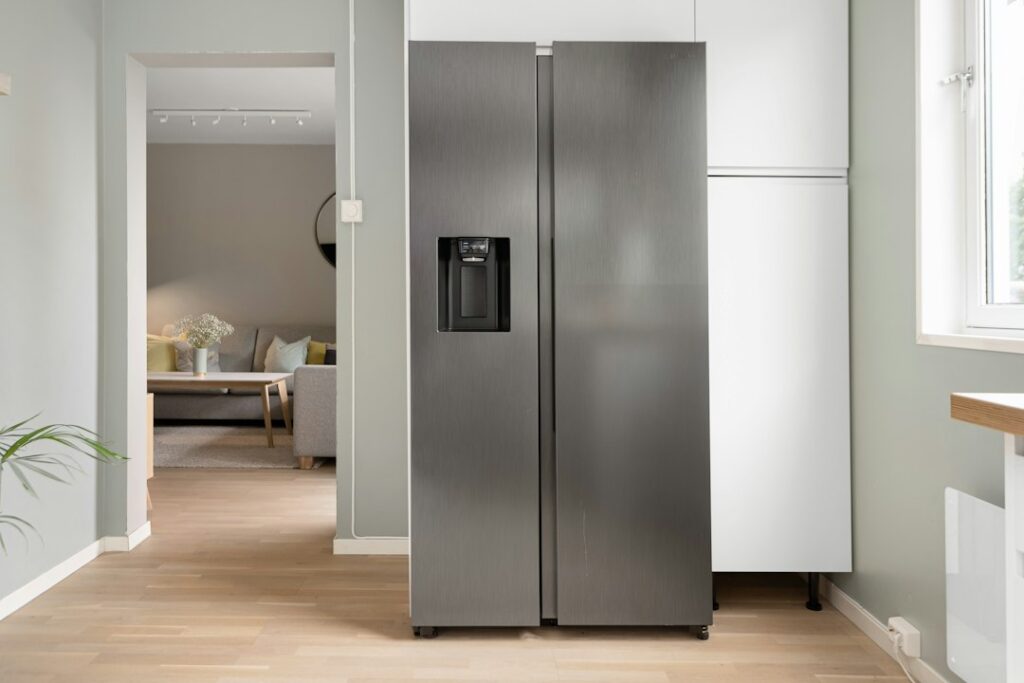
The best French door refrigerator for your kitchen is the one that matches your opening width (usually 33 or 36 inches), your preferred depth, and how much you actually use through-the-door ice and water. Those three choices drive the price, the usable space and the long-term repair risk far more than any badge on the door. We don’t lab-test appliances. This guide explains how to choose a French-door model, what the spec sheet numbers mean, and what a home inspector looks for around the installation. It does not include a model shortlist, because ENERGY STAR’s certified data doesn’t separate French-door units from other bottom-freezer refrigerators; instead, we show how to check any French-door model’s certification and energy use yourself.
Part of our Home Electrical guide — start there for the full picture →
This page contains affiliate links; we may earn a commission at no extra cost to you.
Quick Decision Table: Which French Door Layout Fits?
“French door” means two side-by-side fresh-food doors over a pull-out freezer drawer. Within that, there are several variants. Price bands below are typical national ranges for freestanding units in 2026 and move with width, finish, brand tier and features.
| Layout | Who it suits | Typical price band | Key spec to check |
|---|---|---|---|
| 3-door, 33 in wide | Kitchens with a 33-inch opening, often in older homes; couples and small families | Typical $1,500–$2,800 | Interior shelf width and freezer capacity |
| 3-door, 36 in wide | The mainstream choice for families; fits most newer kitchens | Typical $1,800–$3,500 | Total capacity split and ice maker location |
| 4-door (with a middle flex drawer) | Households that want a separate drawer for drinks, deli or convertible fridge/freezer use | Typical $2,500–$4,500 | Drawer temperature range and lost main freezer space |
| Door-in-door or showcase door | Busy kitchens where the fridge is opened constantly for drinks and snacks | Typical $2,500–$4,500 | Extra seals and how much door storage it uses |
| Counter-depth French door | Remodels and open-plan kitchens where a flush look matters | Typical $2,200–$5,000 | Case depth and reduced capacity |
| Built-in or panel-ready French door | Custom cabinetry designed around the unit | Typical $7,000–$14,000+ | Rough opening and installer requirements |
French-door models are the most popular full-size layout, but they are not automatically the right one. A plain top-freezer model is cheaper and generally uses less energy, and a side-by-side has the narrowest door swing of all. Our refrigerator buying guide compares every configuration. If a flush, built-in look is the priority, read the counter-depth refrigerator guide before you settle on a standard-depth French-door unit. And if your kitchen is a narrow galley where even two half-width doors are awkward, compare with the side-by-side refrigerator guide.
What Actually Matters When Choosing a French Door Refrigerator
Width First: 33 Inches or 36 Inches
French-door refrigerators are mostly built around two widths: about 33 inches and about 36 inches. Measure the opening between cabinets or walls at several heights, because older cabinetry is not always square. Then check the manufacturer’s installation guide for minimum side clearance; some models need extra room on the hinge side for the doors to open far enough to pull out crisper drawers. A unit that technically fits but can’t open its doors past 90 degrees is a daily frustration.
Width also controls shelf width. The main appeal of a French-door layout is a full-width shelf for sheet pans, pizza boxes and party platters. A 36-inch model gives noticeably more of that than a 33-inch model, which is why most new kitchens are designed around 36 inches.
Depth: Standard, Counter Depth, or In Between
Standard-depth French-door models usually stick out several inches past the counter edge once doors and handles are counted. Counter-depth versions sit closer to flush but give up a few cubic feet of capacity for the same width. Some brands sell “counter-depth max” or similar in-between depths. Spec sheets often list depth two ways, with and without doors or handles, so compare like with like. If the fridge sits next to a walkway or an island, measure how far the open door will extend into the aisle.
Capacity and How It’s Split
A common rule of thumb is about 4 to 6 cubic feet of total refrigerator space per adult. Most 36-inch standard-depth French-door models land in the mid-20s of cubic feet, and 33-inch models are usually smaller. Look past the total to the split. French-door freezers are drawers, and a deep single drawer with one sliding basket holds a lot but is harder to organize than a two-drawer design. If you freeze a lot of food, an upright freezer or chest freezer in the basement may be a better answer than buying the biggest French-door unit available.
Ice Maker and Dispenser: The Biggest Trade-Off
French-door models handle ice in three main ways: an ice maker in the freezer drawer, an ice maker built into the left fresh-food door that feeds an external dispenser, or a second specialty ice maker. Door-mounted ice makers free up freezer space but take shelf space in the door, and they rely on a cold air path from the freezer that can ice over if the door seals are poor.
Through-the-door dispensers also add a water filter to replace (often about every six months, per many manufacturers), a valve and line connection behind the unit, and more parts in the door. They are convenient, but they are a frequent source of service calls. The ENERGY STAR data shows the energy side of the trade-off too: in the snapshot below, wide bottom-freezer models with a through-the-door dispenser have a noticeably higher median energy use than those without.
The Center Seal
Because two doors meet in the middle, French-door refrigerators use a hinged flap (often called a mullion) on one door that folds out to seal against the other. It’s a simple part, but if the doors are not level with each other the flap won’t seal, and warm air leaks in. That shows up as condensation, frost near the ice maker or a fridge that runs constantly. Door height adjustment is usually done with a nut or screw on the hinge; check alignment on delivery day.
Energy Use
Every full-size refrigerator sold in the U.S. carries a yellow EnergyGuide label with estimated annual electricity use in kilowatt-hours. Multiply that by your electricity rate to estimate running cost: at an assumed 15 cents per kWh, a 600 kWh/yr model costs about $90 a year and a 700 kWh/yr model about $105. ENERGY STAR’s current criteria require certified full-size refrigerators to use at least 10 percent less energy than the federal standard for their size and features. ENERGY STAR’s buying guidance also notes that bottom-freezer and side-by-side models tend to use more energy than top-freezer designs, and that fewer doors mean less air leakage, which is worth remembering before choosing a four- or five-door model.
Features Worth Paying For, and Ones to Question
Useful extras include a full-width deli drawer with its own temperature setting, adjustable humidity crispers (explained in our humidity-control fridge guide), spill-proof shelves and bright interior lighting. Features to weigh carefully are door-in-door compartments, interior cameras, built-in water pitchers and app connectivity. They aren’t bad, but each adds parts or seals, and none of them helps the sealed system last longer. A clear sealed-system warranty and local service support matter more.
Why There’s No ENERGY STAR French Door Shortlist
Other refrigerator guides on this site include a shortlist built from ENERGY STAR’s certified product data. This one doesn’t, and the reason is simple: the data has no French-door field. ENERGY STAR and the Department of Energy classify refrigerators by where the freezer sits and by features such as an automatic ice maker or through-the-door ice. A French-door unit is filed as “Bottom Freezer,” right alongside single-door bottom-freezer models. Picking “French-door” models from that list would mean guessing from model numbers, and that’s not something we’re willing to present as fact.
How to Check a French Door Model on ENERGY STAR
Once you have a model in mind from a retailer, verifying it takes a couple of minutes:
- Copy the full model number from the retailer listing or the spec sheet, including any suffix letters.
- Open the ENERGY STAR Product Finder for certified residential refrigerators and search by brand or model number.
- If the exact number doesn’t appear, try it without the last two or three characters. ENERGY STAR often lists a model family with asterisks standing in for color or finish codes.
- Confirm the type shows “Bottom Freezer,” then note the annual energy use (kWh/yr), the percentage below the federal standard, and whether it meets ENERGY STAR Most Efficient criteria.
- Compare those numbers with the yellow EnergyGuide label on the retailer listing. They should agree; if they don’t, ask the retailer which variant you’re getting.
- Check the date and status. Certifications change, and a model that was certified last year may not be on the current list.
When comparing two French-door models of similar size, the percentage below the federal standard is the fairest efficiency comparison, because the federal allowance already accounts for capacity and features such as through-the-door ice. If running cost is all you care about, compare kWh/yr directly.
What the Data Says About Wide Bottom-Freezer Models
The data can still describe the category as a whole. The summary below covers ENERGY STAR certified, freestanding, full-size bottom-freezer refrigerators listed for the U.S. market, grouped by width. It includes single-door bottom-freezer models as well as French-door ones, so treat it as a description of the category rather than of French-door units alone.
| Width group | Through-the-door dispenser | Certified models | Median capacity | Median annual energy |
|---|---|---|---|---|
| About 33 in (32–34 in) | No | 131 | 18.6 cu ft | 541 kWh/yr |
| About 33 in (32–34 in) | Yes | 12 | 21.9 cu ft | 679 kWh/yr |
| About 36 in (35–37 in) | No | 305 | 22.8 cu ft | 596 kWh/yr |
| About 36 in (35–37 in) | Yes | 271 | 26.3 cu ft | 714 kWh/yr |
Two things stand out. Models with a dispenser tend to be larger, which explains part of the gap, but the federal standard also gives dispenser models a higher energy allowance, so they are allowed to use more. And very few wide bottom-freezer models reach ENERGY STAR Most Efficient: only eight of the 576 models in the 36-inch group did in this pull. If efficiency is a priority, a model without an external dispenser is the simplest lever you control.
Installation and Home-Inspection Checklist
French-door refrigerators are heavy, often well over 250 pounds, and most have an ice maker that needs a water line. These are the things an inspector or a careful installer checks.
Before Delivery
- Measure the path. Doors, hallways and tight turns. Many crews remove the fridge doors to get through a 32-inch entry; ask whether that’s included.
- Protect the floor. Rollers on a fully loaded unit can dent soft flooring. A sheet of hardboard during install, or appliance floor glides, prevents damage.
- Check the outlet. A grounded 120-volt receptacle, ideally on a circuit not shared with high-draw countertop appliances, with no extension cords or adapters. Newer codes in many areas require GFCI protection for kitchen receptacles, and modern refrigerators generally run fine on it; see our kitchen GFCI outlet guide.
Water Line and Filter
- Accessible shutoff. A quarter-turn valve for the ice maker line, usually under the sink or in the wall box behind the unit.
- No saddle valves. Self-piercing saddle valves are a common slow-leak source and are frequently flagged in inspections.
- Braided or copper line with a service loop. So the fridge can roll out for cleaning without kinking or pulling the connection loose.
- New filter flushed. Run several gallons through the dispenser before drinking from it, as most manufacturers instruct. Our refrigerator water filter guide explains certified replacements.
- Leak check after 24 hours. Look behind the unit and at the floor in front of the toe kick. The refrigerator leaking water guide covers what to do if you find a drip.
Setup and Seals
- Level and door alignment. Adjust leveling legs so the cabinet tilts slightly back and the two fresh-food doors sit at the same height. Uneven doors stop the center flap from sealing.
- Gasket check. Close a dollar bill in each door and the freezer drawer at several points; it should drag when pulled.
- Clearances. Leave the side, top and rear gaps listed in the installation guide. ENERGY STAR recommends a few inches behind the fridge for air circulation and keeping it away from ovens, dishwashers and direct sunlight.
- Temperatures. After about 24 hours, use an appliance thermometer to confirm the fresh-food side holds at or below 40°F and the freezer at 0°F.
Garage or Basement Installs
Some buyers move the old French-door unit to the garage as a beverage fridge. Front Range garages can drop well below freezing in winter and top 90°F in summer, and many standard refrigerators are not designed for that range. In a cold garage the thermostat in the fresh-food section may barely call for cooling, so the freezer drawer can warm up and frozen food can thaw. Check the manufacturer’s stated ambient operating range, or choose a model sold as garage-ready. Plug it into a grounded, GFCI-protected receptacle, as garage outlets generally require, and keep it off direct sun through the garage door.
A second refrigerator also has a running cost. ENERGY STAR estimates an old refrigerator more than 15 years old can cost about $95 a year more to run than needed, which is often more than the beer fridge is worth. Recycling it is a reasonable answer.
Old Unit Disposal
Old refrigerators contain refrigerant and oils that, by federal law, must be removed and recovered before the metal is recycled. Many retailers haul away and recycle the old unit at delivery. ENERGY STAR suggests asking for assurance that the unit will be recycled rather than resold, and some utilities offer a recycling bounty for a working second fridge.
Where to Buy a French Door Refrigerator
Compare the full delivery package, not just the price: delivery, water-line hookup, door removal if needed, and haul-away of the old unit. Open-box or scratch-and-dent French-door models can save meaningfully on a cosmetic mark, but confirm the full manufacturer warranty applies. Before you buy, search the model on the CPSC recalls site, confirm its status on ENERGY STAR as described above, and check the ENERGY STAR Rebate Finder and your utility for rebates.
Where to shop for french door refrigerator
Links open the retailer's current selection — prices, stock and delivery/installation options vary by ZIP code.
We may earn a commission from qualifying purchases made through these links, at no extra cost to you.
Frequently asked questions
Are French door refrigerators energy efficient?
They can be, but ENERGY STAR's buying guidance notes that bottom-freezer and side-by-side designs tend to use more energy than top-freezer models, and more doors mean more air leakage. Choosing an ENERGY STAR certified model, skipping the external dispenser and sizing it to your household are the biggest levers.
How can a buyer tell if a French door refrigerator is ENERGY STAR certified?
Search the full model number in the ENERGY STAR Product Finder for residential refrigerators. French-door models are listed under the Bottom Freezer type, often with asterisks in place of color codes. Check the annual kWh, the percentage below the federal standard and whether the listing is current.
What width French door refrigerator is most common?
Most French-door refrigerators are about 33 or 36 inches wide, with 36 inches the more common size in newer kitchens. Measure the opening at several heights and check the installation guide for side clearance so the doors can open far enough to remove the drawers.
Is a French door refrigerator better than a side-by-side?
French-door models offer wide fresh-food shelves at eye level and a pull-out freezer drawer, which suits families who store platters and large items. Side-by-side models have a narrower door swing and a tall freezer section that is easier to organize at eye level. The right choice depends on kitchen layout and how you use the freezer.
Why does a French door refrigerator get frost near the ice maker?
Frost or ice buildup in a door-mounted ice maker area often comes from warm, moist air leaking in through a poorly sealing door, gasket or center flap. Check that both doors are level, the gaskets are intact and nothing is blocking the doors from closing fully. Persistent icing should be looked at under warranty.
References
- Refrigerators: Buying Guidance and Saving Tips — ENERGY STAR (U.S. EPA)
- Product Finder: ENERGY STAR Certified Residential Refrigerators — ENERGY STAR (U.S. EPA)
- ENERGY STAR Certified Residential Refrigerators (dataset) — ENERGY STAR (U.S. EPA)
- Refrigerators & Freezers Key Product Criteria — ENERGY STAR (U.S. EPA)
- Find a Fridge or Freezer Recycling Program — ENERGY STAR (U.S. EPA)
- Recalls & Product Safety Warnings — U.S. Consumer Product Safety Commission