Asbestos Testing in Longmont, Colorado | InspectandTest
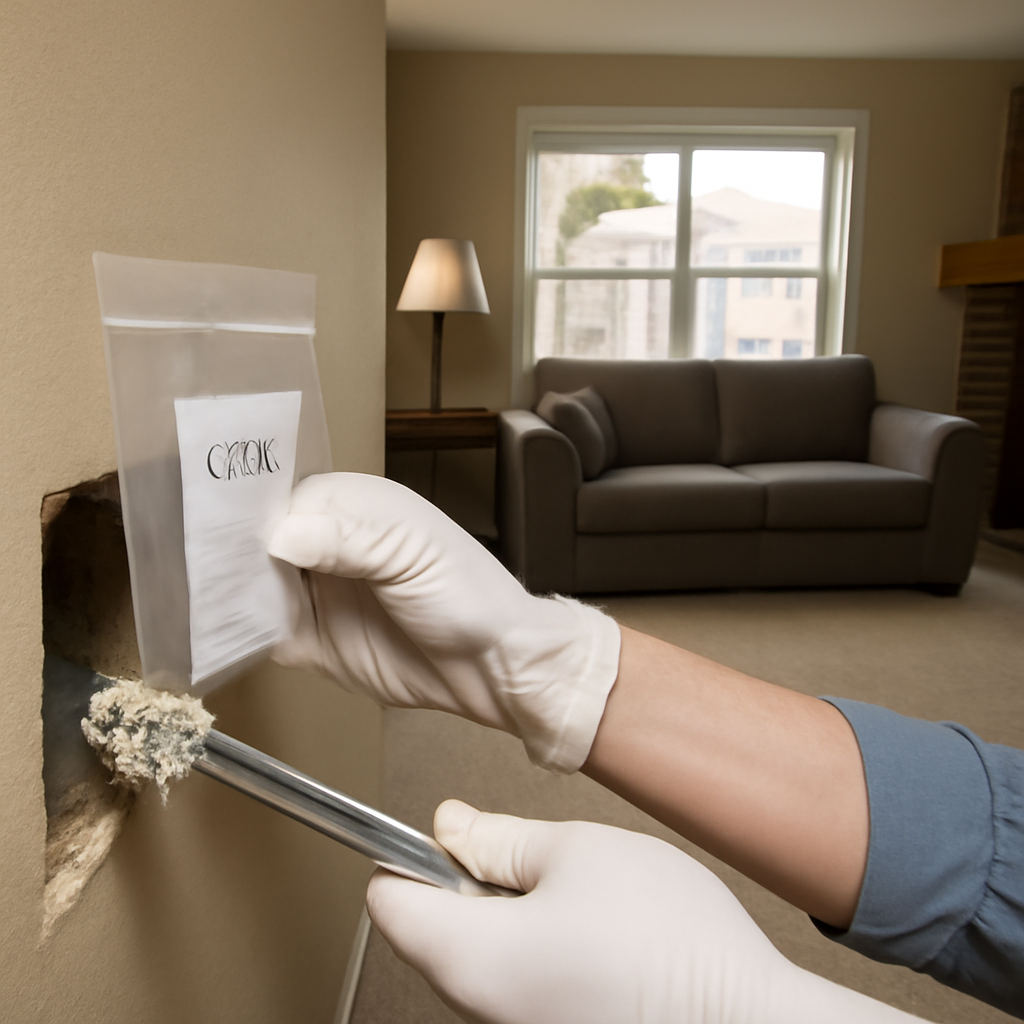
Longmont’s older core, the pre-1978 homes around Old Town and Roosevelt Park, is exactly where asbestos-containing building materials are most likely to turn up. Asbestos was used widely in insulation, floor tile, joint compound, and pipe wrap until federal restrictions tightened in the late 1970s, and it poses a health risk only when disturbed and made airborne. The single way to confirm whether a material contains asbestos is laboratory analysis of a sample. This page explains how asbestos testing longmont homeowners should approach before a remodel or sale, where the material hides locally, and what testing costs. This summary reflects EPA, OSHA, and CDC guidance current as of 2026; consult a certified professional before disturbing any suspect material.
Is this mold, asbestos, or water damage? Get a free instant screen
Upload a clear photo of the suspect area. You'll get an instant AI screening opinion and what to do next. This is screening guidance, not a professional determination.
Screening guidance only. AI can be wrong. Confirm asbestos, mold type, or lead with lab testing or a licensed professional before acting.
Asbestos testing in Longmont: what to know
Asbestos testing means collecting a small sample of a suspect material and sending it to an accredited lab for polarized light microscopy, which identifies asbestos fibers and reports the percentage. You cannot tell asbestos by sight; a 1960s floor tile and a modern one can look identical, so the lab result is the only reliable answer.
The age of the home is the strongest clue. Homes built before 1978, common throughout Old Town Longmont, are the priority for testing before any renovation that would cut, sand, or demolish original materials. For the broader picture of where this hazard lives in older housing, our guide to asbestos and lead in pre-1978 homes lays out the full landscape.
Intact, undisturbed asbestos is generally not an immediate danger; the risk comes from disturbance. A Longmont homeowner planning to pull up old kitchen flooring, scrape a popcorn ceiling, or open a wall in a 1950s bungalow should test first, because cutting into asbestos-containing material releases fibers that linger in the air and lodge in the lungs.
Timing matters for a project. Testing before demolition protects the household and the workers, and it keeps a small remodel from becoming a contaminated cleanup. Sampling a few materials costs far less than abating a home after fibers have spread through the HVAC system during an uninformed tear-out.
Why Longmont homes need asbestos testing
Housing age is the driver. Longmont grew steadily through the mid-twentieth century, and the blocks around Old Town and Roosevelt Park hold many homes built well before the 1978 cutoff. These are the properties most likely to contain original asbestos materials in flooring, ceiling texture, duct insulation, and pipe wrap.
The remodel cycle raises the stakes. Older Longmont homes are popular with buyers who plan to update kitchens, refinish basements, and remove dated ceilings, and every one of those projects can disturb asbestos if it is present. A pre-1978 home that has never been tested is a blind spot for anyone planning to swing a hammer.
Specific materials recur in homes of this era. Vinyl floor tile and the black mastic beneath it, troweled-on or sprayed ceiling texture, the tape and joint compound at drywall seams, vermiculite attic insulation, and the paper-like wrap on old heating pipes are the usual suspects. A Longmont basement remodel that involves removing old tile and opening ceilings touches several of these at once, which is why testing the specific materials in play is the sensible first step.
Newer Longmont subdivisions like Prospect New Town and Fox Hill, built well after 1978, carry far lower asbestos risk, so testing there is rarely warranted unless an unusual older material is found. The hazard concentrates in the older core, which is what makes age, not neighborhood prestige, the real screening question.
The 2013 flood adds a wrinkle specific to Longmont. Homes near the St. Vrain that took on water and were rebuilt may have had old flooring or wall materials removed, and if that work happened before sampling, asbestos-containing tile or joint compound could have been disturbed without proper controls. For a pre-1978 home with a flood-era remodel in its history, testing the materials that remain is a reasonable check, and reviewing any old work records helps an inspector understand what was already removed. The combination of an older home and an unplanned, fast flood cleanup is exactly the scenario where asbestos handling sometimes slipped, which makes confirmation worthwhile before the next renovation reopens those surfaces.
What a Longmont asbestos test covers
A qualified inspector identifies suspect materials, collects small samples following safe wetting and containment practices, and submits them to an accredited lab. Sampling itself can release fibers if done carelessly, so a professional dampens the material, takes a minimal piece, and seals the spot.
Which materials to sample
For a typical Longmont remodel, sampling targets the materials the project will disturb: floor tile and mastic, ceiling texture, drywall joint compound, pipe and duct insulation, and any vermiculite in the attic. An inspector groups materials into homogeneous areas so the lab result represents everything of the same type and age, rather than testing every square foot.
Reading the result
The lab reports each sample as containing asbestos or not, with the fiber type and percentage. Materials above one percent asbestos are regulated as asbestos-containing. A clear report lets a homeowner proceed with a normal remodel; a positive result routes the work to a licensed abatement contractor for safe removal before construction continues.
Asbestos testing cost in Longmont
Individual sample analysis through an accredited lab typically runs about $30 to $75 per sample, and a professional inspector who collects samples and provides a written assessment usually charges roughly $250 to $600 depending on how many materials are sampled and the size of the home. A whole-home survey before a major renovation sits at the higher end.
Do-it-yourself mail-in kits exist for $30 to $60 plus lab fees, but collecting a sample of friable material without proper wetting and protection can release fibers, so professional sampling is safer for anything beyond a single intact piece. For a transaction or a permitted renovation, the documented professional survey is the standard.
Set the cost against the alternative. A few sampled materials cost a fraction of what it takes to abate a home contaminated by an uninformed tear-out, and far less than the long-term health stakes of repeated fiber exposure. In a remodel-heavy older-home market like Old Town Longmont, testing before demolition is the cheap, responsible move.
For buyers, an asbestos survey of a pre-1978 Longmont home folds naturally into broader due diligence and can inform renovation budgets before closing. Knowing in advance that a popcorn ceiling or old tile field contains asbestos lets a buyer price the abatement into their offer rather than discovering it after they own the home.
The cost also scales with the project’s ambition. A homeowner replacing a single bathroom floor in an Old Town bungalow may need only one or two samples, while a buyer planning to gut a kitchen, scrape every ceiling, and open walls throughout a 1950s home will want a broader survey that maps each material type. Grouping materials into homogeneous areas keeps that broader survey from becoming a sample-by-sample expense, since one result can represent every identical ceiling or tile field of the same age. Ask the inspector to scope sampling to the rooms and materials your project will actually touch, which keeps the cost proportional to the work rather than testing surfaces you never intend to disturb.
Colorado regulations and disclosure
Colorado regulates asbestos through the CDPHE Air Pollution Control Division, which sets requirements for sampling, abatement, and disposal. Abatement above regulatory trigger levels must be performed by state-certified contractors, and Longmont homeowners cannot legally dump asbestos waste with ordinary trash. Sellers must disclose known asbestos under Colorado’s property disclosure obligations, making a prior survey or abatement a disclosable item.
Because disturbing asbestos without proper handling violates both federal OSHA worker-protection rules and state air regulations, the safe path for any pre-1978 Longmont remodel is to test first and route positive materials to a certified abater. Homeowners weighing a do-it-yourself project can review our overview of how to tell if insulation is asbestos to understand what materials warrant lab confirmation before they touch them.
Neighborhoods and areas served
Asbestos risk in Longmont tracks the older housing: the pre-1978 homes of Old Town, the established blocks around Roosevelt Park, and scattered mid-century properties throughout the original city grid. Newer developments like Prospect New Town, Southmoor Park, and Fox Hill postdate the worst of the asbestos era and carry much lower risk. Service typically extends to adjacent Niwot, Firestone, Mead, and Berthoud, which share the same mix of older cores and newer subdivisions.
The screening question is always the build year, not the address. A modest pre-1978 Old Town bungalow is far more likely to need testing than a larger but newer home in a recent subdivision, because asbestos use was driven by construction date. Any Longmont owner planning to cut into original materials in an older home should treat lab confirmation as the default first step.
Outbuildings and additions complicate the simple age rule. An older Longmont property may carry a detached garage, a workshop, or a 1960s addition with its own era of materials, and a home that looks updated inside can still hide original duct insulation or pipe wrap in an unfinished basement or crawl space. A thorough inspector looks beyond the main living space to these secondary structures and concealed mechanical areas, because that is often where the most friable, highest-risk asbestos materials survive untouched. For Longmont’s older properties, the survey should follow the materials wherever they are, not stop at the rooms a buyer plans to remodel first.
How to choose a Longmont asbestos testing provider
Ask whether the inspector is trained in asbestos sampling, follows safe wetting and containment practices, and uses an accredited lab that reports fiber type and percentage by polarized light microscopy. A provider who collects samples carelessly can create the very exposure the test is meant to prevent.
For independence, prefer a tester who does not also profit from abatement, so the result is not shaded by a financial interest in finding asbestos. A straight operator explains which materials actually need sampling for your project, groups them sensibly to control cost, and gives clear next steps if a sample comes back positive. Pairing the survey with a broader look at lead, covered in our guide to lead testing in Longmont, makes sense for pre-1978 homes where both hazards coexist.
Finally, insist on a written report with sample locations, lab data, and clear guidance on what is safe to disturb and what must go to a certified abater. That document protects you during a permitted renovation and gives a buyer or contractor a defensible record of the home’s asbestos status.
References
- Asbestos in the home — U.S. Environmental Protection Agency
- Asbestos worker safety standards — Occupational Safety and Health Administration
- Colorado asbestos regulations — Colorado Department of Public Health and Environment
Planning a remodel in an older Longmont home? Test before you disturb anything. Get in touch through our contact page to connect with a vetted local inspector who can sample suspect materials and guide your next step.