Townhouse Inspection Checklist: Shared Walls, HOA and More
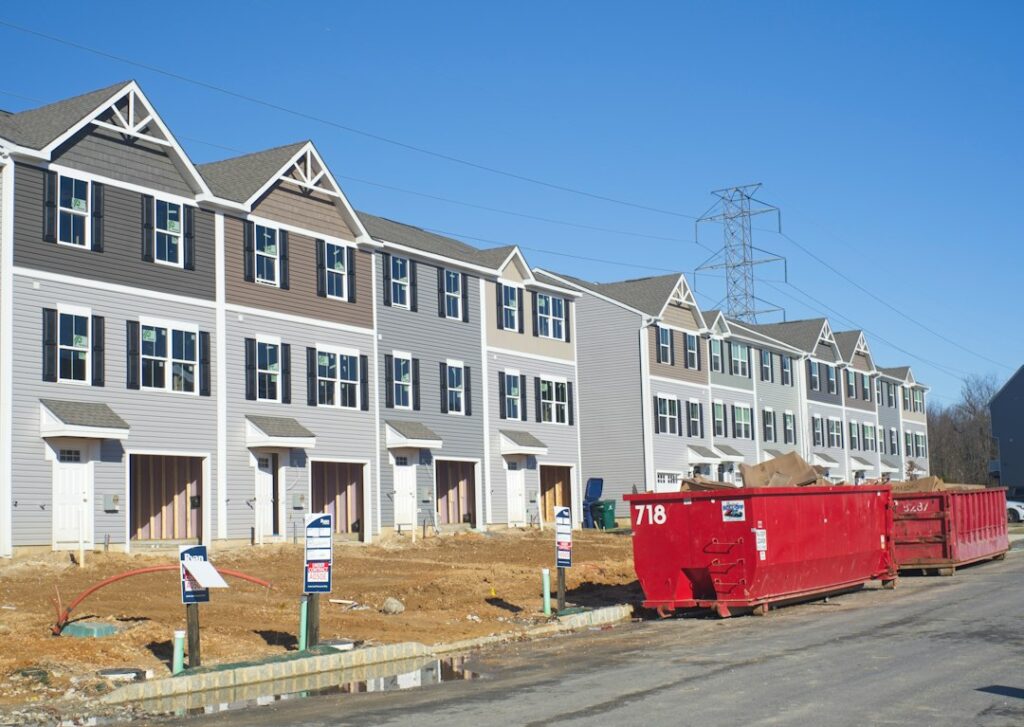
A townhouse inspection checklist covers everything a detached-house checklist does, plus the parts of the building you share with neighbors and the paperwork that decides who pays to fix them. The practical difference is responsibility: in many townhouse communities the HOA owns or maintains the roof, siding or grounds, while in others the owner is responsible for everything from the foundation up, and the governing documents, not the listing, settle the question. This guide explains what is different about a townhouse, how to read the HOA side of the deal, which shared components deserve extra attention (party walls, attic firewalls, sewer laterals and roofs), and then walks through a room-by-room checklist you can take to the inspection. It summarizes general guidance as of 2026; your purchase contract and the community’s recorded documents control any specific transaction.
Part of our Home Inspections Explained guide — start there for the full picture →
What Makes a Townhouse Inspection Different
A townhouse is usually a single-family home that shares one or two walls with neighboring units, sits on its own small lot or a defined parcel, and has no other unit above or below it. Legally, though, townhouses range from fee-simple homes with a light-touch HOA to units that are technically condominiums where the association owns the structure’s exterior. The same building style can carry very different obligations.
That variation changes the inspection in three ways:
- Scope. A general home inspection covers your unit. Shared structures, common roofs and association-owned areas may be outside what the inspector is hired or able to evaluate.
- Priorities. Defects in components you will personally own matter most to your budget. Defects in HOA-maintained components matter to you indirectly, through dues, reserves and special assessments.
- Hidden connections. Shared walls, attics, plumbing stacks and sewer lines mean a neighbor’s problem can become yours.
The ASHI Standard of Practice, which many inspectors follow, says it applies to buildings with four or fewer dwelling units, and it lists among its general exclusions “Common elements and common areas in multi-unit housing, such as condominium properties and cooperative housing.” In practice, that means a buyer should ask the inspector before the appointment exactly what will and will not be looked at, especially for roofs and exteriors that span several units. Our guide to condo home inspections covers the same scope question for stacked units, and much of it applies to townhouse communities organized as condominiums.
Start With the Documents: Who Owns and Maintains What
Before you can decide which findings matter, you need to know which components are yours. The answer lives in the community’s recorded documents, usually called the declaration or CC&Rs (covenants, conditions and restrictions), along with the plat or map, the bylaws and any rules or maintenance matrices the board has adopted. In Colorado, buyers in common-interest communities are typically entitled to receive association documents as part of the purchase process; your contract and your agent can tell you what is due and when.
Read the maintenance and insurance sections first. They usually answer these questions:
| Component | Often HOA-maintained | Often owner-maintained | Where to confirm |
|---|---|---|---|
| Roof covering | Common in many communities | Fee-simple rows with minimal HOA | Declaration maintenance section |
| Exterior siding and paint | Frequently | Some fee-simple communities | Declaration and rules |
| Windows and exterior doors | Sometimes | Very often, even when the HOA does siding | Maintenance matrix |
| Decks, patios and fences | Varies widely | Varies widely | Plat, declaration |
| Party walls | Shared repair cost is common | Each owner maintains their side | Party-wall provisions |
| Sewer lateral and water service | Shared main lines may be HOA | Branch serving one unit often owner | Declaration, utility records |
| Furnace, water heater, interior plumbing and wiring | Rarely | Almost always | Declaration |
| Landscaping, irrigation, snow removal | Common | Small private yards sometimes | Rules and budget |
These columns describe typical patterns, not rules. The insurance section matters just as much: if the master policy covers the building structure, your personal policy may only need to cover interiors and contents; if it does not, you need full dwelling coverage. Ask your insurance agent to review the declaration before you waive any contingency.
A practical tip: mark up the inspection report after you receive it, labeling each finding “mine,” “HOA” or “unclear.” The “unclear” items are the ones to raise with the association manager in writing before your objection deadline. Our guide to the home inspection contingency explains how that deadline works and what you can ask for.
HOA Finances: Dues, Reserves and Special Assessments
A sound townhouse can still be expensive if the association is underfunded. HOA dues are a direct monthly cost, and the Consumer Financial Protection Bureau notes that association dues “are usually paid directly to the homeowners’ association (HOA) and are not included in the payment you make to your mortgage servicer,” and that they “can range from a few hundred dollars a month to more than one thousand dollars a month.” Budget for them separately.
Dues are only part of the picture. Look for:
- The reserve study. Many associations commission a reserve study that lists major shared components (roofs, siding, paving, fences, pool equipment), estimates their remaining useful life and projects what it will cost to replace them. Compare the study’s funding target with the actual reserve balance.
- The current budget and recent financial statements. A budget that funds operations but sets aside little for reserves is a warning sign.
- Board minutes from the past year or two. Minutes often reveal roof leaks, drainage complaints, siding failures or litigation long before they appear anywhere else.
- Special assessments. Ask whether any assessment is levied, approved or under discussion, and how it will be split between buyer and seller at closing.
- Insurance deductibles. On the Front Range, hail is a recurring roof claim. A high master-policy deductible can be passed on to owners as an assessment after a storm.
If the reserve study gives the roof ten more years and the inspector reports widespread hail bruising and soft decking, raise that mismatch with the board and your agent.
Party Walls and Fire Separation
The wall you share with a neighbor is a structural element, a sound barrier and, most importantly, a fire separation. Building codes for attached single-family dwellings generally require a fire-resistance-rated separation between units, often built as a two-hour wall or as two separate one-hour walls, depending on the code edition and construction method. The goal is to slow a fire in one unit long enough for neighbors to escape and firefighters to respond.
An inspector cannot see inside the wall or certify its rating, but visible clues are worth noting:
- Holes and unsealed penetrations. Pipes, wires, recessed boxes and ducts that pass through or into the party wall should be sealed with appropriate firestop materials. Open gaps around a dryer duct or a cable bundle are a common finding.
- Back-to-back recessed boxes. Electrical boxes or medicine cabinets cut deep into the shared wall can reduce its fire resistance.
- Damaged drywall in the garage. Attached garages typically need a fire-resistant separation from the living space. Missing drywall, holes, attic hatches without proper covers and non-rated doors between garage and house are frequent defects.
- Cracks, bowing or moisture. Movement or staining along the shared wall can signal foundation settlement, a plumbing leak on the neighbor’s side or water entering at the roof junction.
Sound transmission is rarely a code defect, but a wall that carries a lot of noise may also have gaps that weaken its fire performance.
Shared Attics and Firewall Continuity
The attic is where townhouse fire separation most often fails. In a properly built row, the separation continues up from the party wall to the underside of the roof deck, so each unit’s attic is its own compartment. In practice, inspectors sometimes find:
- A continuous open attic running over several units with no separation at all
- Firewall drywall that stops short of the roof sheathing, leaving a gap
- Holes cut through the separation for ducts, wiring or access between units
- Missing or damaged drywall where a previous repair, solar install or HVAC replacement took place
An open attic is a fire hazard and a route for pests, moisture and air leakage. Ask the inspector to enter the attic if it is safely accessible and to photograph the separation wall at the party-wall lines. If access is blocked or the attic is not entered, note that in your file. Because the attic separation is often a shared component, a missing firewall usually becomes an HOA or multi-owner repair, so raise it before closing.
While in the attic, the inspector will also look at insulation, ventilation, bath fan terminations and signs of roof leaks. Frost on the underside of the roof deck in a Front Range winter usually points to warm, moist air leaking up from the living space.
Shared Sewer Laterals, Water Lines and Utilities
Many townhouse rows share underground utilities. A common arrangement is one sewer main running behind or under the building, with each unit’s branch connecting to it, or a single lateral serving two or more units before it reaches the city main. Water service, gas lines and electrical service may also be shared or routed through a neighbor’s space.
Shared lines create two risks. First, a blockage or break in the shared section can back sewage into whichever unit sits lowest. Second, responsibility for repair may be split, disputed or simply unknown. Before closing, ask:
- Does the declaration or plat say who owns and maintains each segment of the sewer and water lines?
- Has the association had sewer backups, root intrusion or line replacements in the past few years? Board minutes often answer this.
- Where are the cleanouts, and is there one serving your unit?
A standard home inspection runs water through fixtures and looks for slow drains and leaks, but it does not evaluate underground piping. A sewer scope, in which a contractor or inspector runs a camera through the line, is a separate service and is often worth adding for older townhouse communities, especially where clay or cast-iron pipe and mature trees are present.
Roofs, Exteriors and Drainage in Attached Rows
Even when the HOA maintains the roof, its condition affects you. A leak over your unit damages your ceilings, insulation and belongings, and a tired roof across the whole row may be heading for a large assessment. Ask the inspector what roof evaluation is included. Some inspectors walk accessible roofs; others inspect from the ground, a ladder at the eaves or with a drone, and steep, wet or very high roofs may be declined for safety.
Points to look at on attached rows:
- Roof-to-wall junctions where units of different heights meet, and the flashing along the party-wall line
- Hail damage on shingles, vents, gutters and window wraps, which is common along the Front Range
- Gutters and downspouts that discharge near foundations or onto neighbors’ walkways, where snow melt can freeze into ice in winter
- Grading around shared foundations. Expansive clay soils in parts of the Front Range swell when wet, so water pooling against a foundation is a structural concern, not just a basement nuisance
- Siding, trim and sealant on south- and west-facing walls, which take the most sun at altitude and degrade faster
- Decks and balconies, including ledger attachment, flashing and guardrail stability
Confused by your home inspection report? Decode it free in plain English
Upload your inspector's PDF and get a plain-English summary, what actually matters, rough repair costs, and negotiation talking points. Educational only — not a professional re-inspection. Your file is analyzed and discarded, never stored.
Educational summary only. AI can be wrong and cost figures are rough estimates. This is not a professional re-inspection, appraisal, or legal/financial advice — confirm major items with your inspector or a licensed contractor.
Room-by-Room Townhouse Inspection Checklist
Use this list alongside our general house inspection checklist. It focuses on items that are either specific to attached homes or easy to overlook in a smaller footprint.
| Area | What to check | Why it matters in a townhouse |
|---|---|---|
| Exterior and grounds | Grading, downspout discharge, siding, sealant, window and door condition, deck and stair safety | Defines what you repair versus what the HOA repairs; water at a shared foundation affects several units |
| Roof (as accessible) | Shingle condition, hail marks, flashing at walls and chimneys, roof-line transitions between units | Leaks over your unit are your damage even if the roof is HOA-maintained |
| Attic | Firewall continuity at each party wall, insulation depth, ventilation, bath fan terminations, stains | Open or breached separations are fire and air-leakage risks |
| Attached garage | Fire-resistant wall and ceiling between garage and house, door to the house, attic hatch, opener safety reverse | Garage fires are a major risk in attached homes |
| Party walls (inside) | Cracks, moisture, unsealed penetrations, deep recessed boxes, sound | Signals movement, neighbor-side leaks and weakened fire separation |
| Basement or crawl space | Water stains, efflorescence, foundation cracks, sump pit, insulation, signs of pests | Shared foundations and walls let water and pests move between units |
| Kitchen | Leaks under the sink, range anti-tip bracket, exhaust fan, GFCI protection near counters | Standard items, but small kitchens often hide leaks behind tight cabinets |
| Bathrooms | Fan function and termination, caulk and grout, toilet stability, water staining on ceilings below | Stacked bathrooms on shared walls can leak into the next unit |
| Bedrooms and living areas | Egress windows, smoke alarms, outlet function, ceiling stains under bathrooms | Escape routes are limited when two sides of the home are shared walls |
| Mechanical and plumbing | Furnace and water heater age, venting, CO alarm, main shutoff location, water pressure, drain speed | Equipment is usually owner-maintained even when the exterior is not |
| Electrical | Panel condition, labeling, signs of overheating, aluminum branch wiring in some older rows | Panels in older townhouses can be original and undersized |
| Sewer and utilities | Cleanout location, consider a sewer scope, meter locations, shutoffs | Shared laterals and mains can back up into the lowest unit |
Safety items worth confirming in every unit
The U.S. Fire Administration recommends installing smoke alarms “in every bedroom, outside each separate sleeping area, and on every level of a home — including the basement,” and notes that alarms “need to be replaced 10 years from the manufacture date.” It also recommends interconnected alarms “so that when one sounds, they all sound.” In a townhouse with a fuel-burning furnace, water heater, fireplace or attached garage, carbon monoxide alarms near sleeping areas are a sensible companion, and local code may require them.
Radon is another item that a townhouse checklist should not skip. The EPA states that “Any home may have a radon problem,” including “new and old homes, well-sealed and drafty homes, and homes with or without basements.” Much of the Front Range has elevated radon potential, so testing the lowest livable level of the unit during the inspection period is a common add-on.
What the Inspector Can and Cannot Tell You
A home inspector gives a visual, non-invasive evaluation of the readily accessible parts of the home. The CFPB’s home-buying guidance encourages buyers to attend the inspection, noting that “Being present during the inspection makes it easier to interpret the inspection report, understand issues, and allow you to ask questions.” For a townhouse, that conversation is where the scope questions get settled.
Expect the inspector to cover your unit’s structure as visible, roof as accessible, exterior, attic, plumbing, electrical, heating and cooling, interior and attached garage. Do not expect the inspector to rate fire-wall assemblies, judge the association’s reserve study, determine property lines, evaluate the neighbor’s unit or inspect common-area amenities such as clubhouses and pools. Our guide to what a home inspector looks for lays out the typical scope in more detail, and the costs for attached units are discussed in our guide to condo inspection cost, since townhouse pricing tends to follow similar drivers: square footage, age, crawl space or basement, and add-ons such as radon, sewer scope or mold sampling.
Useful questions to ask during or right after the inspection:
- Which findings appear to involve shared components or HOA-maintained areas?
- Was the attic entered, and was the separation at each party wall visible from end to end?
- Is there evidence of water entering from the neighbor’s side or from a roof junction?
- Which systems are near the end of their typical service life?
- Which items need a specialist, such as a roofer, structural engineer, sewer contractor or electrician?
Turning Findings Into Action Before Closing
Once the report arrives, sort it into three piles. Items in your unit that you will own are negotiated with the seller in the usual way: repair requests, credits or a price adjustment. Items in shared or association-maintained components are raised with the HOA in writing, ideally with photos, and you should ask whether repairs are already scheduled and funded. Items that are unclear go to your agent and, where needed, an attorney who can read the declaration.
Keep a few timing points in mind:
- Objection deadlines often arrive before the HOA answers, so ask early and in writing.
- A seller can fix items inside the unit, but generally cannot authorize repairs to common elements.
- If repairs are completed before closing, confirm them with receipts and, where practical, a re-check, then verify again at the final walkthrough.
When to Call a Pro
Bring in a qualified inspector for any townhouse purchase, and plan for specialists when the general inspection points to them. Typical follow-ups include a structural engineer for foundation movement or cracking along shared walls, a roofer for hail or flashing questions, a sewer contractor for a camera scope of the lateral, and a licensed electrician for panel or wiring concerns. If you are buying on the Front Range and want an inspection that pays attention to party walls, attic separations and shared systems, contact our team to schedule one before your objection deadline.
More Questions About Townhouse Inspections
How much does a townhouse inspection cost?
A townhouse inspection typically costs about the same as or slightly less than a detached home of similar size, with industry estimates often in the few-hundred-dollar range. Price depends mainly on square footage, age, the inspector’s market and the scope agreed in the contract.
Add-ons such as radon testing, sewer scoping and attic firewall review are priced separately. Some townhouse inspections cover only the unit interior if the HOA maintains the exterior and roof, which can lower the fee but leaves important areas unchecked unless the buyer requests them.
Does a townhouse inspection include the roof?
A townhouse inspection usually includes the roof over the unit, but the inspector may only look at it from the ground or by drone if access is restricted by the HOA or the roof is shared. The inspection agreement should state whether the roof is in scope.
Even when the HOA maintains the roof, its condition matters, since an old roof can lead to special assessments or interior leaks. Buyers can ask the HOA for the roof’s age, recent repairs and planned replacement date, and compare that with the reserve study to see if funds are set aside.
What should you look for in a townhouse HOA reserve study?
A townhouse HOA reserve study shows how much money the association has saved for major repairs compared with what it will need. Look at the percent funded figure, since a low percentage raises the chance of special assessments or dues increases.
- Remaining life estimates for roofs, siding and paving
- Planned projects in the next five years
- Whether the study is recent and professionally prepared
- Any history of special assessments
A real estate attorney or the buyer’s agent can help interpret the numbers.
Are townhouses harder to sell than single-family homes?
Townhouses can be slightly harder to sell in some markets, but demand depends heavily on location, price point and HOA health. Many first-time buyers and downsizers prefer townhouses for lower maintenance and lower purchase prices.
Factors that make a townhouse harder to sell include high HOA dues, low reserves, pending special assessments, rental restrictions and litigation involving the association. Lenders may also have stricter requirements for some attached properties. A clean inspection report and well-run HOA documents help a townhouse stand out at resale.
References
- ASHI Standard of Practice for Home Inspection — American Society of Home Inspectors
- Are Condo/Co-op Fees or HOA Dues Included in My Monthly Mortgage Payment? — Consumer Financial Protection Bureau
- Schedule a Home Inspection — Consumer Financial Protection Bureau
- Smoke Alarms — U.S. Fire Administration
- How Does Radon Get Into Your Home? — U.S. Environmental Protection Agency
Frequently asked questions
Is a townhouse inspection different from a regular home inspection?
The inspection itself covers the same systems, but a townhouse adds shared walls, attic fire separations, shared utilities and HOA-maintained components. Buyers should confirm in advance which shared or common areas the inspector will and will not evaluate.
Who pays for townhouse roof repairs, the owner or the HOA?
It depends on the community's declaration or CC&Rs. Many associations maintain roofs and exteriors, while fee-simple townhouse communities often leave them to each owner. Read the maintenance section and ask the association manager in writing.
What is a firewall in a townhouse attic?
It is the fire-resistant separation between units that should continue from the party wall up to the underside of the roof deck. Gaps, holes or a missing separation allow fire, smoke and air to move between units and are a common inspection finding.
Is a sewer scope worth it on a townhouse?
It is often worth it, especially in older communities with clay or cast-iron pipe and mature trees. Many townhouse rows share sewer laterals, and a standard home inspection does not evaluate underground lines.
What HOA documents should a townhouse buyer review?
Review the declaration or CC&Rs, bylaws, rules, current budget, reserve study, recent financial statements, board minutes and the master insurance policy. Together they show who maintains what, how well reserves are funded and whether special assessments are likely.
Can a townhouse inspection find noise problems from neighbors?
A townhouse inspection is not a sound test, but inspectors may note gaps in party walls, shared ceilings without proper separation, or penetrations that carry sound. Buyers concerned about noise should visit at different times of day and ask neighbors or the HOA about complaints.
Is an end-unit townhouse better to inspect closely?
End-unit townhouses deserve close attention to the extra exterior wall, which adds windows, siding, grading and drainage to check. End units often get more light and fewer shared walls, but they also face more weather exposure and can be costlier to heat and cool.
Who pays for a townhouse inspection, buyer or seller?
The buyer usually pays for a townhouse inspection, since it protects the buyer and is ordered by them. Some sellers pay for a pre-listing inspection to share with buyers. Buyers typically still hire their own inspector, rather than relying on a report prepared for the seller.
Buying a townhouse in the Denver metro or elsewhere on the Front Range? Reach out through our contact page to connect with an inspector who knows attached homes.